Soundproofing a high-rise apartment for music practice means treating the door, walls, and floor for sound transmission first, then layering absorption panels for room clarity second — no single product does both jobs. The gap most renters miss: even full treatment won't override a building's quiet-hours policy, so scheduling practice around it matters as much as the foam on the wall.
- Sealing the door with a sweep and weatherstripping stops more sound leakage than any amount of foam.
- Mass loaded vinyl and rugs with rubber underlayment cut transmission for drums, bass, and amplified instruments.
- Acoustic foam panels reduce echo inside the room but do almost nothing to block sound from reaching a neighbor.
- Checking your lease's quiet-hours clause before you buy gear saves you from a violation notice in 2026.
- Low frequencies (kick drums, bass amps) pass through walls far more easily than vocals or acoustic guitar.
Why this matters
High-rise apartments concentrate people close together, and shared walls, floors, and ceilings carry sound in both directions. A musician one floor down hears a snare drum as clearly as the neighbor practicing it does — sometimes more clearly, because sound travels through structural framing more efficiently than through open air.
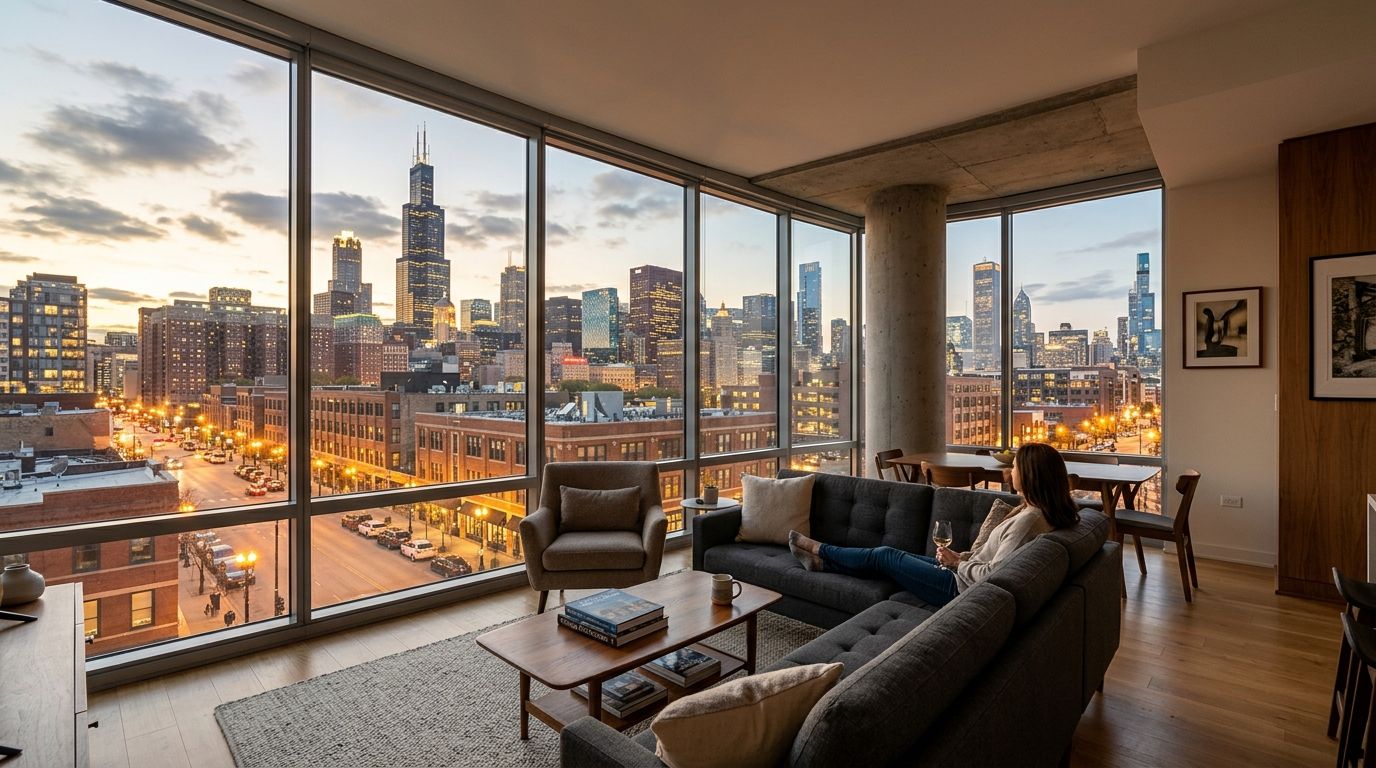
In 2026, most lease agreements in dense buildings include a noise clause that gives management the right to issue a warning or violation for sustained complaints. That makes soundproofing less about courtesy and more about protecting your lease. Before you sign anywhere, it's worth checking how a building's noise levels hold up before you commit — the construction and unit layout matter more than any amount of foam you add after move-in.
How do you soundproof a high-rise apartment for music practice?
Follow this order — sealing gaps first, then adding mass, then absorbing reflections inside the room:
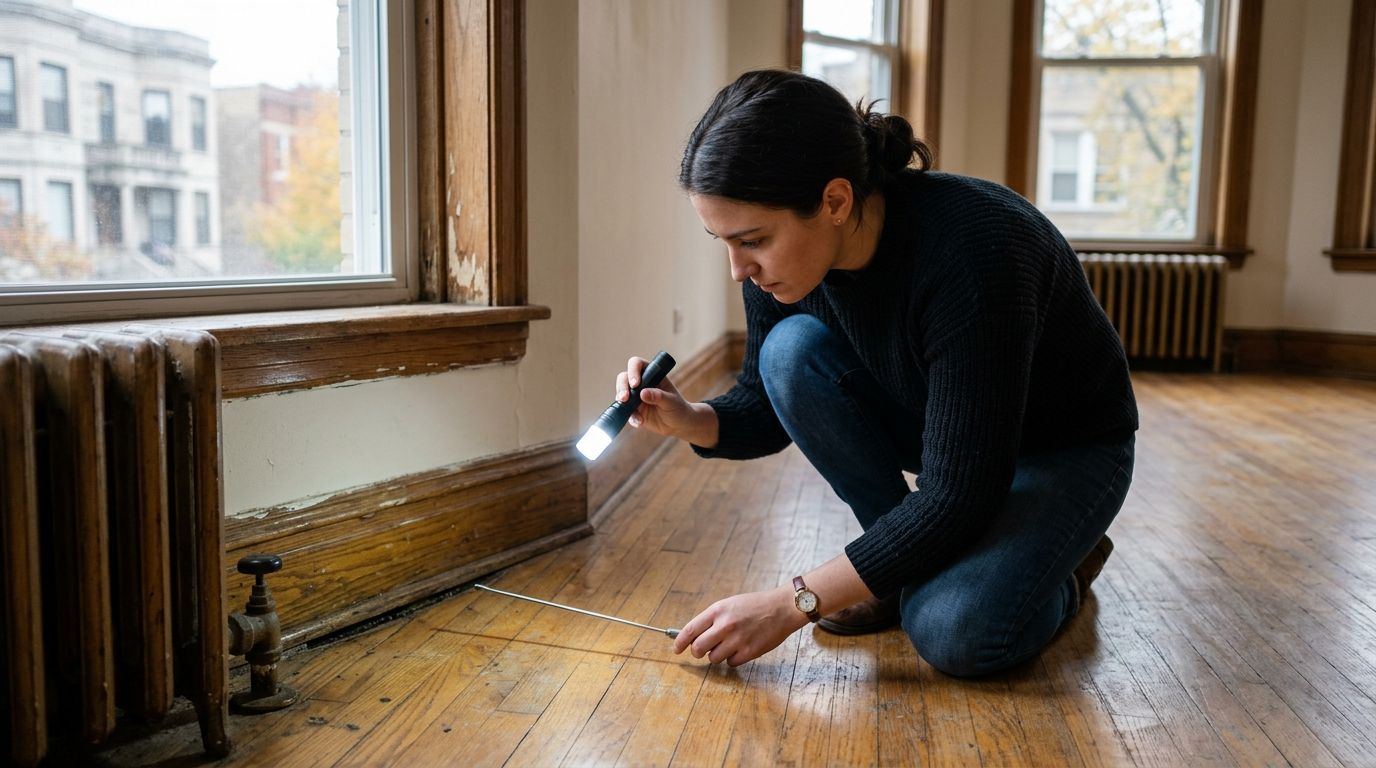
- Seal the door. A door sweep and adhesive weatherstripping close the single biggest air gap in most apartments — sound leaks through gaps before it ever has to pass through a wall.
- Add mass to the wall you share with a neighbor. Mass loaded vinyl (MLV) hung behind a rug or tapestry adds density that blocks transmission far better than foam.
- Break the floor path. A thick area rug over rubber underlayment stops impact noise — footfall, drum pedals, dropped drumsticks — from reaching the unit below.
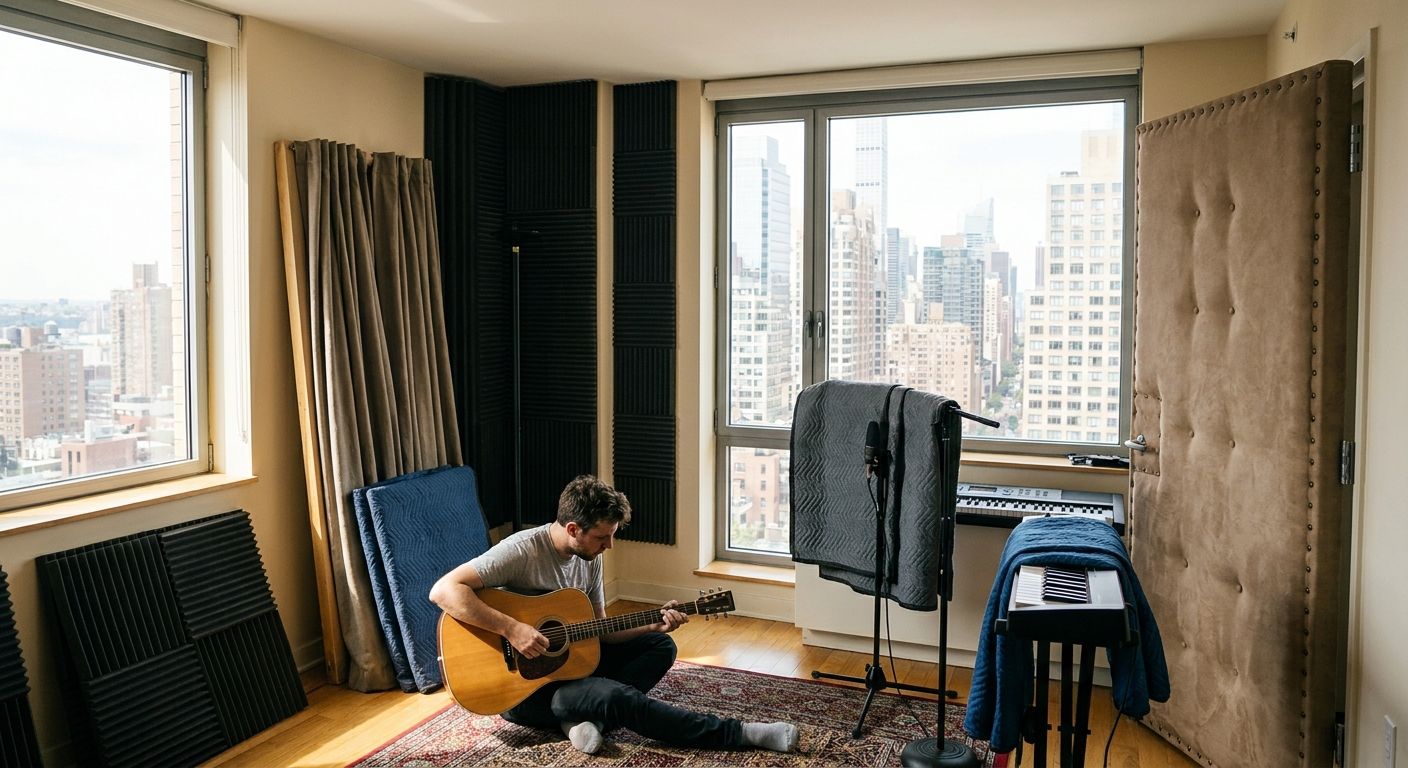
- Treat the room for echo, not isolation. Acoustic foam panels on the walls improve how the room sounds to you and to any recording, but they don't stop sound from leaving the apartment.
- Time your practice around quiet hours. No physical treatment fully replaces scheduling — practicing bass-heavy material midday instead of at 9 p.m. avoids most complaints outright.
| Treatment | What it does | Effectiveness | Best for |
|---|---|---|---|
| Door sweep + weatherstripping | Seals air gaps | Medium | Every instrument, first fix |
| Moving blankets | Absorbs mid/high-frequency reflections | Low to Medium | Vocals, acoustic guitar |
| Mass loaded vinyl (MLV) | Adds mass to block transmission | Medium to High | Drums, bass, amps |
| Rug + rubber underlayment | Cuts impact noise to the floor below | Medium | Drum pedals, foot tapping |
| Acoustic foam panels | Reduces in-room echo | Low | Recording clarity, not isolation |
| Isolation booth | Fully encloses the sound source | High | Daily serious practice |
Soundproofing for acoustic guitar, voice, and light practice
Acoustic instruments and unamplified vocals sit mostly in the mid-to-high frequency range, which moving blankets and foam panels handle reasonably well. A rug, a few blankets draped over a rolling rack, and a sealed door usually get an acoustic player through daily practice in 2026 without a single complaint.
Soundproofing for drums and percussion
Drums are the hardest instrument to contain in any apartment, high-rise or not, because kick drums and floor toms produce low frequencies that travel through structural framing rather than air. MLV on the shared wall, a rug with rubber underlayment under the kit, and strict adherence to daytime hours are the realistic combination — electronic drum kits with headphones are the only way to practice silently at any hour.
Soundproofing for electric instruments and amps
An amp turned up loud enough to feel is louder than most acoustic instruments, so the fix is usually behavioral before it's physical: practice through headphones with a modeling amp or interface, and reserve the actual amp for daytime hours. MLV behind the amp's usual position helps, but a headphone rig removes the problem entirely.
“If a neighbor can still hear the kick drum through a shared wall, more foam won't fix it — only mass, distance, and timing will.”
Why soundproofing needs vary by apartment
- Wall construction — concrete-frame high-rises generally transmit less impact noise through floors than wood-frame buildings, though airborne sound through shared walls still passes through both.
- Unit adjacency — a corner unit with only one shared wall needs half the treatment of a mid-building unit flanked on both sides.
- Floor level — higher floors cut down on street noise but don't reduce sound transfer between neighboring units.
- Instrument type — low-frequency instruments (drums, bass) require mass-based treatment; high-frequency instruments (voice, acoustic guitar) respond better to absorption.
- Building policy — a strict quiet-hours clause changes your practice schedule more than any product changes your wall.
- Time of day — the same practice session that draws no attention at 2 p.m. can trigger a complaint at 9 p.m.
Renters who play regularly often start apartment hunting by looking specifically for studio apartments built with artists and creative practice in mind, since layout and unit placement do more of the work than any treatment added after move-in.
Look for a layout built for practice
Compare studio and one-bedroom floor plans in Fulton Market before you sign.
Can you play drums in a high-rise apartment?
You can play drums in a high-rise apartment if you combine MLV on shared walls, a rug with rubber underlayment, and daytime scheduling — or switch to an electronic kit with headphones for any hour. Acoustic drum kits remain the hardest instrument to fully contain because low frequencies pass through structural framing more easily than through air.
Is it legal to soundproof a rental apartment?
Adding removable treatment like rugs, blankets, and freestanding foam panels is legal in most rental apartments because nothing is permanently altered. Anything that requires drilling into walls, adhesive that damages paint, or structural modification needs written approval — check your lease's alteration clause before you commit to a build.
Do concrete high-rises block sound better than wood-frame buildings?
Concrete high-rises generally block impact noise between floors better than wood-frame buildings, since concrete slabs are denser and don't flex the way wood joists do. Airborne sound through shared walls — voices, amplified instruments, speakers — still travels through both construction types and needs its own treatment regardless of the building material.
FAQ
What's the best way to soundproof an apartment for music practice in 2026?
The best approach in 2026 combines a sealed door, mass loaded vinyl on shared walls, and a rug with rubber underlayment before adding any acoustic foam. Foam alone only improves in-room sound quality — it does not stop sound from reaching a neighbor.
How much sound do moving blankets actually block?
Moving blankets absorb mid-to-high frequency reflections inside a room but block very little sound transmission through a wall. They help recording clarity far more than they reduce noise a neighbor hears.
Is it legal to soundproof a rental apartment?
Yes, removable treatment like rugs, blankets, and freestanding panels is legal in most rental apartments since nothing is permanently altered. Anything involving drilling or adhesive needs a check against your lease's alteration clause first.
Can you play drums in a high-rise apartment without violating your lease?
You can play acoustic drums without violating most leases if you treat the shared wall and floor and stick to daytime hours set by the building's quiet-hours policy. An electronic kit with headphones removes the risk entirely at any hour.
Do concrete high-rises transmit less sound than wood-frame buildings?
Concrete high-rises generally transmit less impact noise through floors than wood-frame buildings because concrete slabs don't flex like wood joists. Airborne sound through shared walls still passes through both construction types.
What time is considered quiet hours in most apartment leases?
Quiet hours typically run from around 10 p.m. to 8 a.m. in most apartment leases, though the exact window is set building by building. Reading your specific lease clause is the only way to confirm the hours that apply to you.
Does an isolation booth work better than acoustic foam?
Yes, an isolation booth outperforms acoustic foam for blocking sound because it fully encloses the source rather than just absorbing reflections in the room. Foam improves clarity for recording but isn't built to stop transmission.
Can electric instruments be practiced silently in an apartment?
Yes, electric instruments can be practiced near-silently through a modeling amp or audio interface with headphones. Reserve the actual amp for daytime hours if you want the full sound without treatment.
One last thing
The detail most renters get wrong in 2026: they buy foam first. Foam changes how a room sounds to the player, not how much sound leaves it — the door sweep, the wall mass, and the floor rug do the actual isolation work, and they cost less than a wall of panels. Before signing anywhere, read the lease's alteration and noise clauses so you know exactly what you're allowed to install without approval.