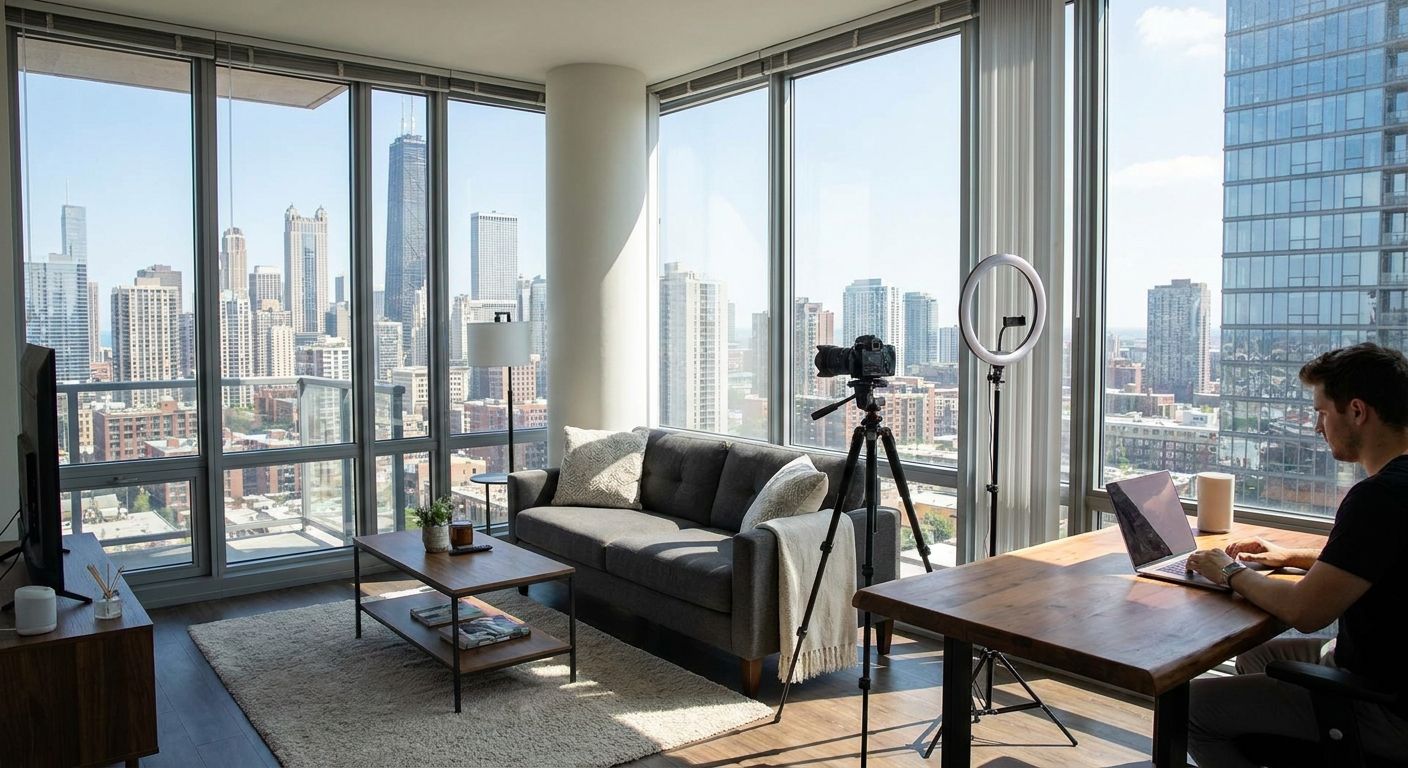
Content creator apartments in Chicago are rental homes chosen for daylight, bandwidth, and backdrop variety rather than square footage alone, built to support daily posting without a commute to a rented studio. Influencers and creators need windows that don't fight a ring light, an internet connection that survives a livestream, and common areas that read well on camera — needs a standard one-bedroom search doesn't screen for.
- Stead 220 in Fulton Market fits apartments for content creators chicago searches with floor-to-ceiling light and a rooftop pool built for lifestyle content.
- Window orientation and building internet speed matter more than square footage for a daily posting schedule.
- Read the lease before you shoot: some Chicago buildings restrict commercial filming in shared amenity spaces.
- Studios work for solo creators; two-bedroom units fit teams that need a dedicated edit room.
Why apartment choice matters for Chicago content creators
A creator's apartment is a set, an office, and a home at the same time. The wrong building means fighting north-facing windows for usable light, running uploads through a connection that collapses at peak hours, or getting flagged by a leasing office for filming in the lobby without asking first.
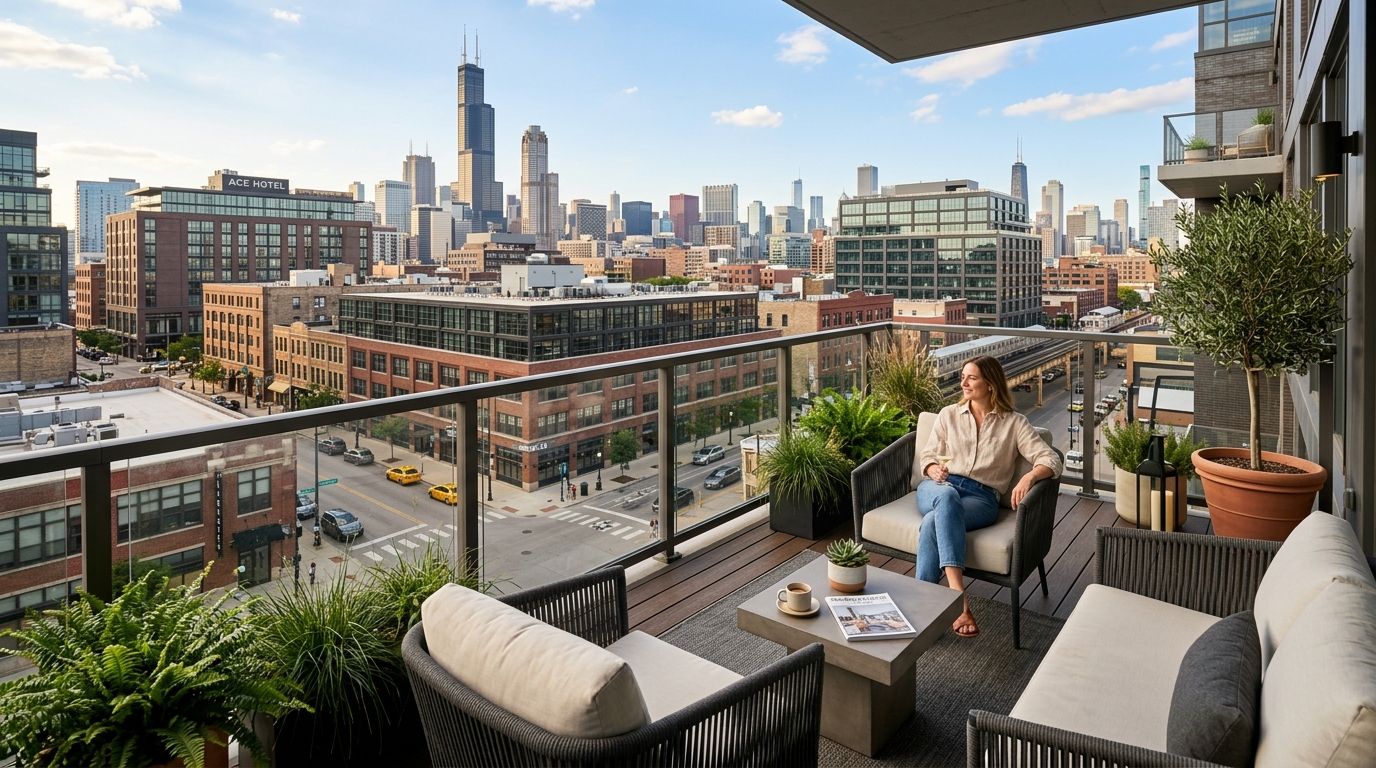
Fulton Market and West Loop have become the default neighborhoods for Chicago creators because most of the building stock went up after 2015 — larger windows, newer wiring, amenity spaces designed to be photographed. Stead 220 sits at 220 N. Ada Street in Fulton Market with 308 units ranging from studios to two-bedroom homes, a rooftop pool, and a fitness center. That's a set of backdrops you don't have to dress before shooting.
Check window orientation and daylight hours
Daylight is the cheapest lighting rig a creator owns, and it's the thing most renters skip when comparing floor plans in 2026.
- Ask for the floor plan's compass orientation before touring — south and west exposures hold usable light later into the afternoon
- Tour at the hour you actually film, not whenever the leasing office is free
- Check floor-to-ceiling versus standard windows; the difference decides how much of a room reads as backdrop
- Note ceiling height on the listing sheet — 9 feet or taller gives room for wide shots
Test the building's internet options before you sign
A livestream that buffers mid-recording costs more than the rent difference between two units.
- Call the building's designated provider directly and ask about upload speeds, not download tiers
- Confirm whether the unit is pre-wired for fiber or still on cable infrastructure
- Ask current residents about dropout frequency, not the leasing agent
- Request speed figures in writing before you apply
Scout in-building backdrops and shared spaces
Amenity spaces double as free content locations when the building allows it, which removes studio rental from your monthly budget entirely.
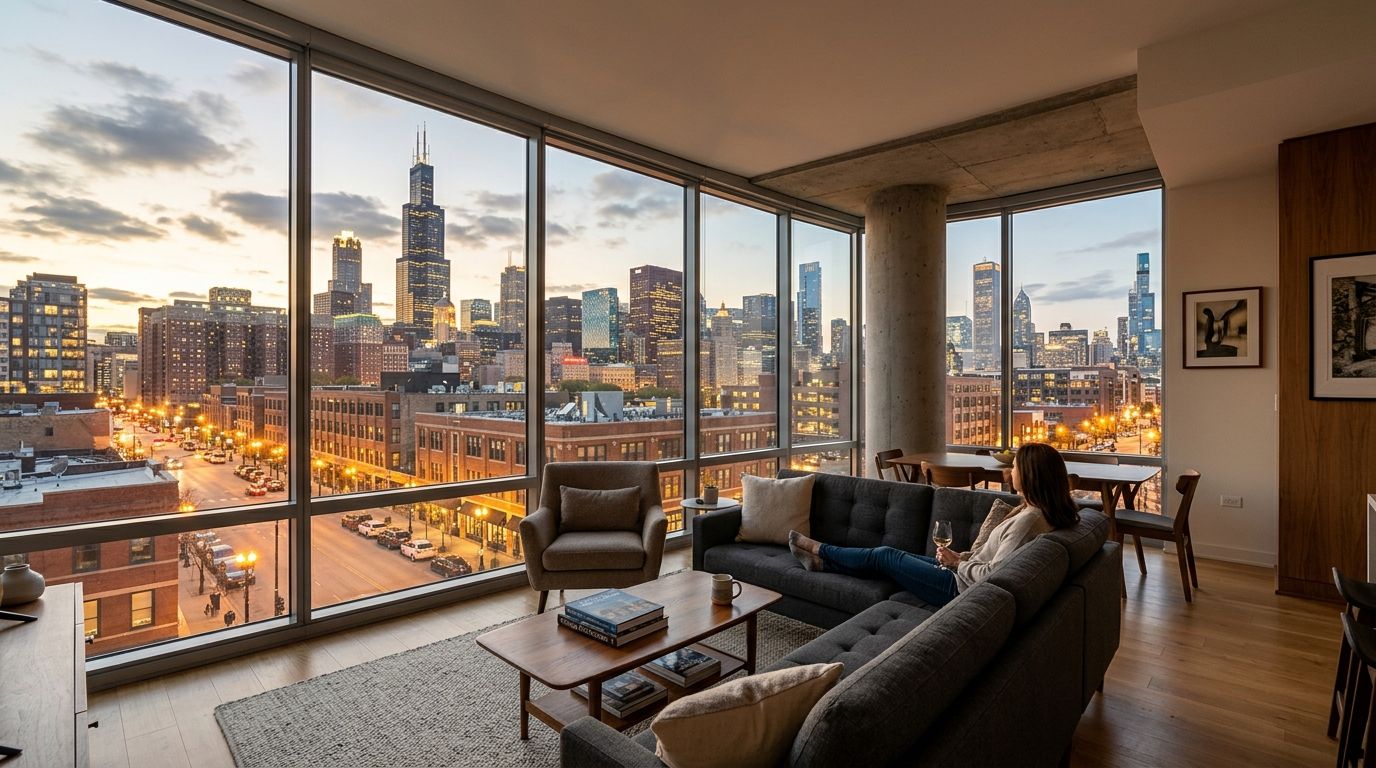
Skyline-view units solve this fastest. A corner exposure facing downtown gives a reusable backdrop that changes character through the day without you leaving the unit. Stead 220's skyline view apartments for photographers are built around exactly that use.
- Walk the rooftop, lobby, and fitness center during a tour and shoot a phone test frame in each
- Ask whether amenity spaces can be reserved for private use at off-peak hours
- Check whether tripods or lighting kits are permitted in shared areas
- Note industrial finishes — exposed concrete and black steel photograph differently than a white-box interior
Read the lease for filming and commercial-use clauses
As of 2026, more Chicago leases carry language about commercial use of a unit, and creators who skim that section find out during a dispute instead of at signing.
Buildings that already lease to working creatives tend to write clearer policies than buildings seeing the question for the first time. Stead 220's place among Fulton Market apartments for creative professionals reflects a resident base that asks this at lease signing.
- Read the commercial-use or business-use clause line by line
- Ask whether paid brand partnerships filmed in-unit require separate disclosure
- Confirm there are no restrictions tied to high package-delivery volume
- Get any verbal exception from a leasing agent in writing before relying on it
Plan storage for gear, backdrops, and PR packages
Ring lights, C-stands, backdrops, and unopened PR boxes eat closet space fast. Most standard studio layouts do not account for it.
- Measure closet depth, not just width, before assuming a light stand fits
- Ask about private storage units in the building if the floor plan runs tight
- Check for package lockers if you receive frequent brand shipments
- Consider a one-bedroom over a studio purely for the gear closet, not the extra living space
Budget for a workspace the apartment can't cover
Some edit sessions and brand calls need a quieter, plainer setting than a living room with a bed in frame.
A building with a coworking lounge handles this without a second lease. Stead 220 residents have on-site lounge space, and the same logic drives searches for coworking lounge apartments in Chicago generally.
- Test amenity Wi-Fi speed the same way you tested the unit
- Check whether the space has bookable private rooms or is open-plan only
- Ask about outlet placement if you bring a second monitor
- Confirm whether any usage fee applies before you count on the space
Verify sound isolation before you record
A great backdrop with elevator noise bleeding through drywall ruins a voiceover take faster than bad lighting ever will.
- Ask what sits adjacent to the unit — elevator shafts, trash chutes, and mechanical rooms are the usual offenders
- Request a walkthrough on a weekday afternoon when building traffic peaks
- Check window glazing if the unit faces a busy corridor like Lake Street or Randolph
- Run a decibel meter app during the tour and record a baseline number
“A ring light fixes bad lighting. It does not fix a north-facing window with no direct sun until 4pm.”
Comparing apartment options for Chicago content creators
| Option | Best for | Key limitation |
|---|---|---|
| Studio | Solo creators with gear that fits one closet | No room for a dedicated edit or storage space |
| One-bedroom | Creators who need a closed-door office | Higher rent than a studio for the added room |
| Two-bedroom | Duo channels or a creator plus an editor splitting rent | Needs a second income or roommate to work financially |
A studio at Stead 220 works for a solo creator filming primarily in natural light with no separate edit room — buy that layout if your kit fits one closet. A two-bedroom fits duo channels or a creator-plus-editor lease split — buy it if you need a door between the set and the desk. A one-bedroom is the middle call: hold on it until you've measured how much gear you actually store.
Tour a light-filled Stead 220 floor plan
See studios through two-bedroom homes chosen for daylight and workspace.
Common mistakes content creators make when apartment hunting
- Choosing a unit for one photo instead of daily use — a dramatic corner window carries a single post, then goes dark at 2pm every day after
- Skipping the upload speed test — trusting a listing's advertised number instead of confirming real upload bandwidth before signing in 2026
- Ignoring the commercial-use clause — signing a standard residential lease without asking how paid in-unit brand content is treated
- Underestimating package volume — creators taking on PR partnerships regularly outgrow a mailroom built for ordinary delivery traffic
- Treating the entire unit as a set — filming every room without deciding which space stays private and off camera
FAQ
What's the best apartment for content creators in Chicago in 2026?
A unit with strong natural light, fiber-grade upload speed, and access to photogenic shared spaces. Stead 220 in Fulton Market fits with floor-to-ceiling light in select homes, a rooftop pool, and studio-to-two-bedroom layouts.
Is Fulton Market a good neighborhood for influencers?
Yes. Most buildings there went up after 2015 with larger windows and newer wiring, and the streetscape itself photographs well with industrial architecture and restaurant row nearby.
Do Chicago apartment leases restrict filming?
Some do. Leases increasingly carry commercial-use or business-use clauses in 2026, so read that section before signing and get any verbal exception in writing.
How much internet speed does a content creator need?
Upload speed matters more than download speed for livestreaming and cloud delivery. Ask the building's designated provider for actual upload figures, not the advertised download tier.
Which amenities matter most for creator housing?
Natural light, a rooftop or skyline view for backdrop variety, a coworking lounge for overflow work, and package lockers for PR shipment volume.
Can you legally film content in a rented Chicago apartment?
Generally yes for personal content, though commercial brand work filmed in-unit may require disclosure under some 2026 leases. Confirm with the leasing office before you sign.
Is a rooftop pool useful for content creation?
Yes. A rooftop pool works as a reusable lifestyle backdrop with no studio rental cost, which is why buildings with one draw creator interest specifically.
Should a content creator rent a studio or a one-bedroom?
A studio works if your gear fits one closet and you don't need a separate office. A one-bedroom is the better call for anyone recording calls on a schedule that overlaps filming.
One last thing
The detail almost every creator skips on a tour is elevator wait time at peak hours. A slow elevator costs more filming and shipping minutes across a month than any amenity on the list gives back. Ask a resident in the lobby, not the leasing agent, how long the wait runs at 9am and 6pm on a Tuesday in 2026.