
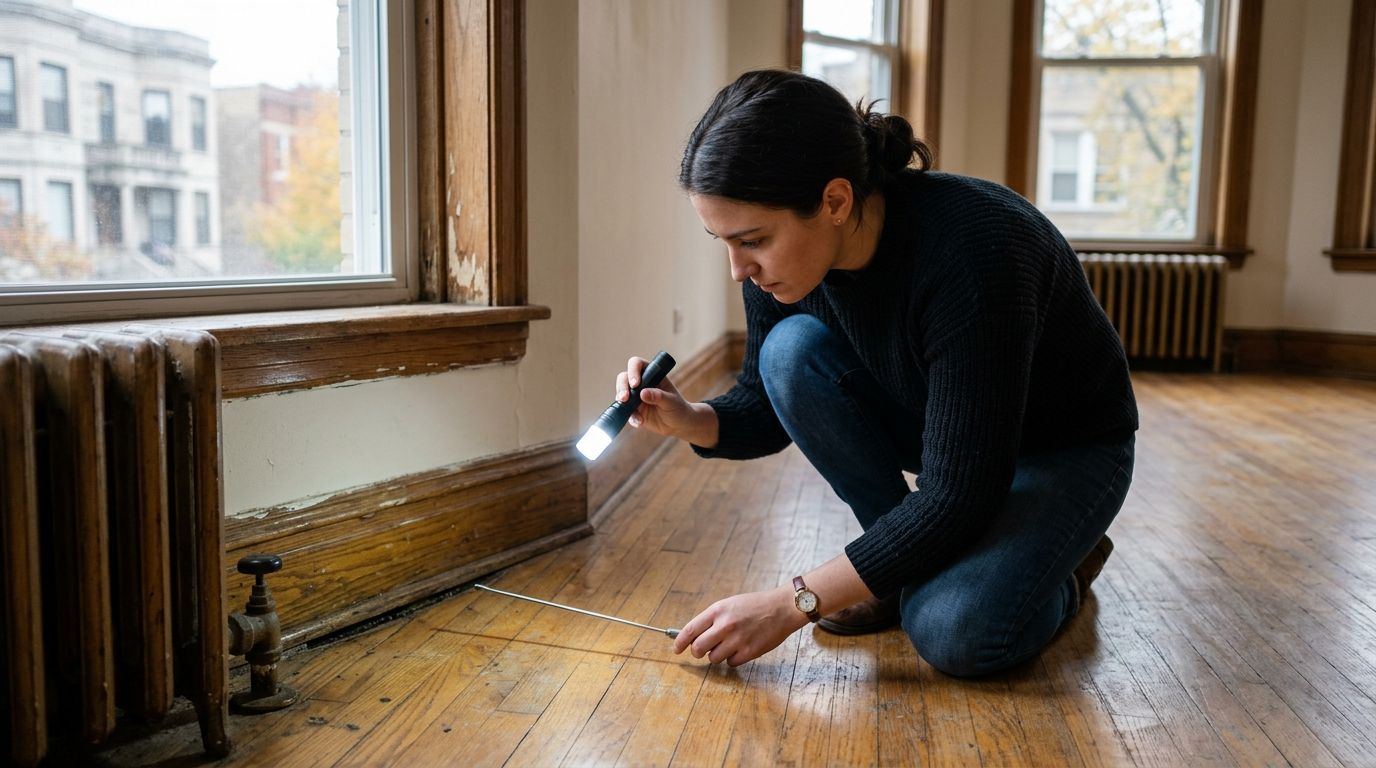
Inspecting a Chicago apartment for pests before you sign takes 15 minutes and a flashlight, and it can save you from breaking a lease six months later. Check the kitchen, bathroom, and shared building areas for droppings, gaps, and prior treatment records before you hand over a deposit.
- Check under sinks, behind the fridge, and inside cabinet hinges for cockroach droppings before signing.
- Ask the leasing office for pest control service logs — refusal to share them is a red flag in 2026.
- Fall and winter push rodents indoors in Chicago, so a clean summer tour proves less than you think.
- Ground-floor units near restaurant corridors face more pest pressure than upper floors in a high-rise.
- Bed bug evidence often shows on a second visit, not the first — book two walkthroughs.
Why this matters
A pest problem discovered after move-in is expensive to fix and hard to prove. Illinois does not force landlords to volunteer a unit's pest history, so the burden sits on you to check before you sign, not after.
Chicago's older housing stock, shared trash chutes, and dense restaurant corridors — especially in neighborhoods like Fulton Market — create more entry points for German cockroaches and rodents than a suburban single-family home. That does not mean every high-rise has a problem. It means a 15-minute walkthrough habit separates a clean lease from a costly one.
This guide covers how to inspect a Chicago apartment for pests before signing in 2026, what evidence actually matters, and which questions get real answers instead of a leasing agent's shrug. Before touring, it also helps to know how to avoid rental scams when searching for Chicago apartments, since sloppy listings and pest neglect tend to travel together.
How to inspect a Chicago apartment for pests before signing
Work through these seven steps during your tour, not after you have signed:
- Ask for the pest control service log. A managed building — including apartment communities like Stead 220 — should produce a schedule showing when technicians last serviced the unit and common areas.
- Open every kitchen cabinet and check under the sink. Look for dark, pepper-like droppings, grease trails along the baseboard, or a musty smell near the disposal.
- Pull the dishwasher kick plate and look behind the refrigerator. German cockroaches nest in warm, damp gaps that a pre-showing cleaning crew skips.
- Inspect baseboards, outlet covers, and window frames for gaps wider than a quarter-inch. Those are mouse entry points, especially once Chicago temperatures drop below freezing.
- Check mattress seams and headboards in a furnished unit. Small reddish-brown stains or tiny shed skins are bed bug indicators.
- Walk the common areas — trash chute, laundry room, bike storage, mailroom. Bait stations there are normal preventive maintenance; a cluster of glue traps outside your specific floor is not.
- Ask current residents, not just the leasing agent. Staff have an incentive to downplay. Neighbors in the elevator usually do not.
The quotable verdict: a Chicago building with a documented, recurring pest control contract and sealed trash chutes is a materially lower risk than an older walk-up running ad hoc extermination — ask for the contract before you ask about the countertops.
What to look for in each room
| Area | What you are checking | Red flag |
|---|---|---|
| Kitchen | Under sink, cabinet hinges, behind fridge, dishwasher kick plate | Pepper-like droppings, grease trails, musty odor |
| Bathroom | Pipe penetrations, grout gaps, under vanity | Standing moisture, quarter-inch gaps around pipes |
| Bedroom | Mattress seams, headboard, baseboard joints | Reddish-brown stains, shed shells |
| Windows and doors | Seals, sweeps, frame corners | Daylight visible at the sweep, torn screens |
| Common areas | Trash chute, laundry, storage, mailroom | Clustered traps, propped chute doors, overflowing bins |
Run this table top to bottom and the inspection takes about 15 minutes. Skip the common areas and you have inspected roughly half the problem, because shared infrastructure is where most Chicago pest pressure originates.
Tour before you commit
Walk the unit and the common areas yourself before signing a lease.
Why pest risk varies from building to building in Chicago
Not every address carries the same exposure. The difference comes down to a handful of structural factors:
- Building age and construction. Older masonry buildings have more gaps around pipes and utility chases than newer steel-and-glass high-rises.
- Proximity to food service. Fulton Market's restaurant row draws cockroach and rodent pressure a residential-only block never sees.
- Trash chute design and pickup frequency. Sealed chutes with regular removal limit access far better than open bins in an alley.
- Ground-floor retail and loading docks. A unit sharing a wall with a commercial kitchen is exposed differently than one ten floors up.
- Season. Fall and winter push rodents indoors across Chicago as outdoor temperatures fall, which is why a clean July tour does not guarantee a clean January.
- Vacancy history. A unit empty for months without service visits carries more risk than one with continuous, documented occupancy.
Floor choice matters more than most renters assume. If you are weighing two units in the same building, the guide on how to choose a high-rise apartment floor in Chicago covers the tradeoffs beyond pests — noise, light, and elevator time.
What are the first signs of a cockroach infestation in an apartment?
The first signs are small dark droppings that look like ground pepper near sinks, stoves, and cabinet hinges, plus a musty odor in tight warm spaces. German cockroaches favor damp areas under the dishwasher and behind the refrigerator, so check those two spots even in a unit that looks freshly cleaned for showing. One live roach during a daytime tour usually means a larger population, because they are nocturnal.
Do Chicago landlords have to disclose past pest problems?
Illinois law does not require a landlord to proactively disclose a unit's pest history, which puts the responsibility on you to ask. Request the pest control service log in writing during your tour in 2026 — a well-run building has one on file and shares it without hesitation. Get any verbal assurance added to the lease or a written addendum before you sign.
How often should pest control service a high-rise building?
Well-managed high-rises schedule pest control on a recurring contract, with extra visits triggered by resident complaints. Ask whether that service covers common areas — trash chutes, mechanical rooms, loading docks — and not just individual units, since shared infrastructure is usually the actual entry point. A building that services units only is treating symptoms.
One last thing
The most-skipped inspection spot is the dishwasher kick plate. Pull it during your tour, because that warm damp gap is where German cockroaches nest in units that otherwise look spotless. And if a leasing office hesitates when you ask for a pest control log in 2026, treat the hesitation as the answer and keep touring — every reasonable question you ask before signing is a question you will not be arguing about in month six.
FAQ
Is it normal to see a mouse trap in a Chicago apartment hallway?
A glue trap or bait station in a hallway or utility closet is standard preventive maintenance, not proof of an active infestation. It becomes a concern only when several traps cluster near one unit or you find droppings nearby.
Can I break a lease if I find bed bugs after moving in?
An undisclosed bed bug infestation can support breaking a lease under Illinois habitability rules, but you generally must give the landlord written notice and a reasonable window to remediate first. Document everything with photos and pest control reports before taking that step.
What time of year has the highest pest risk for Chicago apartments?
Fall and early winter carry the highest rodent risk in Chicago, as falling temperatures drive mice and rats indoors. Cockroach activity stays steady year-round in heated buildings, so a clean summer tour does not rule out a winter problem.
Should I inspect a ground-floor unit differently than a high-rise unit?
Yes. Ground-floor units near restaurant corridors or loading docks face more pressure from adjacent food service and street-level trash. Check window seals, door sweeps, and shared walls with commercial tenants far more closely than you would on a higher floor.
How do I inspect an apartment for pests during a virtual tour?
Ask the agent to open every cabinet, point the camera under the sink, and hold the frame behind the refrigerator and on the baseboards. Then request the pest control service log in writing, since you cannot verify the unit yourself.
What should I ask a leasing agent about pest history during a tour?
Ask for the unit and building pest control service log, how often technicians service common areas, and whether any units on your floor have had recent complaints. An agent who cannot produce a service log has answered without saying no.
Do newer Fulton Market buildings have fewer pest problems than older Chicago buildings?
Newer construction typically has fewer gaps around pipes and utility chases and pairs with sealed trash chutes, which lowers entry points versus older masonry buildings. Age lowers risk but does not remove the need to check service records and common areas yourself.
Is one cockroach in an apartment a sign of an infestation?
One cockroach seen during daylight usually indicates a larger hidden population, because the species common in Chicago apartments is nocturnal. Treat a daytime sighting on a tour as a reason to inspect the kitchen thoroughly before signing.