Private-terrace apartment hunters in Fulton Market want outdoor square footage attached to their own unit, not a shared rooftop time slot, and that single distinction determines which buildings actually qualify. This guide covers what "private terrace" means in Fulton Market's high-rise stock in 2026, how to verify it before you tour, and where a building like Stead 220 fits if daily outdoor access matters more than the word "private" on a listing.
- Private terrace apartments in Fulton Market vary widely: some are true attached outdoor rooms, others are marketing language for a Juliet balcony.
- Verify square footage and exposure direction before touring — listings rarely specify either.
- Stead 220 leases studios to two-bedroom homes with a rooftop pool rather than unit-attached terraces, a shared-amenity path worth comparing against private terrace units.
- Ask about furniture weight limits and grill policies before signing — outdoor space rules trip up more renters than the square footage itself.
Why apartments with private terrace matters for Fulton Market renters
Fulton Market's building stock is newer construction layered on a former meatpacking district, which means floor plans vary building to building even on the same block. Some towers reserve terraces for a handful of upper-floor or corner units; others put outdoor space only on the roof, shared across all 308, 250, or 400-unit rosters. Stead 220 sits in that second category, with amenities built around shared outdoor space rather than private terraces attached to individual homes.
That matters because "private terrace" gets used loosely in Chicago listings. A renter searching that exact phrase in 2026 is often shown Juliet balconies, screened-in porches, and shared rooftop decks mixed in with true attached terraces. Knowing the difference before you tour saves a wasted trip.
How to find a private terrace apartment in Fulton Market
Define what "private terrace" actually means
Listings use "terrace," "balcony," and "outdoor space" interchangeably, and that costs renters tour time. Pin down the exact type before you schedule anything.
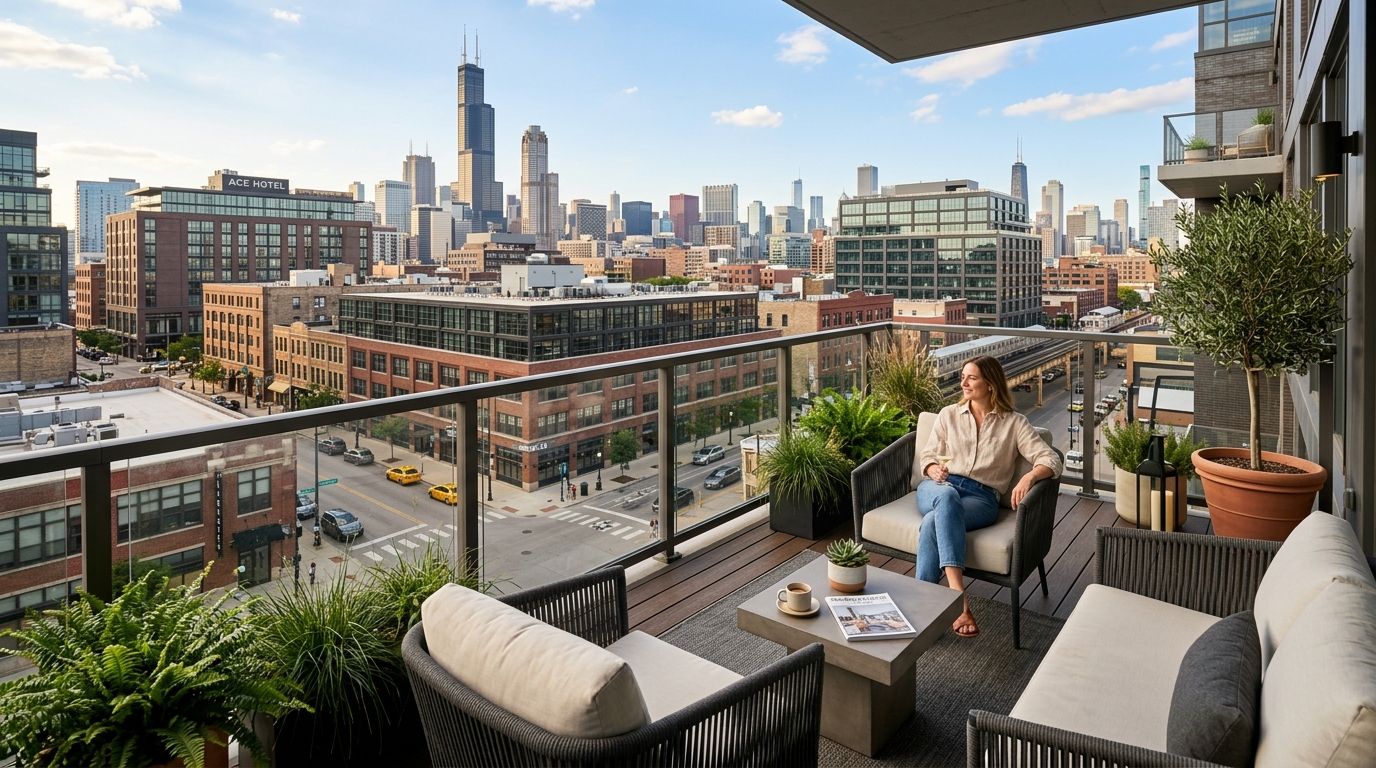
- True private terrace: attached to one unit only, walkable outdoor floor, no shared access
- Juliet balcony: a railing outside a window or door, no usable floor space
- Shared rooftop deck: outdoor square footage available to all residents, scheduled or first-come
- Ground-floor patio: attached to a single unit but at street level, not elevated
- Corner unit with wraparound glass: no outdoor space, but maximum light and view
Check the floor plan mix before you tour
Most buildings don't publish which specific units have terraces. Call or email the leasing office and ask directly rather than relying on the listing photos.
- Ask how many units in the building actually have private terraces
- Ask which floors and which line (corner vs. mid-building) they're on
- Ask the exact square footage range for the terrace itself
- Ask which direction the terrace faces
- Ask whether terrace units carry a separate application queue or waitlist
Compare private terrace units against shared rooftop amenities
A private terrace isn't always the better trade. Shared rooftop space, like a pool deck, gives you a larger footprint and amenities you'd never fit on a personal balcony, at the cost of scheduling around other residents. Stead 220 leases apartments built around a rooftop pool rather than private, unit-attached terraces, which works for renters who want outdoor square footage without maintaining it themselves. If a rooftop pool apartment covers your outdoor-space need, you can skip the unit-by-unit terrace hunt entirely.
- Private terrace: guaranteed access, smaller footprint, you maintain it
- Rooftop deck: larger footprint, shared scheduling, building maintains it
- Rooftop pool: recreational outdoor space, not a workspace or dining terrace
- Ground-floor patio: private but closer to street noise and foot traffic
Confirm the rules that come with outdoor square footage
Every building with private terraces has rules governing what you can put on them, and those rules rarely appear in the listing.
- Furniture and planter weight limits per square foot
- Grill or open-flame policies (often banned on wood or composite terraces)
- Storage restrictions for bikes, seasonal gear, or holiday decor
- Liability language for railings, drainage, and potted plants
- Subletting or short-term-guest rules that apply specifically to outdoor space
Budget for exposure, not just square footage
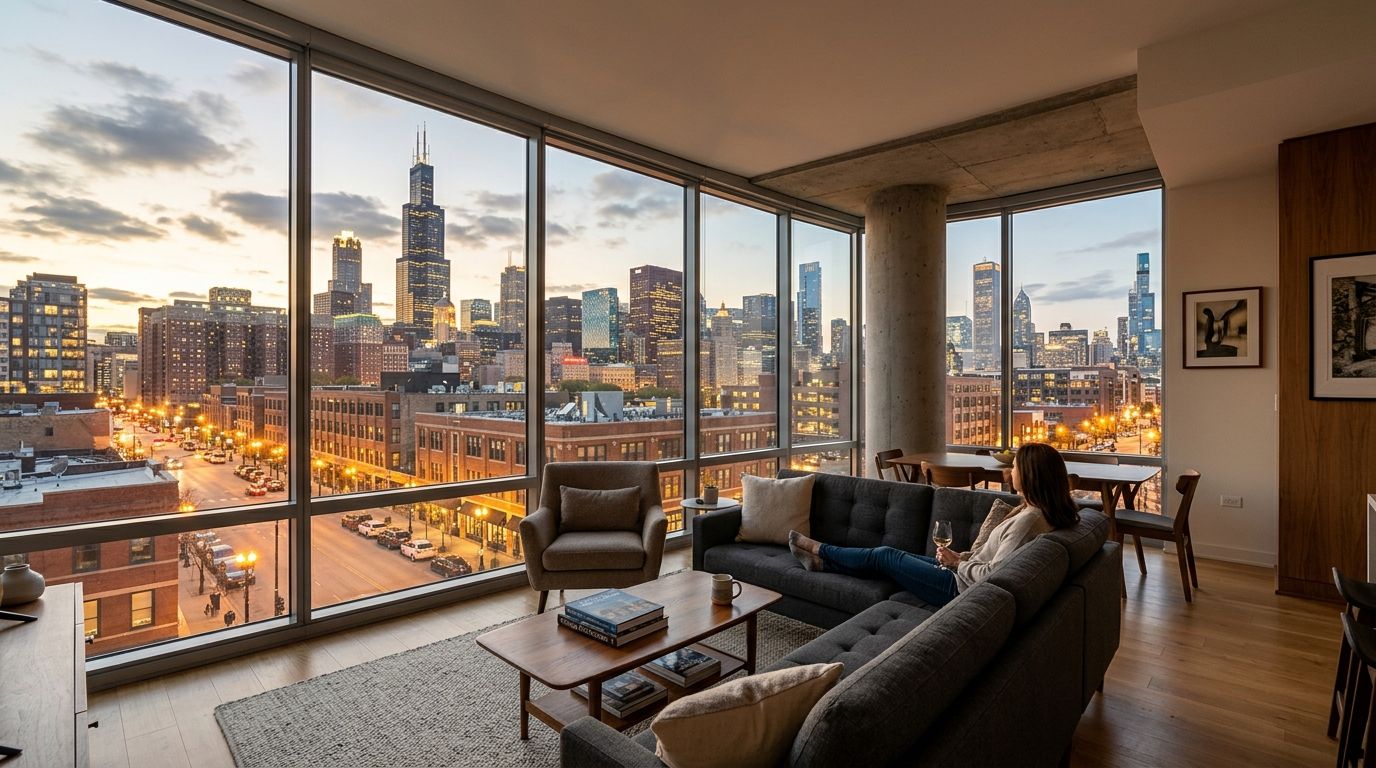
A 120-square-foot south-facing terrace on the 30th floor behaves nothing like the same footprint facing north on the 5th floor. Exposure changes how usable the space is for most of the year.
- South and west exposures get more direct sun but more summer heat
- Higher floors mean more wind, which limits umbrella and furniture use
- North-facing terraces stay cooler but see less usable daylight in winter
- Terraces facing Fulton Market's restaurant row pick up more street noise after dark
Tour at two different times of day
A single daytime tour hides half the picture. Terraces read differently at 10 a.m. than they do at 9 p.m. on a Friday in Fulton Market's restaurant corridor.
- Morning visit: check direct sun exposure and privacy from neighboring buildings
- Evening visit: check street and nightlife noise levels
- Ask about window or terrace screens for bugs in summer
- Check for standing water or drainage issues after recent rain
Ask what happens if the terrace unit isn't available at move-in
Terrace units turn over less often than standard floor plans because current residents tend to renew. Ask about contingencies before you commit to a move-in date.
- Is there a waitlist, and how long has it historically run
- Can you swap into a terrace unit later in your lease without breaking it
- Does the building hold terrace units for a deposit before the unit is vacant
See Fulton Market outdoor space in person
Tour a Stead 220 apartment and compare its rooftop pool to unit-attached terrace options nearby.
Comparison: outdoor space options in Fulton Market apartments
| Option | Best for | Key limitation |
|---|---|---|
| Private terrace unit | Renters who want daily outdoor access without leaving their apartment | Fewer available units per building; often a waitlist |
| Shared rooftop deck or pool | Renters who want a larger outdoor footprint without upkeep | Scheduled or shared access, not exclusive |
| Ground-floor patio | Renters who want a private, walk-out feel | Street-level noise and less privacy |
| Corner unit with panoramic glass | Renters prioritizing light and views over usable outdoor floor space | No true outdoor square footage |
A renter set on a true private terrace should verify unit-level availability before applying anywhere. A renter open to shared outdoor space can move faster: corner units with panoramic views and rooftop-amenity buildings clear the same emotional need — outdoor air, natural light, a change of scenery — without the narrower unit search.
Common mistakes terrace-seeking renters make in Fulton Market
- Treating "balcony" and "terrace" as the same thing. A Juliet balcony has zero usable floor space; a true terrace does. Listings blur this constantly.
- Touring only in good weather. A terrace that looks perfect at noon on a clear day in April can be unusable in January wind at the 25th floor.
- Skipping the furniture and grill rules. Renters sign leases assuming they can set up a dining table and grill, then find out both are restricted.
- Ignoring restaurant-row noise. Terraces facing Fulton Market's dining corridor pick up crowd and delivery noise well past 10 p.m. on weekends.
- Not asking about shared vs. private access in writing. Verbal assurances from a leasing agent don't hold up if the lease itself doesn't specify exclusive terrace use.
FAQ
What counts as a private terrace apartment in Fulton Market?
A private terrace apartment has outdoor floor space attached to a single unit, with no shared access from other residents. It's different from a Juliet balcony, which has a railing but no usable floor area, and from a shared rooftop deck available to the whole building.
Does Stead 220 have apartments with private terraces?
Stead 220's amenities center on a rooftop pool and fitness center rather than private, unit-attached terraces. Renters who need daily outdoor access without a private terrace often find the rooftop pool covers that need.
Is a shared rooftop deck better than a private terrace?
It depends on what you value: a rooftop deck usually offers more square footage and amenities than a private terrace, but you share it with other residents rather than having exclusive access. A private terrace is smaller but guaranteed.
How much more does a private terrace apartment cost in Fulton Market?
Pricing varies by building and floor plan, and terrace units typically carry a premium over standard layouts in the same building. Check current floor plans directly with each building's leasing office for exact figures.
Can you put furniture and plants on an apartment terrace in Chicago?
Most buildings allow furniture and planters on private terraces but set weight limits per square foot and often restrict open-flame grills. Confirm the specific rules with the leasing office before you move outdoor furniture in.
What floor is best for a private terrace apartment?
Lower and mid-floor terraces get more shelter from wind but less privacy from street level; higher floors get more wind exposure but better views and less street noise. Fulton Market's restaurant-row buildings add another variable: proximity to nightlife noise after dark.
Do private terrace units go on a waitlist in Chicago high-rises?
Many buildings hold a shorter list of terrace-equipped units than standard floor plans, and current residents renew into them at higher rates. Ask the leasing office directly how long the waitlist has historically run before you apply.
One last thing
The fastest way to waste a Fulton Market apartment search is assuming every listing that says "terrace" means the same thing. Call the leasing office first, get the exact square footage and exposure direction in writing, then tour at two different times of day before you sign anything in 2026.