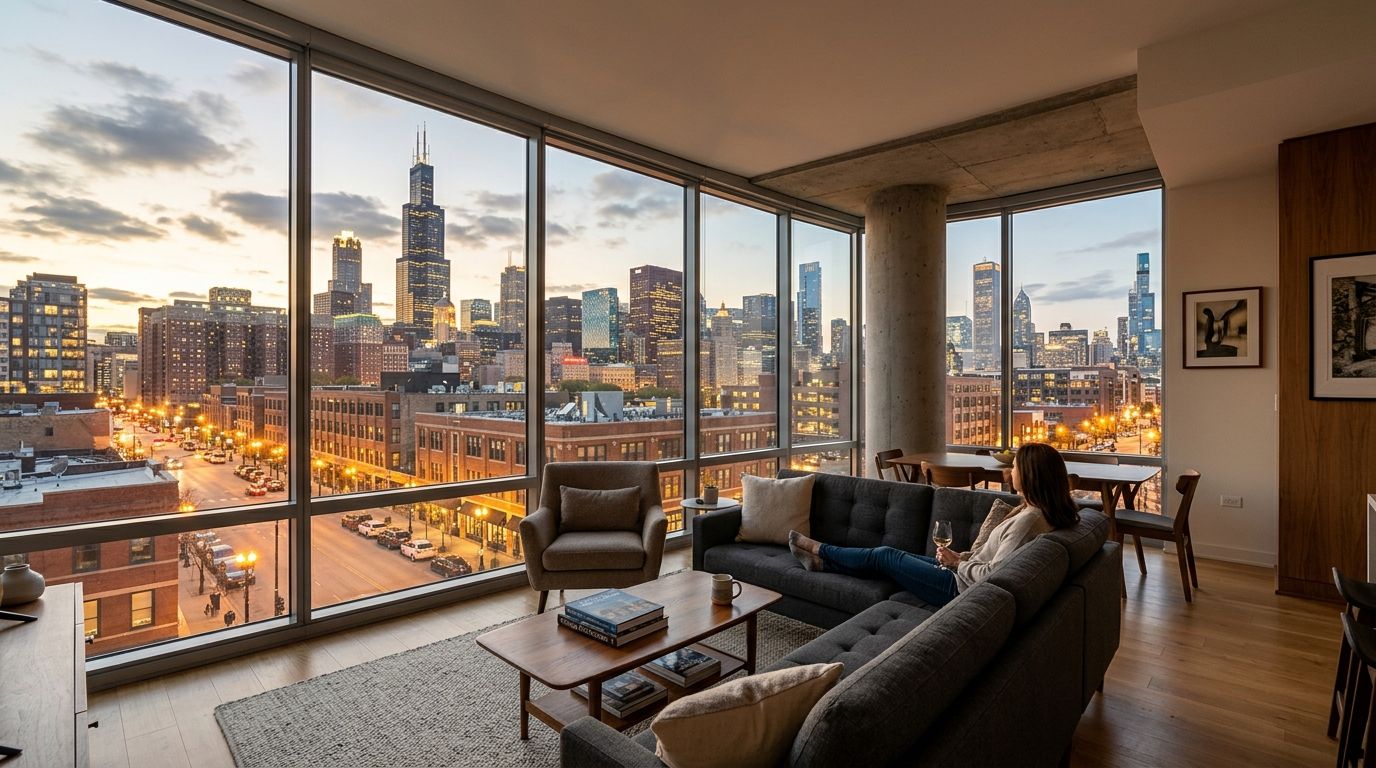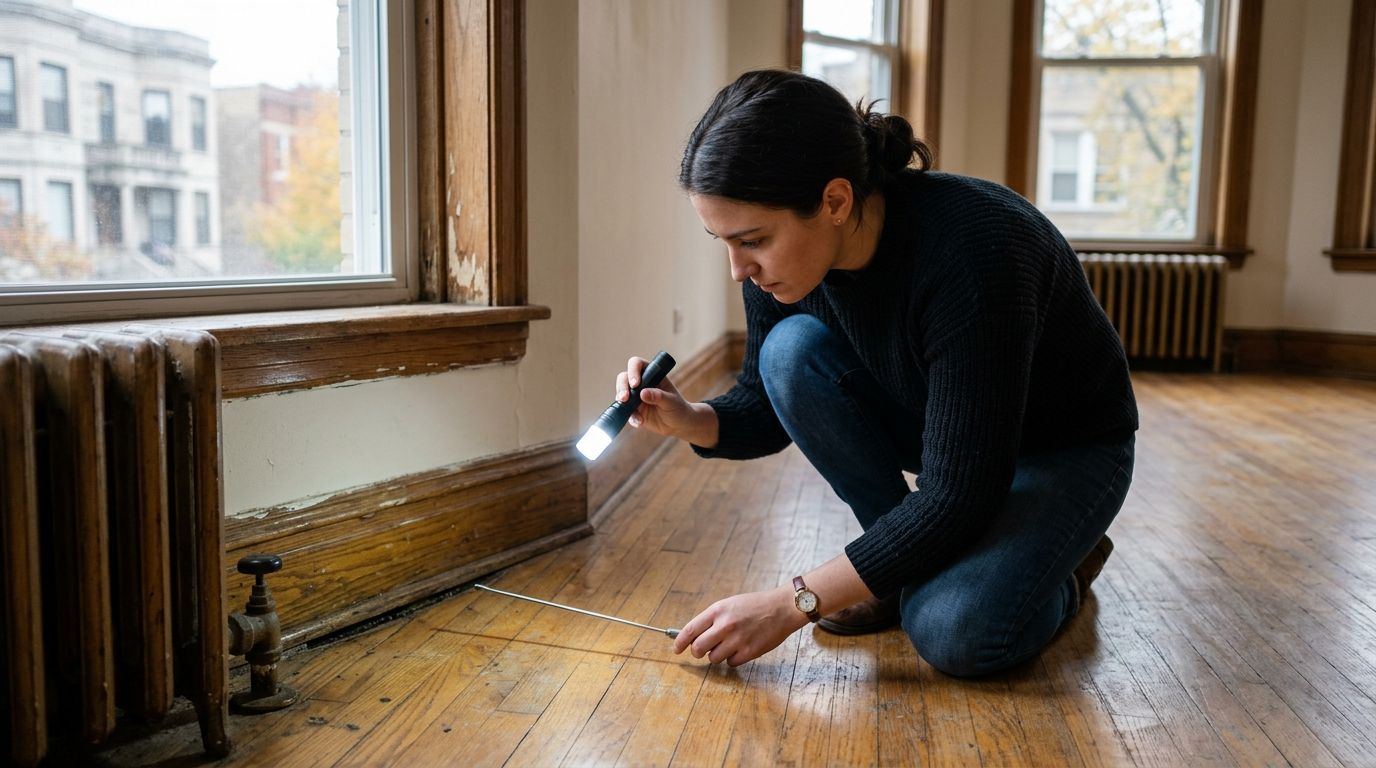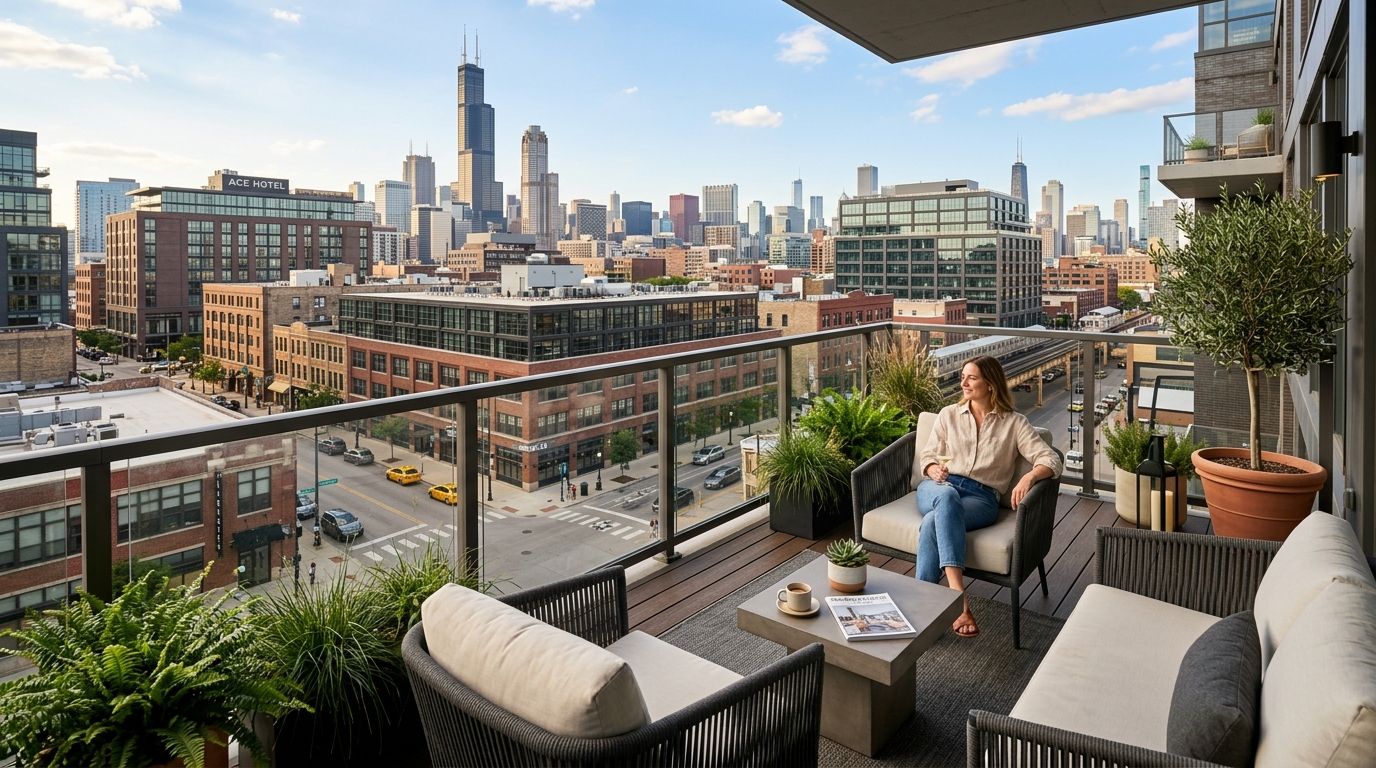
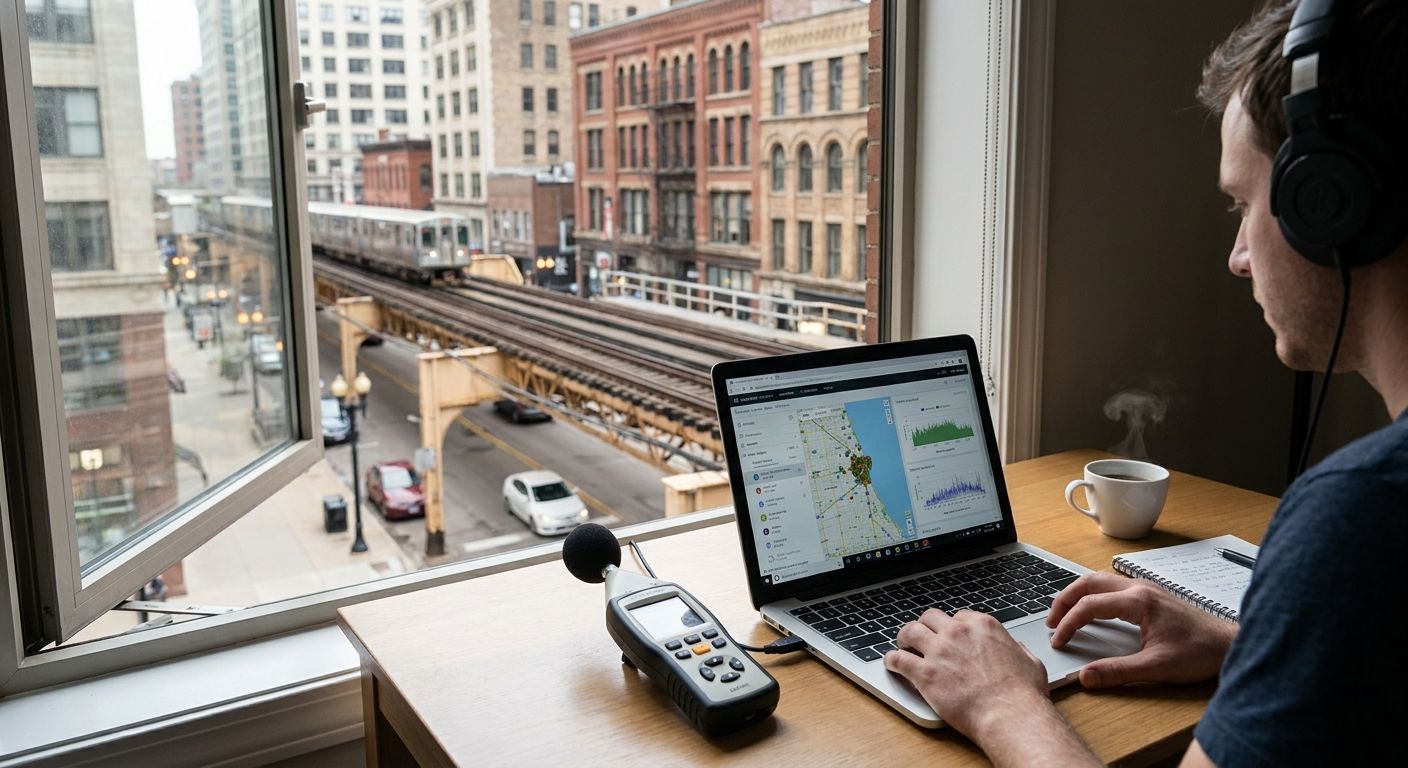
Noise is the one apartment defect that never shows up on a floor plan, and Fulton Market's mix of restaurants, music venues, and rail means it is worth checking before you sign anywhere in the neighborhood, including at Stead 220.
- Research Chicago apartment building noise levels by pulling 311 complaint history for the exact address before you tour.
- Chicago bars run until 2 a.m. weekdays and 3 a.m. Saturdays, so a Friday-night visit beats a Tuesday-afternoon showing.
- Ask leasing which unit lines face the street or restaurant row versus the courtyard side.
- A 308-unit building like Stead 220 at 220 N. Ada Street has enough variety that floor and exposure matter more than the address.
- Google reviews and Reddit surface noise complaints tenants never file with 311.
Why this matters
Fulton Market spent the last decade turning from a meatpacking district into one of Chicago's densest restaurant and entertainment corridors. That is why the neighborhood commands premium rents in 2026, and it is also why noise varies block to block and even floor to floor inside the same building.
A unit facing a rooftop patio sounds nothing like a unit two floors up facing an interior courtyard. Leasing agents will tell you the building is quiet, because most of it is. Your job is to find out whether your specific unit is the exception.
What you'll need
- 30 minutes with Chicago's 311 online service request portal
- The exact street address of the building, not just the neighborhood name
- A smartphone decibel meter app, free, good enough for relative comparison
- Two visit windows: a weekday afternoon and a Friday or Saturday night
- Google Maps satellite view to check what sits within one block
- A notepad for tracking which unit lines and floors you compare
The steps
1. Pull the address-specific 311 history
Chicago's 311 portal lets you search service requests by address, and noise complaints appear as their own category. This separates buildings with a documented pattern from buildings that merely sit near something loud-looking on a map. A building next to a music venue with zero complaints on file tells you more than a building with no obvious noise source and a stack of them. Common mistake: searching only your building and skipping the block face across the street, since complaints filed against a neighboring bar often name the nearest residential address.
2. Map what sits within one block
Open satellite view and walk the block digitally. Fulton Market's ground floors hold restaurants with sidewalk seating, venues, and rail spurs left from the district's industrial past. A restaurant with a rooftop patio two doors down changes your experience far more than one with indoor-only seating. Common mistake: assuming restaurant noise is a dinner-hour problem. Late kitchens and bar crowds on sidewalks run past midnight on weekends.
3. Tour twice, at two different times
One daytime tour tells you almost nothing about acoustic reality. Chicago bar closing hours run to 2 a.m. on weekdays and 3 a.m. on Saturdays, so a Friday or Saturday visit between 9 p.m. and midnight shows the building at its loudest predictable window. Leasing offices default to business hours, so you have to request the second visit yourself. Common mistake: touring only on a rainy weeknight, which suppresses street noise and gives a false sense of quiet. Use a Fulton Market apartment tour checklist so both visits compare the same things.
4. Ask leasing which exposure you're actually renting
A building's reputation does not apply evenly to every unit. Ask directly: does this unit face the street, an alley, a courtyard, or another building's wall? Does it sit above or beside ground-floor retail with late hours? Two units in the same 308-unit community can have completely different acoustic profiles depending on exposure and floor. Common mistake: accepting a flat answer of quiet without asking which direction the windows face.
5. Check the construction type
Concrete construction with poured floors between units transmits far less impact and voice noise than wood frame. Ask what the building is built from and whether the windows are double-pane, since some older converted industrial buildings keep single-pane glass that does little against street noise. Construction is permanent in a way a rug or a white-noise machine is not. Common mistake: assuming newer means quieter. New construction with thin party walls can transmit more sound than an older, heavier concrete structure.
6. Read tenant reviews for specific noise mentions
Search Google reviews and Reddit for the building name plus the word noise. Specific complaints, a trash compactor at 6 a.m. or a neighboring bar going until 1 a.m. on weekends, carry more weight than a star rating. Reviews often flag what 311 never captures, like HVAC or elevator mechanical noise. Common mistake: dismissing one negative review. Look for the same complaint from multiple reviewers across different months, which points to a structural issue rather than a single bad night.
Tour a specific unit at Stead 220
Ask leasing which exposure and floor fit your noise tolerance before you sign.
Troubleshooting
The building has no 311 history at all. Good sign, but it does not rule out noise that never rises to a formal complaint, like a patio that shuts at 10 p.m. Pair the 311 data with a night visit rather than relying on it alone.
Your unit faces a rail line. Rail noise is intermittent but sharp, and it will not surface in a general noise search. Ask leasing how far the nearest active line runs and which unit lines face it.
A bar or restaurant sits directly below your floor. Ground-floor retail with late hours is common across Fulton Market in 2026, and a unit stacked above one absorbs bass and crowd noise differently than a unit set back from the street. Request a higher floor or a line away from the retail frontage.
You already signed and it is louder than expected. Check your Chicago lease agreement for a relocation or unit-transfer clause before assuming you are stuck. Some buildings allow a floor-plan switch when a comparable unit opens.
Reviews conflict with your own tour. Trust the visit you did yourself. Buildings change management, add soundproofing, or lose a noisy neighboring tenant between a 2023 review and a 2026 tour.
Tools and resources
- Chicago's 311 online portal for address-specific complaint history
- Google Maps satellite view for mapping nearby noise sources
- A free decibel meter app for relative, side-by-side unit comparisons
- Google reviews and Reddit for complaints that never reach a formal report
- The leasing team itself, for exposure and construction questions no third-party site answers
What to do next
Once noise is settled for a specific address and unit line, weigh the amenities that offset city living, like an on-site fitness floor that spares you a loud gym commute. The West Loop apartment amenities comparison covers which ones actually change daily life in 2026.
FAQ
How do I research Chicago apartment building noise levels before signing?
Pull the building's address-specific 311 complaint history, map nearby restaurants and venues on satellite view, and tour twice: once on a weekday and once on a Friday or Saturday night in 2026 when bars stay open until 2 or 3 a.m.
Is Fulton Market a noisy neighborhood in Chicago?
Fulton Market has a dense restaurant and entertainment corridor, so street-facing and low-floor units run louder at night than courtyard or upper-floor units in the same building. Exposure matters more than the address.
Does Chicago track noise complaints by address?
Yes. Chicago's 311 service request portal logs noise complaints by address, and searching a specific building before touring shows whether it has a documented pattern.
What time should I tour an apartment to check for noise?
Tour once on a weekday afternoon and once on a Friday or Saturday night between 9 p.m. and midnight. Chicago bars can legally operate until 2 a.m. on weekdays and 3 a.m. on Saturdays.
Does building construction type affect apartment noise?
Yes. Concrete construction with poured floors transmits less impact and voice noise between units than wood frame, and double-pane windows block more street noise than the single-pane glass in some older converted buildings.
Can I switch units if my apartment turns out to be too loud?
Some buildings allow a floor-plan or unit transfer within the same community when a comparable unit is available. Check your lease for a relocation or transfer clause before assuming you have no options.
Are online reviews reliable for checking apartment noise?
Reviews help when the same specific complaint repeats across multiple reviewers and months, which points to a structural issue. A single negative review about one loud night tells you very little.
Do higher floors mean less noise in a Chicago apartment?
Generally yes for street-level noise, since sound dissipates with height. But a floor sitting just above a rooftop amenity deck or a neighboring bar patio can run louder than a low unit facing a quiet side street.
One last thing
The question most renters skip is which floor sits directly above the building's own rooftop amenity deck. A unit two floors above a pool deck picks up more warm-month evening chatter than a low unit on a quiet side street, and leasing staff can answer that in five seconds if you ask.