Chicago cyclists hunting for apartments near the 606 want a home base that's an easy ride from the trailhead, real bike storage instead of a rack bolted to a wall, and a building that treats an e-bike like daily transportation. That's a different search than "apartments with a view of the trail" — it's a search for logistics.
- Apartments near the 606 Chicago cyclists actually want combine trail access with secure indoor bike storage, not just proximity.
- Stead 220 sits in Fulton Market, a short ride south of the trail's eastern end, with 308 units and a fitness center on site.
- The 606 runs 2.7 miles from Ashland Avenue to Ridgeway Avenue on a former elevated rail line — check that fact before trusting any listing's 'steps to the trail' claim.
- Lithium battery storage rules for e-bikes vary by building in 2026 and can override a great location if charging isn't allowed indoors.
- Test the freight elevator and the actual bike route on a tour before signing — don't rely on a map screenshot.
Why apartments near the 606 matter for Chicago cyclists
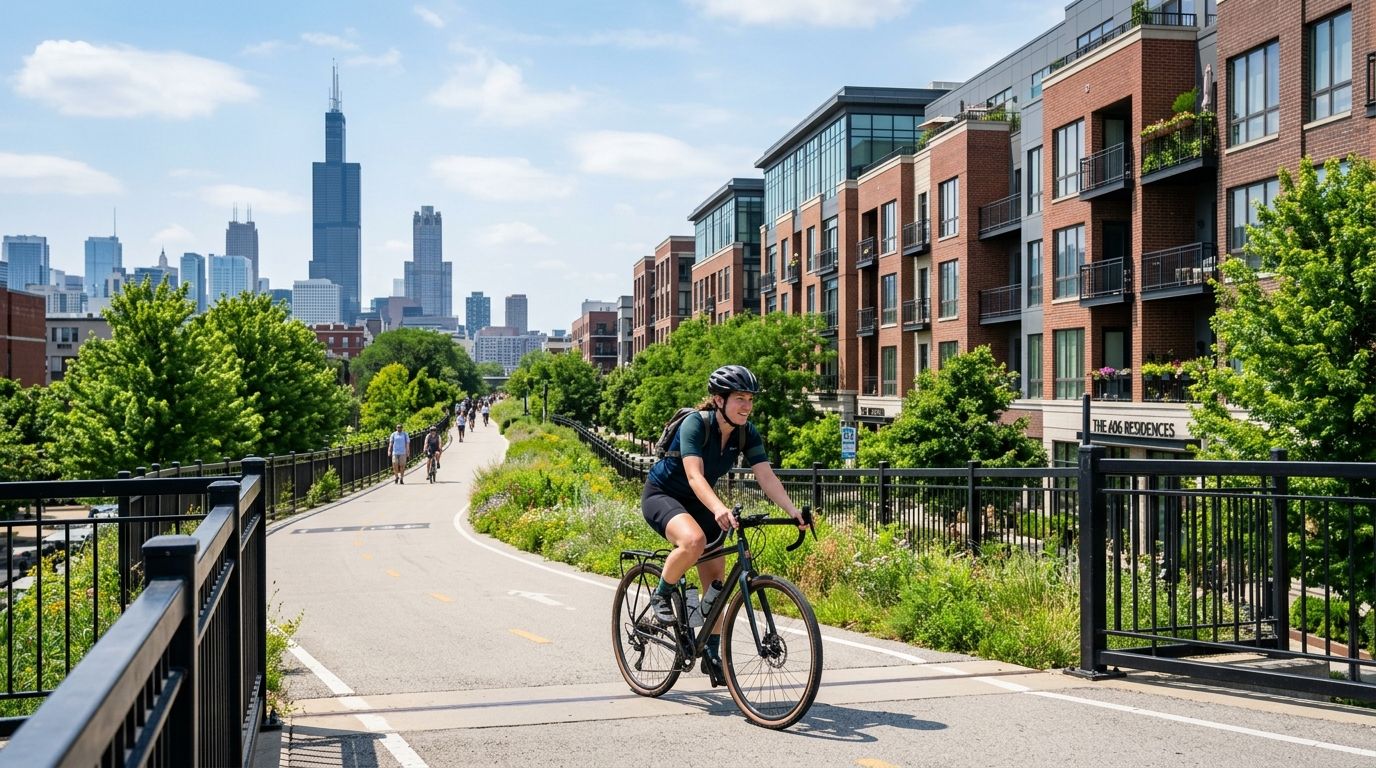
The 606 is a 2.7-mile elevated trail built on a former Bloomingdale rail line, running from Ashland Avenue near Wicker Park to Ridgeway Avenue in Logan Square. It's car-free the entire length, which is exactly why cyclists build a housing search around it instead of settling for "bike-friendly neighborhood" as a vague label.
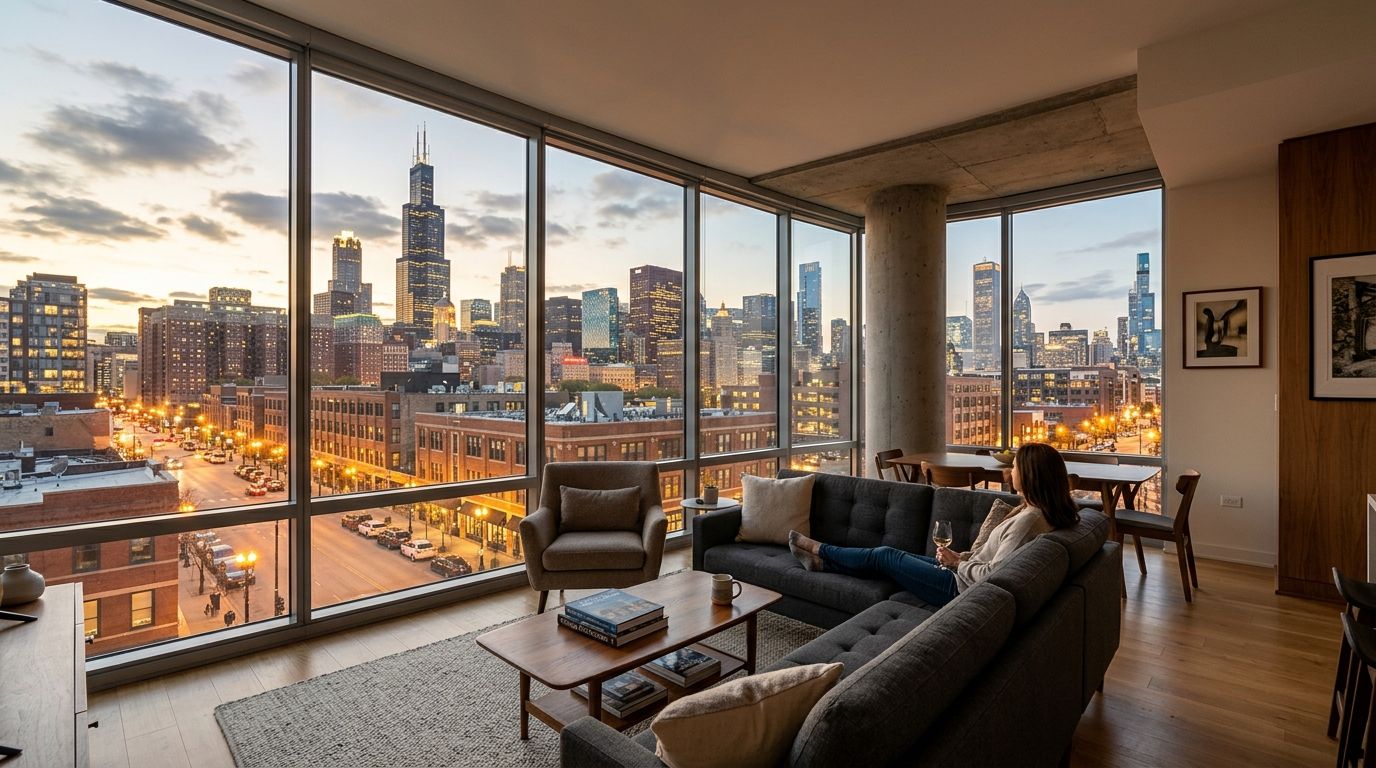
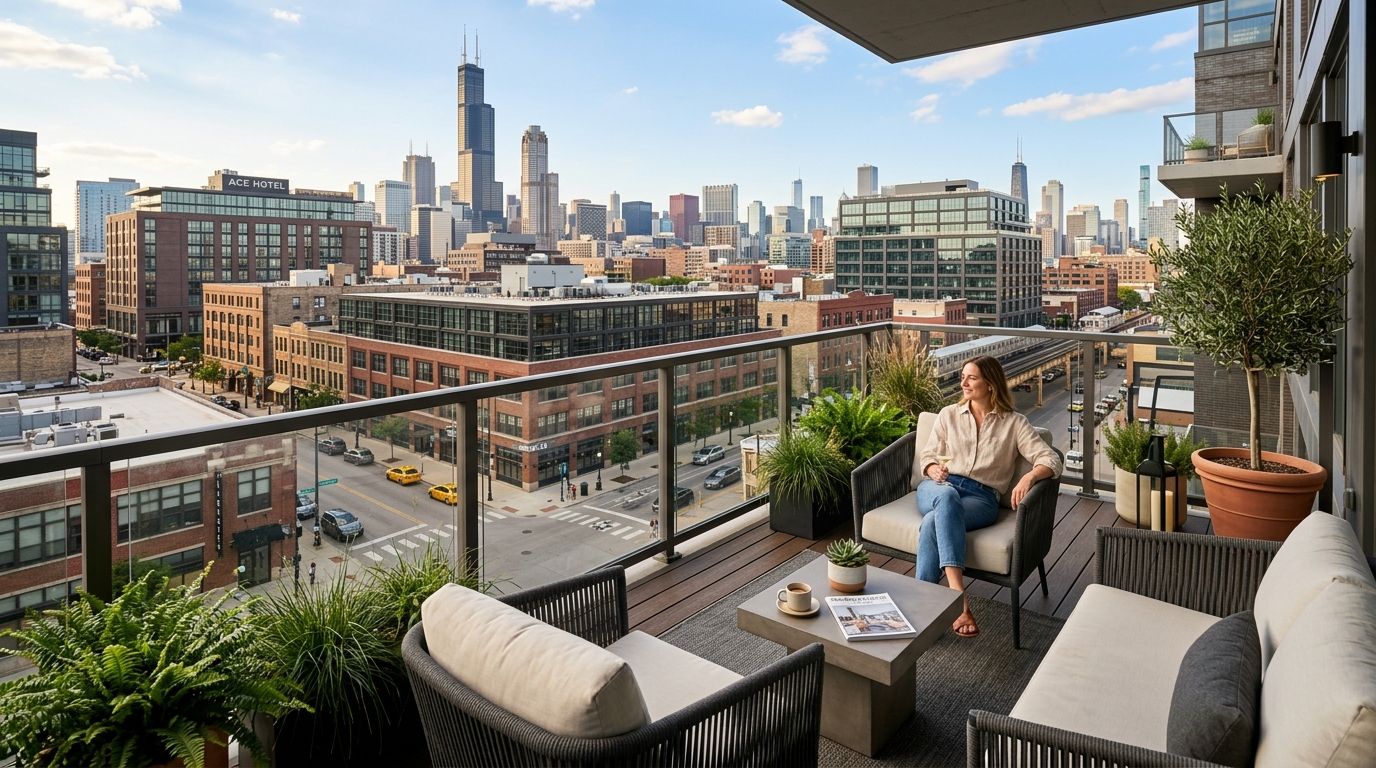
Stead 220, a 308-unit building at 220 N. Ada Street in Fulton Market, sits south of the trail's eastern access point rather than directly beneath it. That distinction matters more than most listings admit: a building marketed as "near the 606" that actually requires a 20-minute street ride isn't the same product as one with a five-minute connector. Bike storage at Stead 220 is built for renters who ride daily, whether that ride ends at the trail or at a Fulton Market office two blocks from home.
Cyclists searching this keyword aren't shopping on rent alone. They're shopping on whether the building's infrastructure — storage, elevators, charging outlets — matches how they actually move through the city in 2026.
Update your route map before you tour anything
Most listing sites show straight-line distance to the trail, which is close to useless for a cyclist who has to navigate stoplights, one-way streets, and construction detours.
- Pull up the actual bike route in mapping software, not the walking distance
- Ride or drive the route yourself at the time of day you'd actually commute
- Flag routes with more than two unprotected intersections
- Check whether the route crosses a CTA rail line, which adds wait time
- Note which streets get plowed first in winter, since an unplowed block kills a bike commute for weeks
Confirm real bike storage, not a rack in the lobby
A single wall-mounted rack near the mailboxes is not bike storage — it's decoration. Cyclists near the 606 need a room built for volume and gear.
- Indoor, secured storage separate from the general lobby
- Room sized for cargo bikes and trailers, not just road bikes
- Ground-floor or freight-elevator access, not a walk through a residential hallway
- A repair stand or basic tool station on site
- Enough capacity that storage isn't full by the time you tour
Check e-bike and scooter charging rules before you sign
Fire code restrictions on indoor lithium battery charging have tightened at buildings across Chicago, and they can quietly override an otherwise perfect location. Apartments built for e-bikes and electric scooters spell out charging access up front instead of leaving it to a lease addendum you find after move-in.
- Ask directly whether indoor charging is permitted, not just storage
- Confirm outlet access at the storage location itself
- Check weight limits on any elevator you'd use for a loaded cargo e-bike
- Ask if the building requires proof of UL-certified batteries
- Get charging and storage policy in writing, not verbally from a leasing agent
Test the freight elevator and loading dock
A cargo bike or a bike with a child seat doesn't fit through a standard passenger elevator gracefully, and high-rises without a freight option turn every ride into a hallway negotiation.
- Ride the freight elevator during your tour, not just the passenger one
- Ask about reservation systems for large moves and whether daily bike access needs one too
- Check loading dock hours if you plan to bring gear in and out regularly
- Confirm there's no separate fee for freight elevator use on move-in day
Price out going fully car-free
Dropping a car changes the math on rent, parking, and insurance all at once, and it's worth running the numbers before you assume proximity to the 606 makes car ownership optional.
- List every trip you currently take by car and map a bike or transit substitute
- Check winter viability — some routes that work in July don't work in February
- Factor in rideshare or car-share costs for the trips a bike genuinely can't cover
- Confirm building policy on guest parking if you occasionally need a car
Build a training-ride network beyond the trail
The 606 alone is 2.7 miles each way — cyclists who ride for fitness or long-distance training need connecting routes, not just the trail itself.
- Map connector paths to the lakefront or riverfront trail systems
- Check for protected bike lanes linking your building to the trail
- Ask other renters or building staff which routes they actually use
- Note seasonal closures that affect training consistency
Book a tour and ride the route yourself
A map is not a commute. Book a tour timed to when you'd actually ride, and treat the trip to and from the building as part of the evaluation, not an afterthought.
- Time the ride during your typical commute window, not midday
- Bring your own bike if the leasing office allows it
- Ask to see the storage room in person, not just photos
- Walk the freight elevator and loading dock path before deciding
Comparing housing options for cyclists near the 606
| Option | Best for | Key limitation |
|---|---|---|
| Stead 220 (Fulton Market) | Cyclists commuting to West Loop or Fulton Market jobs who want a connector ride to the trail | Not directly on the trail; requires a street ride through West Town |
| Wicker Park/Bucktown vintage walk-ups | Cyclists who want to walk straight onto the trail | Often no elevator, street-only bike parking, limited indoor storage |
| West Town/Noble Square mid-rises | Cyclists splitting time between the trail and Loop offices | Inventory is thin; many units are older conversions with dated storage |
| Humboldt Park courtyard buildings | Budget-focused cyclists riding the trail's western half | Fewer building amenities, longer ride to West Loop job clusters |
Stead 220 wins for cyclists who prioritize a Fulton Market address and building-grade bike infrastructure over literal trailhead adjacency.
See bike storage and floor plans in person
Tour Stead 220 in Fulton Market and check the ride to the 606 yourself.
Common mistakes Chicago cyclists make in this search
- Trusting "near the 606" as a marketing phrase. Some listings use it for anything within a mile, which can mean a 20-minute ride through unprotected intersections.
- Skipping the winter test. A route that's smooth in September can be unplowed and unrideable in January — plan for both seasons, not just the tour date.
- Renting for the view, not the storage. Trail-facing units are often the loudest, given runners and dog walkers, and a view doesn't fit a cargo bike indoors.
- Assuming all buildings allow indoor e-bike charging. Fire code interpretations vary by building in 2026, and finding out after signing is the expensive way to learn.
- Not testing the freight elevator. A five-minute freight elevator ride to street level beats a daily fight with a passenger elevator and a loaded bike.
FAQ
What's the best apartment near the 606 for Chicago cyclists in 2026?
There's no single building directly on the 606 in every neighborhood it passes — the trail runs through Wicker Park, Bucktown, and Humboldt Park. Stead 220 in Fulton Market is best for cyclists who want a West Loop address with a short connector ride to the trail's eastern end, not a doorstep-to-trail location.
How long is the 606 trail?
The 606 runs 2.7 miles from Ashland Avenue near Wicker Park to Ridgeway Avenue in Logan Square. It's built on a former elevated rail line and stays car-free its entire length.
Is Fulton Market close to the 606 trail?
Fulton Market sits south of the trail's eastern trailhead, connected by street riding through West Town rather than direct access. Cyclists commuting to Fulton Market or West Loop jobs treat it as a connector ride, not a doorstep location.
Do apartment buildings allow indoor e-bike charging?
Policies vary by building in 2026 due to fire code interpretations on lithium battery storage. Ask directly whether charging, not just storage, is permitted before signing a lease.
What should cyclists check on an apartment tour near the 606?
Ride the actual commute route at the time you'd use it, inspect the bike storage room in person, and test the freight elevator if you have a cargo bike or trailer. Map distance alone hides stoplights and unprotected intersections.
Is it possible to live car-free near the 606 in Chicago?
Many renters near the trail go car-free by combining the 606 with connecting bike lanes and CTA transit, though winter route reliability should be checked before committing. Map every regular car trip and confirm a viable substitute first.
What's the biggest mistake cyclists make apartment hunting near the 606?
Trusting listing language like "steps to the trail" without riding the route themselves. Distance on a map doesn't account for stoplights, unprotected crossings, or winter plowing.
Does Stead 220 have bike storage for cyclists?
Stead 220 is a 308-unit building in Fulton Market with bike storage built for daily riders, positioned as a connector location to the 606 rather than a direct-access building.
One last thing
The 606 was built on a decommissioned elevated freight rail line, which is why it runs straight and car-free for its full 2.7 miles instead of winding through intersections like a standard street-level path — the one structural advantage no apartment amenity can replicate, and the reason cyclists keep searching for buildings near it instead of just anywhere in Chicago.