Fulton Market sits on some of the flattest, most rideable ground in Chicago, and in 2026 that fact matters more to a cyclist than a granite countertop. Finding bike storage apartments in Fulton Market means checking for freight elevators and secure indoor space before you check the finishes.
- Stead 220 at 220 N. Ada Street sits blocks from Fulton Market's street-level bike lanes and Divvy stations — Buy for daily commuters.
- Bike storage apartments in Fulton Market need freight elevators and indoor space, not a rack bolted to a lobby wall.
- Studio and one-bedroom layouts fit a single rider with one bike; two-bedroom homes fit a cycling household with gear to spare.
- Fitness center apartments built around TechnoGym equipment give cyclists a place to cross-train through Chicago's winter months.
Why this matters
A bike is not a bag you tuck in a closet once and forget. It's daily equipment that gets wet, muddy, and heavy, and it needs a real path from the street to a dry, secure spot every single day of 2026. Buildings that treat bikes as an afterthought push riders into hallway parking, which damages floors, blocks exits, and eventually gets a bike towed or stolen. The apartments that get this right are the ones where storage, elevator access, and location were considered together, not bolted on after leasing started.
Who this is for
This guide is for renters who ride to work, to the Lakefront Trail, or just to Fulton Market's restaurant row on weekends, and who are comparing Stead 220 against other buildings in the neighborhood. If you own one commuter bike and a rain jacket, the criteria below still apply, but they matter even more if you're a two-bike household or you're hauling a cargo bike home from work.
What to look for in bike storage apartments for cyclists in Fulton Market
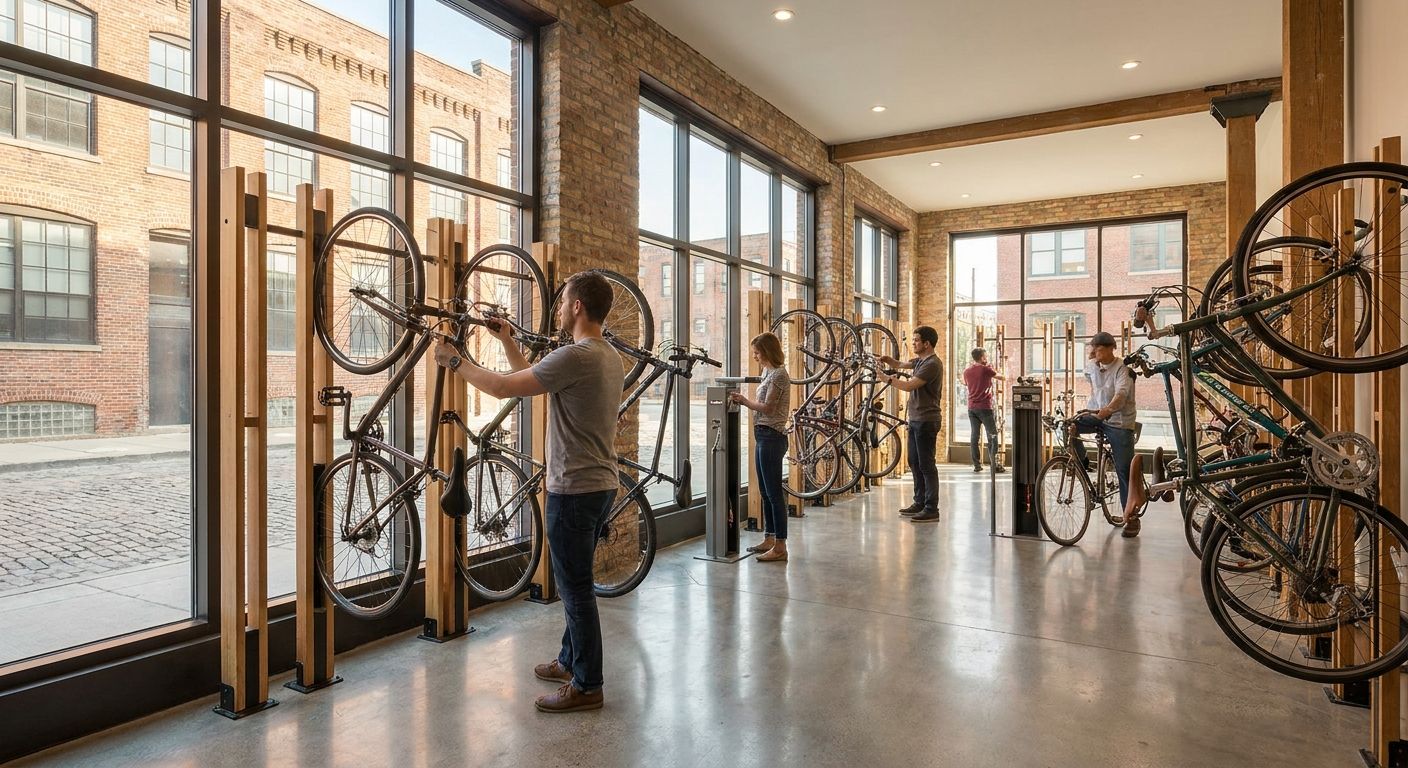
Indoor, weatherproof storage
Chicago winters are hard on drivetrains and hard on hallway paint. A bike stored outdoors or in an uncovered rack corrodes faster and gets stolen more often than one kept indoors, so the first filter for any apartment search in 2026 should be whether storage is fully enclosed. If a listing only mentions a rack near the entrance, ask what happens to that bike in January.
Freight elevator or wide door access
Carrying a 25-pound frame through a narrow stairwell scratches oak hardwood floors and dents Italian wardrobes before you've unpacked a single box. A freight elevator or a service entrance built for equipment, not just people, protects both your bike and the building's finishes. Ask specifically how bikes move from the street to storage, not just whether storage exists.
Proximity to bike lanes and trails
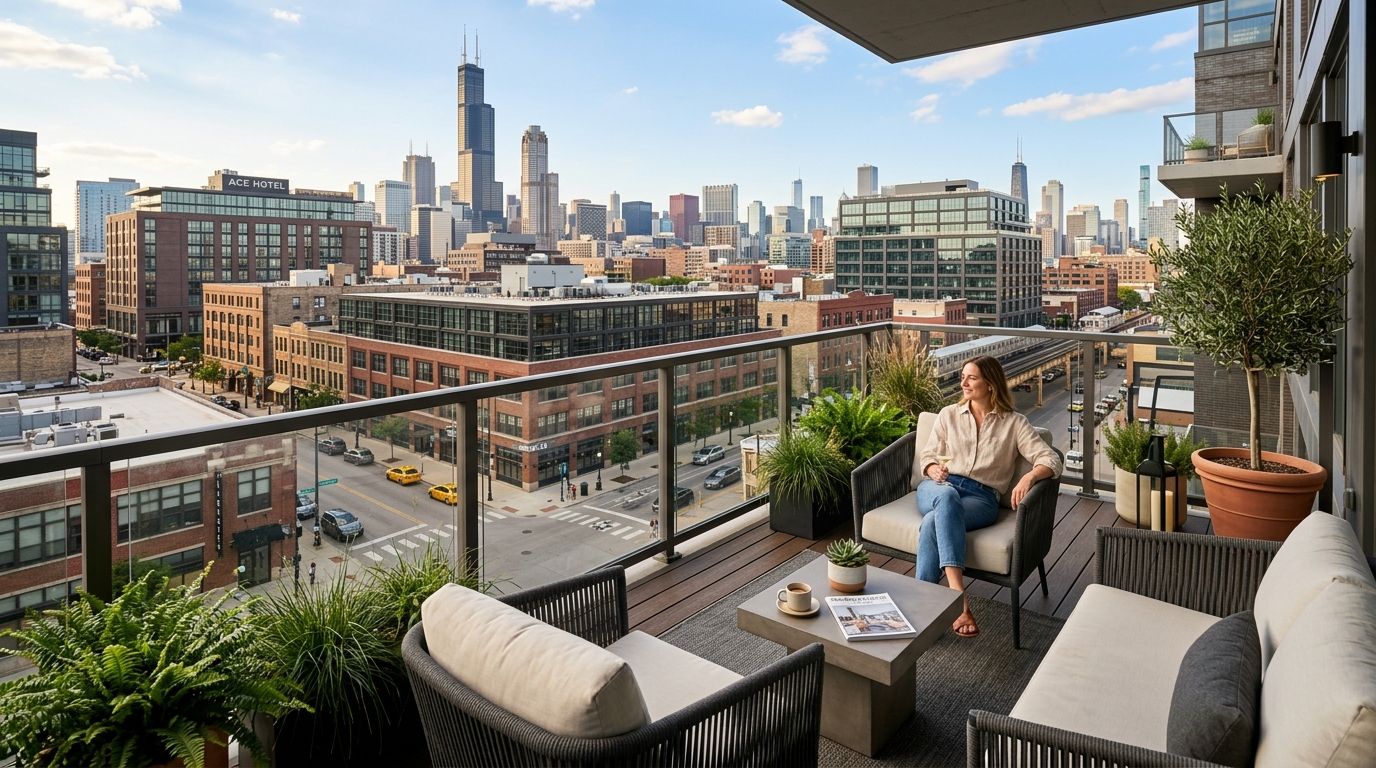
Fulton Market connects easily to the Lakefront Trail and to the protected lanes running through the West Loop, and that geography is the actual reason to live here as a rider. An apartment three blocks from a protected lane saves real time every single commute in 2026 compared to one that dumps you onto Kennedy Expressway frontage roads.
Cross-training amenities
Cyclists still need strength and mobility work, especially through Chicago's shoulder seasons when outdoor miles drop off. A fitness center built around cross-training equipment means you're not paying for a separate gym membership just to keep your legs ready for spring.
Package and gear handling
Bike parts ship constantly, tires, chains, cleats, and a building without a real package system means missed deliveries or gear left in a lobby. This matters more for cyclists than almost any other renter type, since a $60 derailleur left unattended for a weekend is a real loss.
Compare Floor Plans Before You Lease
Studios to two-bedroom homes at 220 N. Ada Street, available now for 2026.
Top picks: which floor plan actually works for cyclists
The solo commuter's pick. A studio floor plan works for one rider with one bike and a smaller footprint to manage. The tradeoff is real: there's no spare room for a second bike or a repair stand, so this is the right call only if you're riding alone. Verdict: Buy if you're a single commuter who rides one bike and doesn't need a workspace for maintenance.
The pairs pick. A one-bedroom layout gives a couple or a roommate pair enough separation that gear doesn't pile up in the living room, while still keeping the lease size manageable. It's a reasonable middle ground, but two riders with two bikes and winter gear will feel the walls close in by month three. Verdict: Consider if both riders are light on gear; Skip if either of you owns a second bike or a trainer setup.
The cycling household's pick. A two-bedroom floor plan gives a household with multiple bikes, a trainer, and off-season gear the flex space that smaller units can't offer. It costs more per month, but for a two-cyclist household in 2026, the extra room pays for itself in avoided clutter and fewer scratched walls. Verdict: Buy for households with more than one active rider.
What to avoid
- A building that advertises "bike storage included" but the storage is a shared garage on the far side of the property. If the walk from storage to your unit is longer than the walk from your unit to the street, it defeats the purpose.
- Studios with no coat closet. If there's no dedicated storage for outerwear, a bike and its accessories end up in the living room, not because the unit lacks charm, but because it lacks a place to put things.
- Outdoor-only racks in a city with real winters. Salt, slush, and wind exposure shorten a drivetrain's life fast, and Chicago's 2026 winter won't be gentle on an uncovered bike.
“A bike leaning against a lobby wall isn't storage. It's a scratch waiting for a lease violation.”
Verdict comparison
| Floor plan | Best for | Storage approach | Verdict |
|---|---|---|---|
| Studio | Solo commuter, one bike | Compact closet, minimal gear space | Buy for single riders |
| One-bedroom | Two riders, light gear | Shared closet space, tighter fit | Consider case by case |
| Two-bedroom | Cycling household, multiple bikes | Flex room for bikes and off-season gear | Buy for households |
FAQ
What's the best neighborhood in Chicago for cyclists in 2026?
Fulton Market and the surrounding West Loop rank among Chicago's flattest, most bike-connected neighborhoods, with direct access to protected lanes and the Lakefront Trail. The flat terrain and short blocks make daily commuting by bike faster than driving in most cases.
Is Fulton Market bike-friendly?
Yes, Fulton Market has street-level bike lanes and multiple Divvy stations within the neighborhood. Its proximity to the West Loop and downtown makes it a common commuter route for riders working in the Loop or Fulton Market's office corridor.
Do apartments in Fulton Market offer secure bike storage?
It varies building by building, so ask specifically whether storage is indoor, weatherproof, and accessible by freight elevator. A rack near the front door is not the same as secure storage, and the difference matters through a Chicago winter.
How much does a bike storage apartment cost in Fulton Market?
Pricing depends on floor plan and lease term, so check current availability directly with the leasing office for exact 2026 numbers. Studios typically run lower than one- and two-bedroom homes with more storage flexibility.
Is a studio or one-bedroom better for a cyclist?
A studio works for a single rider with one bike and minimal gear, while a one-bedroom gives a bit more breathing room for two people. Households with more than one bike or seasonal gear generally need a two-bedroom to avoid clutter.
How close is Stead 220 to bike lanes in Fulton Market?
Stead 220 sits at 220 N. Ada Street in Fulton Market, within blocks of the neighborhood's street-level bike lanes and Divvy stations. That location puts riders close to both the West Loop office corridor and the Lakefront Trail.
What amenities help cyclists cross-train indoors?
A fitness center with strength and cardio equipment lets riders maintain conditioning through Chicago's colder months without a separate gym membership. TechnoGym equipment covers both strength work and low-impact cardio for active recovery.
Should I avoid apartments with outdoor-only bike racks in Chicago winters?
Yes, outdoor-only racks expose a bike to salt, slush, and wind that shorten drivetrain life fast. Indoor, weatherproof storage protects the bike and reduces theft risk through the winter months of 2026.
One last thing
The detail most renters skip: ask how a bike actually travels from the street to storage, step by step, before you sign anything in 2026. A building can advertise "bike storage" and still route every rider through a narrow stairwell that scratches oak hardwood floors and dents wardrobe finishes on the way in. Walk the actual path yourself during a tour instead of taking the leasing office's word for it.