Living without a car in Fulton Market means trading a parking spot for a five-minute walk to almost everything you need, and in 2026 that trade works better here than in most Chicago neighborhoods. This guide covers the transit, delivery, and daily-routine setup that makes car free living fulton market chicago apartment life realistic instead of aspirational.
- Car free living fulton market chicago apartment life works because Morgan Street CTA, Divvy docks, and restaurant row sit within walking distance.
- Stead 220 residents cut driving errands using package lockers, an in-building fitness center, and coworking space onsite.
- Winter is the real test of car free living in Chicago — plan Metra and rideshare backups before December, not during a snowstorm.
- Moving in without a car takes different logistics than moving in with one — book a freight elevator slot, not a parking spot.
Why this matters
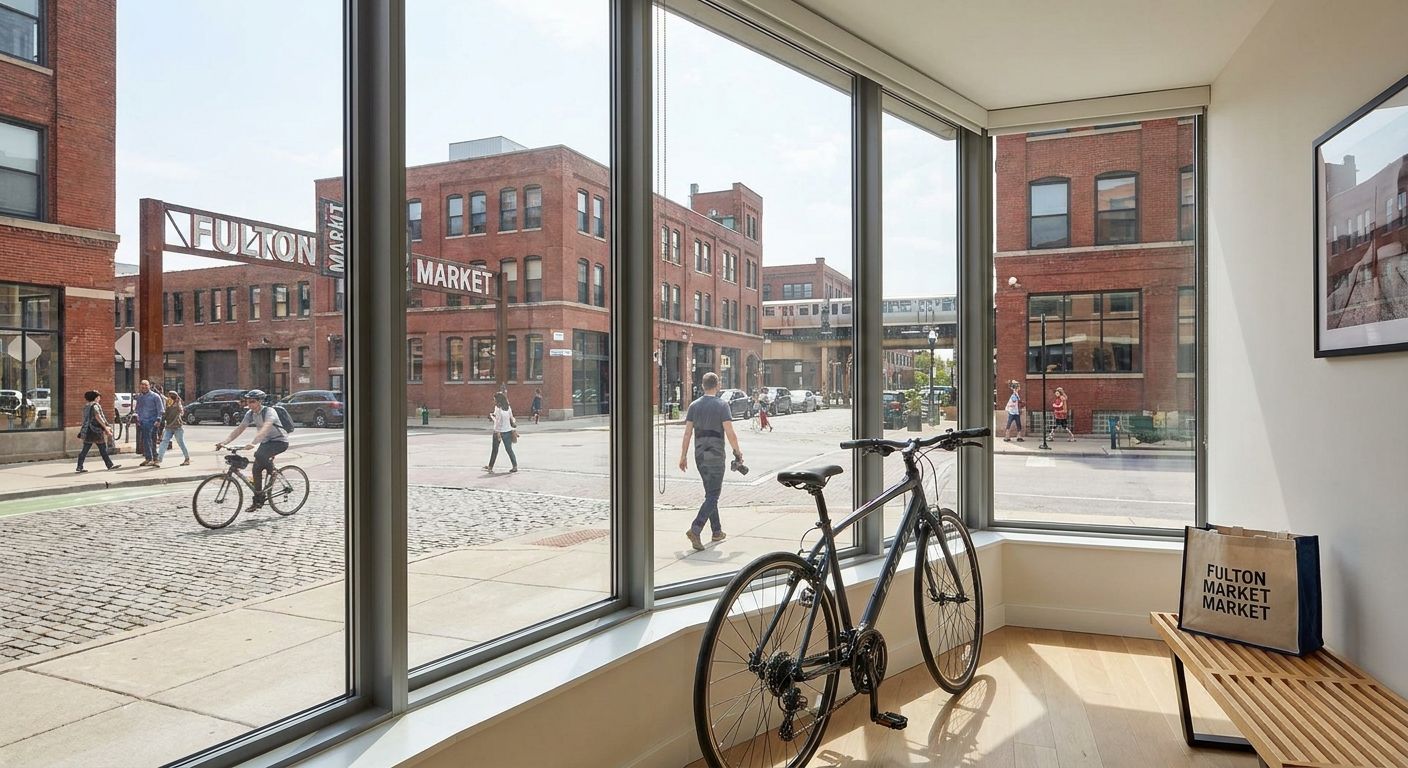
Fulton Market was built around foot traffic before it was built around apartments. Restaurant row, the Google Chicago office, and the Morgan Street CTA stop on the Green and Pink Lines all sit inside a walkable core, which is why more renters are asking whether they need a car at all before they sign a lease in 2026.
Giving up a car in Chicago also removes a real cost line — parking, insurance, gas, and maintenance — without giving up access to work, food, or a gym. The apartments at Stead 220 sit at 220 N. Ada Street, close enough to that walkable core that the building itself becomes part of the car-free plan: rooftop pool instead of a country club drive, in-house fitness equipment instead of a commute to a gym.
The hard part isn't deciding to go car free. It's building the small systems — deliveries, groceries, bad-weather days — that make it sustainable past the first month.
What you'll need
- A CTA Ventra card or app account (Green and Pink Line access via Morgan)
- A Divvy membership for short trips restaurant row and errands don't cover on foot
- A rideshare app for late nights and severe weather
- A grocery delivery or pickup account, since hauling multiple bags on foot gets old fast
- A package locker or secure delivery setup — online shopping fills the gap a trunk used to
- A plan for large purchases (furniture, appliances) that need delivery, not a car trip
The steps
1. Map your walkable radius first
Before canceling anything, walk the actual routes you'd take to work, groceries, and the gym. Fulton Market's restaurant row and the retail along Randolph and Lake sit close enough to most Fulton Market buildings that a fifteen-minute walk covers dinner, coffee, and a pharmacy run. Do this mapping in daylight and in bad weather once, so you know the honest version of the walk, not the optimistic one.
Common mistake: mapping only the summer walk. Chicago winters change what's reasonable on foot, so test the route in January conditions mentally before you commit.
2. Set up transit before move-in day
Load a Ventra card or app with fare before your first week, and register for Divvy the same day. The Morgan CTA stop on the Green and Pink Lines puts the Loop within a short ride, which matters if your job isn't a walk from Fulton Market. Test the ride during a normal commute window in 2026, not on a Sunday, since weekday frequency and crowding are what you'll actually live with.
3. Replace car errands with delivery and lockers
The single biggest driver of "I need a car" thinking is grocery and package hauling. A package locker apartment setup removes the missed-delivery problem entirely — online orders sit secured until you're home, no trunk required. Pair that with a grocery delivery subscription for the heavy weeks and reserve walking trips for smaller runs.
Expected outcome: most car free living fulton market chicago apartment residents report that lockers and delivery, not the car itself, were the actual daily friction point — solve that first.
4. Build a fitness routine that doesn't require driving
A drive to the gym is one of the more common reasons people keep a car they otherwise don't need. Using fitness center apartments built for runners removes that trip entirely, and a rooftop pool covers the warm-weather months without a membership drive across town. TechnoGym equipment in-building means the workout happens on the way from the elevator, not the parking garage.
5. Rework your work-from-home or hybrid setup
If your job is hybrid, the days you work from the apartment shouldn't require a car trip to a coffee shop for focus. A coworking space setup inside the building gives freelancers and hybrid employees a change of scenery without leaving Fulton Market at all. This is the step people skip and then regret by month three, when cabin fever quietly becomes the argument for a car.
Common mistake: assuming the in-unit desk will always feel like enough. It won't every day — build the onsite alternative into your routine from week one.
6. Plan the bad-weather and big-purchase exceptions
Car free doesn't mean car-never. Keep a rideshare app ready for ice storms and late nights, and budget for delivery fees on furniture or appliance purchases instead of a car rental. In 2026, most Chicago rideshare and delivery options handle these edge cases cheaper than a monthly parking spot would cost anyway.
7. Recalculate the savings after 60 days
Track what you're not spending on gas, insurance, and parking for two months. Most renters underestimate this number until they see it written down — it's usually the single best argument for staying car free past the first lease renewal.
“The car is optional in Fulton Market; the fitness center and rooftop pool are not.”
Troubleshooting
- Groceries pile up faster than you can carry them. Switch to twice-weekly delivery instead of one big weekly haul — smaller, more frequent orders beat one heavy walk home.
- Winter makes the walk to Morgan feel long. Layer in a rideshare budget for January and February specifically; treat it as a seasonal cost, not a failure of the plan.
- Packages go missing without a doorman. A package locker apartment setup solves this directly — it's the most common reason renters give up on car-free living prematurely.
- You miss a gym you used to drive to. Give the in-building fitness center 30 days before judging it; most equipment gaps close once you adjust your routine.
- Guests assume you have parking. Tell visitors upfront to use rideshare or nearby garages — don't let their expectations pull you back into car ownership.
- Moving day without a car feels harder, not easier. Book professional movers or a freight elevator slot in advance; car-free moving is a logistics problem, not a car problem.
See car-free floor plans at Stead 220
Studios to two-bedroom homes steps from Fulton Market's restaurant row.
Tools and resources
- Ventra app for CTA fare and trip planning
- Divvy app for short bike trips around Fulton Market
- A grocery delivery subscription for heavier hauls
- Package locker apartments for online shoppers to remove the missed-delivery problem
- Fitness center apartments for runners to replace the gym commute
- Coworking space apartments for freelancers for hybrid work days
What to do next
Once the transit and delivery systems are running, the last piece is picking a home base that shortens every one of these trips further. Apartments near Fulton Market restaurant row puts dinner, coffee, and errands inside the same walk you'd take to the CTA — read that guide next if location is still the open question in your car-free plan for 2026.
FAQ
Can you live car free in Fulton Market Chicago?
Yes, car free living fulton market chicago apartment life is realistic because the Morgan CTA stop, Divvy docks, and restaurant row all sit within walking distance. The main adjustments are grocery delivery and a winter transit backup.
What CTA lines serve Fulton Market?
The Morgan Street station serves the Green and Pink Lines, connecting Fulton Market to the Loop and beyond. It sits within Fulton Market's walkable core, which is why many residents skip car ownership entirely.
Is Fulton Market walkable without a car?
Fulton Market is one of Chicago's more walkable neighborhoods, with restaurant row, retail, and CTA access clustered close together. Most daily errands — food, coffee, pharmacy — fall within a fifteen-minute walk from most buildings in the area.
How do you handle deliveries without a car in an apartment?
Package locker apartments solve the delivery problem directly by holding items securely until you're home. This removes the trunk-storage habit that keeps many renters attached to car ownership.
Do you need a car for groceries in Fulton Market?
No — grocery delivery and pickup services cover most needs, and smaller, more frequent orders work better on foot than one large weekly haul. Divvy or a short walk covers quick top-up trips.
What do you do for exercise without driving to a gym?
Buildings with an in-house fitness center and TechnoGym equipment remove the gym-commute problem entirely. A rooftop pool covers warm-weather months without a separate membership drive.
How much do you save going car free in Chicago?
Savings vary by household, but renters typically track the change by comparing two months without gas, insurance, and parking costs against two months with them. Most find the difference significant enough to skip renewing a lease on a parking spot.
Is Fulton Market good for people who work from home?
Yes — coworking space inside the building gives hybrid and remote workers a change of scenery without a car trip across town. This matters most for people who find a single desk isn't enough five days a week.
One last thing
The part renters underestimate isn't the transit or the walking — it's the psychological shift of not defaulting to "drive there" for small decisions. Give the routine 60 days before judging whether car free living fulton market chicago apartment life works for you; most of the friction disappears by week three, once delivery, transit, and the building's own amenities become habit instead of a workaround.