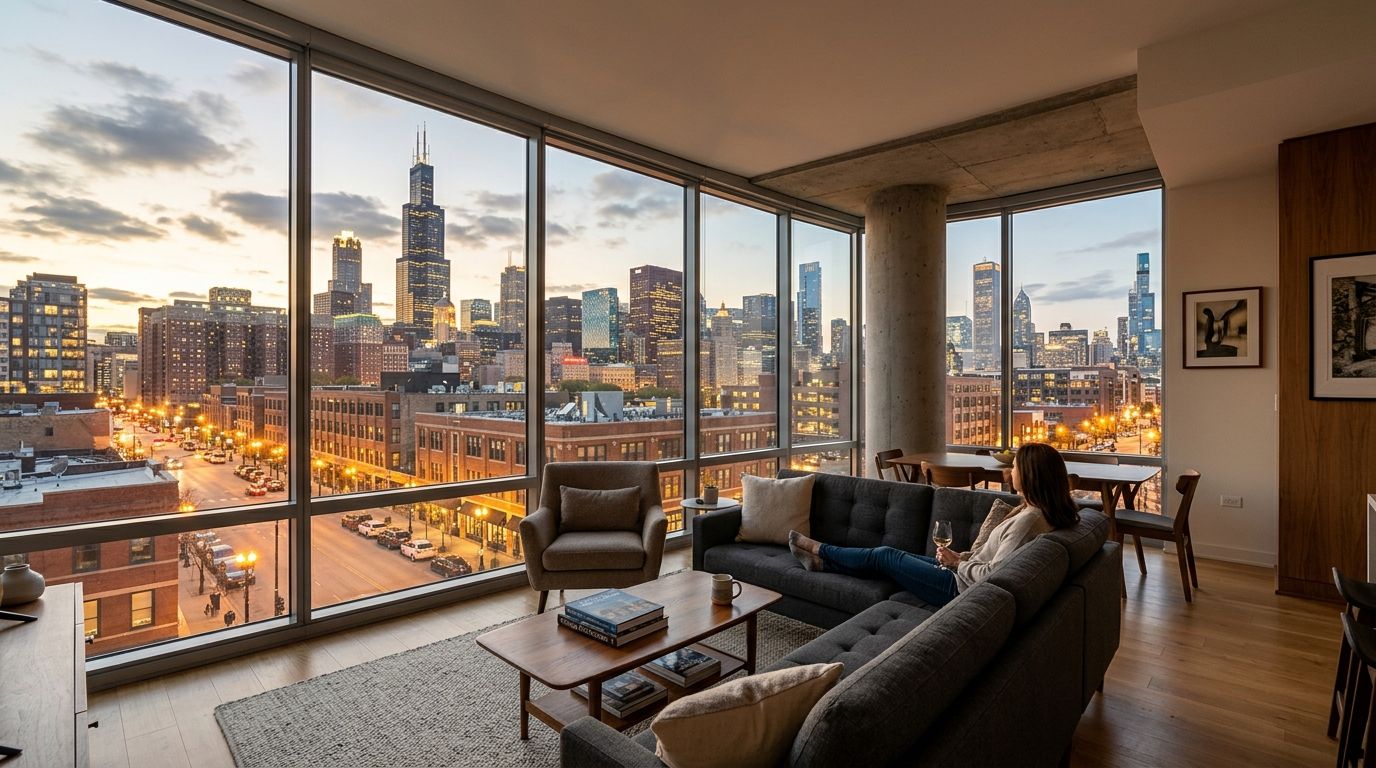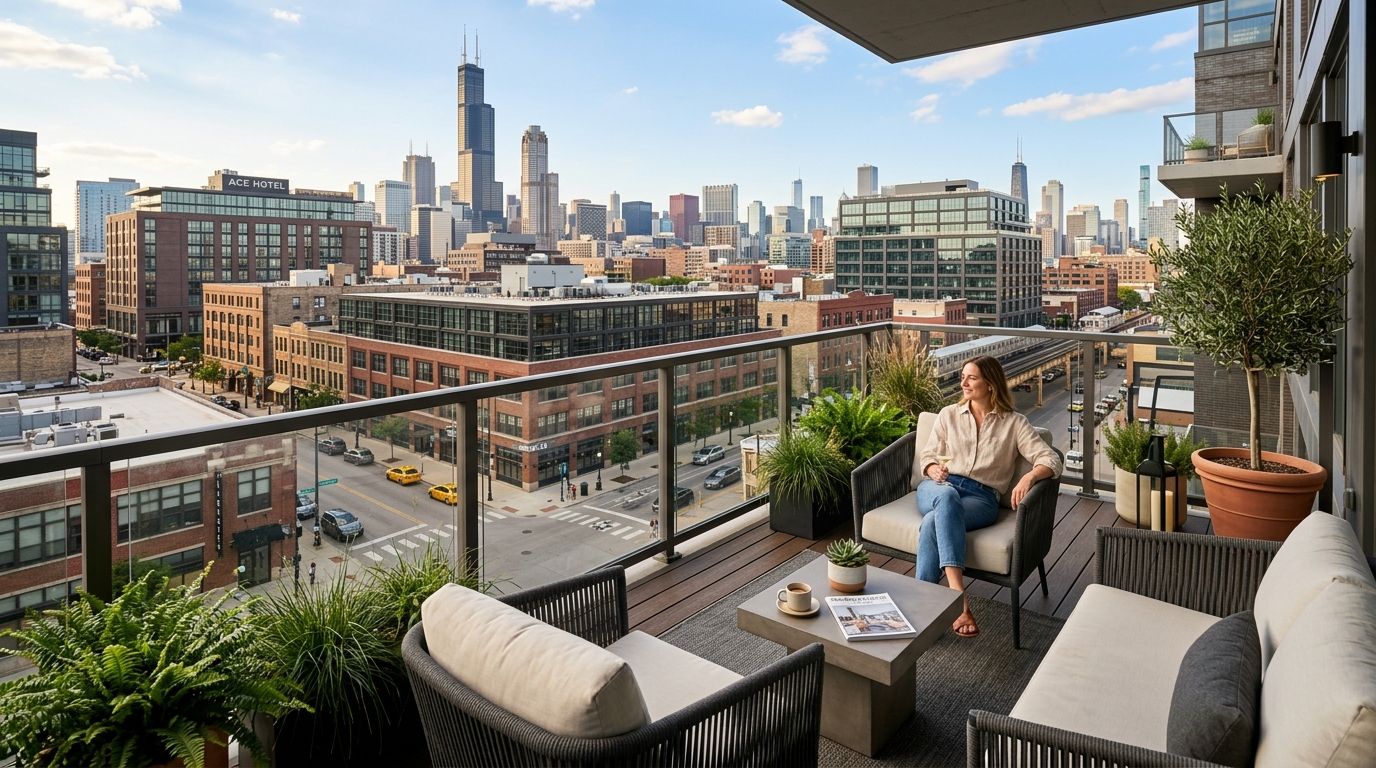
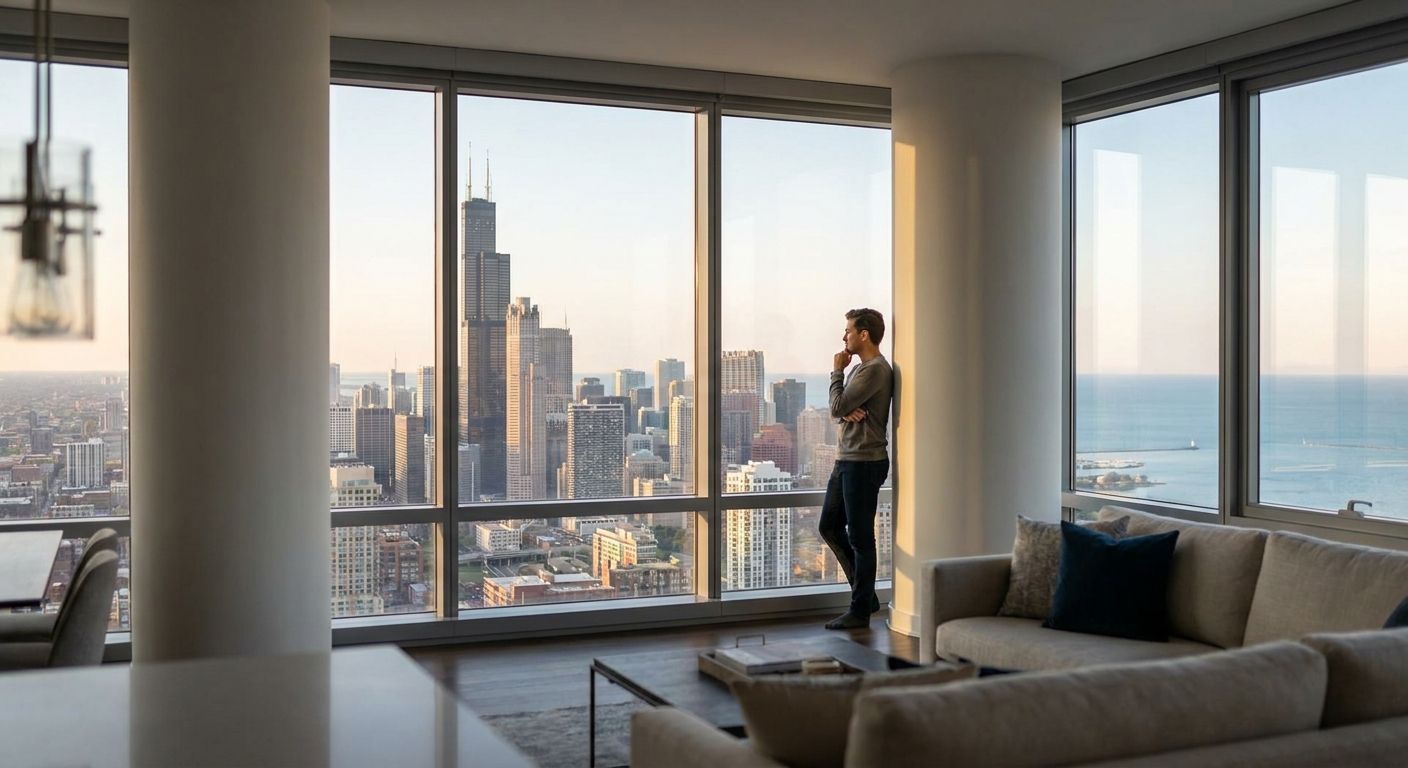
Picking a floor in a Fulton Market high rise changes your daily routine more than picking a neighborhood does. Street noise, sun angle, elevator lines, and view lines all shift by the level, and Chicago's high-rise stock varies more than most renters expect.
- Choosing a high rise apartment floor in Chicago comes down to noise, light, elevator wait, and view sightlines.
- Floors above the treeline and street noise band generally run quieter in Fulton Market — worth the premium if you work from home.
- West-facing units catch sunset light over the Loop skyline; east-facing units get morning light with less glare.
- Elevator wait time matters more on floors served by a single bank during 8-9am peak departures.
- Ask for a floor plan grid before touring — it saves two or three wasted visits in 2026's tight Fulton Market market.
Why this matters
A high rise in Fulton Market isn't a uniform stack of identical units. The building's lower floors sit closer to restaurant traffic, delivery trucks, and street-level foot traffic along Ada Street, while upper floors trade that noise for stronger skyline view apartments and quieter nights.
Rent premiums for higher floors are real in 2026's Fulton Market market, so the floor you pick is a budget decision as much as a lifestyle one. Get the criteria straight before you tour, and you'll stop touring units that look identical on paper but feel completely different in person.
What you'll need
- A list of your daily non-negotiables: noise tolerance, sun exposure preference, work-from-home schedule
- A floor plan grid from the leasing office showing which units sit on which floors and facing directions
- Two tour slots at different times of day — morning and evening — for the same unit or stack
- A budget range that includes the floor premium, not just the base rent
- 30-45 minutes per tour if you want to actually stand at the window and listen
The steps
1. Decide what view actually matters to you
Skyline views, courtyard views, and street views are not interchangeable, and confusing them wastes a tour. A skyline-facing unit toward the Loop rewards you every evening at sunset in 2026, but a courtyard-facing unit on the same floor can be dead quiet with zero view.
Stand in the room, not the hallway, before you decide. Photos taken from a listing rarely show what's directly across the street, and Fulton Market has active construction that can block a view within a year or two.
Common mistake: picking a unit based on a marketing photo shot with a wide-angle lens rather than what you'll actually see from eye level at the window.
2. Test street noise at the actual floor, not the building average
Fulton Market carries restaurant and nightlife noise well past 11pm on weekends, and that sound travels upward more than most renters assume. A unit on a low floor facing a bar-heavy block will hear more bass and voices than a unit on the same block ten floors up.
Ask the leasing team about window glazing on the floor you're touring — dual-pane glass cuts noise more than single-pane, and older buildings sometimes mix glazing types by floor. If you work from home and take calls, this single detail matters more than square footage.
Common mistake: touring only during a quiet weekday afternoon and never hearing what the block sounds like at 10pm on a Friday.
3. Map elevator wait time against your actual schedule
A 20th-floor unit sounds appealing until you're standing in a lobby at 8:15am with everyone else on your elevator bank. Buildings with a single elevator bank serving high floors can add five to ten minutes to a morning commute during peak departure windows.
Ask how many elevator banks serve the floor you're considering, and whether high floors and low floors share a bank or split into separate zones. This is a five-minute question that saves months of frustration.
Common mistake: assuming elevator speed is uniform across a building when older or larger buildings often split banks by floor range.
4. Weigh sun exposure and facing direction
East-facing units in Chicago catch direct morning light and warm up fast, which matters if you work early or keep plants. West-facing units get late-afternoon and sunset light, along with more glare on a hot July afternoon in 2026.
Oak hardwood floors and lighter finishes show sun fading faster on a west-facing unit with all-day exposure, so ask about window treatments if that's a concern. North-facing units stay coolest and most even, which some renters prefer for sleep quality over view drama.
Common mistake: picking a unit for its view without asking which direction it faces, then discovering the afternoon sun makes the living room unusable without blinds.
5. Price the floor premium against your actual budget
Higher floors in Fulton Market carry a rent premium that can run into real money over a 12-month lease. Before you fall for a 25th-floor skyline view, ask the leasing office for the exact rent difference between that unit and a comparable layout five or ten floors lower.
Sometimes the jump from floor 15 to floor 20 costs more than the jump from floor 20 to floor 25, because that's where the building's marketed view line starts. Ask for the full floor-by-floor pricing grid instead of guessing.
Common mistake: budgeting for the base rent shown online and getting surprised by the floor premium once you're at the leasing table.
6. Factor in proximity to the amenities you'll actually use
If a rooftop pool and a fitness center are part of your daily routine, floor location changes how often you'll use them. A unit close to the amenity floor means fewer excuses to skip a workout, while a unit far from it adds friction on busy weeks.
Someone who swims regularly should look at rooftop pool apartments with faster access to the deck, and a daily runner benefits from fitness center apartments built for runners with equipment like TechnoGym machines close to the elevator bank they use most.
Common mistake: treating amenity proximity as a nice-to-have instead of weighing it the same way you'd weigh a commute.
7. Check sightlines against neighboring construction
Fulton Market has added new towers steadily through the 2020s, and a clear skyline view today can be partially blocked within a lease term or two. Ask the leasing office directly whether any approved construction sits in the sightline of the unit you're considering.
This is a question most renters never ask, and it's the single biggest reason a great view turns disappointing by year two.
Common mistake: assuming a current view is permanent in a neighborhood still under active development in 2026.
Compare floor plans before you tour
See available units by floor, facing, and amenity access at Stead 220.
Troubleshooting
- Unit feels noisy despite being on a high floor. Ask about window glazing type — some floors in older buildings mix single-pane and dual-pane windows, and glazing matters more than height alone.
- Elevator wait is longer than expected on a high floor. Ask if the floor shares an elevator bank with lower floors or has a dedicated high-rise bank; split banks cut wait time significantly.
- View is partially blocked by a neighboring building. Request the building's sightline diagram before signing — this shows what's currently built and what's approved nearby.
- Afternoon sun makes a west-facing unit too hot or bright. Ask about blackout shades or window film availability rather than ruling out the unit entirely.
- Budget doesn't stretch to the floor you want. Trade a few floors of height for a better layout or more square footage — the price difference often buys more space than view.
- Can't tell what a floor sounds like from a daytime tour. Ask the leasing team if you can do a short evening walkthrough, or drive by the block after 9pm before signing.
Tools and resources
- Floor plan grid from the leasing office, organized by floor and facing direction
- A notes app to log noise, light, and elevator wait during each tour
- The building's rooftop pool apartments page for amenity-floor context
- A second tour scheduled for a different time of day than your first
What to do next
Once you've narrowed a floor range, look at layout-specific guides for your unit type — a two-bedroom apartment for roommates has different floor priorities than a studio built for one person working from home.
FAQ
What floor is best for noise in a Chicago high rise?
Floors above the street noise band, generally higher than the surrounding rooflines, run quieter in Fulton Market. Ask about window glazing too, since that affects noise as much as height.
Do higher floors cost more in Chicago apartments?
Yes, higher floors typically carry a rent premium tied to view and quiet. Ask for the exact floor-by-floor pricing grid rather than assuming a flat per-floor increase.
How do elevator wait times affect high floor apartments?
Buildings with a single elevator bank serving high floors can add several minutes to a morning commute during peak departure windows. Ask whether high and low floors share a bank.
Is a west-facing or east-facing unit better in Chicago?
East-facing units get direct morning light with less afternoon glare, while west-facing units catch sunset light and more heat in summer. Pick based on your schedule and heat tolerance, not just the view.
What floor should I choose near Fulton Market nightlife?
Choose a floor well above street level and confirm window glazing if your block has bars or restaurants nearby. Nightlife noise in Fulton Market carries upward more than most renters expect.
Do apartments near a rooftop pool cost more?
Units closer to amenity floors sometimes carry a small premium tied to convenience, not just view. Ask the leasing office directly for the price difference by proximity.
How many units should I tour before choosing a floor?
Tour at least two floors in the range you're considering, ideally at different times of day. A single daytime tour won't show you evening noise or elevator congestion.
Is a lower floor apartment worth it in a Chicago high rise?
Lower floors often cost less and can still work well if the unit faces a quiet courtyard rather than a busy street. Price and quiet matter more than floor number alone.
One last thing
Most renters ask about the view and skip the sightline question entirely. Fulton Market has added towers steadily through the 2020s, and asking the leasing office what's approved for construction nearby is the one question that protects a great view from turning into a wall in 2026 or 2027.