Fulton Market's restaurant row and late-night bar corridor push real noise into apartments after dark, and the fix isn't a single product — it's picking the right unit, then layering window upgrades with interior fixes. Combine floor height, window rating, and a couple of retrofits, and most street-level nightlife noise drops to a level you stop noticing by month two.
- Cutting noise from Fulton Market nightlife means combining unit selection, window upgrades, and interior fixes, not one product alone.
- Windows rated STC 35 or higher block far more street noise than standard double-pane glass rated STC 26-28.
- Interior-facing or higher-floor units sit farther from restaurant row's street-level noise than ground-facing units.
- Soundproof curtains, door sweeps, and a white noise machine close the remaining gap after windows are handled.
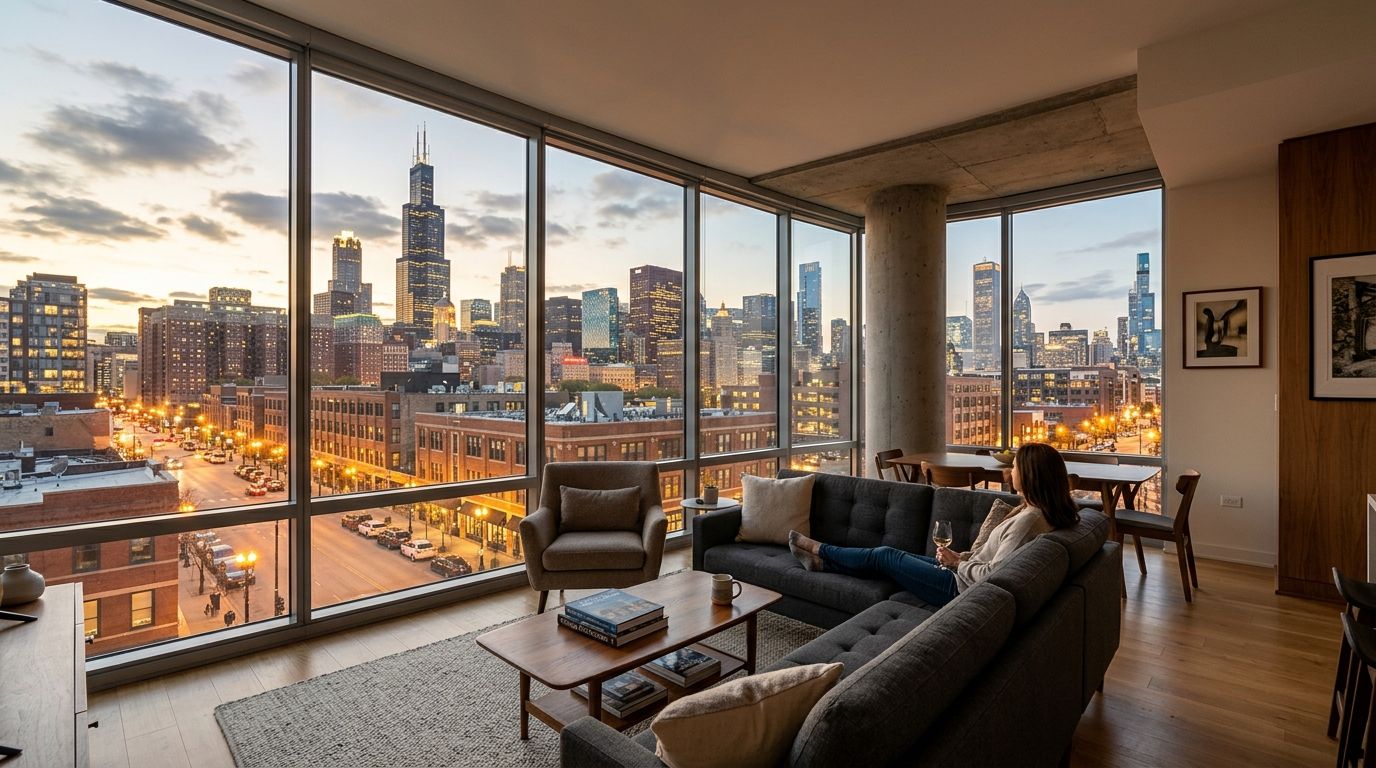
- Stead 220 in Fulton Market offers floor plan orientations that let renters choose exposure away from the loudest blocks.
Why this matters
Fulton Market's restaurant row runs later every year — more liquor licenses, more rooftop bars, more foot traffic spilling onto Randolph and Fulton after 10pm. That's the tradeoff for living somewhere walkable in 2026: the same density that puts a dozen restaurants within five minutes also puts bass and sidewalk chatter under your window.
Renters who ignore this at lease signing end up either living with earplugs or breaking a lease early over noise they could have screened for. Stead 220 sits inside that same corridor, and the noise question comes up on nearly every tour — which is exactly why unit orientation and window spec matter more here than square footage.
How to reduce noise from Fulton Market nightlife indoors
The order below matters. Skipping straight to a white noise machine without addressing the window is treating a symptom, not the source.
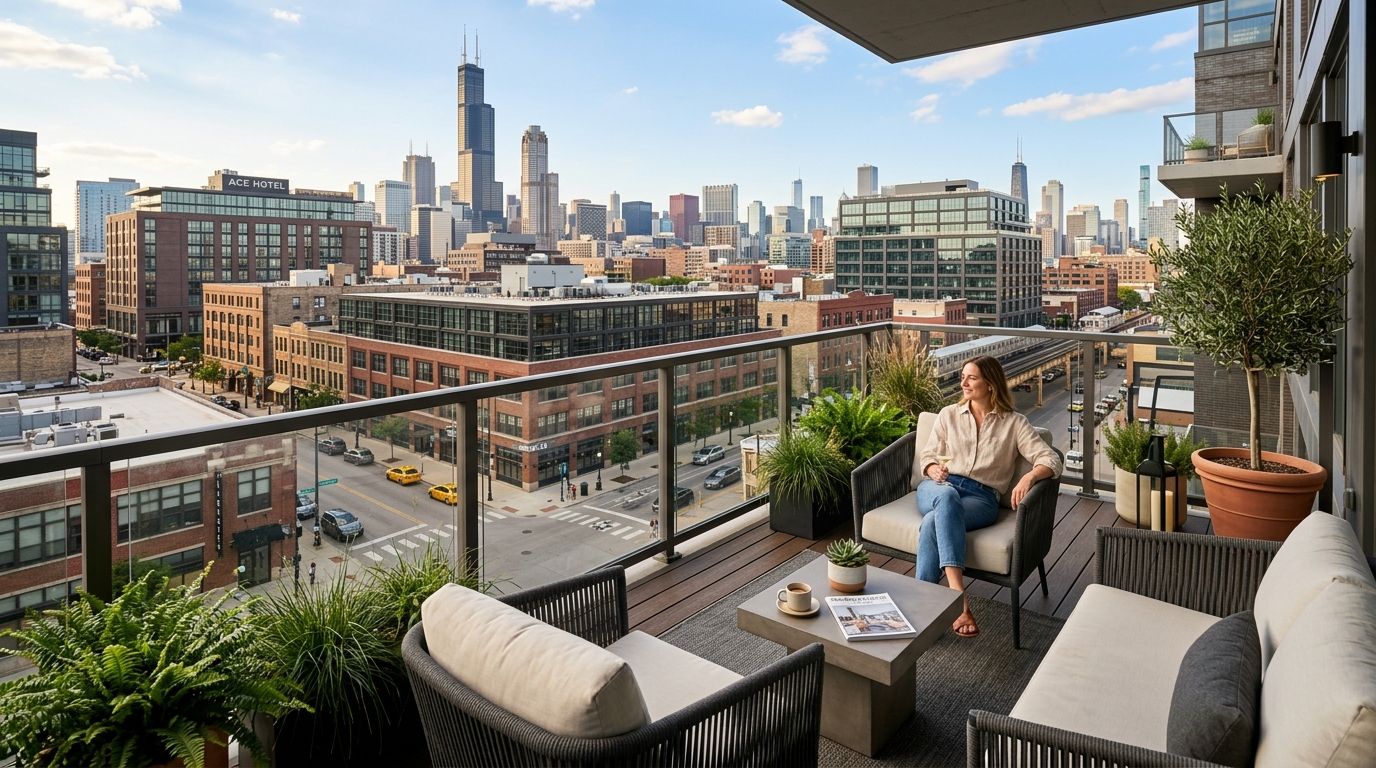
- Pick a unit on a higher floor or an interior-facing side. Street-level sound bounces between buildings and loses intensity as it climbs — units above the fourth or fifth floor, or those facing a courtyard instead of the restaurant strip, take noticeably less of it.
- Check the window rating before you sign. Standard double-pane glass sits around STC 26-28. Laminated or acoustic glass rated STC 35-40+ is the single biggest lever you have, because glass is almost always the weakest point in the wall assembly.
- Add a secondary window insert if you can't replace the glass. These sit inside the existing frame and typically push a standard window's rating up into the mid-30s without any construction work.
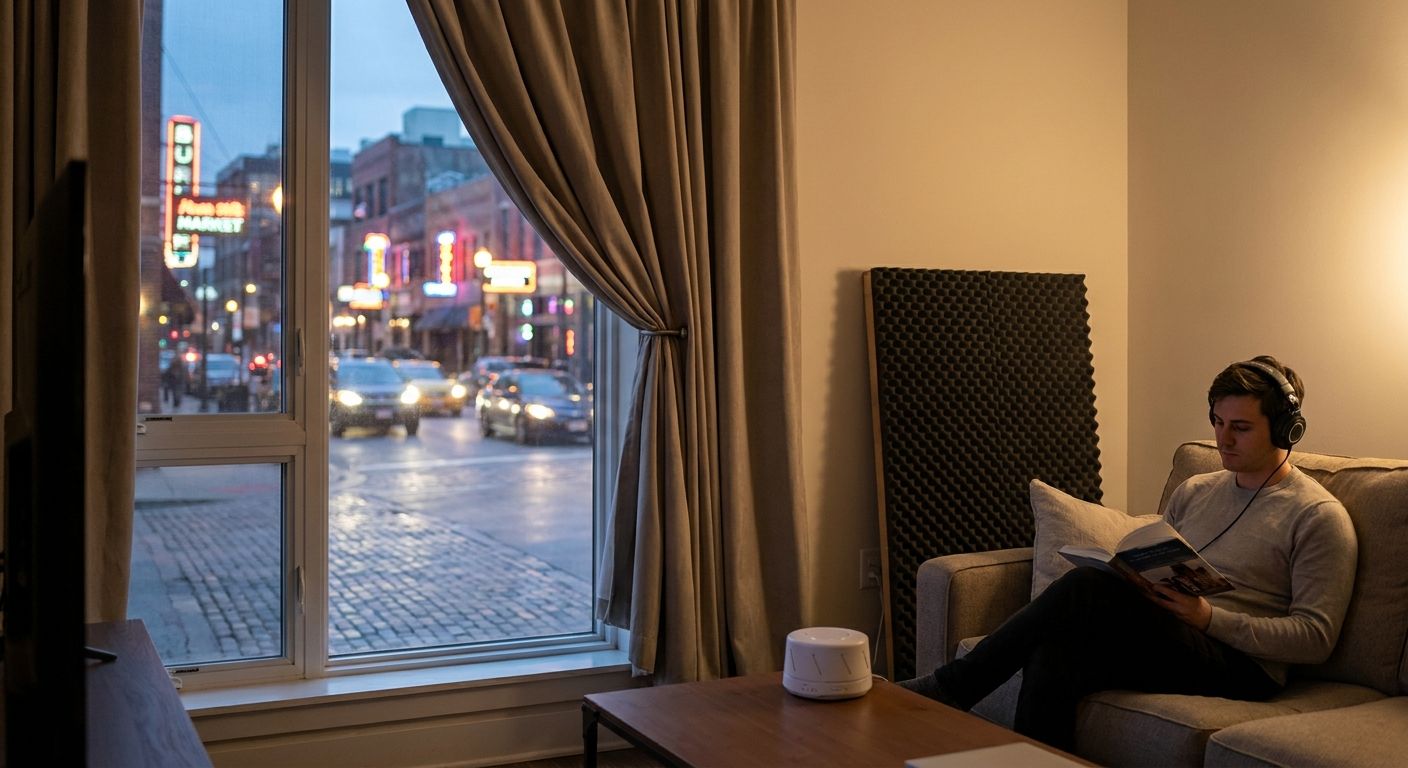
- Layer soundproof curtains over the window. Dense, multi-layer curtains won't match what glass does on their own, but stacked with a good window they knock off another few decibels of mid-and-high-frequency noise — the clinking glasses and voices, not the bass.
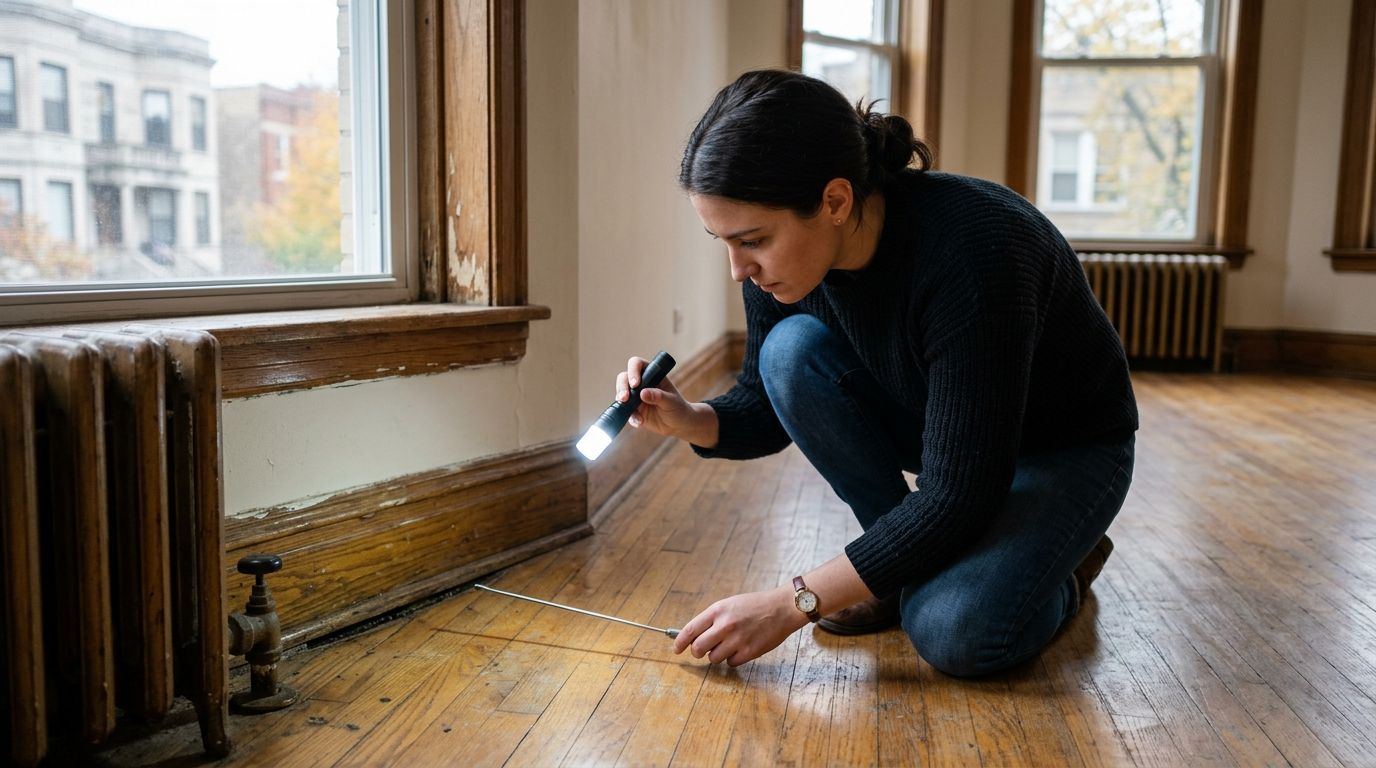
- Seal the door. A door sweep and weatherstripping close the gap under and around the entry door, which is often a bigger leak point than people expect in older Fulton Market buildings.
- Run a white noise machine or fan at night. This doesn't reduce the noise entering the room — it masks the remaining variability, which is often what actually disrupts sleep more than raw volume.
Window options compared
| Window option | Typical rating | Best for | Verdict |
|---|---|---|---|
| Standard double-pane | STC 26-28 | Interior courtyard units, upper floors | Skip if street-facing on restaurant row |
| Secondary window insert | STC 35-38 | Renters who can't replace existing glass | Buy — most practical retrofit |
| Laminated/acoustic glass | STC 40+ | Street-facing units above bars and restaurants | Buy — best long-term fix |
Why noise levels vary so much between units
Two apartments in the same Fulton Market building can have completely different nighttime noise profiles. The variables are predictable once you know what to check:
- Distance from restaurant row. Units within a block of the busiest stretch pick up crowd noise and outdoor seating chatter that fades fast with distance.
- Floor height. Noise attenuates as it rises; the difference between floor 3 and floor 10 is significant.
- Window age and type. Older single or double-pane glass in pre-2020 construction leaks far more sound than newer acoustic glazing.
- Day of week. Thursday through Saturday nights run louder than weeknights, sometimes by a wide margin near bar-heavy blocks.
- Building construction material. Concrete and steel structures dampen airborne noise better than lighter frame construction.
- Unit orientation. Street-facing exposures take the brunt of it; courtyard-facing or rear-facing units are consistently quieter.
Does floor height actually reduce nightlife noise?
Floor height reduces nightlife noise meaningfully once you clear the fourth or fifth story, where direct street-level sound reflection drops off. Below that, noise bounces between buildings at close to full volume regardless of which side you face.
Are soundproof curtains worth it on their own?
Soundproof curtains alone typically shave a few decibels off mid-and-high-frequency sound — voices, glassware, footsteps — but do little against bass from music or traffic. They're a supplement to a good window, not a replacement for one.
Which Fulton Market blocks run loudest at night?
The blocks directly along the restaurant row corridor and the streets with rooftop bars run loudest, especially Thursday through Saturday after 9pm. Units one or two blocks off that corridor, or facing away from it, see a measurable drop in ambient noise.
Before committing to a unit, it's worth learning how to research a Chicago apartment building's noise levels before signing a lease — asking the leasing office directly about window specs and unit orientation saves a lease-break headache later. If your goal is closer to blocking out your own noise rather than the street's, the approach to reduce noise from Fulton Market nightlife indoors overlaps heavily with soundproofing a high-rise unit for music practice — same window and sealing logic, different source of sound.
The verdict: an interior-facing or higher-floor unit paired with an STC 35+ window handles most of Fulton Market's nightlife noise before curtains or white noise machines even enter the picture.
FAQ
What is the best way to reduce noise from Fulton Market nightlife indoors?
The best way to reduce noise from Fulton Market nightlife indoors is combining unit selection with window quality — choose a higher floor or interior-facing unit, then upgrade to an STC 35+ window before adding curtains or a white noise machine.
Do higher floors really block more street noise in Fulton Market?
Higher floors block more street noise once you clear roughly the fourth or fifth story, where direct sound reflection off nearby buildings drops off noticeably. Below that height, floor doesn't change much.
Is Fulton Market noisy at night in 2026?
Fulton Market is noisiest Thursday through Saturday nights near restaurant row and rooftop bar blocks in 2026, driven by continued growth in the neighborhood's dining and entertainment scene. Weeknights and interior-facing units are notably quieter.
What window rating blocks the most nightlife noise?
A window rated STC 35 or higher blocks the most nightlife noise, compared to standard double-pane glass at STC 26-28. Laminated or acoustic glass rated STC 40+ is the strongest option for street-facing units.
Can soundproof curtains block bar and restaurant noise?
Soundproof curtains reduce some bar and restaurant noise, mainly voices and glassware sound, but they don't meaningfully stop bass or low-frequency music. Pair them with a rated window for a real difference.
Which Fulton Market apartments are quietest at night?
The quietest Fulton Market apartments sit above the fourth or fifth floor, face a courtyard instead of the street, and use laminated or acoustic-rated windows. Distance of even one block from restaurant row makes a measurable difference.
Does white noise help with nightlife noise?
White noise helps mask the unpredictability of nightlife noise — voices, laughter, doors — rather than reducing the actual decibel level entering the room. It works best as a final layer after windows and sealing are addressed.
How can I check a building's noise levels before signing a lease?
Ask the leasing office directly about window glazing type and STC rating, and request a unit tour during evening hours on a Thursday or Friday. Standing in the actual unit after 9pm tells you more than any spec sheet.
One last thing
Most renters fixate on the window and skip the door — but in older Fulton Market conversions, an unsealed entry door can leak nearly as much hallway and street noise as a mediocre window. A five-dollar door sweep sometimes closes more of the gap than a curtain upgrade costing ten times as much. Newer construction in the neighborhood increasingly ships with acoustic glazing standard, which is worth confirming directly rather than assuming from the building's age.