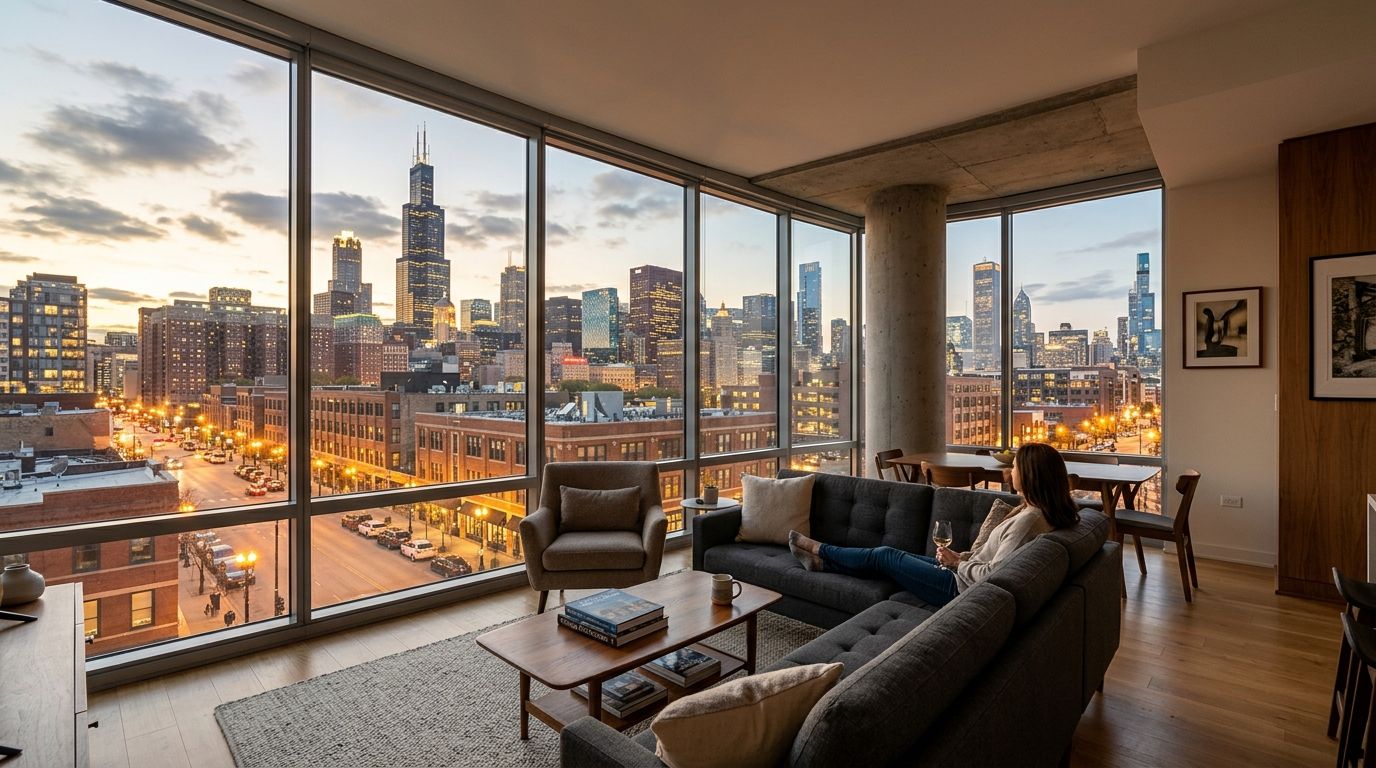
Fulton Market high-rises take wind and cold differently than a three-flat or a walk-up, and the fixes are specific, not seasonal decorating tips.
Preparing a Chicago high-rise apartment for winter in 2026 means sealing window and balcony-door drafts, reversing ceiling fans to push warm air down, checking radiator bleed valves or HVAC vents, and stocking a cold-weather kit for wind chills that regularly drop below 0°F on upper floors. The step most renters skip: protecting in-unit washer supply lines and floor drains, because a burst line on floor 20 floods every unit below it before building engineering can shut the riser.
- Winterizing a Chicago high-rise apartment in 2026 starts with draft-sealing windows and balcony doors, not the furnace.
- Reverse ceiling fans clockwise and check radiator bleed valves before the first hard freeze.
- Protect washer supply lines and floor drains — upper-floor leaks flood units below before engineering can respond.
- Wind chill on high floors runs colder than street level, so a cold-weather kit matters more above floor 10.
- Stead 220 residents on upper floors face more wind load through floor-to-ceiling glass than a low-rise sees through punched windows.
Why this matters
A high-rise unit loses heat differently than a house. Wind load against floor-to-ceiling glass, shared risers that serve dozens of units, and HVAC systems tied to a building-wide loop all change what "winterizing" actually means above the tenth floor.
Skip the prep and the failure isn't a cold room — it's a frozen supply line, a jammed balcony door track, or a space heater tripping a breaker shared with three other outlets. None of that is rare in Chicago high-rises once temperatures sit below freezing for a stretch, which the 2026 winter forecast pattern makes likely from December through February.
How do you prepare a Chicago high-rise apartment for winter?
Work through these in order, starting three to four weeks before the first sustained freeze:
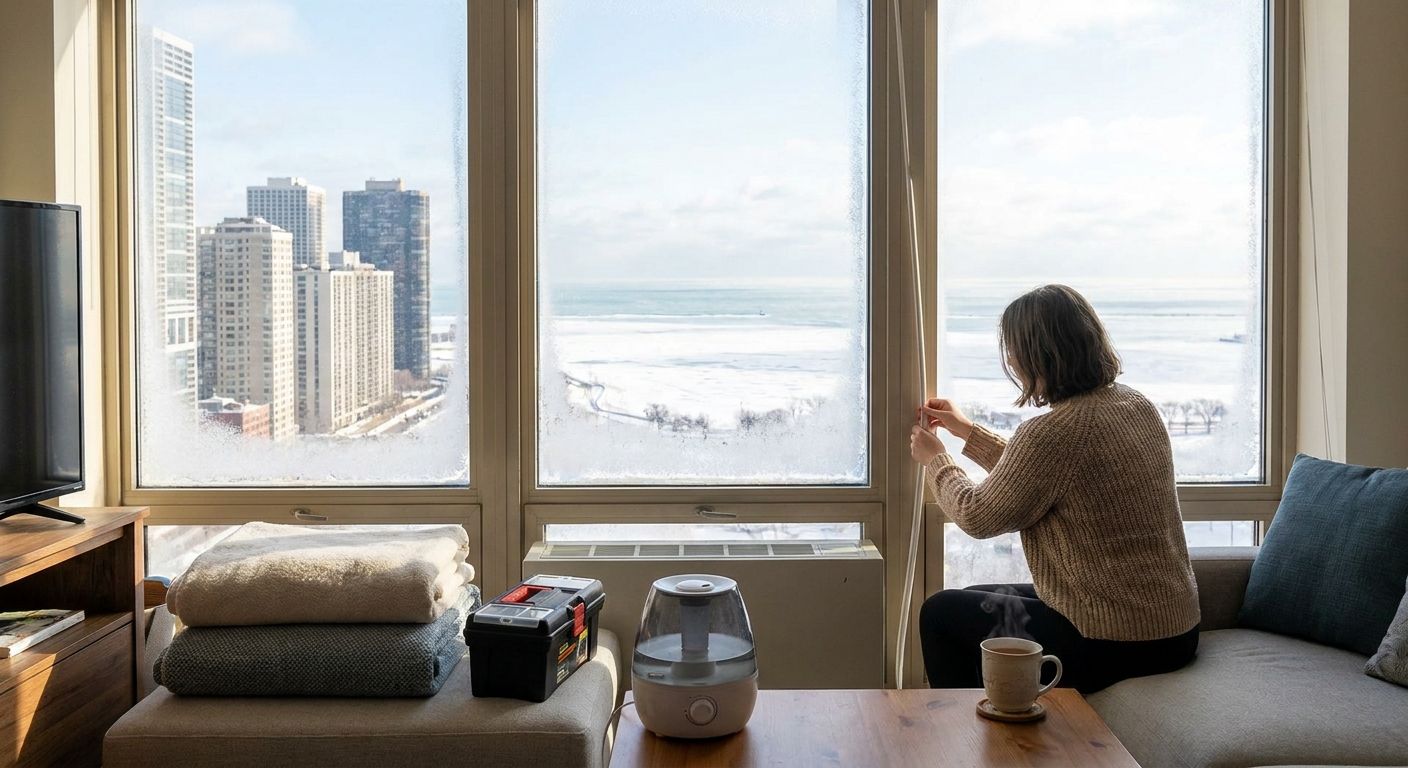
- Seal window and balcony-door drafts. Weatherstripping and a rolled towel at balcony door thresholds cut the wind chill effect that floor-to-ceiling glass amplifies on upper floors.
- Reverse ceiling fans to run clockwise at low speed. This pushes warm air that collects near the ceiling back down into the room instead of wasting it.
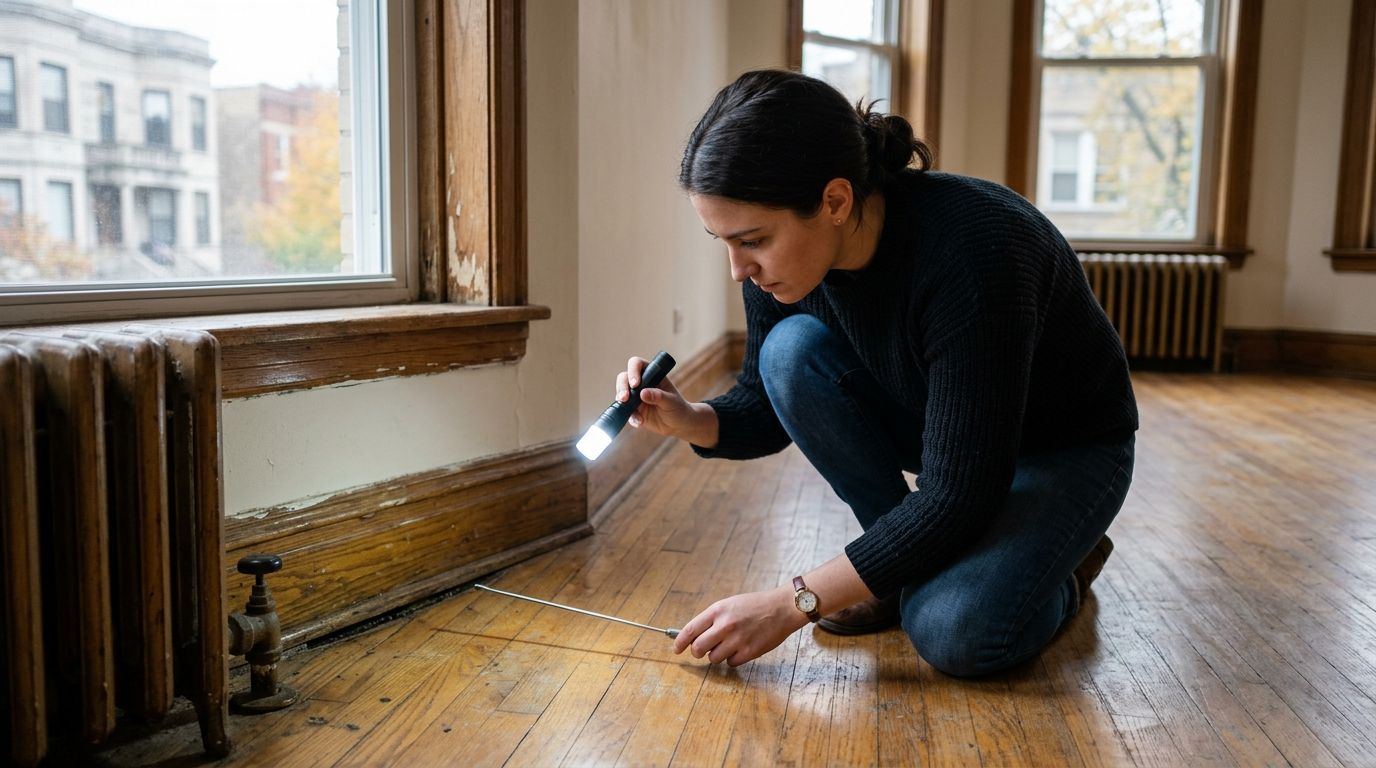
- Check radiator bleed valves or HVAC vents for trapped air or blocked airflow before the coldest week hits, not during it.
- Insulate or wrap washer supply lines near exterior walls, and know where the unit's water shutoff is — a frozen or burst line on a high floor is a building-wide problem within minutes.
- Store bulky winter gear — boots, skis, bins — off the floor and away from exterior walls; see how to store winter sports gear in a Chicago apartment for closet and storage-unit options that don't crowd a small entryway.
- Confirm heating and utility accounts are active before move-in cold snaps, not after a thermostat reads 58°F; see how to set up utilities before moving into a Chicago apartment.
- Winterize a car if the building has parking. Battery, wiper fluid rated for sub-zero, and a scraper kept in the unit — not the trunk — save time on the coldest mornings; buildings with attached parking garages remove the ice-scraping step entirely.
The one-line verdict: seal the glass, reverse the fans, protect the supply lines, and a Chicago high-rise apartment stays livable through the coldest stretch of 2026 without a single space heater running around the clock.
“The failure point in a high-rise winter isn't the windows, it's the supply line nobody checked before the first freeze.”
Why winter prep needs vary by unit
Not every high-rise unit needs the same level of prep. What changes the checklist:
- Exposure — north- and lake-facing units take more direct wind than interior-facing or south-facing units.
- Floor height — wind load increases with elevation, so units above floor 15 feel wind chill that street-level units don't.
- Window type and building age — floor-to-ceiling glass in newer Fulton Market construction transfers cold faster than older double-hung windows, but seals tighter when weatherstripped correctly.
- HVAC system — radiator heat, forced-air, and in-unit PTAC units each fail differently in extreme cold; know which one the unit has before the first freeze, not during it.
- Balcony or terrace exposure — private outdoor space adds a door seam that needs checking every fall.
- Corner unit vs. interior unit — corner units have two exterior walls instead of one, doubling the draft points to seal.
At Stead 220, upper-floor units with floor-to-ceiling glass see more wind load than a walk-up's punched windows ever would, which is why draft sealing matters here more than paint color or furniture layout.
Tour a winter-ready high-rise unit
See floor-to-ceiling glass and in-unit systems before you sign.
Do high-rise apartments get colder than low-rise buildings in Chicago winter?
High-rise units on upper floors face more wind load than low-rise or street-level units, which makes the wind chill effect through windows and balcony doors noticeably stronger even at the same outdoor temperature. The fix is draft-sealing, not a higher thermostat setting.
Should I cover apartment windows for winter in Chicago?
Weatherstripping the window frame and door seams handles most of the draft; a full window film or plastic cover is only worth it on older single-pane windows, which most Fulton Market construction from the last decade doesn't have. Check the seal at the frame before assuming the glass itself is the problem.
How early should I winterize a Chicago apartment before the cold hits?
Three to four weeks before the first sustained freeze gives enough time to order weatherstripping, confirm utility accounts are active, and check radiator or HVAC function before demand spikes across the building. Waiting until a cold snap is already forecast means competing with every other renter in the city for the same parts and appointments.
FAQ
How do I stop drafts in a high-rise apartment in Chicago?
Weatherstrip window frames and balcony door thresholds first — that's where most heat loss happens on upper floors, not through the glass itself. A rolled towel or door draft stopper handles the gap under balcony doors that weatherstripping alone misses.
What temperature should I set my thermostat to in winter in a Chicago high-rise?
Most Chicago high-rise leases and building engineering teams recommend keeping units above 55-60°F even when away, since lower settings risk frozen supply lines in shared risers. Check the specific lease terms, since some buildings set a minimum temperature requirement in writing.
Do I need to winterize my balcony in a Chicago apartment?
Yes — clear standing water or planters that can crack from freezing, and check the door seal since balconies add an exterior seam that interior-only units don't have. Furniture left out over winter should be covered or brought in if it's not rated for sub-zero wind chill.
How much colder does it feel on a high floor versus a low floor in a Chicago high-rise?
Wind load increases with elevation, so units above roughly floor 15 experience stronger wind chill against windows and balcony doors than street-level units at the same outdoor temperature. This is why draft sealing matters more the higher the unit sits in the building.
Should I run space heaters in a Chicago apartment during winter?
Only on a dedicated outlet, since most high-rise units share circuits with other outlets in the room and a space heater can trip the breaker fast in sub-zero weeks. Reversing the ceiling fan and sealing drafts first often removes the need for one entirely.
What should be in a winter emergency kit for a Chicago apartment?
Flashlight, backup phone charger, extra blankets, bottled water, and a battery radio cover most short outages tied to winter storms. Keep the kit in a spot that doesn't require digging through stored winter gear to reach it.
Do Chicago high-rise buildings turn off amenities like rooftop pools in winter?
Most rooftop pools close for the season once temperatures drop consistently below freezing, typically by late fall, and reopen in spring. Check the specific building's seasonal amenity schedule rather than assuming a year-round pool.
Is it worth reversing ceiling fans for winter in an apartment?
Yes — running the fan clockwise at low speed pushes warm air that collects near the ceiling back down into the room, which measurably reduces how hard the heating system has to work. It takes under five minutes and costs nothing.
One last thing
The biggest heat leak in a high-rise unit usually isn't the windows — it's the dryer vent flap. A flap stuck partly open pulls outside air straight into the laundry closet all winter, and most renters never check it because it's not on the standard winterizing list. Look at it before blaming the thermostat.