Childproofing a high-rise apartment in Chicago starts with three things: locking every window to a 4-inch maximum opening, confirming balcony railing gaps are under 4 inches (the same spacing standard used for stair balusters), and swapping any corded blinds for cordless ones. None of this requires drilling into a rental unit, and most of it takes an afternoon.
The part parents miss isn't the window — it's the common areas. A locked front door does nothing for the elevator lobby, the trash chute room, or the parking garage stairwell, and those spaces need their own supervision rules since a toddler in a high-rise has access to hallways a house-dwelling toddler never sees.
- Childproofing a high-rise apartment in Chicago means window stops capped at 4 inches, balcony gaps under 4 inches, and cordless window coverings first.
- Common areas — elevator lobbies, chute rooms, stairwells — need separate rules since a locked unit door doesn't cover them.
- Corner and higher-floor units in 2026 buildings often have larger glass expanses, which changes the window-lock priority list.
- Hardware-mounted gates at balcony doors and stairwells beat pressure-mounted gates in a rental unit.
Why this matters
A house has a yard with a fence. A high-rise apartment has a balcony with a door, a hallway with an elevator, and windows that open onto nothing but air. The failure modes are different, and the fixes that work for a ranch home — outlet covers, cabinet locks — are only half the job here.
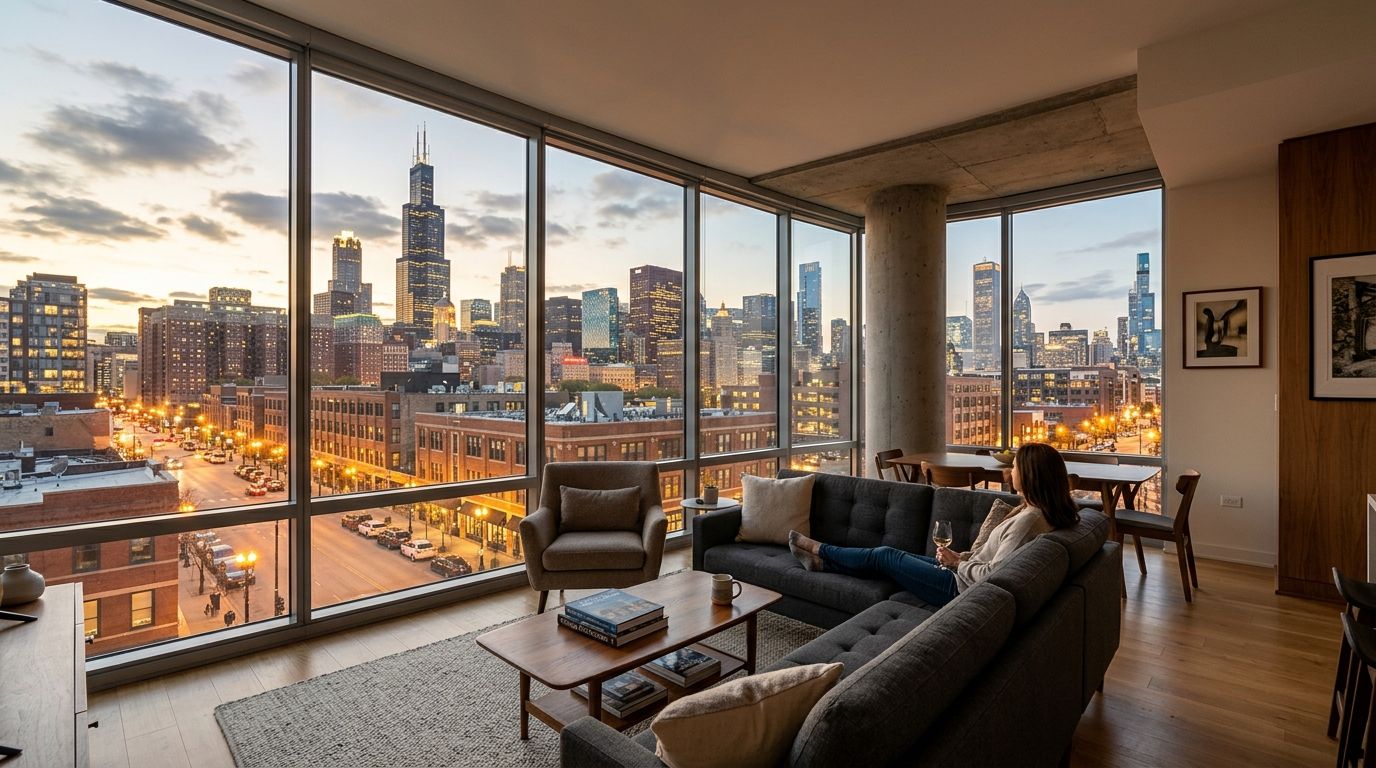
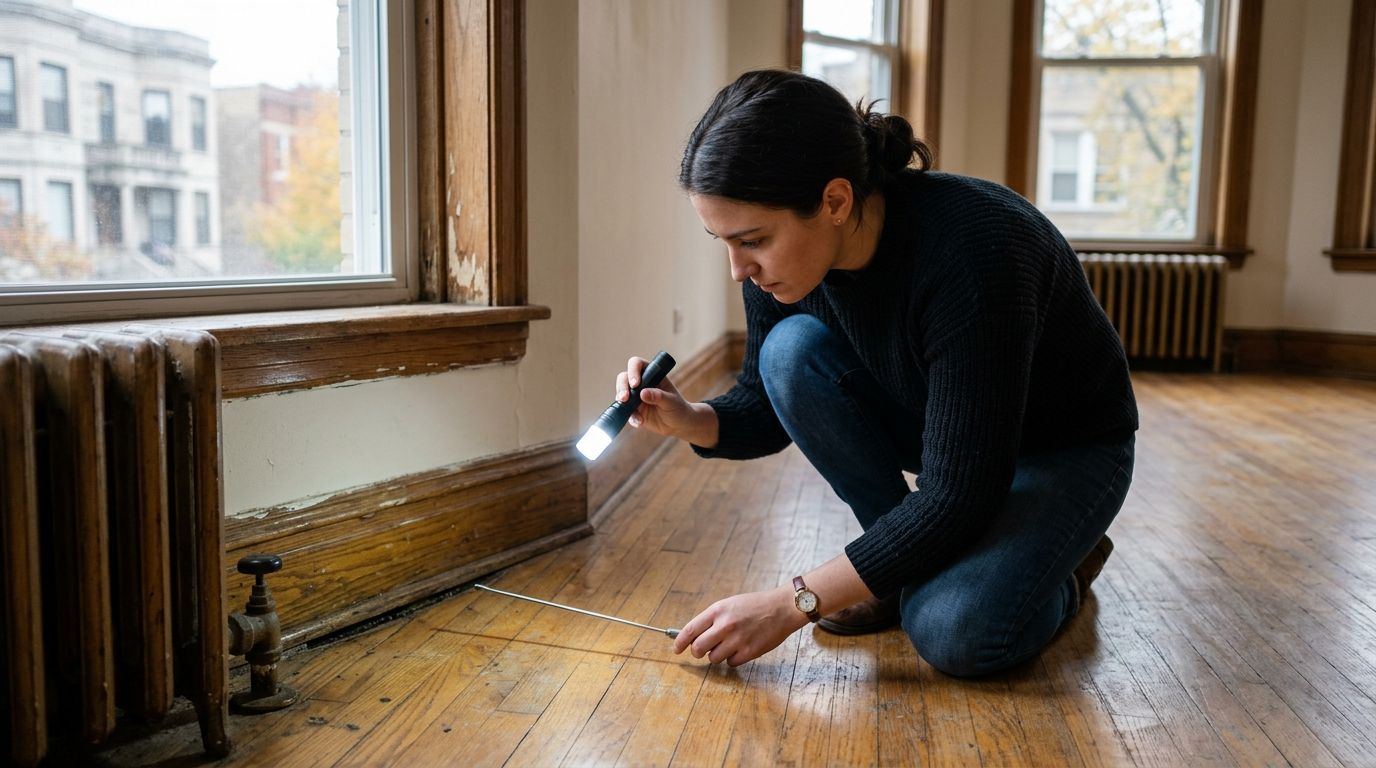
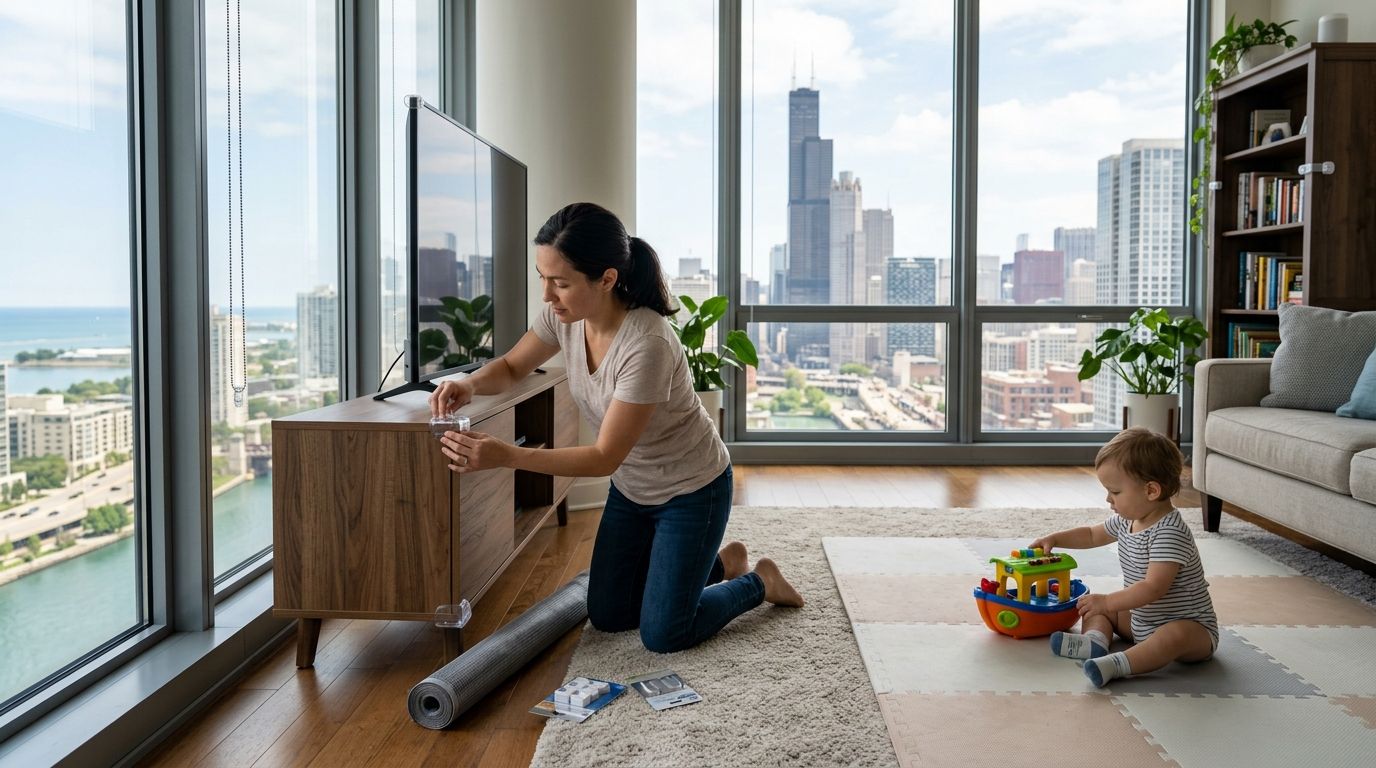
Chicago's Fulton Market and West Loop high-rises built in the last decade tend to run floor-to-ceiling or oversized windows for the skyline views, which means more glass surface to secure, not less. Older converted-loft buildings sometimes have double-hung windows with looser stops. Either way, the checklist below assumes a rental unit where you can't repaint, drill into concrete, or void a security deposit.
How do you childproof a high-rise apartment in Chicago?
Work top to bottom, room by room, in this order:
- Windows first. Install pressure-mounted or adhesive window stops that limit any opening to 4 inches — the same clearance the Consumer Product Safety Commission uses for stair baluster spacing. Test every window in the unit, including ones in closets or a second bedroom you don't use daily.
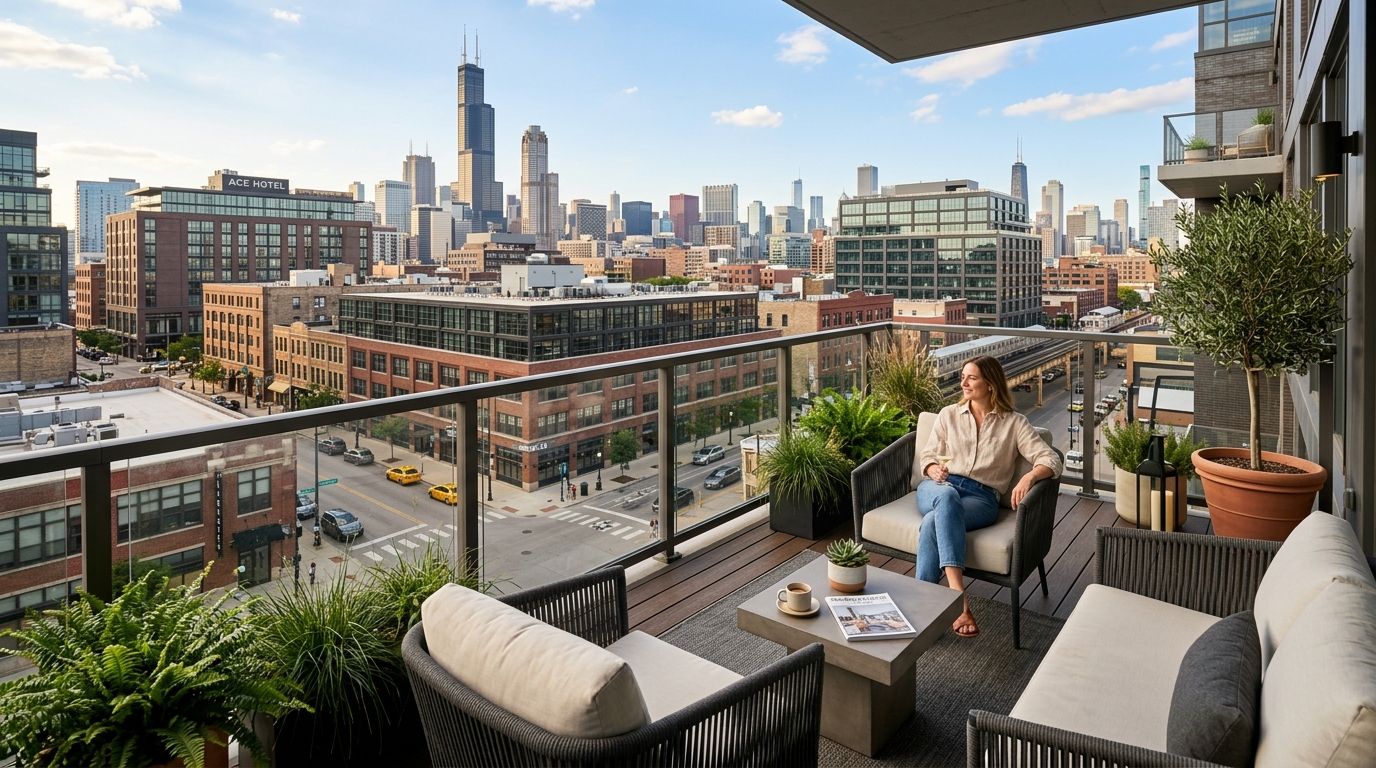
- Balcony or terrace door. Add a secondary lock above reach height and confirm railing gaps are under 4 inches. If the balcony has a gap wider than that (common on some older Chicago high-rises with decorative ironwork), treat the door as permanently locked, not just supervised.
- Window coverings. Since the window covering industry moved to cordless-first designs around 2018, most new blinds and shades sold since then don't have accessible cords — but older units may still have them. Replace any corded blind within reach of a crib, changing table, or floor play area.
- Outlets and cords. Standard outlet covers plus cord shorteners for lamps and the TV. This part is identical to any house.
- Front door and hallway. Add a lock or lever cover above adult reach height so a toddler can't wander into the corridor unsupervised — this matters more in a high-rise than a house because the hallway leads to an open elevator shaft, not a yard.
- Elevator lobby and stairwell doors. These aren't yours to modify, so the fix is behavioral: never let a child approach an elevator door alone, and treat stairwell doors as always-locked from the unit side.
Window locks: what actually holds
| Fix | Works on | Rental-safe |
|---|---|---|
| Pressure/adhesive window stop | Double-hung, sliding windows | Yes — no drilling |
| Screw-in window guard | Double-hung windows only | Depends on lease terms |
| Casement window locks | Crank-style casement windows | Yes, most clip on |
| Cordless blind conversion | Any window covering | Yes |
Casement windows — common in newer Fulton Market construction — actually childproof more easily than old double-hung sashes, since the crank mechanism itself limits how far the window opens. Confirm this with the building before assuming it, since crank strength varies by manufacturer.
Balconies: the gap test
Stand at the balcony railing and hold up your hand. If a child's head could pass through a gap in the railing, the gap is too wide — the 4-inch rule of thumb (same spacing standard used in most U.S. building codes for stair balusters) applies here too. Add a clear acrylic panel or mesh barrier along the base of any railing with wider spacing, and keep furniture away from the railing so it can't be used as a step-up.
Why childproofing needs vary by unit
- Floor height. A 30th-floor unit has more glass and taller sightlines than a 6th-floor unit, which changes how urgent window locks feel even though the underlying risk (a fall) is identical.
- Building age. Pre-2015 Chicago high-rises are more likely to have double-hung windows and older corded blinds; 2020s-era buildings lean toward casement windows and cordless coverings by default.
- Balcony style. Solid concrete parapets need no gap fix. Decorative iron or cable railings often do.
- Unit layout. A studio has fewer rooms to secure than a two-bedroom, but also less separation between a kitchen and a play area.
- Elevator access. Buildings with keyfob-restricted elevator access reduce the risk of a child wandering into a lobby unsupervised versus buildings with open lobby access.
Families touring two-bedroom floor plans in Fulton Market should ask directly whether window stops and balcony gate hardware come pre-installed or need to be added after move-in — two-bedroom apartments for families in Fulton Market is a reasonable starting point for comparing layouts before that conversation.
Related questions
Does Chicago require window guards in apartments?
Chicago does not mandate window guards the way New York City's building code does, so the responsibility falls on the renter to install pressure-mounted stops or guards themselves. Check your lease for any restriction on window hardware before drilling or adhering anything.
What floor is safest for a family with young kids?
There's no single safest floor — the safety work (window locks, balcony gap checks) is identical whether you're on floor 4 or floor 40. Lower floors do make evacuation during a fire alarm faster with young kids and strollers, which is worth weighing when choosing a high-rise apartment floor in Chicago.
Is Fulton Market a good neighborhood for families?
Fulton Market has grown a residential base of families and young professionals alongside its restaurant and office scene, and the childproofing considerations are the same as any dense, high-rise-heavy Chicago neighborhood: windows, balconies, and elevator access first.
FAQ
How do you childproof a high rise apartment in Chicago?
Start with window stops capped at 4 inches, balcony railing gaps under 4 inches, and cordless window coverings, then move to outlet covers and a locked front door lever. Common areas like elevator lobbies need supervision rules, not hardware, since you can't modify them.
Are corded blinds dangerous in an apartment with kids?
Corded blinds are a strangulation risk within reach of a crib or floor play area, which is why the window covering industry shifted to cordless-first designs starting around 2018. Check any blinds in an older unit before assuming they're cordless.
Do balconies need extra childproofing beyond a locked door?
Yes — a locked balcony door stops access, but if a child does get out, railing gaps wider than 4 inches are a fall risk on their own. Add a mesh or acrylic panel to any railing with wide spacing.
Can I install window guards in a Chicago rental without violating my lease?
Pressure-mounted or adhesive window stops are generally rental-safe since they don't require drilling, but screw-in window guards may need landlord approval. Read the lease's alteration clause before installing anything permanent.
What's the biggest childproofing mistake in a high-rise apartment?
Treating the front door as the security perimeter. In a high-rise, the elevator lobby and stairwell are just as accessible to a child who slips out, so behavioral rules around those spaces matter as much as window locks.
Do newer Chicago apartment buildings childproof more easily than older ones?
Generally yes — buildings built in the 2020s tend to use casement windows with built-in crank limits and cordless blinds by default, while pre-2015 buildings are more likely to have double-hung windows and older corded coverings that need retrofitting.
One last thing
The childproofing job that gets skipped most often isn't the window or the balcony — it's the elevator call button height. Most panels sit low enough for a curious toddler to reach, so the actual fix is a habit, not a product: hold a child's hand or carry them past the panel, every single time, until they're old enough to understand what it does.