Fulton Market renters who order three to five packages a week need a building system built for volume, not a lobby table that turns into a cardboard maze by Thursday. This guide breaks down what to check before you sign, which unit types at Stead 220 fit an online-shopper lifestyle, and where package handling quietly falls apart in older Fulton Market buildings.
- Package locker apartments in Fulton Market need staffed reception hours plus locker capacity, not one or the other.
- Studio and one-bedroom units near ground-floor package rooms cut retrieval friction the most in 2026.
- Cold-storage lockers for grocery delivery are now a real differentiator, not a bonus amenity.
- Buildings without camera coverage on package rooms see the most theft complaints during holiday months.
Why this matters
Fulton Market's density means more deliveries per building, not fewer. A 308-unit community like Stead 220 at 220 N. Ada Street can see hundreds of packages arrive daily during peak shopping weeks, and how that volume gets sorted determines whether your Tuesday afternoon includes a five-minute pickup or a twenty-minute search through unlabeled bins.
Renters comparing package locker apartments in Fulton Market in 2026 are really comparing operational systems: locker capacity, staff hours, and how close your unit sits to the pickup point. Get that wrong and the rooftop pool doesn't make up for a missing package the week before your Amazon return window closes.
Who this is for
This is for the renter who orders groceries three times a week, gets a package delivered most days, and works from home often enough that a missed delivery means rescheduling around a video call. Remote workers, online-shopping households, and anyone managing meal-kit or pharmacy subscriptions in Fulton Market should read the criteria below before touring.
What to look for in package locker apartments for online shoppers
Locker capacity relative to unit count
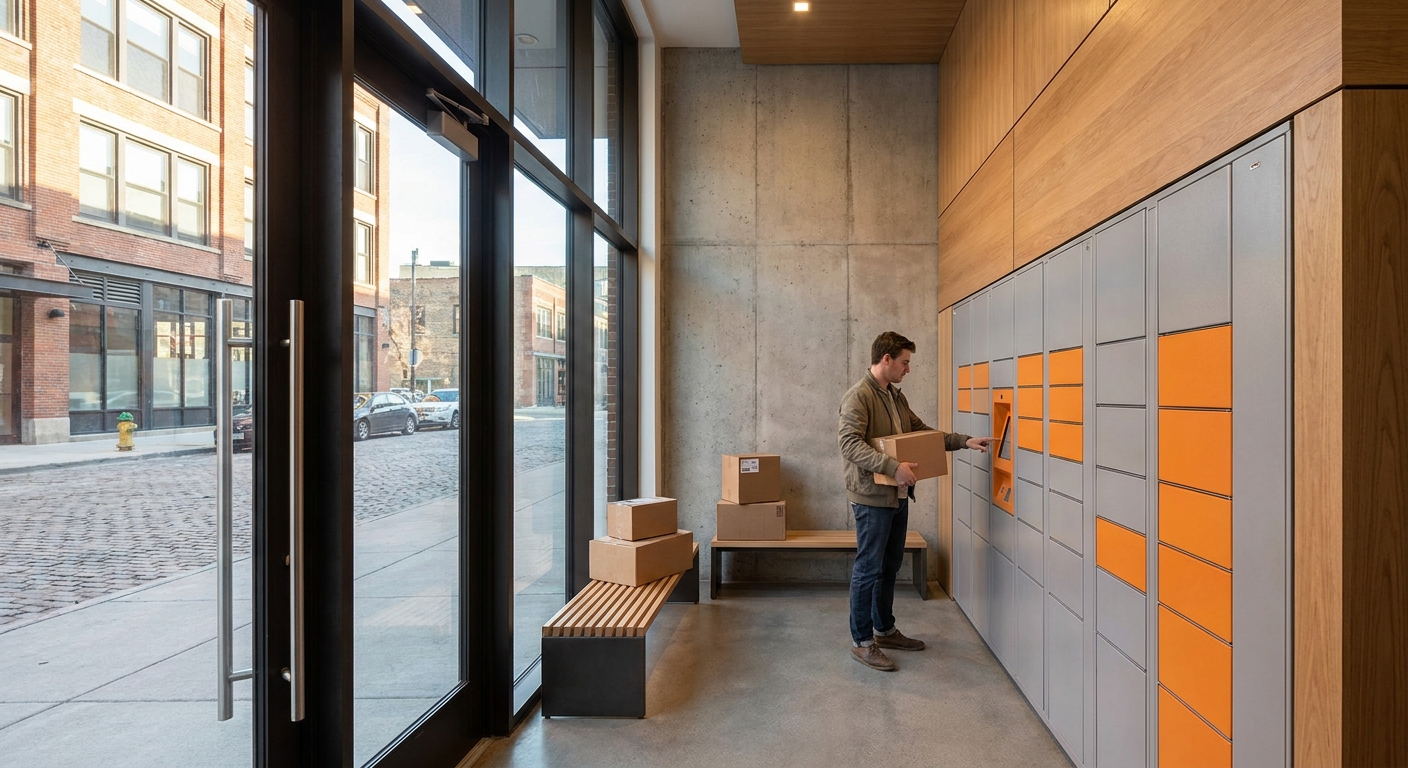
A locker wall sized for 150 units in a 308-unit building creates a bottleneck by design. Ask how many locker slots exist per 100 units and whether the count was set at construction or added later — undersized systems overflow onto floor space within the first holiday season.
Staffed reception hours
Lockers handle standard boxes; staffed reception handles oversized furniture, refrigerated meal kits, and anything requiring a signature. A building with reception staffed only 9-to-5 leaves evening and weekend deliveries stacking up in a side room, which defeats the point of a locker system in the first place.
Cold storage for grocery and meal-kit delivery
This matters more in 2026 than it did five years ago, with grocery delivery volume up across most urban markets. A dedicated refrigerated locker means a Whole Foods or Instacart order doesn't sit at room temperature for six hours before you get home from work.
Camera coverage on the package room
Package theft complaints cluster around buildings with no visible camera coverage near pickup areas. Ask specifically whether cameras cover the locker bank itself, not just the lobby entrance — the two are not the same thing.
Proximity of your unit to the package room
A ground-floor or first-elevator-bank package room saves real time across a year of daily pickups. If your floor plan search includes units on high floors, factor in elevator wait times during peak evening delivery hours.
Overflow handling during peak season
November and December delivery volume can double a building's daily package count. Ask what happens when the locker wall fills — some buildings hold overflow at a staffed desk, others leave boxes stacked in a hallway, which is the outcome you're trying to avoid.
Top picks: unit types built for high delivery volume
The remote-worker pick: studio layouts near the package room. Studio units at Stead 220 built for remote work put you close to daily routines, including package pickup, without a second bedroom you're not using. If you're ordering daily and working from home most weekdays, a studio apartment for remote workers in Fulton Market keeps your commute to the lobby under two minutes. Buy if daily pickup convenience outweighs square footage.
The solo-shopper pick: one-bedroom units for professionals. A one-bedroom gives you a dedicated space to stage returns and unbox deliveries without living out of a studio's single room. The one-bedroom apartments for solo professionals in Fulton Market option suits renters ordering five-plus packages weekly who still want separation between sleeping and living space. Buy for the balance of space and delivery convenience.
The bulk-order pick: two-bedroom units for families. Families running grocery delivery, meal kits, and kids' online orders simultaneously generate the highest package volume of any renter profile in Fulton Market. Two-bedroom layouts built for families handle that volume with room to actually store what arrives, not just receive it. Consider if your household orders across multiple accounts and needs storage space, not just pickup speed.
The relocation pick: corporate relocator units. Renters moving to Fulton Market on a corporate timeline often furnish an entire apartment through online orders in the first month — furniture, kitchenware, electronics, all arriving within weeks of move-in. That volume spike makes package infrastructure a first-month priority, not a someday concern. Consider for anyone furnishing remotely before move-in.
Tour a unit near the package room
Ask the leasing team about locker capacity and reception hours before you sign.
What to avoid
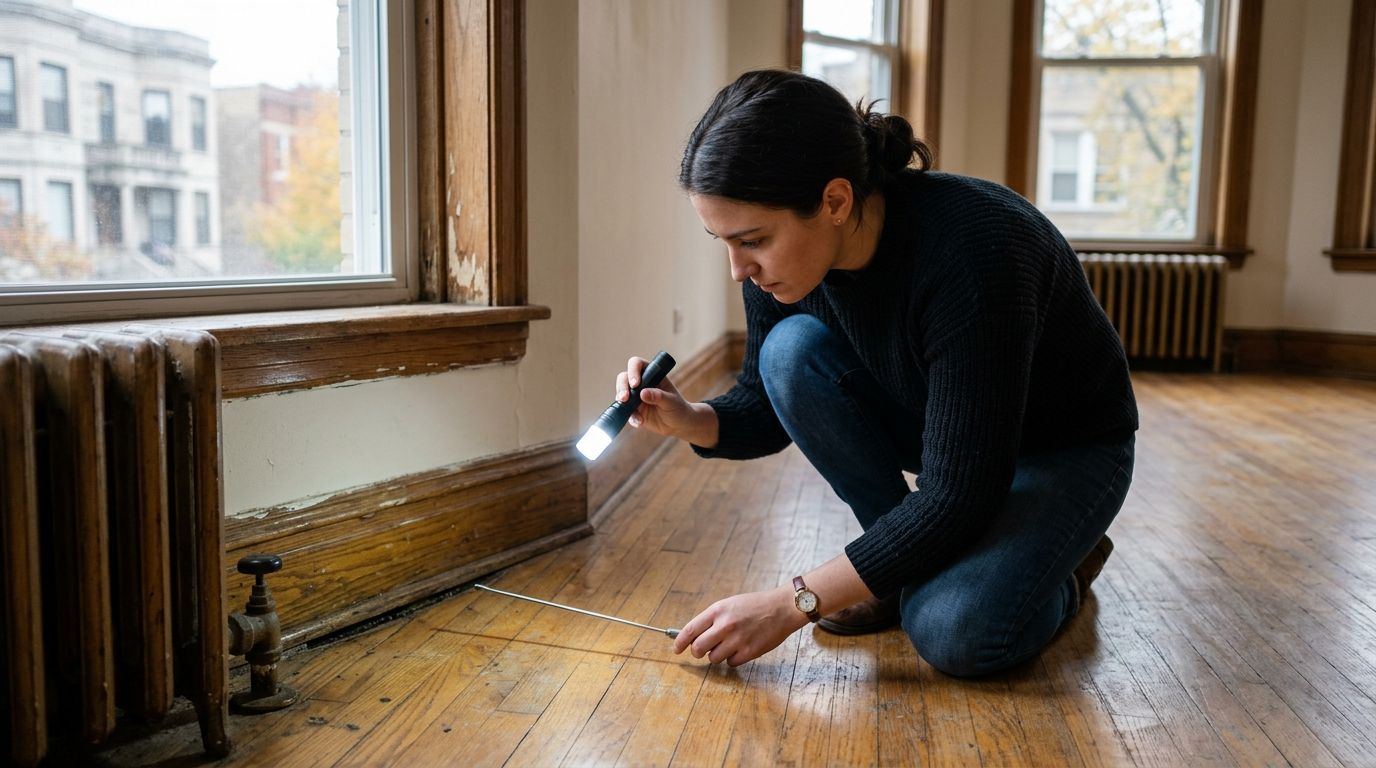
- Vintage walk-ups advertised as "charming" with no locker system. A converted loft with a single mail table looks fine on a tour and falls apart the first week you order more than one package.
- Buildings that count a mailroom as a package system. A mailroom sized for envelopes and small parcels isn't built for a grocery delivery bag or a furniture box — ask what happens to anything larger than a shoebox.
- Reception-only buildings with no locker backup. If staff hours end at 6 p.m. and your delivery window is 7 to 9 p.m., a reception-only system means packages sit outside or get held until the next business day.
Verdict comparison
| Unit type | Package room proximity | Delivery volume fit | Verdict |
|---|---|---|---|
| Studio for remote workers | Ground-floor adjacent | Daily single-item orders | Buy |
| One-bedroom for solo professionals | Near first elevator bank | 5+ packages weekly | Buy |
| Two-bedroom for families | Standard floor access | High-volume, multi-account | Consider |
| Corporate relocator units | Standard floor access | First-month furnishing spike | Consider |
FAQ
What are package locker apartments in Fulton Market?
Package locker apartments are buildings with dedicated locker systems for parcel pickup, separate from a staffed front desk. In Fulton Market, this matters because delivery volume in dense buildings like a 308-unit community can exceed what a lobby table or single mailroom can handle.
Do Fulton Market apartments offer cold storage for grocery delivery?
Some buildings include refrigerated lockers for grocery and meal-kit orders, though this varies by property and should be confirmed directly with the leasing office. It's worth asking about specifically since standard package lockers don't handle perishables.
Is a studio or one-bedroom better for frequent online shoppers?
A studio works for renters ordering daily single items and prioritizing proximity to the package room, while a one-bedroom suits renters who need separate space to unbox and store deliveries. The choice comes down to order volume versus square footage needs.
How much package volume can a Fulton Market building handle during holidays?
Peak-season delivery volume can double a building's daily package count in November and December 2026. Buildings with undersized locker walls or reception-only hours tend to see overflow stacking in hallways during this period.
Are camera systems standard in Fulton Market package rooms?
Camera coverage on package rooms isn't universal across Fulton Market buildings, so it's a question worth asking directly rather than assuming. Coverage of the lobby entrance alone doesn't guarantee coverage of the actual locker bank.
What happens when package lockers are full?
Overflow handling depends on the building — some hold excess packages at a staffed desk, others leave them in a common area. Ask this question before signing, especially if you're moving in during a high-order season.
Do corporate relocators need package infrastructure on day one?
Yes, renters furnishing an apartment remotely often generate their highest package volume in the first 30 days after move-in. A building with reliable locker and reception systems matters most during that initial furnishing window.
One last thing
The detail renters skip during tours: ask what happens to a package that requires a signature when you're not home and reception has closed for the day. That single answer tells you more about a building's package system than the locker wall itself.