Fulton Market runs on remote and hybrid work, and a studio built for sleeping isn't the same as a studio built for a full workday of calls, deadlines, and deep focus. Stead 220's studio apartments at 220 N. Ada Street separate those two jobs instead of forcing you to choose.
- Stead 220 studio apartments in Fulton Market fit remote workers who need desk space, quiet, and fast internet in 2026 - Buy.
- Corner and high-floor studios with two window exposures outperform interior units for video calls - Consider.
- Ground-floor studios near the main entrance carry foot traffic and delivery noise - Skip for daytime work.
- Built-in Italian wardrobes free floor space for a real desk setup without cramming a studio layout.
Why this matters
Remote work didn't shrink apartment demand in Fulton Market - it changed what people ask a studio to do. A desk that doubles as a nightstand, thin walls that carry every neighbor's call, and a mail room that closes at 5 p.m. all cost you productive hours in 2026, not just comfort.
Stead 220 sits at 220 N. Ada Street inside a 308-unit community, leasing studios up through two-bedroom homes. For someone working from home four or five days a week, the difference between a studio that works and one that doesn't shows up by the second week of a lease, not the first showing.
Who this is for
This guide is for the freelancer, founder, or hybrid tech employee who spends more hours on video calls at home than at a desk downtown. If your workday needs a quiet corner, a stable internet connection, and a break room that isn't a coffee shop with bad Wi-Fi, the criteria below apply directly to you - not to someone who only sleeps in Fulton Market between shifts.
What to look for in studio apartments for remote workers
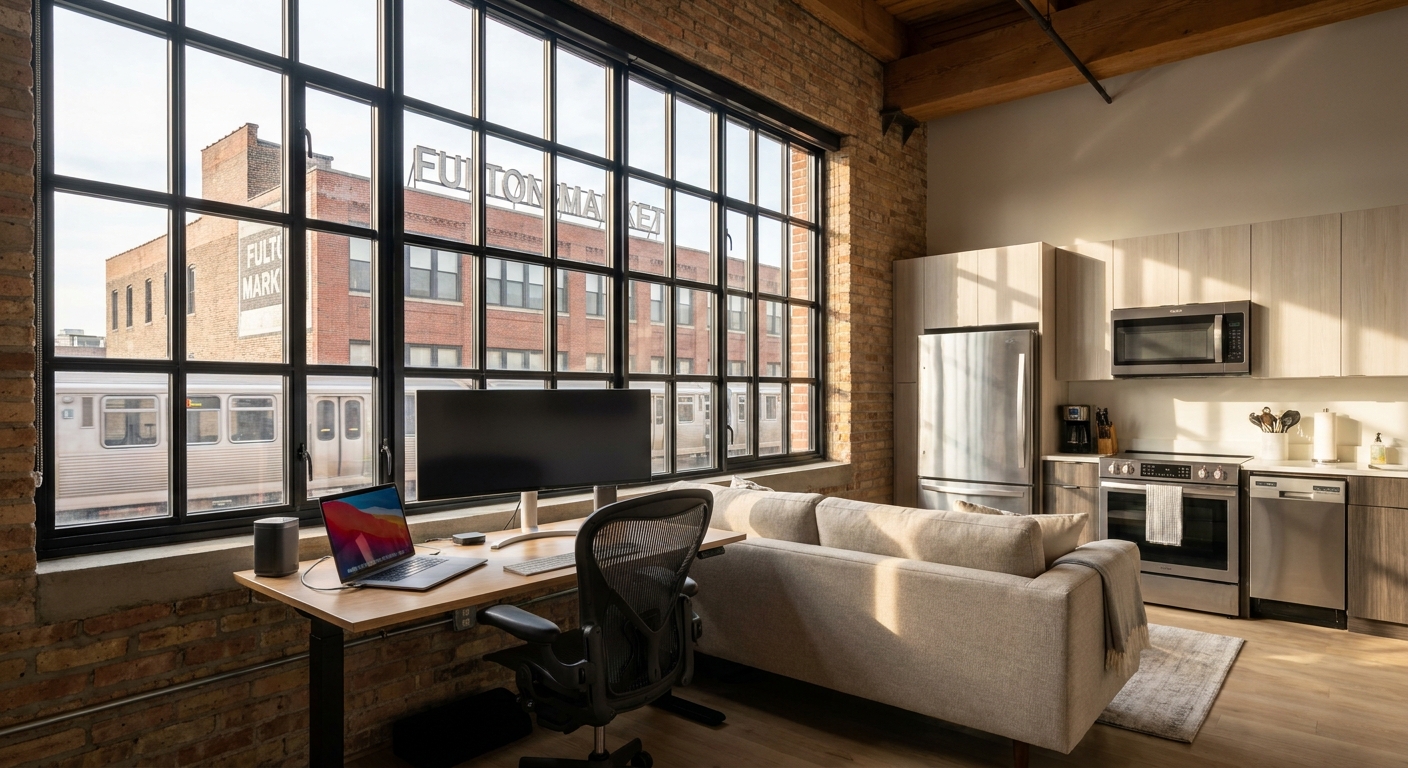
A desk zone separate from the bed
An open studio with no wall, alcove, or furniture line between sleeping and working means your bed shows up on every video call. Look for a layout with a defined desk nook or a floor plan long enough to place a desk against a wall the bed doesn't touch.
Sound insulation between units
Concrete construction and solid interior walls matter more to a remote worker than to someone who's only home at night. Thin drywall carries a neighbor's TV or a hallway conversation straight into your 10 a.m. call.
Reliable, fast internet infrastructure
A building wired for fiber-grade internet is not optional in 2026 when your income depends on the connection holding through a client presentation. Ask directly what's run to the unit, not just what's advertised in the leasing office.
Natural light and window exposure
Daylight from two exposures changes how you look on camera and how alert you stay by 3 p.m. A single north-facing window in an interior studio leaves you reaching for a ring light every afternoon.
On-site amenities that break up the day
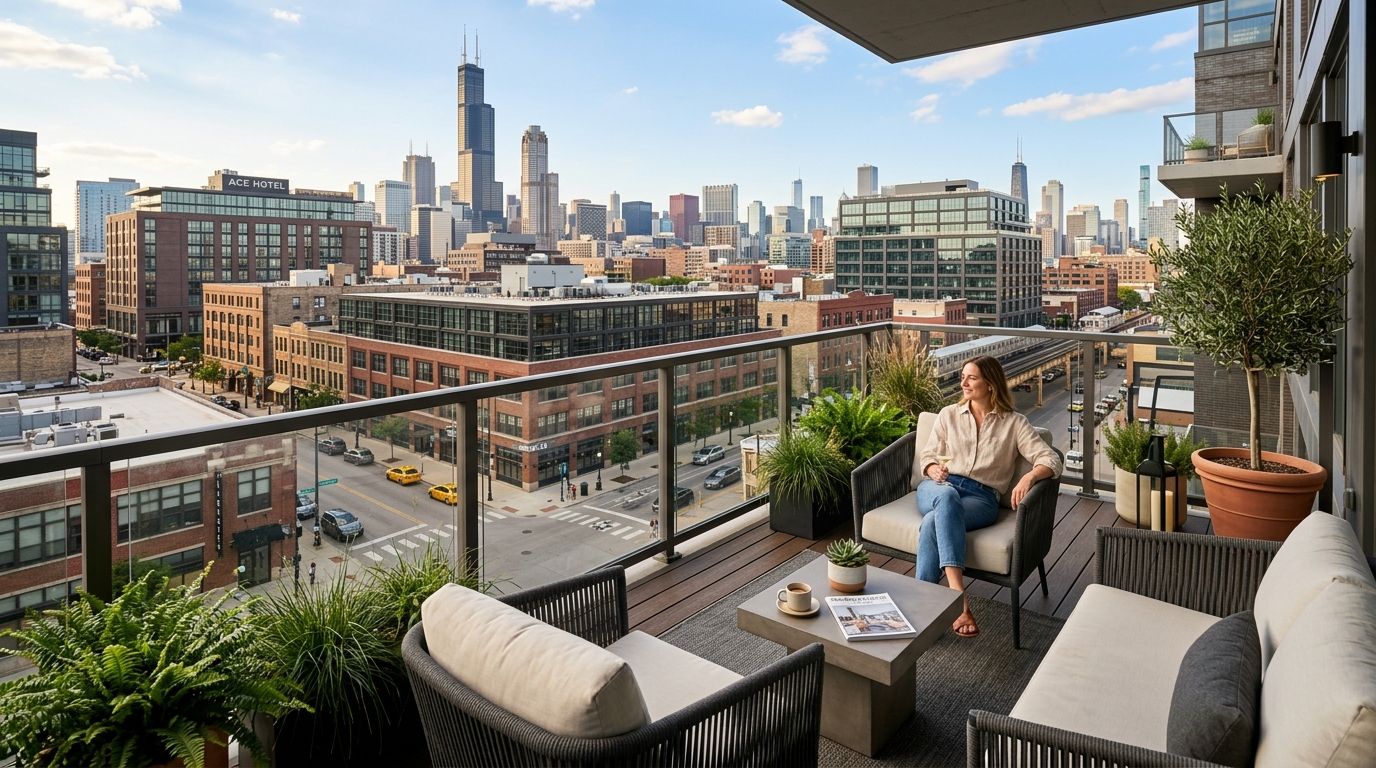
A rooftop pool and a fitness center with TechnoGym equipment aren't just leasing brochure lines - they're the difference between stepping outside for ten minutes and never leaving your desk chair. That short break matters more when your commute is a hallway.
Daytime package and mail handling
Remote workers get more deliveries during business hours than anyone else in the building. A package room that only accepts drop-offs after 6 p.m. means missed items and repeat trips to a locker across the neighborhood.
Top picks at Stead 220
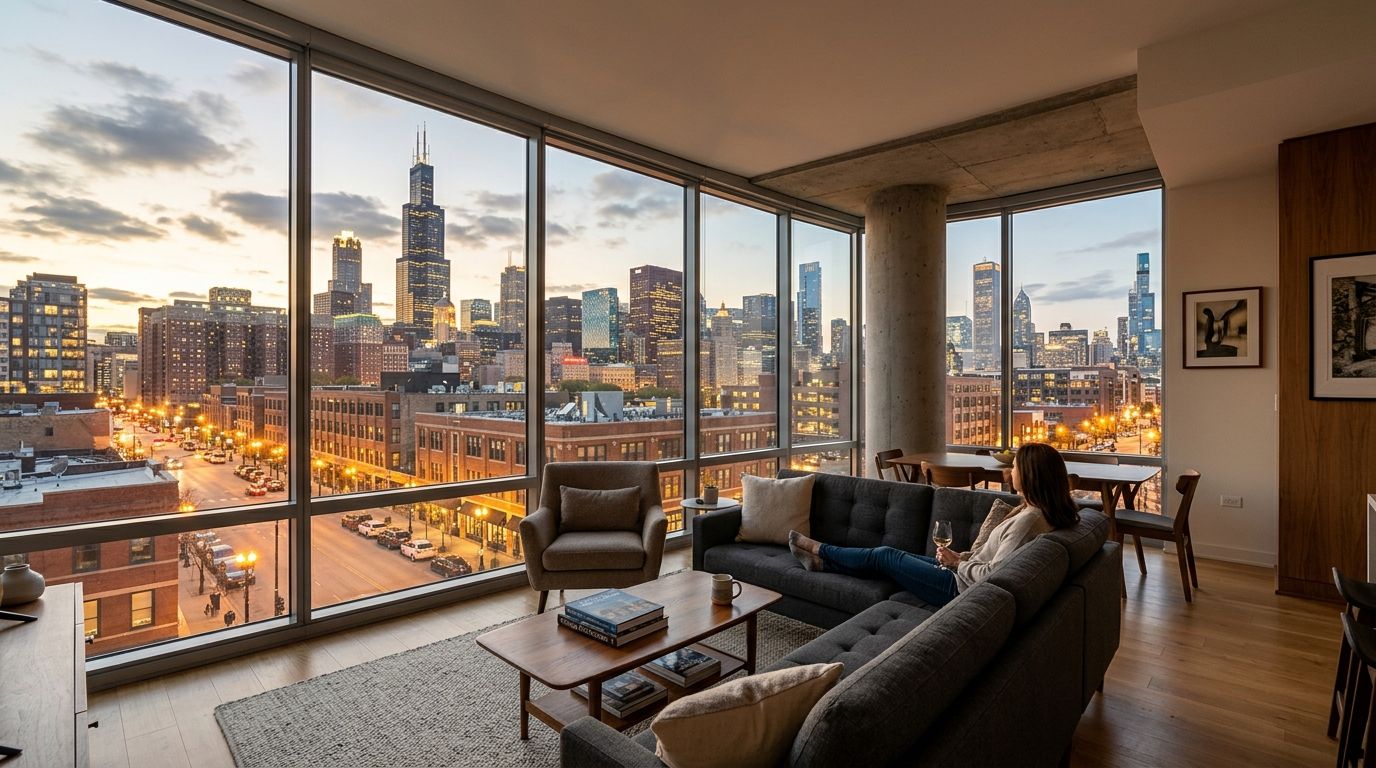
High-floor corner studio - the safe pick. Two window exposures bring daylight in from both sides of the unit, and the floor-to-ceiling window line keeps a video call lit without extra equipment. Oak hardwood floors run throughout. Buy.
Interior studio near the amenity levels - the wildcard. You trade a slightly narrower window line for quick access to the rooftop pool and the fitness center between meetings, which matters if your breaks need to be short and close. Consider.
Studio with a built-in Italian wardrobe wall - the design pick. The wardrobe build-out replaces a freestanding closet, which frees enough floor space for an actual desk instead of a fold-down table. Buy.
Ground-floor studio near the main entrance - the risk. Foot traffic through the lobby and daytime deliveries create noise that shows up on calls scheduled between 9 a.m. and 5 p.m., exactly when you need the unit quiet. Skip.
Tour a Stead 220 studio
See the layouts built for a full remote workday, not just a night's sleep.
What to avoid
- "Open concept" studios with zero wall between bed and desk. They photograph well and work poorly the moment a client sees your bed on a call.
- Buildings that advertise "coworking" but deliver one shared table. A single table for hundreds of units isn't a workspace, it's a waiting line.
- Studios facing an alley or blocked by an adjacent building. Low natural light forces you to rely on lamps and ring lights for every call, all day, every day of the year.
Verdict comparison
| Pick | Desk space | Natural light | Noise control | Amenity access | Verdict |
|---|---|---|---|---|---|
| High-floor corner studio | Strong | Two exposures | Good | Moderate | Buy |
| Interior studio near amenities | Moderate | Single exposure | Good | Best | Consider |
| Studio with Italian wardrobe wall | Strong | Depends on unit | Good | Moderate | Buy |
| Ground-floor studio, main entrance | Moderate | Moderate | Weak | Best | Skip |
FAQ
What's the best studio apartment layout for remote workers in Fulton Market?
A high-floor corner studio with two window exposures and a defined desk nook works best in 2026, since it separates sleeping and working space without needing a second room. Stead 220 offers this layout at 220 N. Ada Street.
Is a studio big enough to work from home full time?
Yes, if the layout puts a wall or furniture line between the bed and a real desk area. A studio without that separation forces compromises a one-bedroom wouldn't require.
Does Stead 220 have amenities for remote workers?
Stead 220 includes a rooftop pool and a fitness center with TechnoGym equipment, both useful for breaking up a workday spent at home. These amenities sit within the same 308-unit community as the studios.
How much noise transfer is normal in a Fulton Market studio building?
Concrete construction and solid interior walls should block most hallway and neighbor noise during business hours. If you hear conversations or televisions through the wall during a tour, treat it as a warning sign for daytime work.
Should remote workers pick a corner unit or an interior unit?
Corner units win on natural light and video call quality thanks to two window exposures, while interior units near amenity floors win on convenience for quick breaks. Choose based on whether lighting or proximity matters more to your workday.
What internet setup should I confirm before signing a lease in 2026?
Confirm the exact internet infrastructure run to the unit, not just what's listed in a leasing brochure. Fiber-grade service is the baseline for anyone working from home in 2026.
Are ground-floor studios a problem for remote work?
Ground-floor studios near a main entrance tend to carry more foot traffic and daytime delivery noise than upper-floor units. Skip these if your schedule includes calls between 9 a.m. and 5 p.m.
What should I look for besides square footage?
Look at desk zone separation, window exposure, wall construction, and daytime package handling before square footage. A larger studio with no desk wall still fails a remote workday.
One last thing
The detail most people skip on a tour: ask whether the wardrobe is built-in or freestanding. A built-in Italian wardrobe at Stead 220 removes the need for a separate closet footprint, and that reclaimed floor space is usually the exact amount needed to fit a proper desk instead of a folding table pushed against the wall. It's a small line item on a leasing sheet that decides whether your studio works for a full year of remote work in 2026 or just looks good in photos.