Micro apartments for minimalist renters in Chicago are compact studio and one-bedroom units, generally under 650 square feet, chosen deliberately to reduce what you own, what you clean, and what you pay for space you never use. Minimalist renters don't need more square footage — they need better storage systems, fewer surfaces to maintain, and buildings that replace the stuff they'd otherwise own with shared amenities.
- Micro apartments for minimalist renters in Chicago work best under 650 square feet with built-in storage systems.
- Stead 220 in Fulton Market pairs studio layouts with Italian wardrobes and a rooftop pool instead of storage closets.
- Skip any studio under 400 square feet that lacks a walk-in or built-in wardrobe system.
- Amenity substitution — gym, rooftop, coworking lounge — cuts what a minimalist renter needs to own at home.
Why micro apartments matter for minimalist renters
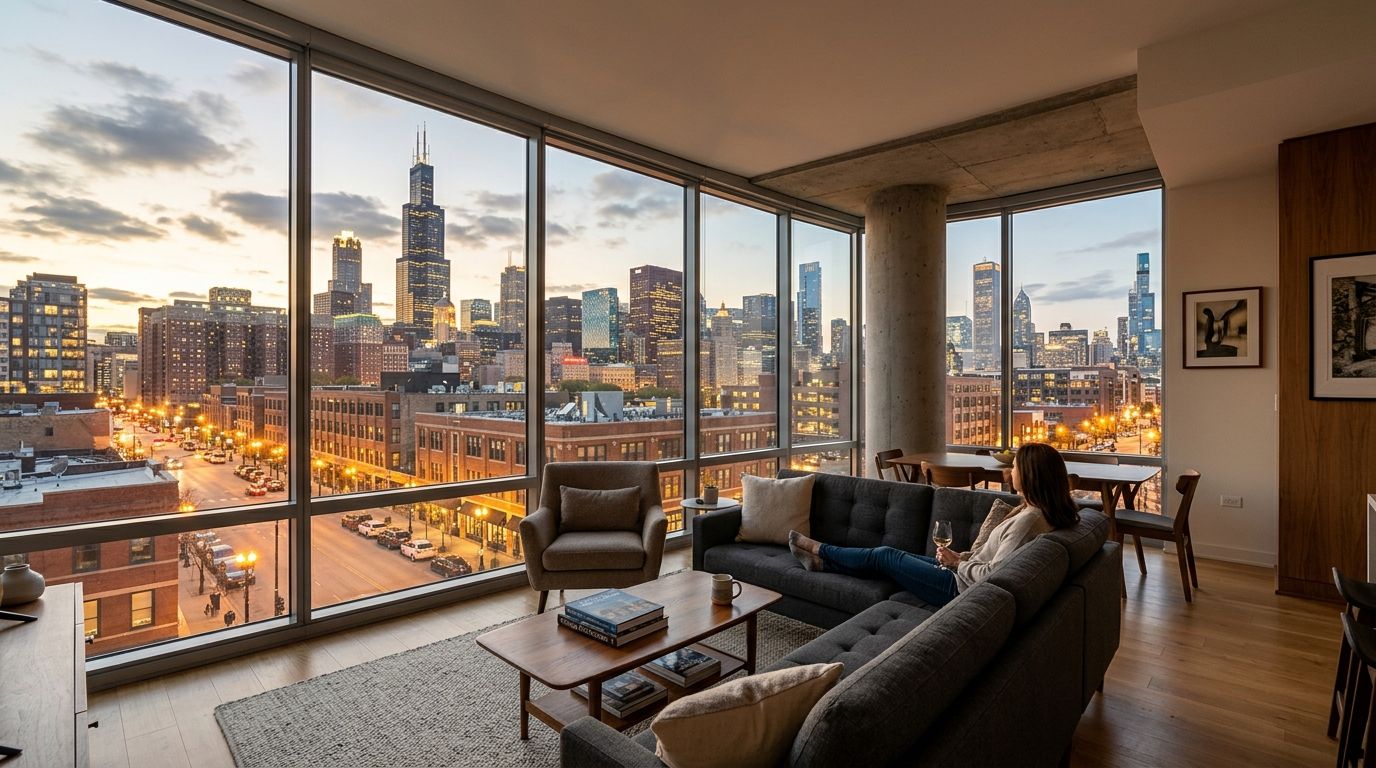
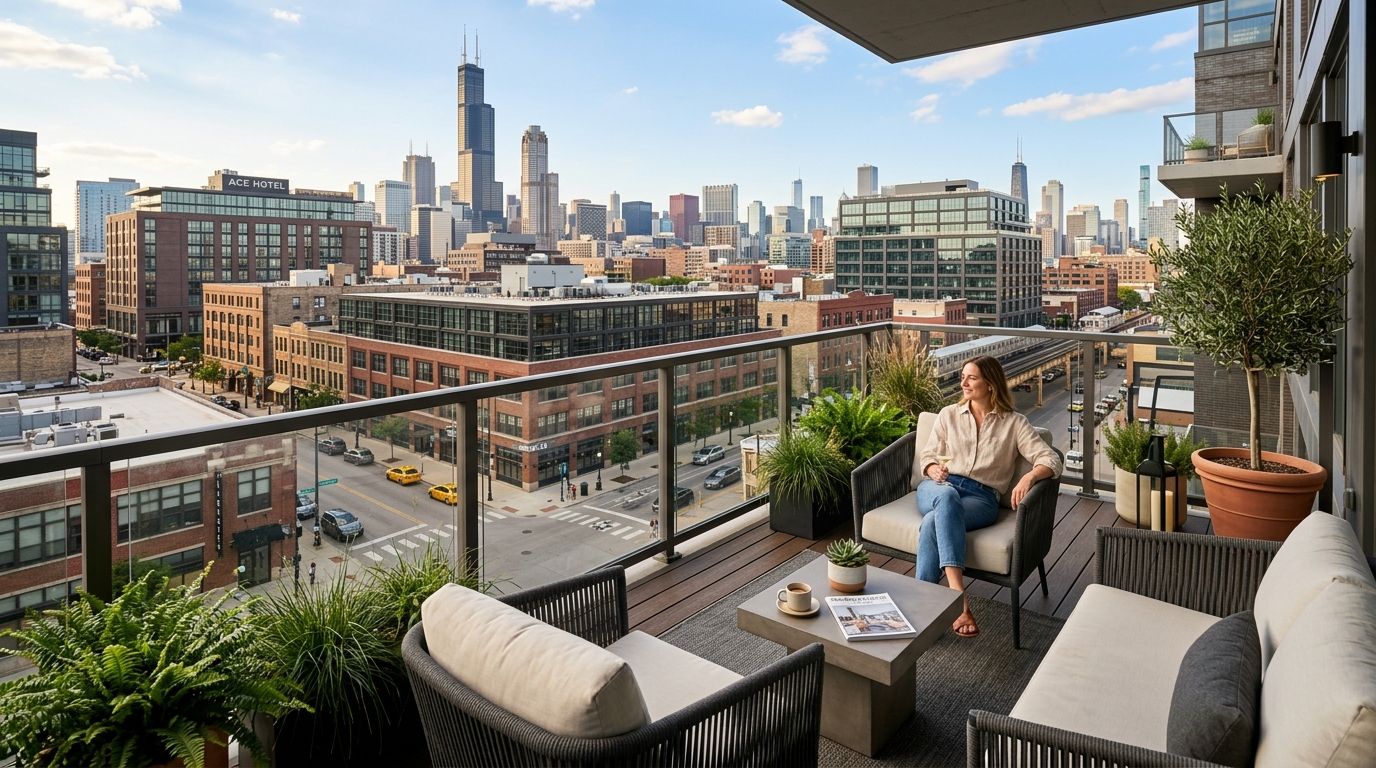
Fulton Market and West Loop are dense, walkable, and built around fewer possessions by default: restaurants replace a stocked kitchen, transit replaces a car, and shared building amenities replace a home gym or a guest room. That trade only works if the unit itself is designed for it.
Stead 220 sits at 220 N. Ada Street with 308 units running studio through two-bedroom, and the studios are where the minimalist case is strongest: oak hardwood floors, Italian wardrobes built into the layout, and a rooftop pool and fitness center that take the place of equipment you'd otherwise store at home. A minimalist renter isn't shopping for the biggest floor plan in Chicago in 2026 — they're shopping for the one with the fewest wasted square feet.
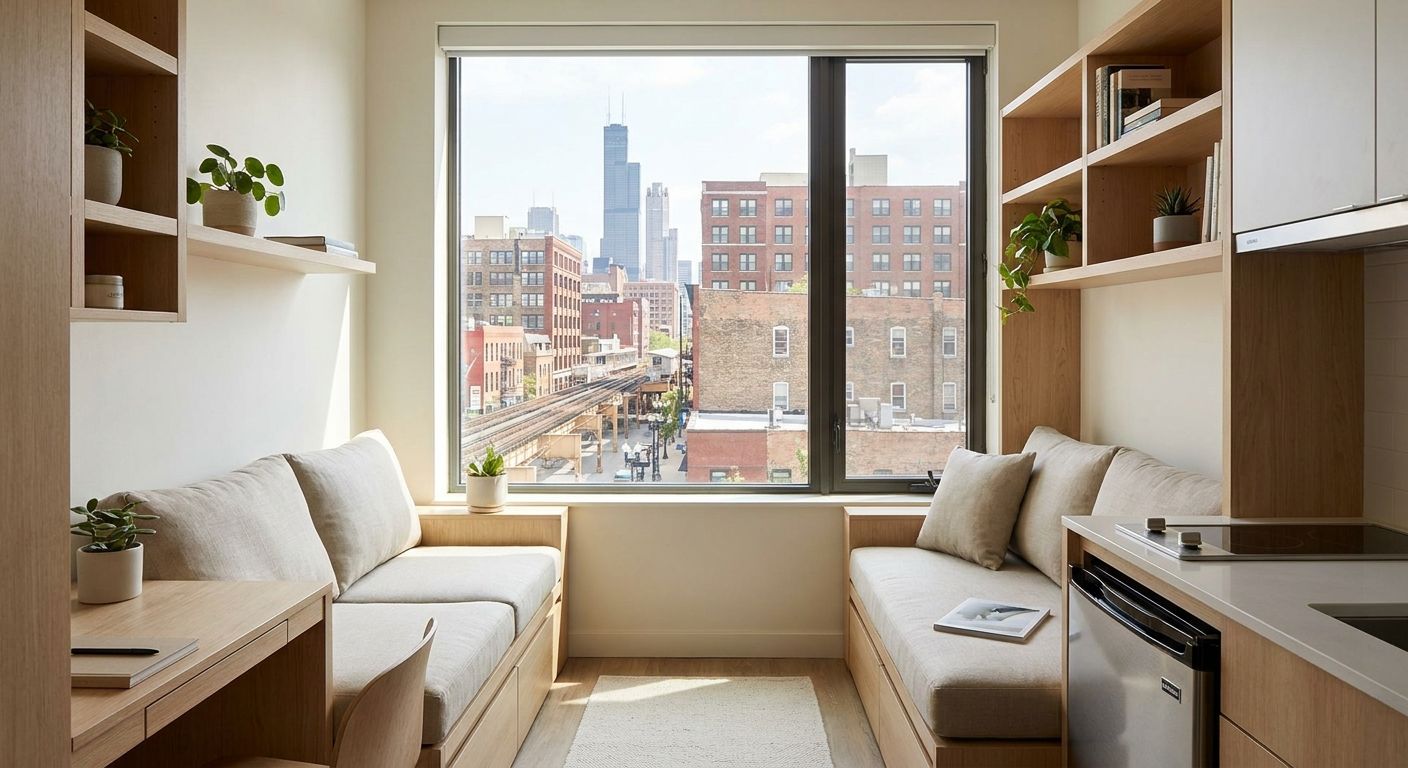
The mistake most renters make is touring for size instead of function. A 550-square-foot studio with a wardrobe system and a coat closet beats a 650-square-foot studio with a single shallow closet, every time, for someone trying to live with less.
Update your square-footage floor, not your ceiling
Most apartment searches start with a maximum budget and a minimum size. Minimalist renters should flip the second variable: set a floor below which storage becomes physically impossible, not a ceiling above which you're paying for unused space.
- Rule out anything under 400 square feet unless it has a dedicated wardrobe or walk-in closet
- Measure closet depth, not just closet width — 24 inches minimum for hanging clothes
- Count linear feet of storage per room, not just square footage
- Ask whether the kitchen has upper cabinets or open shelving only
- Confirm bathroom storage exists beyond a medicine cabinet
Audit what you actually own before you tour
Touring without an inventory means you'll fall for a beautiful unit that can't hold your winter coats. Do this before you book a single showing.
- List every category of item you own: clothing, kitchen, electronics, seasonal gear
- Photograph your current closet and drawers to estimate real volume
- Flag anything you'd need to sell, store off-site, or donate before moving
- Note anything oversized — bikes, skis, instruments — that needs its own storage plan
Prioritize built-in storage over floor space
Built-in storage is the single biggest variable between a livable micro apartment and a cluttered one. A unit with an Italian wardrobe system built into the layout functions like a closet twice its visible size, because the interior is organized instead of just deep.
- Look for floor-to-ceiling wardrobe systems, not standalone closets
- Check for under-bed storage clearance in the floor plan
- Ask if the kitchen island or counter includes drawer storage
- Confirm entryway storage exists for shoes and outerwear
- Prioritize furnishing guidance built for studio apartments over generic apartment advice — a studio needs multi-function furniture, not scaled-down regular furniture
Test the layout for the one-object-one-place rule
A minimalist layout gives every object exactly one home. If a floor plan forces you to stack items on visible surfaces because there's no designated spot, the unit will feel cluttered within a month regardless of how little you own.
- Walk the unit and mentally place your five largest possessions
- Check whether the layout separates sleeping, working, and storage zones
- Confirm there's a spot for a full-size vacuum or cleaning supplies
- Ask about closet lighting — dark storage gets ignored and becomes dead space
Substitute amenities for things you'd otherwise own
This is where a minimalist renter should stop comparing square footage and start comparing what the building replaces. A rooftop pool replaces patio furniture. A TechnoGym-equipped fitness center replaces a home rack and mat. A resident lounge replaces a dining table sized for guests you host twice a year.
- Confirm fitness center equipment quality if you're skipping a home gym
- Check for guest suites if you host visitors rarely but want the option
- Look for package lockers if you're skipping a large pantry for delivery-based living
- Verify bike storage if you're going car-free
- Ask about coworking lounges if a home office desk isn't worth the square footage
Check renters downsizing from a larger space
If you're moving from a house or a larger apartment, the gap between what you own and what fits is the biggest risk to a smooth move-in. Plan for it before signing.
- Rent a temporary storage unit for anything you're not ready to part with
- Read guidance on private storage for renters downsizing before assuming your building has extra space
- Sell or donate furniture that won't scale down — a king bed rarely fits a micro studio bedroom nook
- Digitize documents and media instead of boxing them
Lock a lease term that matches your minimal setup
A minimalist renter's lease term should match how long the current setup — job, city, lifestyle — is expected to hold. Signing a long lease on a compact unit before confirming it fits your daily routine is the most common regret minimalist renters report after move-in.
- Consider a shorter initial term if this is your first time downsizing this far
- Confirm renewal terms before signing, not after
- Ask what happens to storage add-ons (bike racks, lockers) at renewal
Tour a Stead 220 studio
See the wardrobe systems and rooftop amenities in person before you sign.
Compare apartment types for minimalist renters
| Option | Best for | Key limitation |
|---|---|---|
| Studio with built-in wardrobe | Solo minimalist renters who want zero wasted space | Limited room for guests to stay overnight |
| One-bedroom convertible | Renters who want a separate sleeping zone but still minimal footprint | Costs more than a studio without adding much usable storage |
| Micro-unit under 450 sq ft without built-ins | Renters with almost no furniture or seasonal gear | Fails fast for anyone with more than a capsule wardrobe |
| Loft-style open layout | Renters who want visual space over enclosed storage | Open shelving means everything stays visible — harder to hide clutter |
Verdict: a studio with a built-in wardrobe system and shared building amenities is the strongest micro apartment option for minimalist renters in Chicago in 2026 — it removes the need for standalone furniture and outsources the gear you'd otherwise store at home.
Common mistakes minimalist renters make
- Choosing size over storage design. A larger unit with shallow closets holds less usable capacity than a smaller one with a proper wardrobe system.
- Skipping the amenity audit. Renters sign leases without checking whether the fitness center or rooftop actually replaces the equipment they'd otherwise buy.
- Underestimating seasonal gear. Winter coats, boots, and holiday items are the most common overflow problem in Chicago micro units.
- Not measuring before move-in day. Furniture that fit a previous space rarely fits a compact layout — measure doorways and corners, not just floor area.
- Treating minimalism as empty rooms. A minimalist apartment still needs functional storage; an apartment with nowhere to put things isn't minimal, it's just cluttered on the floor instead of in a closet.
“A minimalist apartment isn't the one with the least furniture — it's the one where every object has exactly one place to live.”
FAQ
What size apartment works best for a minimalist renter in Chicago?
Most minimalist renters do well in 450 to 650 square feet, provided the unit has built-in wardrobe storage rather than a single shallow closet. Below 400 square feet, storage becomes physically limiting even for a small wardrobe.
Are micro apartments in Fulton Market good for minimalist living?
Fulton Market works well because restaurants, transit, and building amenities replace things a minimalist renter would otherwise need to own, like a full kitchen setup or a car. Studios with built-in storage, like the layouts at Stead 220, extend that further by replacing standalone furniture with fitted wardrobes.
Is a studio or one-bedroom better for minimalist renters?
A studio with strong built-in storage is usually the better minimalist choice because it eliminates unused square footage. A one-bedroom only makes sense if you specifically need a closed-off sleeping area separate from a work or living zone.
How much storage does a micro apartment need for a minimalist lifestyle?
A functional minimum is a floor-to-ceiling wardrobe or closet with at least 24 inches of hanging depth, plus dedicated kitchen and entryway storage. Anything less forces items onto visible surfaces, which defeats the point of a minimalist layout.
What amenities matter most for minimalist renters in Chicago apartments?
Fitness centers, rooftop spaces, package lockers, and coworking lounges matter most because each one replaces equipment or furniture a renter would otherwise store at home. Buildings with a TechnoGym-equipped fitness center, for example, remove the need for home workout gear entirely.
How do I downsize into a micro apartment without feeling cramped?
Audit everything you own before touring, prioritize units with built-in storage over raw square footage, and use temporary off-site storage for anything you're not ready to part with. The layout matters more than the total square footage for how cramped a space feels.
Do micro apartments cost less than standard apartments in Chicago?
Micro units generally carry a lower footprint than one- and two-bedroom apartments, but exact rates vary by building and season, so check current pricing directly with the property.
One last thing
The detail most minimalist renters skip on a tour: closet lighting. A dark wardrobe, even a large one, gets ignored over time and turns into dead storage — the items inside stop getting used and start getting replaced by whatever sits on a visible surface. Walk into every closet on the tour, not just the bedroom, and check whether you can actually see what's in it in 2026's shorter winter daylight hours.