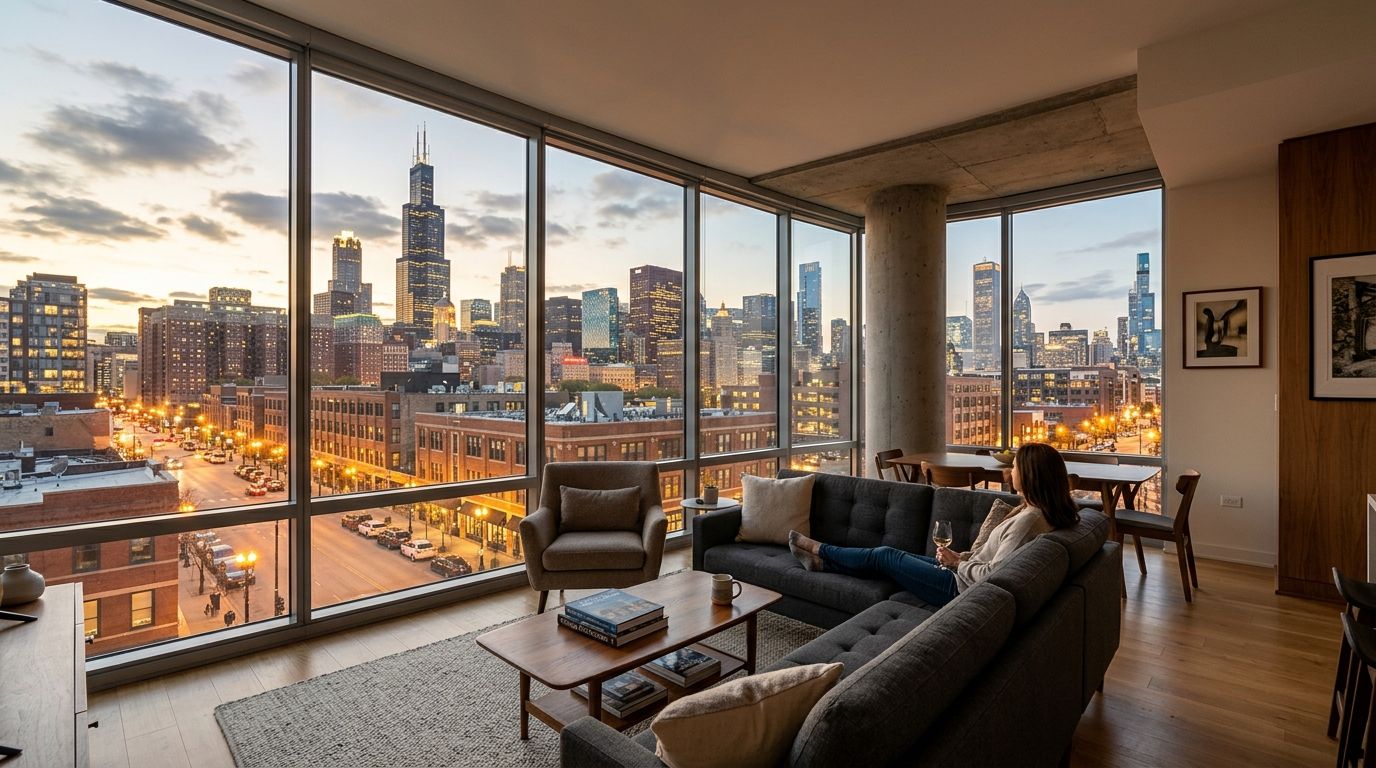

Chicago's rental market gets loud between May and September, when graduations, summer relocations, and expiring spring leases all compete for the same handful of good units. Here's how to run a tighter search so you land the apartment instead of losing it to someone who applied twenty minutes faster.
- Chicago apartment hunting during peak leasing season rewards speed: tour and apply the same week, not the same month.
- May through September is the tightest window in Chicago's rental cycle, driven by May 1 and October 1 turnover traditions.
- Stead 220 at 220 N. Ada Street runs 308 units in Fulton Market with a rooftop pool and fitness center, so peak-season demand hits fast.
- Have income proof, ID, and budget locked before your first tour, not after you find a unit you like.
- Corporate relocators and first-time renters face the steepest competition in July and August specifically.
Why this matters
Peak leasing season isn't a rumor real estate agents use to rush you. Chicago's rental cycle has run on a May-to-September clock for generations, tied to the city's old May 1 moving-day tradition and reinforced now by summer corporate relocations and graduation timelines. Units that would sit for two weeks in February get three applications in 48 hours during July.
That means the apartment hunting playbook changes. In slow months you can take your time, compare five buildings over three weekends, and negotiate. In 2026's peak window, hesitation is the thing that costs you the unit — not price, not credit, hesitation.
What you'll need
- Proof of income — pay stubs, an offer letter, or two months of bank statements, ready before your first tour
- A number, not a range — know your top monthly rent, not "somewhere around"
- Photo ID and application fee funds — most Fulton Market and West Loop buildings run applications same-day
- A shortlist of 4-6 buildings, not 15 — peak season punishes indecision, not narrow searches
- A guarantor lined up in advance if your income-to-rent ratio is tight — this is the single biggest delay point in July and August
- A calendar cleared for back-to-back tours — one Saturday, not three spread-out weekends
The steps
1. Start in April, not June
The best units in Fulton Market and the West Loop get listed 30 to 45 days before their available date. If you start your Chicago apartment hunting during peak leasing season in June, you're touring what's left after the April searchers already signed. Set calendar alerts for building websites two months before your target move-in date.
Common mistake: waiting until the current lease is almost up before looking. By then you're touring under a deadline, which pushes you toward whatever's available instead of what fits.
2. Lock your paperwork before you tour
Leasing teams in peak season don't hold units while you gather documents. Have pay stubs, ID, and application fee funds ready before you walk into a leasing office, not after you fall for a unit. Buildings serving corporate relocators in Fulton Market especially move fast because relocation packages come with hard start dates.
Expected outcome: you can submit an application within the hour of touring instead of losing the unit overnight.
3. Build a tight shortlist, not a long one
Four to six buildings that actually match your budget and neighborhood beats fifteen you're vaguely curious about. Rank them by priority before you tour, so when two come back available the same day, you already know which one you're taking.
Common mistake: touring buildings out of range "just to see." It burns your Saturday and clouds the comparison.
4. Tour back-to-back, same week
Spacing tours across three weekends means the unit you liked week one is gone by week three. Book everything in a single trip if you can — most leasing offices in Fulton Market and the West Loop will schedule same-day or next-day appointments in peak months. If you're apartment hunting for a September 1 Chicago start date, tour in July, not August.
Expected outcome: you compare units while the details are still fresh, not from memory two weeks later.
5. Ask about the actual move-in date, not just availability
"Available now" can mean three different things: vacant today, vacant in two weeks after turnover, or pre-leasing for a date six weeks out. Nail down the real date before you apply — this matters most for renters coordinating a lease end elsewhere. First-time renters especially get burned here, since apartments for first-time renters in Chicago often come with overlapping lease dates that need a week or two of double rent.
Common mistake: assuming "available" means move-in-ready today.
6. Apply the day you decide
In peak season, a unit you love on Tuesday can be gone by Wednesday morning. If a place checks your boxes — layout, floor, natural light, closet space — apply that day. Don't sleep on it hoping it'll still be there for a second look.
Expected outcome: you skip the "it's pending another application" call that ends most delayed decisions.
7. Read the lease terms before you sign, not after
Chicago's Residential Landlord and Tenant Ordinance governs security deposit handling and habitability standards citywide — know the basics before signing anything. Confirm move-in logistics too: freight elevator reservation windows, certificate of insurance requirements, and any move-in fee, since these details differ building to building and get missed when you're rushing to beat another applicant.
Common mistake: signing same-day without confirming the freight elevator slot, then scrambling to reschedule a moving truck.
Tour Stead 220 before peak season fills up
308 units in Fulton Market, from studios to two-bedrooms, with same-week tour scheduling.
Troubleshooting
- Every unit I like is already leased. You're touring too late in the cycle. Shift your search two to four weeks earlier next round, and widen your shortlist by one or two buildings.
- I can't get a tour slot that works with my schedule. Ask for a self-guided tour or a video walkthrough — most Fulton Market buildings offer one during peak months when in-person slots fill up.
- My credit or income doesn't hit the standard ratio. Line up a guarantor or offer additional months of rent upfront before you tour, not after a denial. This is the single biggest cause of lost units in July and August.
- I'm losing units to corporate relocation applicants. Relocation packages often come pre-approved with employer backing, which moves faster than a standard application. Apply the same day you tour to compete on speed.
- Budget keeps creeping up as I compare buildings. Set a hard ceiling before touring and stick to it — peak-season urgency makes it easy to justify $150-200 more a month than you planned.
- I found the right unit but the move-in date doesn't line up with my current lease. Ask the leasing office about short-term overlap options or a flexible start date before walking away from the unit entirely.
Tools and resources
- Building websites with live availability calendars — check twice a week during peak months, not once
- A shared spreadsheet ranking your shortlist by rent, floor plan, and move-in date
- In-unit washer/dryer apartments for busy professionals in Chicago if laundry logistics are a dealbreaker in your search
- A guarantor's contact info and documents, saved and ready to send same-day
- A moving company quote locked in two to three weeks ahead — movers book solid in Chicago's peak season
What to do next
Once you've narrowed your shortlist, go deeper on the amenities that actually change daily life instead of the ones that just photograph well. Fitness center access, closet systems, and finish quality matter more after move-in than they do on a tour. If remote work shapes your day, start with studio apartments for remote workers in Fulton Market to see what a live-work layout actually looks like before you commit.
FAQ
When is peak leasing season in Chicago?
Chicago's peak leasing season runs roughly May through September, driven by the city's historic May 1 moving-day tradition and summer corporate relocations. Demand and competition for units are highest in July and August specifically.
How far in advance should I start apartment hunting in Chicago?
Start 60 to 90 days before your target move-in date. Buildings in Fulton Market and the West Loop typically list units 30 to 45 days out, so an early start means you're touring inventory before it's gone.
Is it harder to find an apartment in Chicago in summer?
Yes. Summer is when the most leases turn over citywide, so good units get multiple applications within a day or two. Applying the same day you tour is the main way to compete during peak season.
What documents do I need to apply for an apartment in Chicago?
Most Chicago buildings require photo ID, proof of income such as pay stubs or an offer letter, and application fee funds. Having these ready before you tour lets you submit an application the same day instead of losing the unit overnight.
Do Chicago apartments require a guarantor?
Buildings typically require a guarantor when your income doesn't meet the standard rent-to-income ratio, often around 2.5 to 3 times monthly rent. Lining up a guarantor before you start touring avoids delays once you find a unit.
What is Fulton Market like for apartment hunting?
Fulton Market is one of Chicago's most in-demand rental neighborhoods, mixing restaurant row energy with newer high-rise buildings and tech offices nearby. Competition for units here is steep during peak season, so a fast, decisive application process matters more than in slower submarkets.
Should I sign a lease the same day I tour during peak season?
If the unit meets your must-haves, yes. Units in high-demand buildings can go from available to leased within 24 to 48 hours during Chicago's July and August peak.
What's the Chicago Residential Landlord and Tenant Ordinance?
The RLTO is Chicago's citywide ordinance governing security deposit handling, habitability standards, and tenant rights in most rental units. Reading the basics before signing a lease helps you spot terms that don't match local requirements.
One last thing
The detail most apartment hunters skip in peak season is the freight elevator reservation window, not the rent number. A unit at the right price with a move-in date that can't get a moving truck booked for two weeks is a worse deal than a slightly pricier unit with a same-week slot open. Ask about it on the tour, not after you've signed.
Stead 220 sits at 220 N. Ada Street in Fulton Market, running 308 units from studios to two-bedrooms with a rooftop pool and fitness center built around how residents actually use the building, not how it photographs. Shaped by design, built for belonging — instead of the ordinary scramble most renters go through in 2026's peak months, a same-week tour-to-lease process is what actually wins the unit.