Cat friendly apartments in West Loop Chicago are units that skip breed and weight restrictions, cap the number of cats per lease instead of banning pets outright, and give owners hard-surface flooring that survives litter tracking and scratched baseboards. Cat owners need different answers than dog owners chasing dog runs and leash rules — the real questions are window screen security, elevator noise, and how many cats one lease actually allows.
- Cat friendly apartments west loop chicago should confirm per-cat caps and fees before touring, not after applying.
- Stead 220's oak hardwood floors and elevator-access units suit indoor cats better than carpet-heavy vintage walk-ups.
- Window screen policy is the top cat-safety question in Fulton Market high-rises in 2026, not square footage.
- Verdict: Stead 220 is worth touring for cat owners who want a 308-unit Fulton Market building with hard-surface floors; confirm the current pet policy before signing.
Why cat friendly apartments matter for West Loop renters
Cat owners hunting in Fulton Market and West Loop face a narrower filter than dog owners. There's no dog run to check, no breed list to scan, but there's also less transparency — most Chicago listing sites lump "pet friendly" into one checkbox that doesn't separate cats from 80-pound dogs. That checkbox tells you nothing about per-cat fees, multi-cat caps, or whether the unit's windows have screens rated to hold a cat's weight.
High-rise living changes the calculus too. Veterinary literature has documented "high-rise syndrome" in cats since the 1980s — falls from windows above the second floor are common enough in urban buildings that screen security matters more than amenity count. A Stead 220 unit with a rooftop pool means nothing to a cat if the bedroom window doesn't lock a screen in place.
Confirm the building's actual cat policy, not the marketing page
Listing sites say "pets welcome" more often than leases actually spell out cat-specific terms. Get the real answer before you tour.
- Ask for the pet addendum in writing, not a verbal "yes, cats are fine"
- Confirm whether the cap is per-unit or per-bedroom (a two-bedroom often allows more cats than a studio)
- Ask if the policy differs for adopted shelter cats versus cats already living with you
- Check if there's a separate policy for kittens under six months
- Confirm whether the addendum requires proof of spay/neuter or current vaccination records
Check per-cat fees, deposits, and renewal terms
Fulton Market buildings vary widely on how they structure pet costs, and the number on the leasing flyer isn't always the number on the lease.
- Ask if the fee is one-time, monthly, or both
- Confirm whether the deposit is refundable and under what conditions
- Ask if pet rent increases at lease renewal, separate from base rent increases
- Get the exact per-cat multiplier if you have more than one cat
- Confirm whether an emotional support or service animal designation changes any of the above
Compare amenities that actually matter to indoor cats
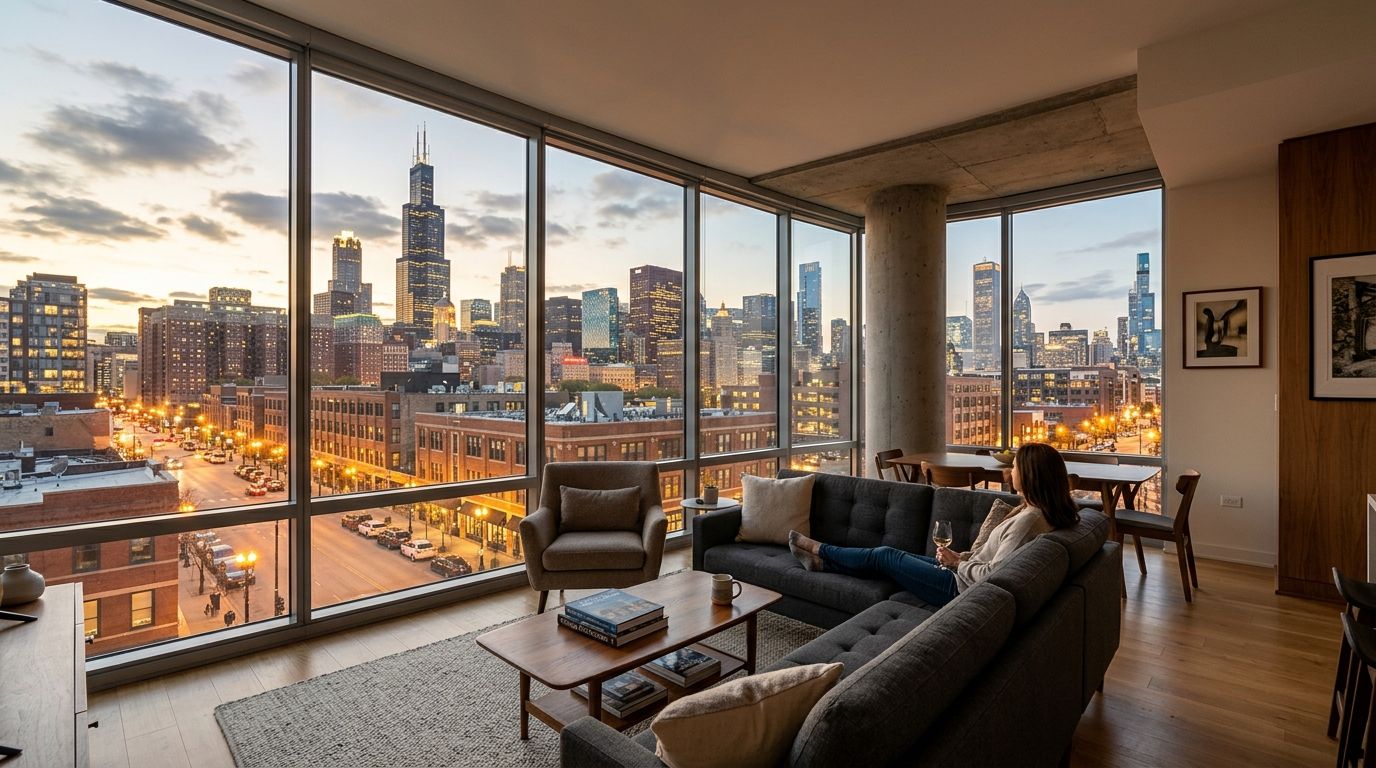
Rooftop decks and fitness centers get the marketing spotlight, but indoor cats care about floor surface, window count, and quiet. Run every Fulton Market listing through the same checklist instead of judging buildings by their lobby photos — a step-by-step way to compare apartment amenities across West Loop listings side by side, not by whichever building answered your email fastest.
- Hardwood or LVP flooring versus carpet in living areas and bedrooms
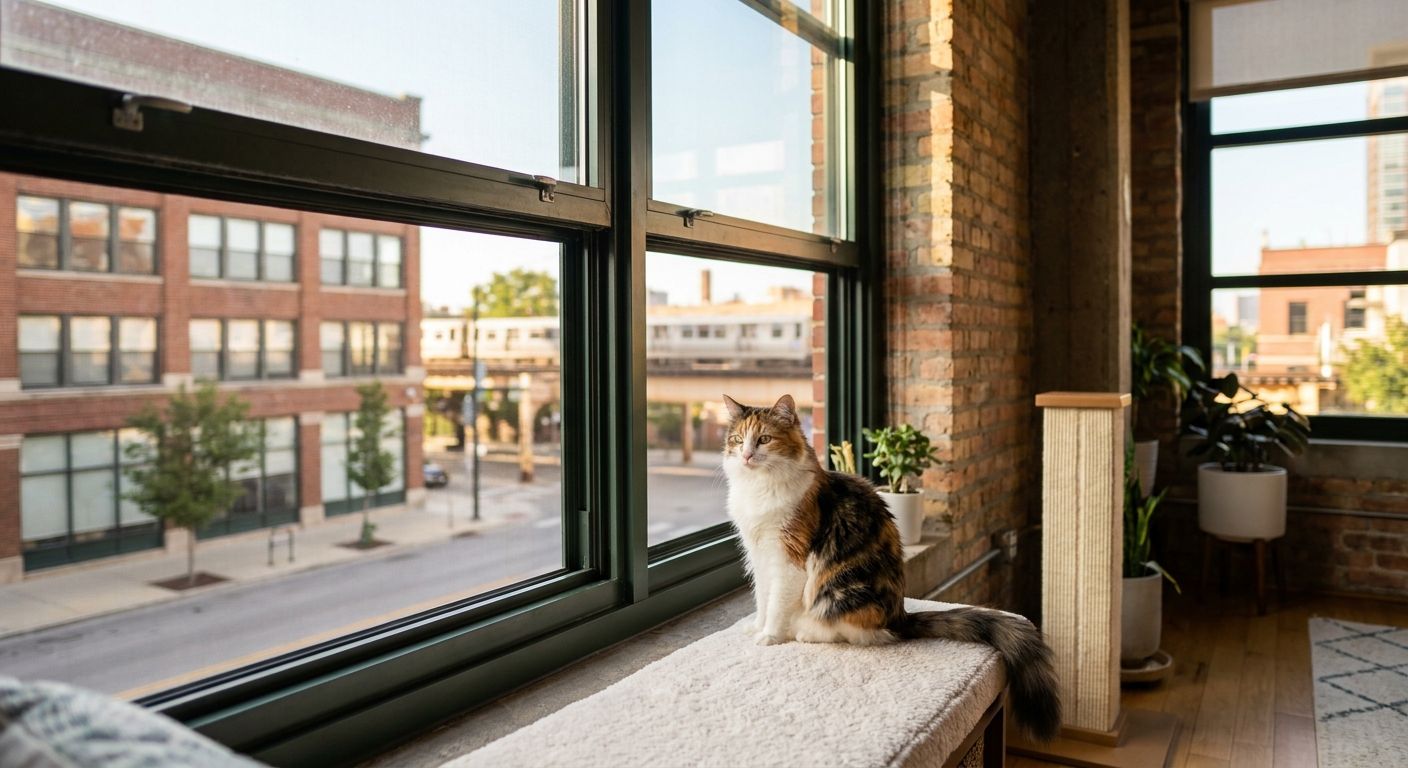
- Number and size of windows with direct sunlight for a cat's day
- In-unit laundry, which cuts down on litter-tracked trips to a shared laundry room
- Ceiling height and closet depth for vertical cat furniture
- Distance from the unit to the elevator bank, since cats react to hallway noise more than dogs do
Walk the specific unit for window and balcony safety
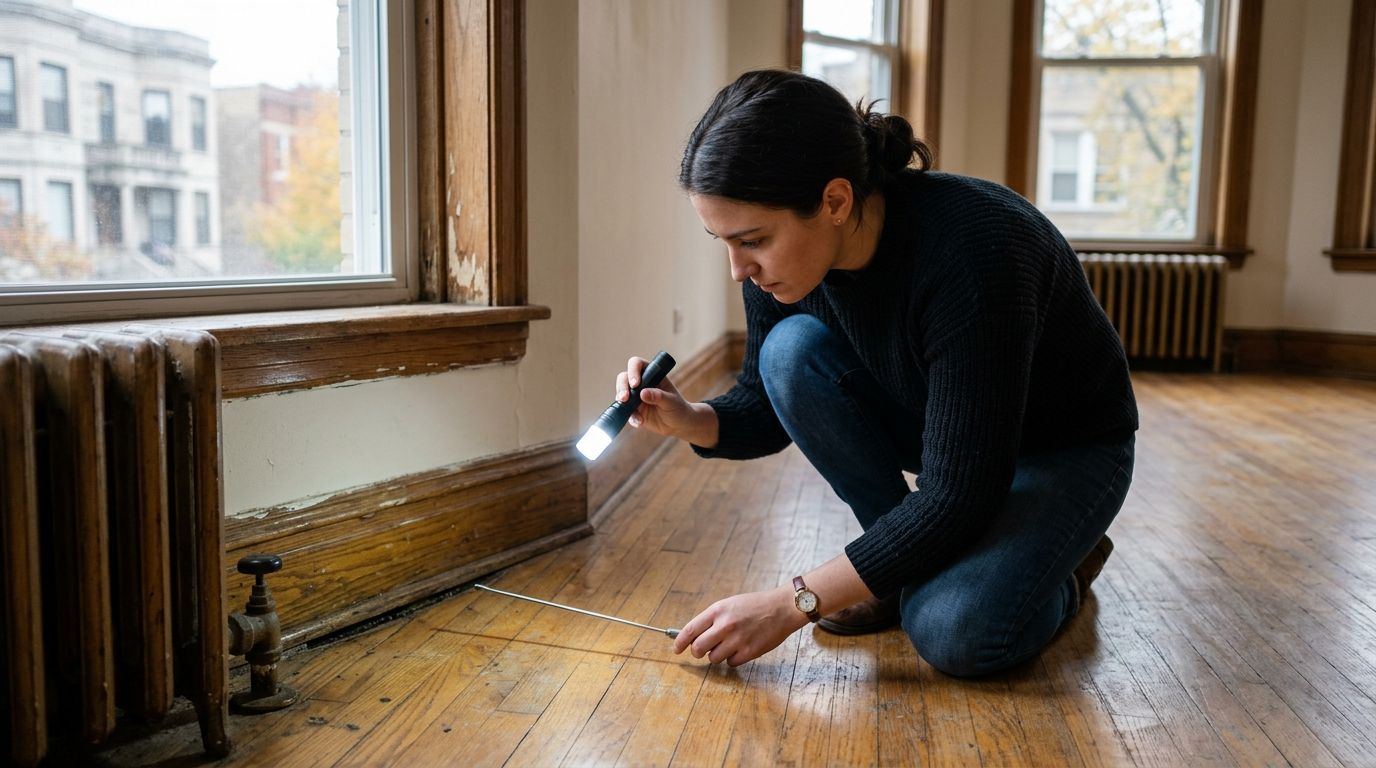
A floor plan on paper doesn't show you whether a window screen is bolted in or just resting in the frame. Walk the actual unit before signing anything.
- Test that window screens are secured, not just present
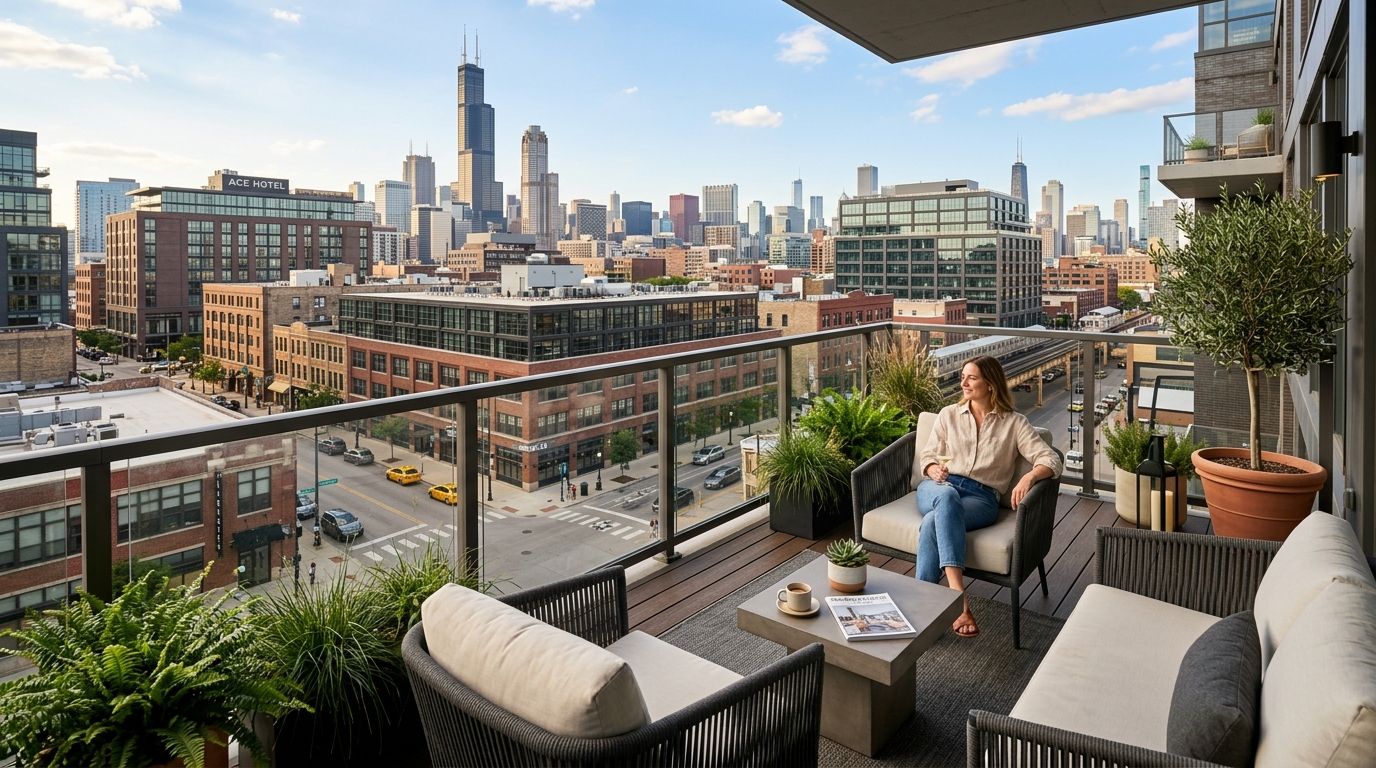
- Check balcony railing gap width if the unit has private outdoor space
- Look for gaps around in-wall AC units where a cat could get stuck
- Confirm whether window screens are tenant-installed or building-maintained
- Ask what floor the unit is on and whether that changes the building's screen requirements
See a Fulton Market floor plan today
Compare studio to two-bedroom layouts before you commit to a lease.
Ask about noise and neighboring pets before signing
A cat that startles at hallway noise will tell you within the first week whether the building was the right call. Ask these questions on the tour, not after move-in.
- How many pet households are on the same floor
- Whether the building allows dogs in the same hallway as cats (relevant for skittish cats near elevator banks)
- What the walls and floors are made of between units
- Whether the leasing office has fielded noise complaints tied to pets in the last year
Apply and lock the pet terms in writing
Once you've picked a finalist, get every pet term into the lease itself, not a side email. The application process for a Fulton Market apartment usually runs in parallel with pet paperwork, so submit both together to avoid a second review cycle.
- Request the pet addendum as a signed attachment to the lease, not a verbal add-on
- Confirm the move-in date accounts for time to set up a cat-safe unit (screens, litter station, hiding spots)
- Ask what documentation the building needs on file for a cat versus what it needs for a dog
- Get the renewal pet-fee structure in writing before you sign year one
Comparison: building types for cat owners in West Loop
| Building type | Best for | Key limitation |
|---|---|---|
| Vintage walk-up conversion | Owners who want lower rent and character details | Carpet in common areas, inconsistent window screen quality |
| 2010s mid-rise | Owners who want predictable pet policy paperwork | Fewer hardwood units, smaller windows in interior layouts |
| New construction high-rise (Stead 220) | Owners who want hard-surface floors and elevator access with fewer stairs for carriers | Confirm current cat policy directly, since amenity pages don't always list pet terms |
| Micro-studio buildings | Solo renters with one cat and a tight budget | Limited vertical space and window count for enrichment |
Verdict: a new-construction high-rise with oak hardwood and elevator access is the safer bet for indoor cats, but the pet policy still has to be confirmed line by line before you sign — no building type substitutes for reading the addendum.
Common mistakes cat owners make in West Loop
- Assuming "pet friendly" means no restrictions. Many Fulton Market buildings that allow dogs still cap cats at two per unit or charge a separate per-cat fee that isn't on the flyer.
- Skipping the window screen check. A unit can look perfect in photos and still have a screen that isn't secured — ask before you fall in love with the view.
- Ignoring elevator and hallway noise. Cats react to unfamiliar foot traffic differently than dogs; a building with heavy hallway traffic near the unit can mean weeks of a stressed cat.
- Not getting the pet addendum in writing. A verbal "yes" from a leasing agent isn't binding once the lease is signed.
- Forgetting to ask about renewal terms. Pet rent that seems reasonable in year one can jump at renewal if it isn't capped in the lease.
“A rooftop pool means nothing to a cat if the bedroom window doesn't lock a screen in place.”
FAQ
What makes an apartment cat friendly versus just pet friendly in West Loop?
A cat friendly apartment specifies cat-only terms in the lease — per-cat fees, caps, and window screen policy — instead of lumping cats into a general pet clause built around dogs. In 2026, ask for the pet addendum in writing to see the real terms.
Are there breed or weight restrictions for cats in Chicago apartments?
Most Chicago buildings don't apply breed or weight restrictions to cats the way they do to dogs, but many still cap the number of cats per unit. Confirm the cap directly with the leasing office before applying.
How much does a cat pet deposit typically add to a Chicago lease?
Pet deposits and fees vary by building and aren't standardized across Fulton Market or West Loop, so get the exact figure from the leasing office rather than relying on a listing site estimate.
Is Stead 220 a cat friendly apartment community?
Stead 220 is a 308-unit Fulton Market community with oak hardwood floors and studio-to-two-bedroom layouts; confirm the current cat policy directly with the leasing team before applying in 2026.
Do high-rise apartments carry more risk for cats than low-rise buildings?
Veterinary literature on high-rise syndrome shows falls from upper-floor windows are a real risk for cats, which makes screen security more important than floor height alone. Check that screens are bolted, not just resting in the frame, on any floor above the second.
Can I have more than one cat in a West Loop apartment?
Multi-cat households are common but not automatic — many leases cap cats at two per unit regardless of square footage. Confirm the per-unit cap before signing if you have more than one cat.
What should I check on an apartment tour if I own a cat?
Check window screen security, flooring type in the bedroom, and hallway noise near the unit's entrance. These three details affect a cat's daily comfort more than any amenity list.
Does pet rent increase at lease renewal in Chicago?
It can, and the increase isn't always tied to the base rent adjustment. Get the renewal pet-fee structure in writing during the original lease signing, not after the first year ends.
One last thing
The detail most cat owners skip on a tour isn't the amenity list — it's whether the window screens are actually secured to the frame. High-rise syndrome in cats is a documented veterinary phenomenon going back decades, and it has nothing to do with square footage or rooftop pools. Ask the leasing agent to show you a secured screen in the specific unit, not a generic one in the model apartment, before you sign anything in 2026.