Home cooks looking for a Chicago apartment with a demo-kitchen layout, in 2026, are really asking one question: which building gives you an island big enough to actually cook on, sightlines from the stove to the living room, and a neighborhood that keeps the pantry stocked. This guide ranks five ways to answer that question in Fulton Market and West Loop.
- Stead220 at 220 N. Ada Street pairs open-concept kitchens with oak hardwood floors across its 308 units in Fulton Market.
- Apartments with demo kitchens chicago searches usually mean an open island layout built for entertaining, not a literal cooking-school kitchen.
- Fulton Market Restaurant Row apartments put you steps from working chefs; industrial-style units give you the exposed-duct aesthetic that photographs like a demo kitchen.
- West Loop's farmers market corridor and wine-storage buildings serve renters who cook seasonally or stock a real pantry.
Why this matters
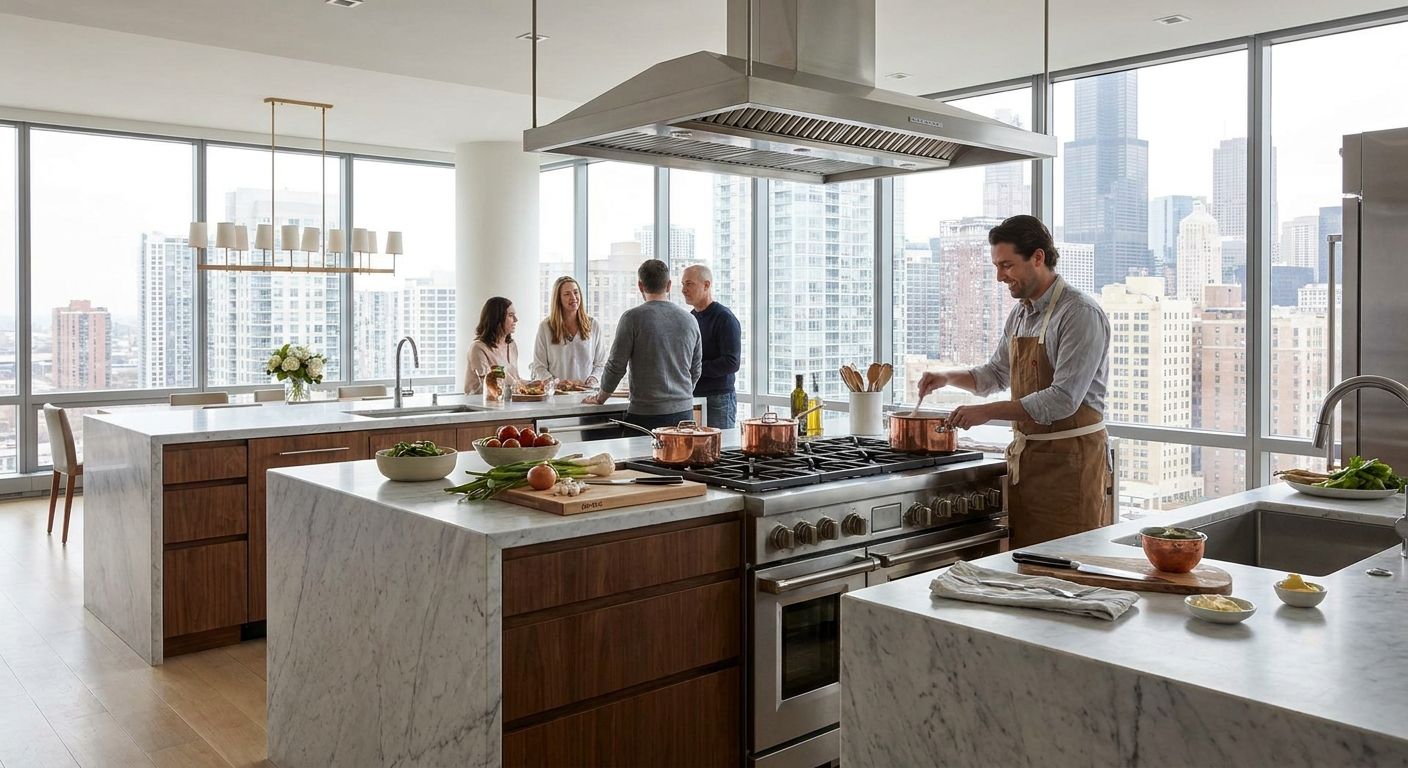
"Demo kitchen" isn't a leasing term you'll find in a building's amenity sheet — it's shorthand for a kitchen built to be used in front of people: a waterfall island, full sightlines into the living area, and enough counter space for two people to work without colliding. In 2026, more Chicago renters are cooking at home instead of eating out every night, and the apartments that support that habit look different from a galley kitchen tucked behind a wall.
Fulton Market and West Loop are the two Chicago submarkets where this layout shows up most, because most of the housing stock is new construction built after 2015. That means open floor plans are closer to the default than the exception, but the degree of openness, island size, and neighborhood food access still vary a lot building to building.
What makes the best apartment for a home cook
- Open sightlines from the cook zone into the living and dining space, not a kitchen boxed off by a wall
- An island or peninsula with real seating, not a two-foot ledge that can't hold a cutting board and two plates
- Storage depth for cookware, small appliances, and a working pantry
- Hard flooring through the kitchen, like oak hardwood, that holds up to spills and heavy foot traffic
- Walkable access to grocery and specialty food, since a great kitchen with nothing nearby to cook is half a solution
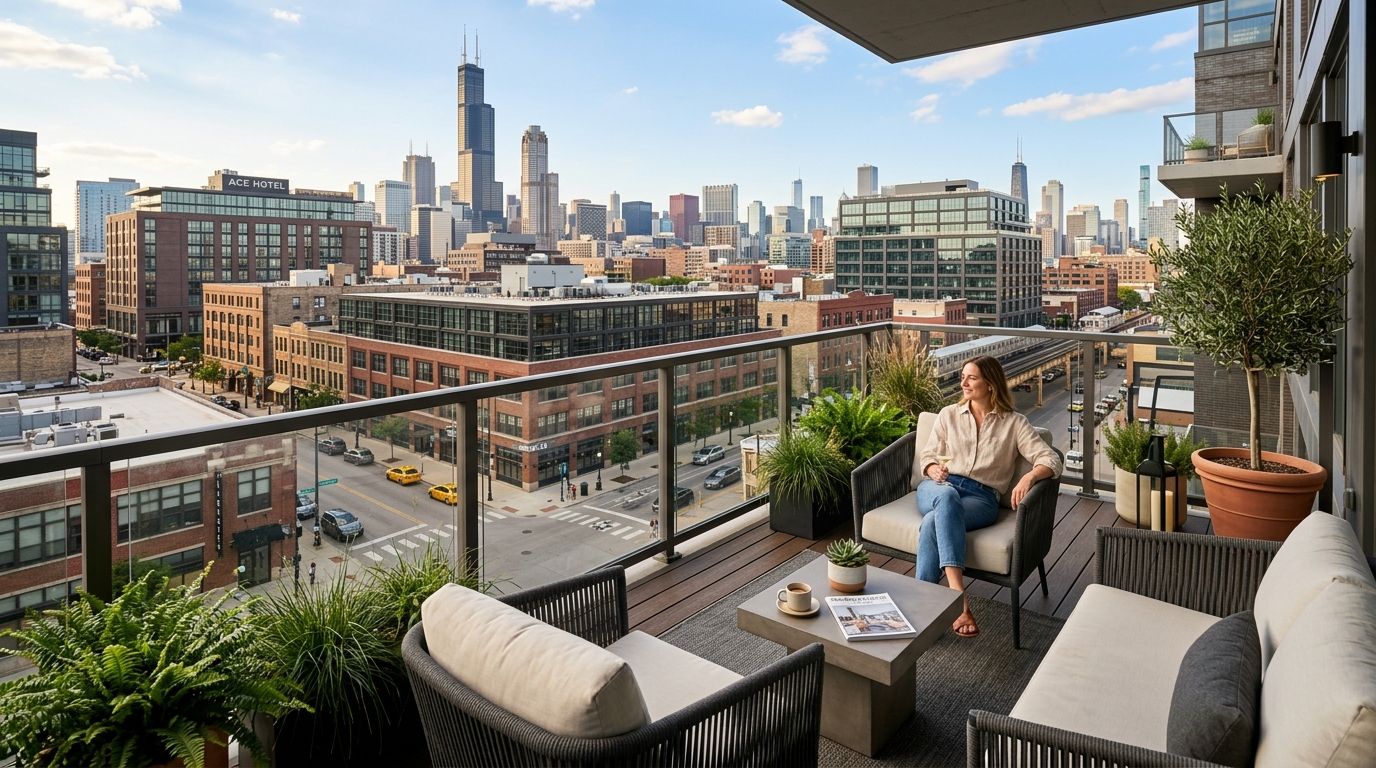
- Building-wide entertaining space — a rooftop deck or lounge that lets a dinner party spill outside the unit
At a glance
| Pick | Best for | Standout kitchen-adjacent detail | Key limitation |
|---|---|---|---|
| Stead220 | Open-concept living overall | Oak hardwood floors and open layouts across studio to two-bedroom homes | Not every floor plan has an oversized island — confirm per unit |
| Fulton Market Restaurant Row apartments | Restaurant-grade energy at your door | Direct walk to the neighborhood's working chef scene | Weekend noise from the restaurant corridor |
| Fulton Market industrial-style apartments | The exposed-duct demo-kitchen look | Loft-style ceilings and raw material finishes | Older buildings can mean smaller kitchen footprints |
| West Loop farmers market apartments | Seasonal, ingredient-first cooking | Walking distance to fresh produce vendors | Market access is seasonal, not year-round |
| Chicago apartments with private wine storage | Renters building a real pantry or cellar | Dedicated storage beyond the in-unit kitchen | A niche amenity most buildings don't offer at all |
1. Stead220: best Chicago apartment for open-concept demo-kitchen living
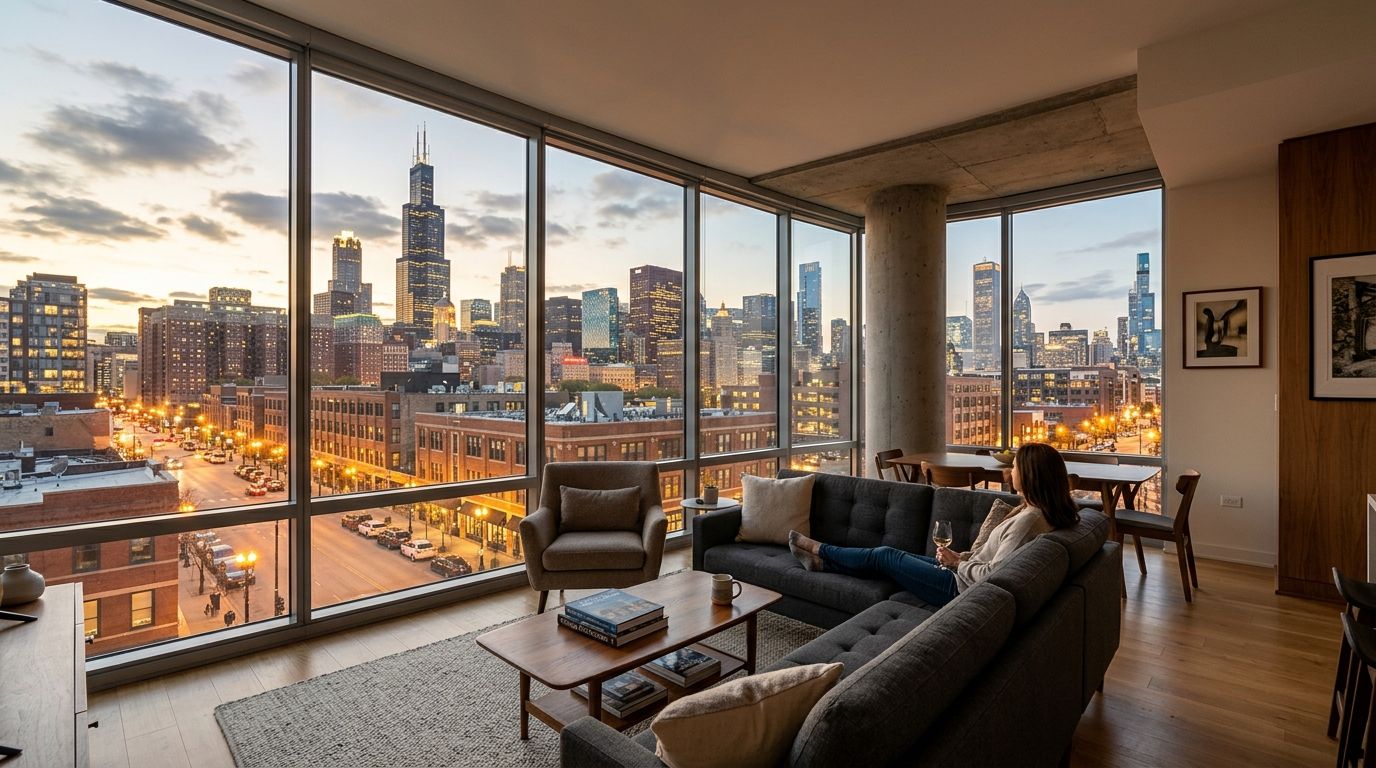
Stead220 is the strongest overall pick for a home cook who wants an open kitchen without leaving Fulton Market. The building sits at 220 N. Ada Street and runs 308 units from studios to two-bedroom homes, with oak hardwood floors carrying through the open kitchen and living space rather than stopping at a doorway.
The building's amenity set backs up the cooking-and-entertaining use case even outside the unit: a rooftop pool and a fitness center outfitted with TechnoGym equipment give a resident somewhere to host or unwind that isn't the kitchen island itself. Closets built with Italian-crafted wardrobes round out the same design-forward approach applied to the rest of the home.
Stead220 pros:
- Open floor plans that put the kitchen at the center of the living space, not boxed off
- Oak hardwood floors run through the kitchen and living area
- Rooftop pool and TechnoGym-equipped fitness center for entertaining beyond the unit
- Fulton Market location puts grocery and dining resources within walking distance
Stead220 cons:
- Island size and layout vary by floor plan — confirm specifics for the unit you're touring
- 308 units means peak leasing season can move fast on the layouts with the most kitchen space
Best for: renters who want an open kitchen as the default, not a special request.
Verdict: tour it first.
2. Fulton Market Restaurant Row apartments: best for home cooks who want to live near working chefs
This pick covers apartments clustered around Fulton Market's restaurant corridor, where a walk to dinner doubles as a walk past some of the neighborhood's most active kitchens. For a home cook, proximity to that scene means easier access to specialty grocers, butcher counters, and the kind of ingredient shopping that a suburban strip mall doesn't offer.
Fulton Market Restaurant Row pros:
- Walking distance to a dense concentration of restaurants and food retailers
- Strong resale and rental demand keeps buildings well maintained
- Easy to build a rotating list of takeout backups on nights you don't cook
Fulton Market Restaurant Row cons:
- Weekend and evening noise from restaurant traffic and deliveries
- Kitchen layouts vary widely building to building — this pick is about location, not a guaranteed island size
Best for: renters who treat the neighborhood itself as an extension of the kitchen.
Verdict: shortlist it.
3. Fulton Market industrial-style apartments: best for the exposed-duct demo-kitchen look
Some of Fulton Market's industrial-style interiors sit in converted warehouse buildings with exposed brick, ductwork, and taller ceilings than a typical new-construction tower. That aesthetic is the closest thing Chicago has to a literal demonstration kitchen — the kind of open, raw-material space that photographs like a cooking set.
Fulton Market industrial-style pros:
- Taller ceilings and exposed materials give the kitchen visual openness
- Loft-style layouts often skip interior walls that would otherwise box in a kitchen
- Distinct aesthetic that's harder to find in standard new-construction buildings
Fulton Market industrial-style cons:
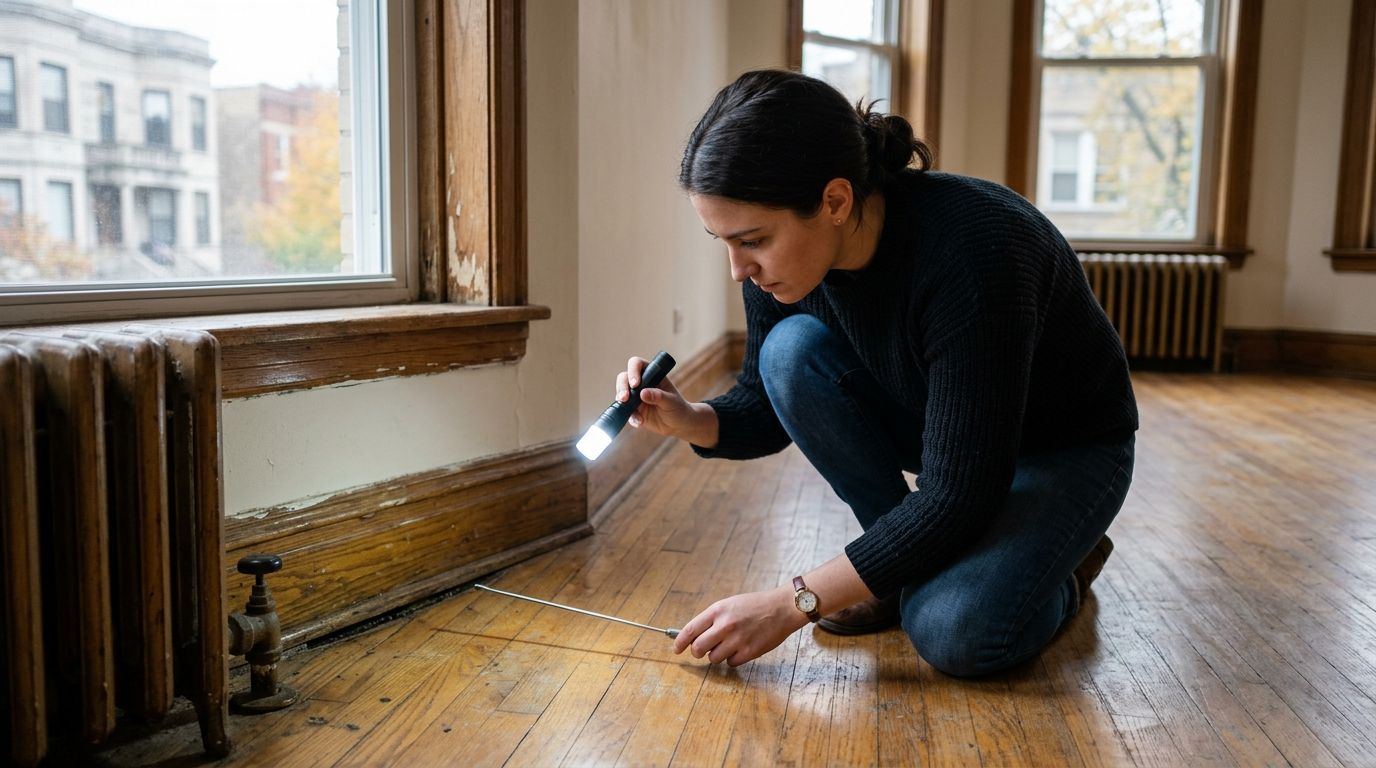
- Older conversions can mean smaller kitchen footprints than the aesthetic suggests
- Appliance packages and finishes vary more than in newer buildings
Best for: renters who want the industrial look more than a guaranteed square footage number.
Verdict: tour it, but measure the island before you sign.
4. West Loop farmers market apartments: best for seasonal, ingredient-first cooking
Apartments near West Loop's farmers market corridor put a home cook within walking distance of fresh produce on market days, which matters more than square footage if your cooking habit is built around what's in season. This is a location-driven pick rather than a kitchen-layout pick — the value is in what's outside the door.
West Loop farmers market pros:
- Walking access to seasonal produce vendors
- Complements an ingredient-first cooking style better than a big-box grocery run
- Sits inside the same West Loop corridor as most of Chicago's newer apartment stock
West Loop farmers market cons:
- Market access is seasonal, not a year-round amenity
- Kitchen size and layout still depend on the specific building, not the location alone
Best for: renters who plan meals around what's fresh that week.
Verdict: consider it if you already cook seasonally.
5. Chicago apartments with private wine storage: best for renters building a real pantry
This is the niche pick. A small number of Chicago buildings offer dedicated wine storage rooms separate from the in-unit kitchen — useful for a home cook who's outgrown the kitchen cabinet as a storage solution and wants a real cellar setup.
Private wine storage pros:
- Dedicated storage that doesn't eat into kitchen cabinet space
- Appeals to renters who host regularly and want a stocked bar or cellar
Private wine storage cons:
- Rare amenity — most Chicago buildings, including many in Fulton Market and West Loop, don't offer it
- Doesn't substitute for a well-designed kitchen if the unit's actual layout is closed off
Best for: renters whose cooking hobby has expanded into serious wine or spirits storage.
Verdict: niche pick — check availability before you count on it.
Ready to tour a Fulton Market kitchen?
See the floor plans and start an application.
How this list was ranked
Each pick was measured against the six criteria above: open sightlines, island seating, storage depth, hard flooring, walkable food access, and building-wide entertaining space. Stead220 leads because it's the only pick on this list that combines a confirmed open floor plan and hardwood flooring with a specific address and unit count — the rest are location or aesthetic categories where kitchen specifics vary by building.
If the kitchen island is the single feature that matters most to you, an open-concept building like Stead220 beats a great location with an unverified layout.
Which Chicago apartment should you choose in 2026?
If you want a confirmed open kitchen layout without gambling on a specific building's finishes, Stead220 is the default pick — 308 units at 220 N. Ada Street, oak hardwood floors through the kitchen and living space, and a Fulton Market address that puts grocery and dining resources within walking distance. If restaurant proximity matters more than the kitchen itself, go with Fulton Market Restaurant Row apartments. If you want the raw-material aesthetic, tour the industrial-style conversions first — just measure the actual kitchen before you sign anything in 2026.
FAQ
What is a demo kitchen apartment?
A demo kitchen apartment has an open layout with a large island and clear sightlines into the living space, built for cooking in front of guests rather than in a closed-off galley kitchen. It's a design term, not an official leasing category.
Does Stead220 have a demo kitchen?
Stead220's studio to two-bedroom homes feature open-concept layouts with oak hardwood floors running through the kitchen and living area. Confirm the specific island size and layout for the floor plan you're touring, since it varies by unit.
Is Fulton Market or West Loop better for home cooks?
Fulton Market puts you closer to the neighborhood's restaurant corridor and specialty food retailers, while West Loop's farmers market corridor favors seasonal, ingredient-first cooking. Both submarkets sit inside mostly new-construction housing stock with open floor plans as the default.
What should I look for in a Chicago apartment kitchen for cooking?
Prioritize open sightlines from the kitchen to the living area, an island with real seating, and hard flooring like oak hardwood that holds up to daily cooking. Storage depth for cookware and a walkable route to groceries matter just as much as the layout itself.
Are industrial-style Fulton Market apartments good for cooking?
Industrial-style conversions offer taller ceilings and exposed materials that read as open, demo-kitchen-style space, but older buildings can have smaller actual kitchen footprints. Measure the island and counter space before assuming the aesthetic matches the function.
How many units does Stead220 have?
Stead220 is a 308-unit community at 220 N. Ada Street in Fulton Market, leasing studios through two-bedroom homes.
Do Chicago apartments near farmers markets cost more?
Location near a farmers market corridor doesn't set pricing on its own — kitchen layout, building age, and unit size drive cost more than proximity to a seasonal market. Confirm current pricing directly with each building.
What amenities pair well with a home-cook lifestyle in Chicago?
A rooftop deck or lounge for entertaining beyond the kitchen, a fitness center to balance the cooking-and-eating routine, and walkable grocery access round out the amenities that matter most alongside the kitchen itself.
One last thing
Most Chicago listings that use the phrase "demo kitchen" are describing the island and sightlines, not a literal cooking-demonstration space — so when you tour in 2026, bring a tape measure and check the counter depth yourself instead of relying on the listing photos.
“If the kitchen island can't fit a cutting board and two plates at the same time, it's not a demo kitchen, whatever the listing calls it.”