ADA accessible apartments in Chicago come down to two separate checks: does the building meet Fair Housing Act design and construction rules, and does the unit itself have the roll-in shower, lowered counters, and reinforced walls a renter actually needs. This guide ranks the strongest categories of accessible apartments in Chicago for 2026, from new-construction communities in Fulton Market to Chicago Housing Authority units built around Section 504.
- Stead220 in Fulton Market is the top pick among ADA accessible apartments in Chicago for 2026, with step-free access to every amenity floor.
- Buildings constructed after March 13, 1991 must meet Fair Housing Act accessible design and construction rules under federal law.
- CHA-administered housing guarantees at least 5% mobility-accessible and 2% sensory-accessible units under HUD Section 504.
- Buildings near Ogilvie Transportation Center and Union Station suit renters who need step-free transit without a car.
Why this matters
Accessibility in Chicago apartments isn't one standard, it's three stacked on top of each other. The Fair Housing Act's design and construction requirements apply to any multifamily building with four or more units first occupied after March 13, 1991, covering accessible routes, usable kitchens and bathrooms, and reinforced bathroom walls. The Illinois Accessibility Code adds state-level requirements on top of that. And federally assisted housing, including much of what the Chicago Housing Authority administers, follows Section 504 of the Rehabilitation Act, which sets minimums of 5% mobility-accessible and 2% sensory-accessible units.
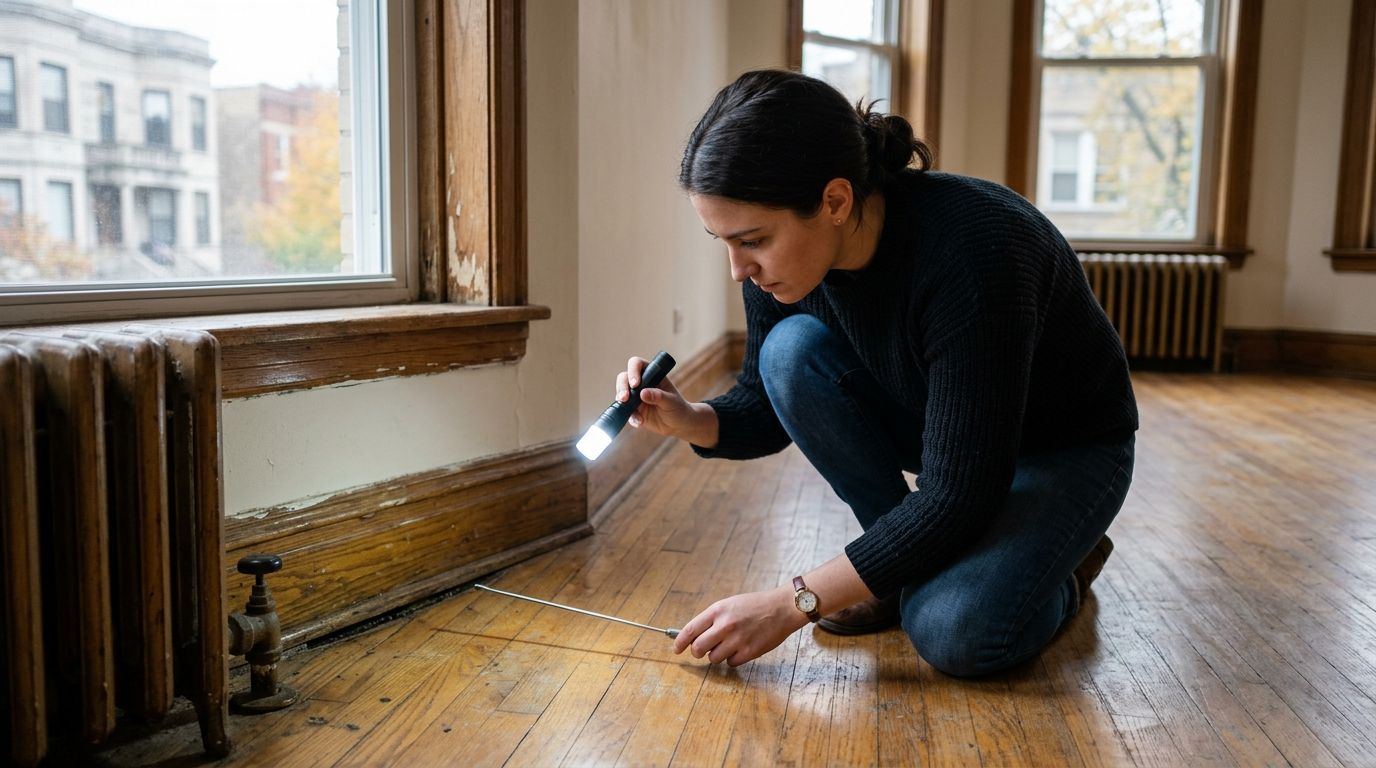
What that means for a renter searching in 2026: a building's age tells you almost as much as its listing photos. Pre-1991 vintage buildings in neighborhoods like the Loop or Lincoln Park often lack elevators or accessible routes entirely, while new construction in Fulton Market and West Loop is required to meet the federal baseline from the day it opens.
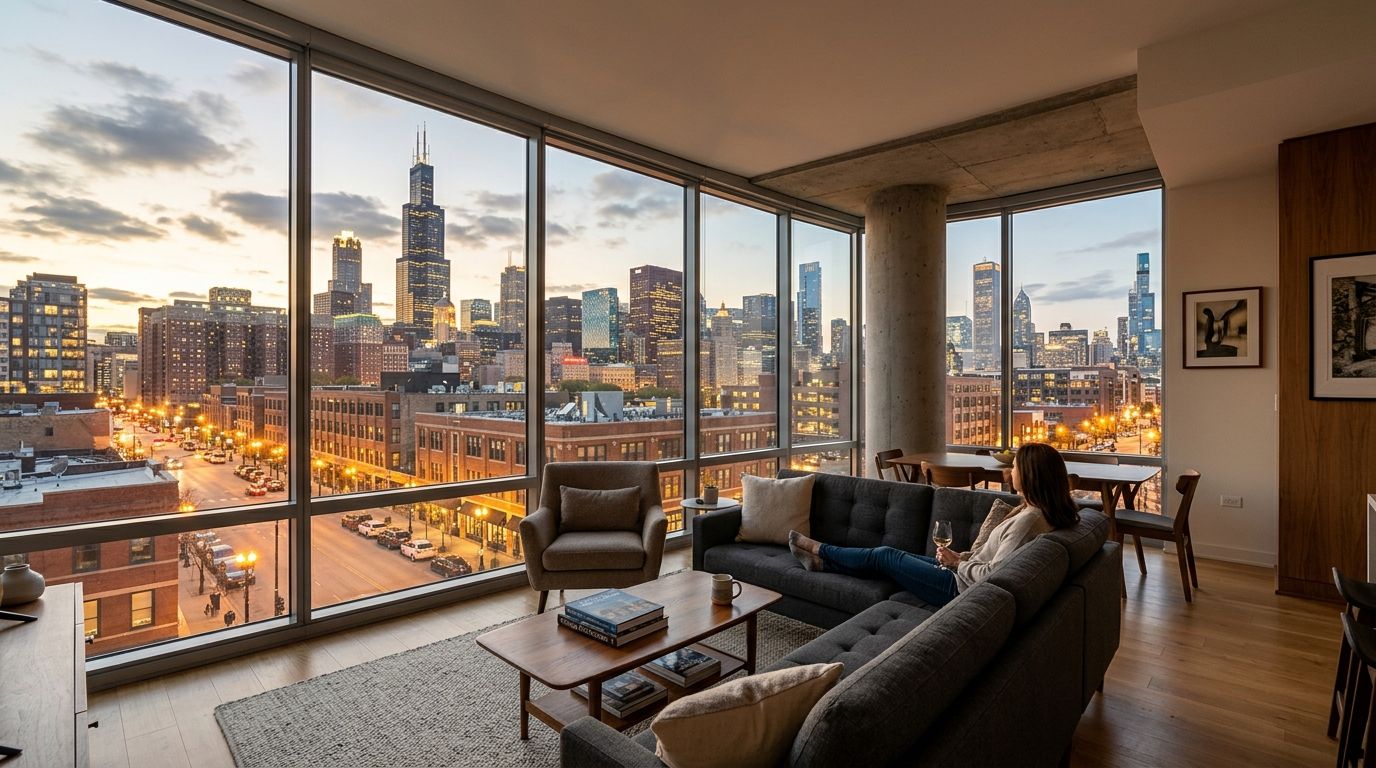
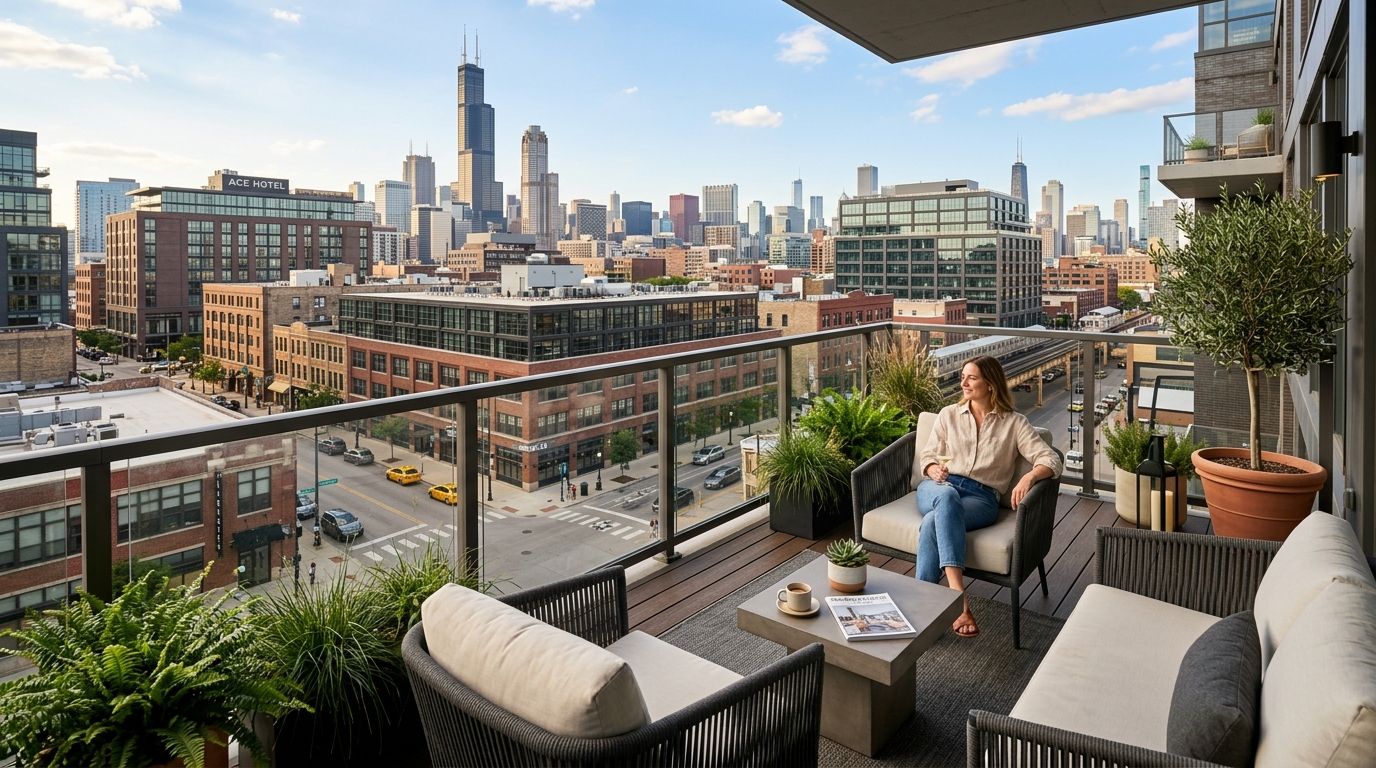
Stead220, a 308-unit community at 220 N. Ada Street in Fulton Market, sits in that newer-construction category. It leases studios through two-bedroom homes and includes shared amenities like a rooftop pool and fitness center that fall under the same accessible-common-area rules as the units themselves.
What makes the best ADA accessible apartments in Chicago
- Step-free accessible route from parking, the lobby, and the unit entry itself.
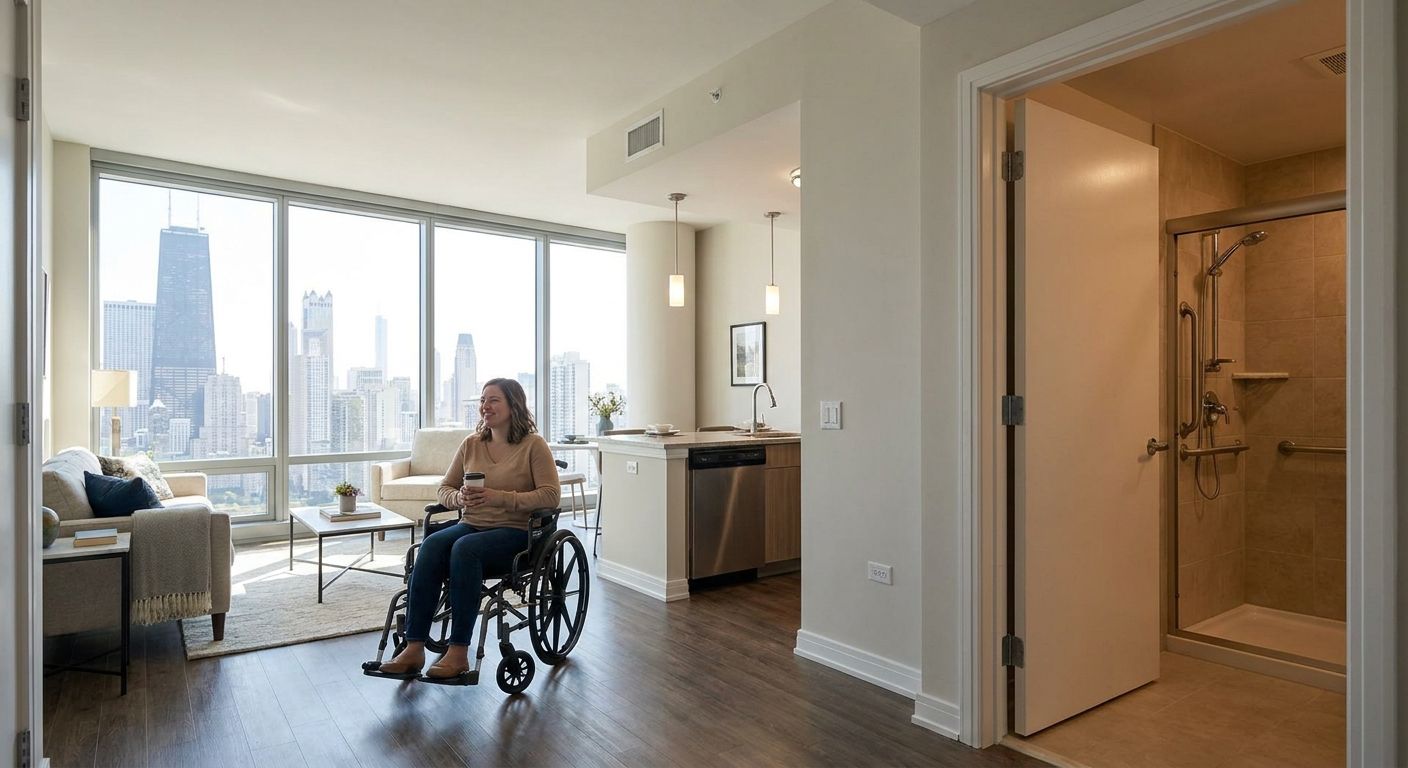
- Roll-in showers or transfer-height tubs, lowered counters and light switches, and reinforced walls for grab bars.
- Elevator access in every building constructed after the 1991 FHA design threshold.
- Accessible common areas — pool decks, fitness centers, package rooms, coworking lounges.
- Proximity to transit or medical care for renters managing recurring appointments.
- Responsive property management that processes reasonable accommodation and modification requests without delay.
ADA accessible apartments in Chicago: at a glance
| Category | Best for | Standout feature | Key limitation |
|---|---|---|---|
| Stead220 (Fulton Market) | New-construction accessible amenities | Step-free access to rooftop pool, fitness center, and package lockers | Single building, so no portfolio-wide waitlist flexibility |
| West Loop new-construction high-rises | Corporate and tech commuters | Post-1991 buildings built to FHA-compliant unit design | Availability shifts fast during peak leasing season |
| Illinois Medical District corridor | Renters near hospitals | Walkable or short-transit distance to major medical campuses | Fewer luxury amenities than Fulton Market or West Loop stock |
| CHA-administered Section 504 housing | Subsidized accessible units | Guaranteed minimum 5% mobility-accessible, 2% sensory-accessible units | Waitlists run long and income limits apply |
| Buildings near Ogilvie and Union Station | Car-free transit access | Step-free routes to Metra and Amtrak platforms | Noise and foot traffic near station entrances |
1. Stead220 (Fulton Market): best ADA accessible apartments in Chicago for new-construction amenities
Stead220 leases studios to two-bedroom homes at 220 N. Ada Street, in the middle of Fulton Market's newer development corridor. As a newer community, its shared spaces — rooftop pool, fitness center — fall under the same accessible common-area standard that applies to the units themselves.
Stead220 pros:
- Newer Fulton Market construction, built into a stretch of the neighborhood defined by ground-up development rather than converted warehouses.
- 308 units across studio, one-bedroom, and two-bedroom layouts gives renters more accessible-unit options within one address.
- Shared amenities, including the rooftop pool and fitness center, sit within a single accessible building footprint.
Stead220 cons:
- One address means one waitlist — a renter who needs a specific accessible unit type has fewer floor plans to shift between than across a multi-building portfolio.
- Confirming a specific unit's exact accessible features (roll-in shower vs. transfer tub, for example) requires a direct conversation with leasing, not a listing page.
Best for: renters who want new-construction accessible design plus full-building amenities in one Fulton Market address.
Verdict: Tour it. Start with a direct accommodation request through leasing to confirm which floor plans have the accessible features you need.
2. West Loop new-construction high-rises: best ADA accessible apartments in Chicago for corporate commuters
West Loop's high-rise stock, much of it built in the last decade, sits squarely in the post-1991 FHA design window. Renters working downtown or in Fulton Market's corporate offices get elevator-served buildings with accessible routes built in from day one rather than retrofitted.
West Loop high-rises pros:
- Post-1991 construction means Fair Housing Act design and construction compliance is a legal baseline, not an upgrade.
- Dense concentration of buildings gives renters more units to compare within a few blocks.
- Proximity to Metra and CTA lines cuts down on accessible-transit gaps.
West Loop high-rises cons:
- Popular buildings lease up fast during peak season, narrowing accessible-unit choices.
- Rents in this corridor sit at the higher end of the Chicago market, which limits the pool for budget-conscious renters.
Best for: commuters who want elevator-served, code-compliant buildings close to West Loop and Fulton Market employers.
Verdict: Shortlist it. Confirm accessible-unit availability early since these buildings turn over quickly.
3. Illinois Medical District corridor: best ADA accessible apartments in Chicago for renters near hospitals
Renters managing ongoing medical care, or working shifts at a hospital, gain the most from apartments within walking or short-transit distance of Chicago's medical campuses. This corridor trades some of the amenity density of Fulton Market for a shorter trip to appointments.
Medical corridor pros:
- Shorter, more predictable trips for renters with frequent medical appointments.
- Building stock includes a mix of ages, so both retrofitted and new-construction accessible units exist.
- Often more moderate rents than Fulton Market or West Loop.
Medical corridor cons:
- Fewer luxury amenities like rooftop pools or resident lounges compared to newer downtown-adjacent buildings.
- Older buildings in the mix require closer verification of actual accessible features before signing.
Best for: renters prioritizing distance to hospitals and specialists over amenity package.
Verdict: Tour it, but verify unit age first. Ask directly whether the specific building was constructed before or after 1991.
4. CHA-administered Section 504 housing: best ADA accessible apartments in Chicago on a subsidized budget
Federally assisted housing in Chicago, much of it administered through the Chicago Housing Authority, follows HUD's Section 504 rule: a minimum of 5% mobility-accessible units and 2% sensory-accessible units per property. For income-qualified renters, this is the most reliable path to a guaranteed accessible unit.
CHA housing pros:
- Legally guaranteed minimum percentage of accessible units, not a building-by-building guess.
- Rent is tied to income for qualifying renters, easing the affordability side of the search.
- Properties span multiple Chicago neighborhoods, not just downtown-adjacent corridors.
CHA housing cons:
- Waitlists commonly run long, and availability isn't immediate.
- Income limits apply, which rules this option out for higher earners.
- Amenity packages are typically far more modest than market-rate new construction.
Best for: income-qualified renters who need a guaranteed accessible unit and can plan around a waitlist.
Verdict: Apply and wait-list now. The lead time on this option is the longest on this list, so start the application in 2026 rather than closer to a move date.
5. Buildings near Ogilvie and Union Station: best ADA accessible apartments in Chicago for car-free transit access
Renters who don't drive, or who use a mobility device that makes driving impractical, benefit most from buildings within step-free distance of Metra and Amtrak platforms at Ogilvie Transportation Center and Union Station.
Transit-adjacent pros:
- Step-free routes to regional and intercity rail cut down on transfer points.
- Dense West Loop and Fulton Market building stock nearby means newer, code-compliant construction.
- Reduces reliance on rideshare or paratransit for regional travel.
Transit-adjacent cons:
- Noise and foot traffic near station entrances during rush hour.
- Premium pricing on buildings directly adjacent to the stations.
Best for: renters who travel regionally by rail and want accessible routes without a car.
Verdict: Shortlist it if Metra or Amtrak access matters more to your routine than proximity to Fulton Market's restaurant row.
Start your Stead220 application
Confirm accessible unit availability directly with leasing before you tour.
How we ranked
Each category above is measured against the six criteria listed earlier: accessible route, in-unit accessible features, elevator access tied to the 1991 FHA threshold, accessible common areas, proximity to transit or medical care, and management responsiveness on accommodation requests. Categories that satisfy more of these without trade-offs rank higher; categories built around a single strong trait, like CHA's guaranteed accessible-unit percentage, rank by how well they serve the renter who needs that specific trait most.
Which ADA accessible apartments in Chicago should you choose?
If you want new-construction accessible design with full building amenities in one Fulton Market address, Stead220 is the default pick for 2026. If your daily routine centers on downtown offices, West Loop's post-1991 high-rise stock is the stronger match. Renters managing frequent medical appointments should weigh the Illinois Medical District corridor first, income-qualified renters should start a CHA application now given waitlist length, and car-free renters should prioritize buildings near Ogilvie and Union Station.
Whatever the choice, the confirmation step is the same: no listing page substitutes for a direct conversation with leasing about which specific units carry which accessible features.
FAQ
What makes an apartment ADA accessible in Chicago?
An ADA accessible apartment in Chicago typically means the building meets Fair Housing Act design and construction requirements for buildings first occupied after March 13, 1991, including accessible routes, usable kitchens and bathrooms, and reinforced walls for grab bars. Federally assisted properties also follow HUD Section 504, which sets minimums for mobility- and sensory-accessible units.
Is Stead220 ADA accessible?
Stead220 is a 308-unit community in Fulton Market with shared amenities like a rooftop pool and fitness center that fall under accessible common-area standards. Confirm specific unit-level accessible features directly with leasing before touring.
How many accessible units are required in Chicago apartment buildings?
Federally assisted housing must meet a minimum of 5% mobility-accessible and 2% sensory-accessible units under HUD Section 504. Market-rate buildings built after March 13, 1991 must meet Fair Housing Act design and construction requirements but don't carry the same fixed percentage rule.
Are Fulton Market apartments wheelchair accessible?
Most Fulton Market buildings are new construction built well after the 1991 Fair Housing Act threshold, which requires accessible routes and elevator access. Confirm the specific unit's roll-in shower or transfer-height tub setup with leasing since listing photos don't always show it.
How do I request an ADA accommodation in a Chicago apartment?
Submit a reasonable accommodation or modification request directly to the property's leasing or management office, in writing, describing the specific need. Fair Housing Act protections require landlords to respond and, where reasonable, make the change.
What's the difference between ADA and Fair Housing Act accessibility rules?
The ADA primarily governs public accommodations and common areas open to the public, while the Fair Housing Act governs the design and construction of the housing units themselves in buildings built after March 13, 1991. Most apartment accessibility questions in Chicago fall under the Fair Housing Act, not the ADA directly.
What are the best neighborhoods for accessible apartments in Chicago?
Fulton Market and West Loop lead for new-construction accessible design built after 1991, while the Illinois Medical District corridor suits renters prioritizing proximity to hospitals. Buildings near Ogilvie Transportation Center and Union Station work best for car-free, transit-dependent renters.
Do older Chicago apartment buildings have accessible units?
Some do, through retrofits, but buildings constructed before March 13, 1991 aren't required to meet Fair Housing Act design and construction standards. Always confirm accessible features directly with the building rather than assuming based on age alone.
One last thing
The single detail most renters skip: the 1991 construction date isn't a soft guideline, it's the legal line the Fair Housing Act draws for design and construction compliance. Ask any Chicago leasing office for the building's first-occupancy year before you tour — it tells you more about accessible design in 2026 than any amenity list.