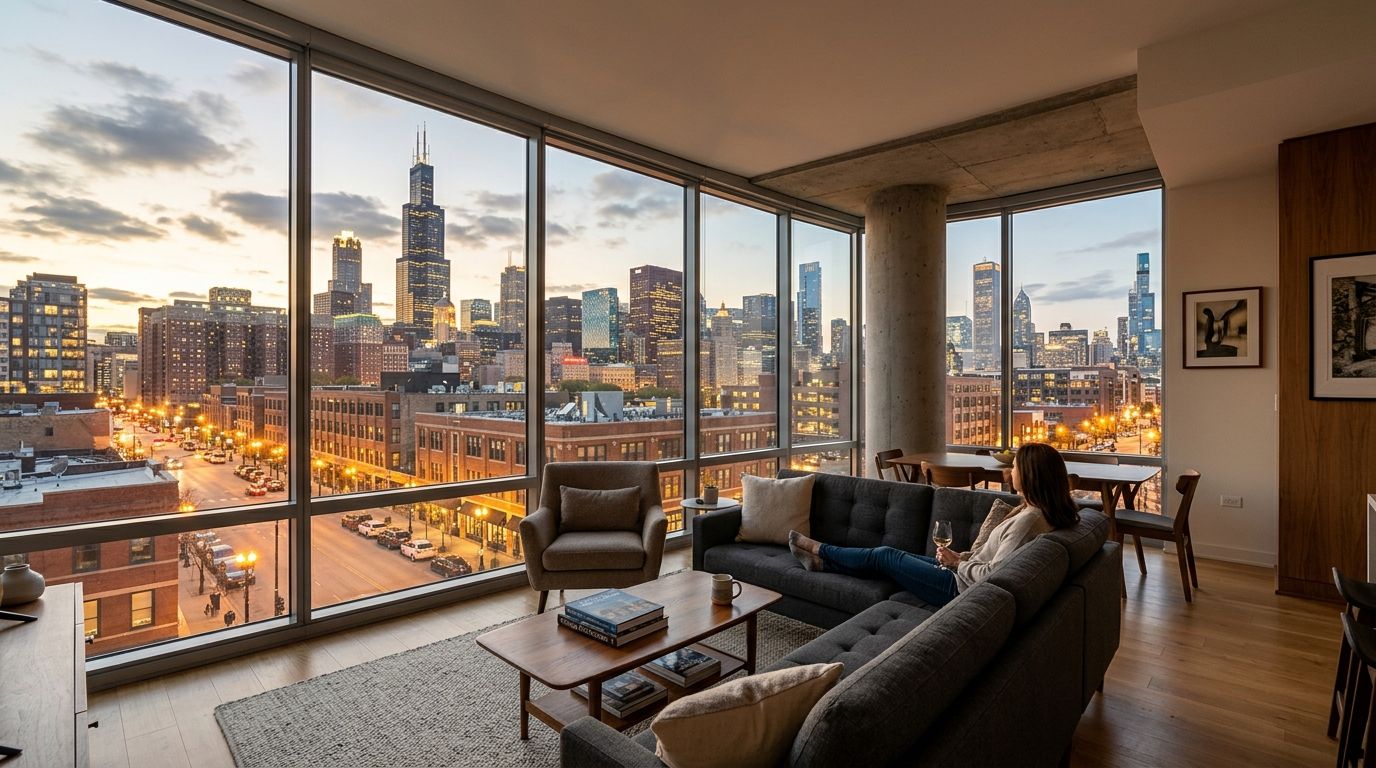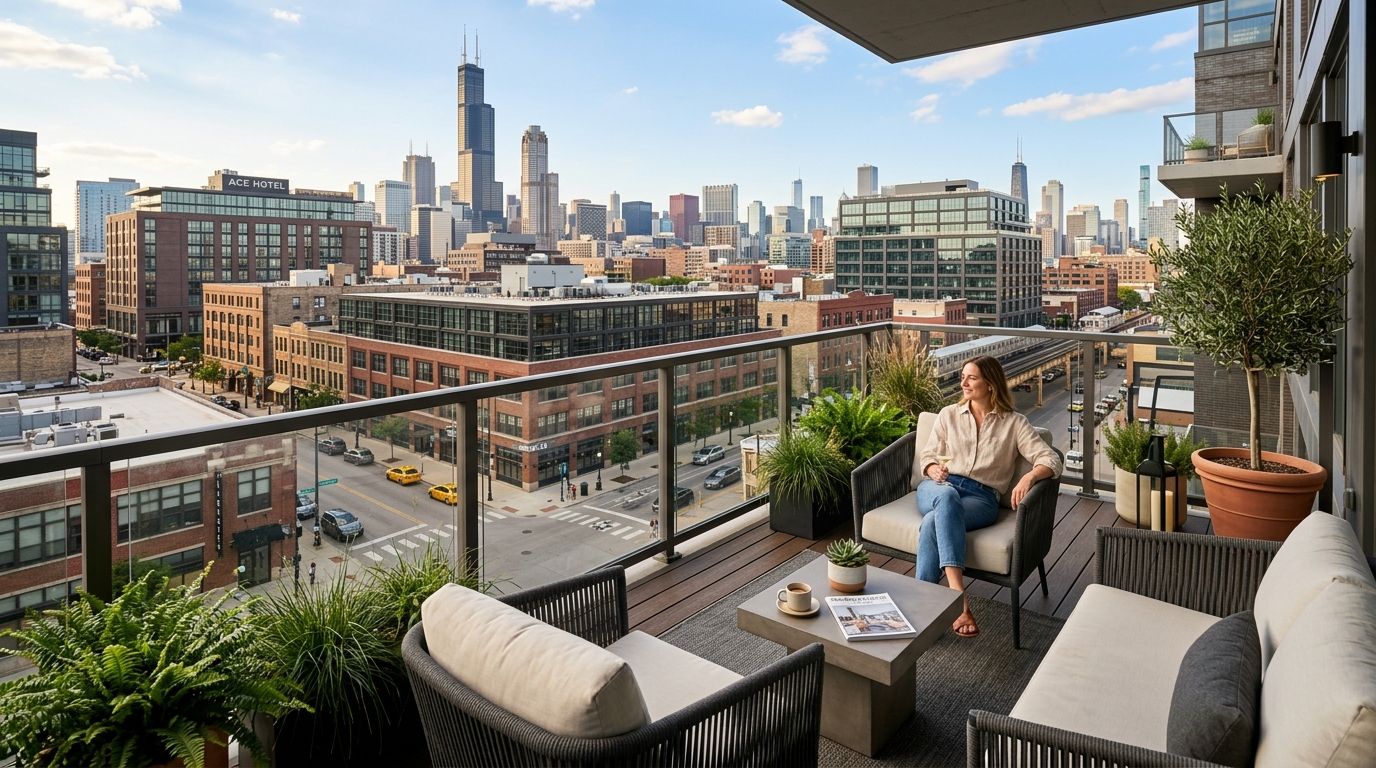
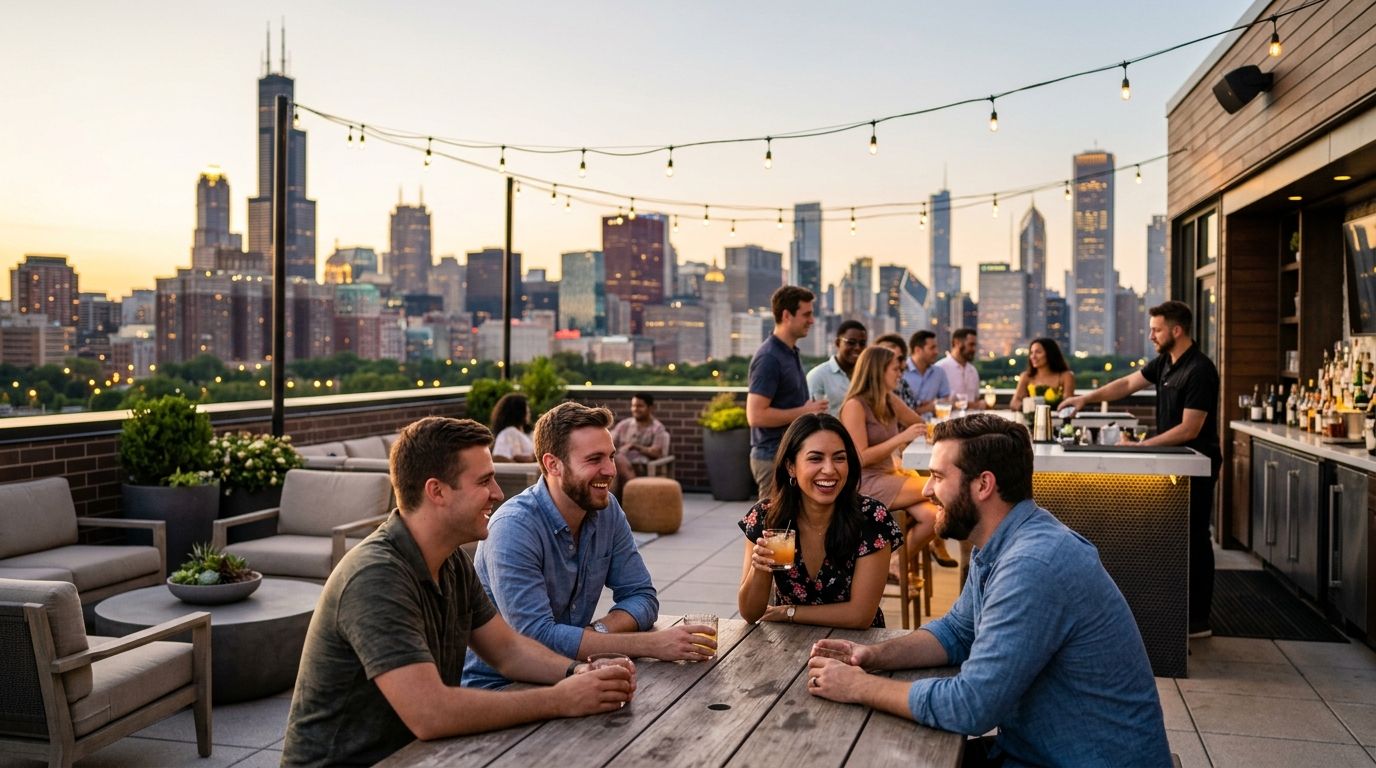
Renters seeking building-hosted community events in Chicago want an apartment that comes with a social life attached, not just a floor plan and a fob. This renter is screening for shared space, resident turnout, and a building that actually gets used after 6 p.m.
- Apartments with community events chicago favors buildings with scale, shared amenity space, and real resident traffic.
- Stead 220 is a 308-unit Fulton Market community at 220 N. Ada Street with a rooftop pool and fitness center.
- Unit count predicts turnout better than amenity photos in 2026 — a small building leaves the nicest lounge empty.
- Tour during evenings or weekends in 2026, not weekday mornings, to see whether shared space gets used.
- Confirm amenity access hours and booking rules before signing a 2026 lease.
Why building-hosted events matter for this segment
A rooftop pool photographed empty on a listing site tells you nothing about whether that pool ever has ten people on it in July. The renter chasing community events is really asking a density-and-design question: does this building have enough shared space, and enough neighbors, for a Tuesday night to feel like something is happening.
Stead 220 sits at 220 N. Ada Street in Fulton Market as a 308-unit community with studios through two-bedroom homes, a rooftop pool, and a fitness center. Those three variables directly affect whether a building can support a social calendar. More units means more people sharing the same roof deck. A dedicated pool level and fitness center gives residents a reason to be in the same room at the same time, instead of just riding the same elevator.
That is the frame for the rest of this 2026 guide: shared space plus enough neighbors to fill it. Everything below is built around confirming both before you sign.
Map the building's shared spaces before you tour
Start with the amenity list, then push past it. A listing that says rooftop deck could mean four lounge chairs or a full pool level built for groups.
- Ask leasing for seating capacity on the roof deck, not just whether one exists
- Separate photogenic space from usable space: seating for 10 or more, a grill station, a demo kitchen
- Ask whether the fitness center is a single treadmill room or a floor with separate zones
- Confirm whether shared space is bookable for private groups or strictly first-come, first-served
- Note whether there is more than one social space, since a roof deck alone is seasonal in Chicago
Ask about the events calendar, not just the amenity list
The amenity list tells you what exists. The calendar tells you whether it gets used.
- Ask the leasing office directly whether the building runs resident events and how often
- Ask whether events are resident-organized, management-run, or both
- Ask whether attendance is open building-wide or capped
- Ask how events get communicated: resident app, email, or a lobby board
- If a building cannot answer these clearly on a 2026 tour, that vagueness is your answer
Weigh unit count and resident density
This is the variable renters skip, and it predicts turnout better than any amenity photo.
- Buildings under 100 units often feel quiet even with good shared space, because there are not enough neighbors to fill a lounge on a random Wednesday
- Buildings in the 250-plus range, like the 308 units at Stead 220, carry a base large enough to make shared space feel active without a formal event scheduled
- Ask how many units are currently leased, not just built, since a half-empty new-construction building will not feel social in 2026 regardless of amenities
- Cross-check density against the number of shared spaces: 300 units and one small lounge is crowded, not social
Test the resident communication channel
A building can have excellent space and still fail at community if nobody knows what is happening in it.
- Ask to see the resident app or portal during your tour instead of taking leasing's word for it
- Confirm how far in advance events post and whether RSVP is required
- Ask whether there is an interest-group or resident directory system, not only an events feed
- Buildings that market resident lounges for networking tend to invest more in the staff and software behind the calendar
Visit when residents are actually around
A 10 a.m. Tuesday tour shows you an empty building no matter how strong the amenities are.
- Book a second walkthrough for early evening or a weekend afternoon
- Ask to see the rooftop pool level during warmer months, since Chicago's outdoor season is short
- Watch fitness center traffic at 6 p.m. rather than 11 a.m.
- If you know a current resident, ask how often they personally use the shared spaces
- Count how many people you pass in common areas during a 20-minute tour
Compare your shortlist on one scale
Once you have toured two or three buildings, score them against the same criteria instead of comparing gut feelings.
| Option | Best for | Key limitation | Verdict |
|---|---|---|---|
| Large new-construction community, 250+ units | Renters who want density plus multiple shared spaces | Can feel impersonal without active management engagement | Buy |
| Boutique building under 50 units | Renters who want a small, familiar-faces feel | Thin amenity budget, few or no organized events | Hold |
| Building anchored by a rooftop fire pit lounge | Renters who want a strong seasonal social draw | Roof use drops sharply in Chicago winters | Buy for warm months |
| Coworking-lounge-only building | Hybrid workers wanting daytime contact | Daytime traffic does not reliably convert to evening community | Hold |
| Building with amenities but no events program | Renters who prefer privacy | You pay for space you will use alone | Skip |
Confirm the fine print before you sign
- Ask whether the pool, fitness center, and lounge are included in rent or booked separately
- Confirm amenity access hours, since some buildings lock those floors after a set time
- Ask about guest policies for shared spaces, since events often draw plus-ones
- Get capacity limits in writing if you plan to host anything yourself
- Ask whether amenity access changes during renovation or seasonal closures
See Stead 220's shared spaces
Tour the rooftop pool deck and fitness center at 220 N. Ada Street in Fulton Market.
Common mistakes renters make when chasing a social building
- Judging community fit off the amenity list alone. A rooftop pool photo says nothing about whether the building runs events or whether anyone shows up.
- Touring only on weekday mornings. Shared space sits empty at 10 a.m. in every building. Evening and weekend tours tell a different story.
- Ignoring unit count. A striking lounge in a 60-unit building will feel quieter than a modest one in a 308-unit community.
- Assuming amenities equal community without checking access hours. A roof deck that closes early, or a booking app nobody uses, kills the social energy the listing implies.
- Signing before confirming what is included in rent. Some buildings charge separately for amenity access. Find that out before move-in, not after.
FAQ
What Chicago apartments have building-hosted community events?
Apartments with community events chicago generally means buildings pairing dedicated shared space such as rooftop decks, resident lounges and fitness centers with enough units to draw a crowd. Stead 220 in Fulton Market is a 308-unit example with a rooftop pool and fitness center built for shared use.
Is Stead 220 a good fit for renters who want a social apartment building?
Stead 220 offers 308 units at 220 N. Ada Street in Fulton Market with a rooftop pool and fitness center, giving it both the shared space and the resident density that support an active building. Confirm current amenity access hours with leasing before you tour.
Do bigger apartment buildings host better resident events than smaller ones?
Larger buildings usually have more resident density to fill shared space, but turnout still depends on active management and clear communication. A 300-unit building with no events calendar can feel quieter than a small one that runs a single event well.
What amenities matter most for a socially active apartment building?
Rooftop decks, resident lounges, fitness centers and demo kitchens matter most because they give residents a reason to be in the same place at the same time. Seating capacity matters more than whether the amenity simply exists.
How do I find out if a building actually uses its amenity spaces?
Ask leasing to show you the resident app or events calendar during your tour instead of taking the amenity list at face value. Book a second walkthrough for an early evening or weekend to see real usage.
Are rooftop pools available for private events in Chicago apartments?
Policy varies by building, so ask leasing directly about booking rules, capacity limits and guest policies for rooftop or lounge space. Some buildings allow private bookings while others run first-come, first-served access only.
What is the difference between a resident lounge and a coworking lounge?
A resident lounge is a casual social space for gathering, while a coworking lounge is built around desks and wifi for daytime work. Buildings aiming at community usually invest in both, since daytime traffic does not automatically convert to evening use.
How early should I start looking for a social building in Chicago?
Start 60 to 90 days before your target move-in date so you can schedule evening and weekend tours rather than whatever slot is left. Peak leasing months in 2026 compress availability and leave less room for a second visit.
One last thing
The variable renters underweight most is unit count, not amenity quality. A 308-unit building with a modest lounge will feel more social on an average Tuesday than a 40-unit building with a beautiful one, because there are enough neighbors around to fill the room. When you tour in 2026, ask for the roof deck's seating capacity and the building's total unit count in the same breath. That ratio predicts turnout better than any listing photo.