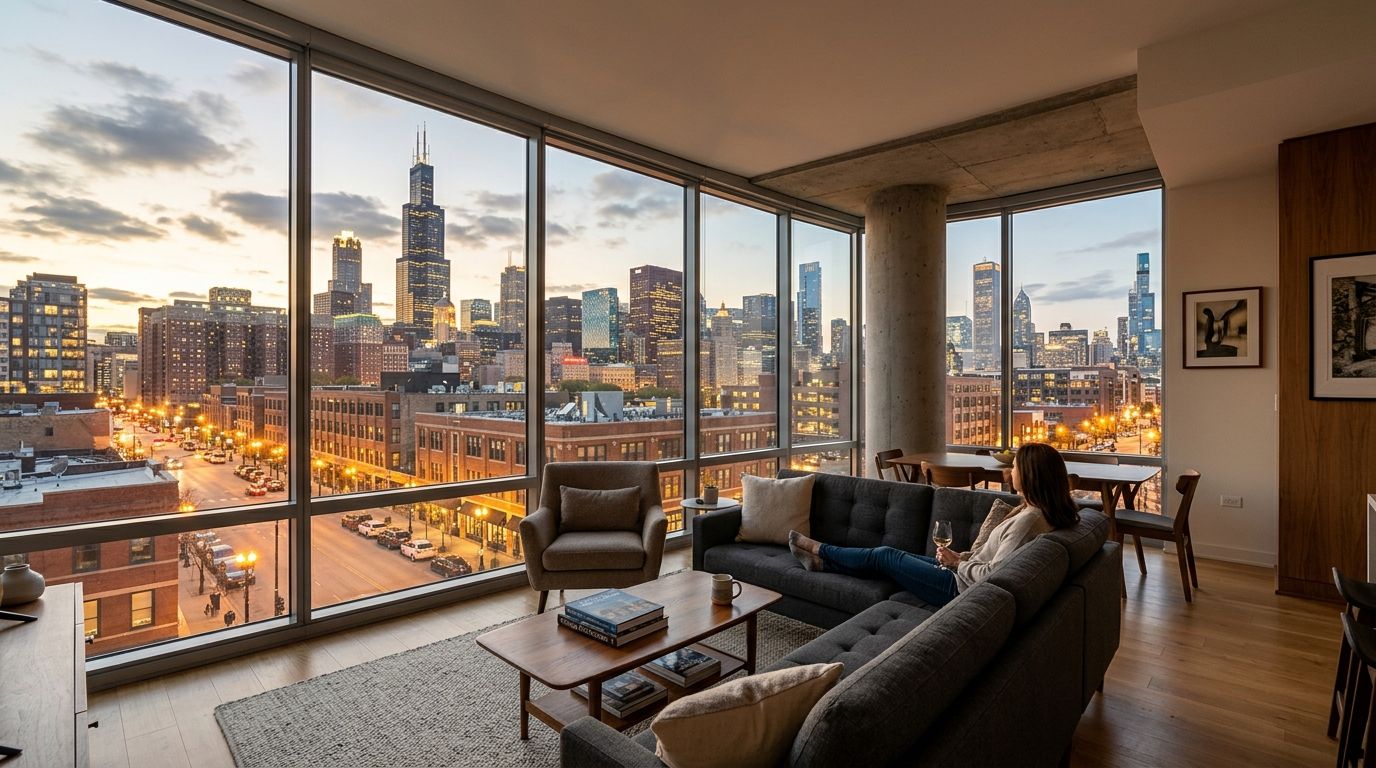
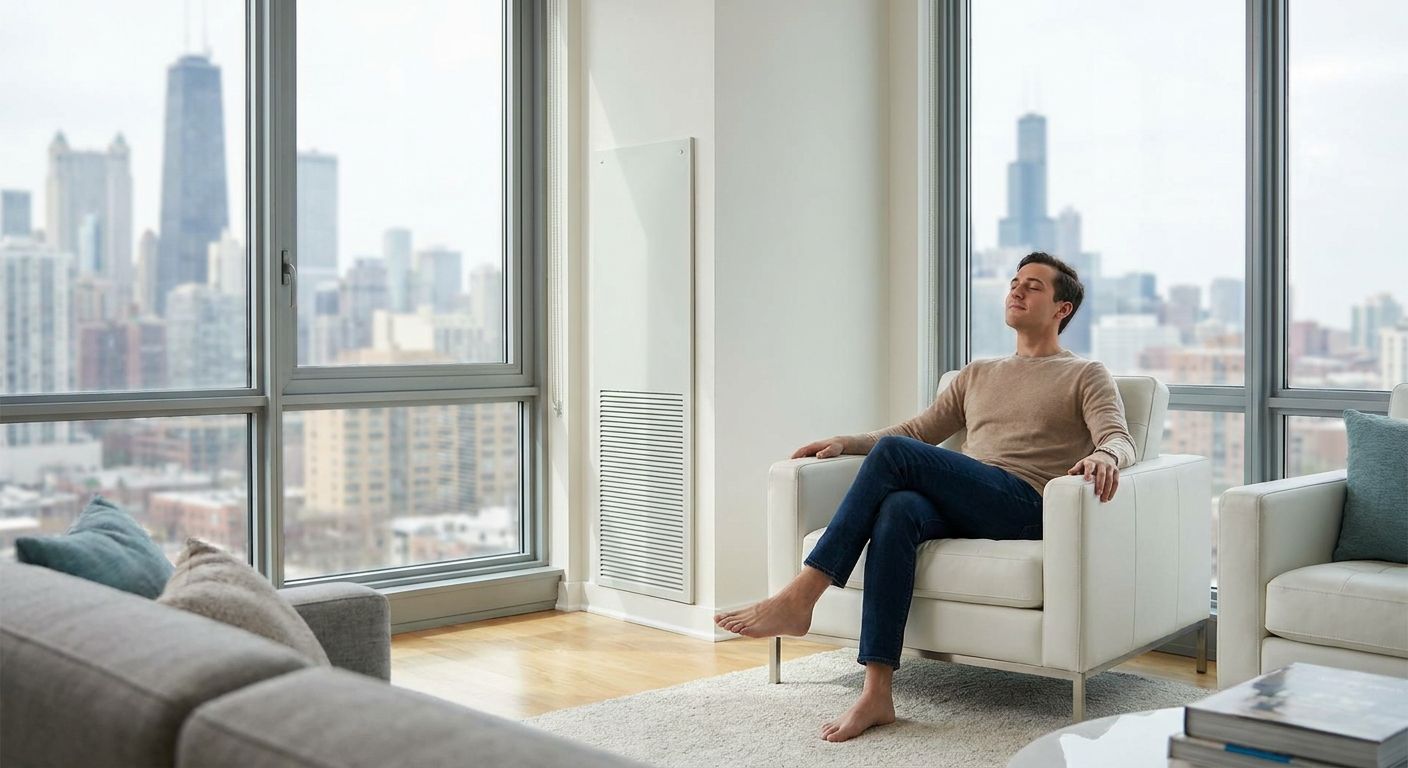
Apartments with air filtration for allergies in Chicago means weighing flooring, HVAC filter ratings, floor placement, and moisture control before you weigh finishes or square footage. Allergy sufferers searching Fulton Market and West Loop have a narrower set of deal-breakers than the average renter, and most listings never mention the details that matter.
- Hard flooring beats carpet for allergy sufferers because it doesn't trap dust mites or pet dander.
- Ask for the building's HVAC filter MERV rating before touring, not after signing.
- High-rise units above the 10th floor see less street-level pollen and vehicle exhaust in 2026.
- Stead 220 leases studios to two-bedrooms with oak hardwood floors throughout, which removes the carpet variable entirely.
- Portable HEPA purifiers add a layer of protection but don't replace a building's baseline filtration.
Why apartment air filtration matters for allergy sufferers
Allergy sufferers don't just want a nice apartment. They want a unit that doesn't actively work against them for the length of a 12-month lease. Chicago's tree pollen runs heavy from March through May, ragweed picks up in August and September, and forced-air heating in the winter dries out sinuses and stirs up dust that's settled all fall.
A renter without allergies can tolerate wall-to-wall carpet, an aging HVAC system, or a ground-floor unit next to a loading dock. A renter with allergies can't, and the wrong choice shows up as sneezing, congestion, or worse within the first month. That makes the search different: the questions asked on a tour matter more than the photos on the listing.
Stead 220 sits at 220 N. Ada Street in Fulton Market and leases studios through two-bedroom homes with oak hardwood floors in every unit, which removes one of the biggest allergen traps before you even look at anything else.
Prioritize hard flooring over carpet
Carpet holds dust mites, pet dander, and pollen tracked in from outside, and vacuuming only pulls out a fraction of what's embedded in the fibers. Hardwood, laminate, and vinyl plank don't hold onto allergens the same way, and they're easier to clean thoroughly.
- Ask specifically whether the unit has carpet in the bedroom, not just the living room
- Request the flooring type in writing before scheduling a tour
- If carpet is unavoidable, ask about steam-cleaning frequency between tenants
- Bring a lint roller to the tour and press it on any carpeted area to see what comes up
- Check closets and hallway runners, which often get skipped in listing photos
Hardwood floors don't hide dust mites the way wall-to-wall carpet does.
“Hardwood floors don't hide dust mites the way wall-to-wall carpet does.”
Verify HVAC filter rating and control
Most leasing agents can't tell you the MERV rating of the building's filters off the top of their head, which means you have to ask before you sign, not after you move in. A MERV-13 filter captures the fine particles that trigger seasonal allergies; a basic MERV-8 mostly stops dust and lint.
- Ask the leasing office directly what MERV rating the building's HVAC filters use
- Find out how often filters get changed and whether that's on a fixed schedule
- Confirm whether you control the unit's thermostat and fan settings independently
- Ask if the system runs continuous fan circulation or only cycles on heating and cooling calls
- Check whether the building allows filter upgrades if you want to swap in a higher-rated filter yourself
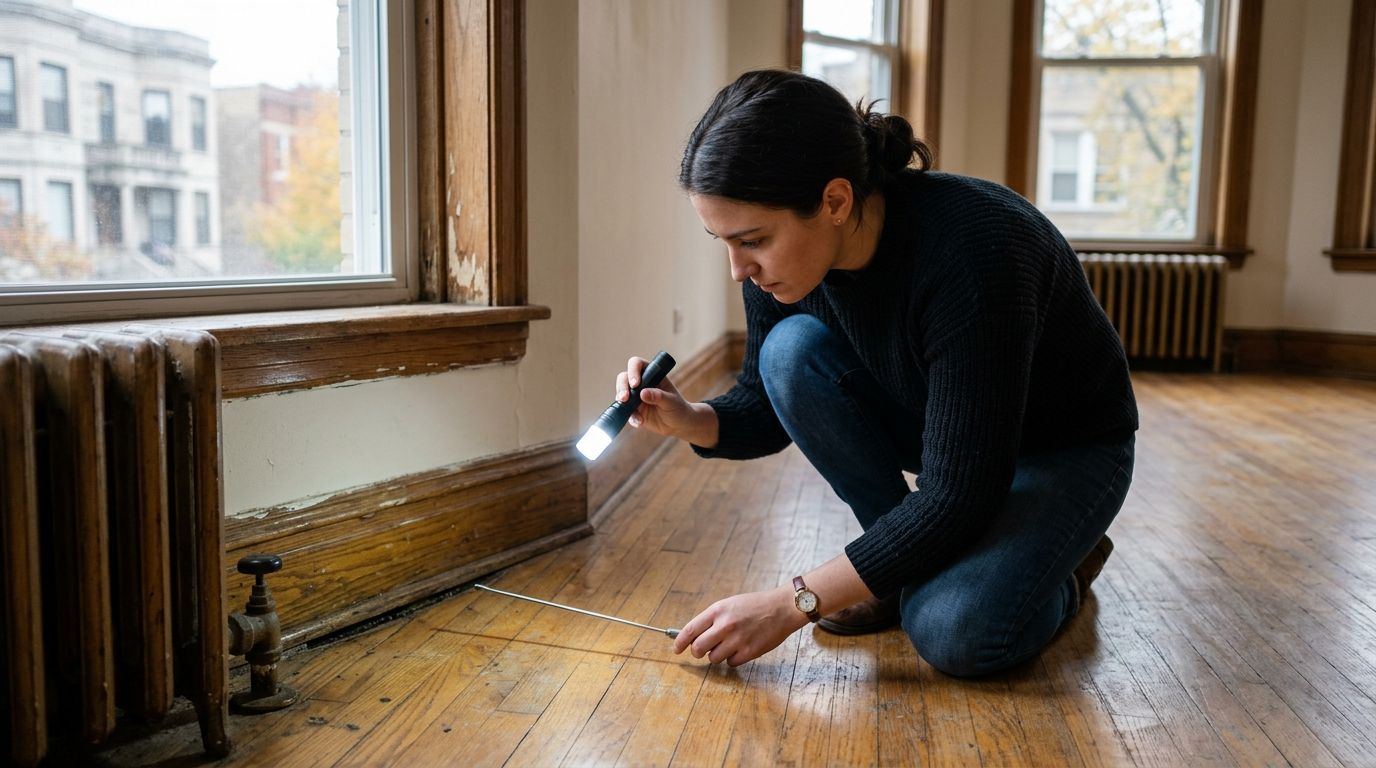
Rule out moisture and mold at the tour
Mold spores are one of the most common indoor allergy triggers, and they thrive anywhere moisture sits: bathroom grout, window sills, and basement-level units. A visual check during the tour catches most of it.
- Look at bathroom grout lines and shower caulking for dark spots
- Check under kitchen and bathroom sinks for water staining
- Smell for a musty odor near windows, especially on lower floors
- Ask if the unit has ever had a water leak or flooding claim
- Avoid units on the ground floor of older buildings without confirmed waterproofing
Pick unit placement: floor height and orientation
Where the unit sits inside the building changes your daily allergen exposure more than most renters realize. Street-level pollen, vehicle exhaust, and construction dust concentrate near the ground and thin out as you go up.
- Request a unit above the 8th to 10th floor when the building has enough height to offer one
- Avoid units directly facing a loading dock, alley, or major arterial street
- Ask whether windows seal tightly or let in street-level air during high-traffic hours
- Check proximity to any nearby construction sites, which throw off dust for months
- Confirm the unit isn't next to a shared laundry room or trash chute, both of which raise humidity and odor exposure
At 220 N. Ada Street, Stead 220 offers studio through two-bedroom layouts across a 308-unit high-rise, giving allergy-sensitive renters options above street level along with the in-unit washer and dryer setup that lets you wash bedding and towels on your own schedule instead of hauling allergen-loaded fabric through a shared laundry room.
Add portable filtration as backup
Even a well-filtered building benefits from a portable HEPA unit in the bedroom, where you spend eight hours a night breathing whatever's circulating. This is the fastest lever a renter controls directly, independent of what the building provides.
- Size the purifier to the room's square footage, not the whole apartment
- Run it overnight in the bedroom rather than the living room
- Replace HEPA filters on the manufacturer's recommended schedule, typically every 6 to 12 months
- Skip ozone-generating "ionizer" models, which can irritate sensitive airways further
- Keep windows closed during high pollen count days even with a purifier running
Time the move-in around pollen season
Moving during peak tree pollen season in Chicago, typically April through May, means hauling boxes and furniture through the exact window when outdoor allergen counts run highest. Scheduling around it reduces exposure during an already stressful week.
- Target a move-in date in late fall or winter when outdoor pollen counts drop
- If a spring move is unavoidable, keep windows shut during loading and unloading
- Wash all linens and clothing immediately after moving, before unpacking into closets
- Wipe down furniture surfaces before bringing them inside, especially anything stored outdoors or in a garage
- Check the local pollen forecast the week of your move and shift heavy lifting to lower-count days
Comparing filtration options for allergy sufferers
| Option | Best For | Key Limitation |
|---|---|---|
| Building central HVAC with MERV-13 filter | Renters who want passive, year-round filtration | Filter quality varies by building; confirm the rating before signing |
| Portable HEPA air purifier | Renters with severe reactions who want a bedroom-level layer | Adds noise and requires regular filter swaps |
| Window or through-wall AC with washable filter | Renters in older, non-central-air buildings | Covers one room only, catches large particles at best |
| Houseplants marketed as air purifiers | Renters looking for a low-cost first step | Does little for airborne dust or pollen at apartment scale |
| Professional duct cleaning | Renters moving into an older converted building | One-time service, doesn't address ongoing allergen load |
Building central HVAC with a confirmed MERV-13 filter is the strongest baseline for allergy sufferers; a portable HEPA unit is the right add-on, not a substitute.
Tour a high-floor Stead 220 unit
See hardwood floors and filtration details in person before you sign.
Common mistakes allergy sufferers make apartment hunting
- Assuming new carpet is safe. New carpet still traps dust and pet dander within the first few months of normal use.
- Skipping the mold check because the unit looks clean. Mold hides in grout lines and under sinks, not on visible surfaces.
- Touring only during low pollen months. A unit that seems fine in January can feel very different by May if windows don't seal well.
- Not asking about the filter rating at all. Most leasing offices won't volunteer the MERV number unless you ask directly.
- Ignoring floor placement. Ground-floor and low-floor units near traffic take on more outdoor particulate than upper floors.
FAQ
What's the best apartment feature for someone with severe allergies in Chicago?
Hard flooring throughout the unit is the single biggest factor, since carpet traps dust mites and pet dander that vacuuming can't fully remove. A building HVAC system with a MERV-13 filter and confirmed change schedule is the second priority.
Is a high-rise apartment better than a low-rise for allergy sufferers?
A unit above the 8th to 10th floor generally sees less street-level pollen and vehicle exhaust than a ground-floor or low-floor unit. Building height matters less than the specific floor you're placed on within it.
Do MERV-13 filters actually help with allergies?
Yes, MERV-13 filters capture the fine particles associated with pollen, dust, and some pet dander more effectively than the basic MERV-8 filters common in older buildings. Ask the leasing office for the exact rating before signing.
Should allergy sufferers avoid carpet completely in an apartment?
Hard flooring is strongly preferred for allergy sufferers because carpet holds onto dust mites and dander that regular cleaning doesn't fully remove. Oak hardwood or laminate throughout the unit, including bedrooms, is the safest baseline.
Is it worth bringing a portable HEPA purifier if the building already filters air?
Yes, a bedroom-level HEPA purifier adds a layer of filtration for the hours you spend sleeping, independent of the building's central system. It's a backup, not a replacement, for a well-filtered HVAC system.
When is pollen season worst in Chicago for apartment hunting?
Tree pollen peaks from March through May in Chicago, with ragweed picking up again in August and September. Scheduling a move for late fall or winter reduces exposure during the physically demanding move-in week.
How much does mold matter in a Chicago high-rise vs a vintage building?
Mold risk depends more on individual unit maintenance and moisture history than building age alone, though ground-floor and basement units in older buildings carry higher risk. Check grout lines, under-sink areas, and window sills at every tour regardless of building type.
Can pet-friendly buildings still work for people with pet allergies?
It depends on unit placement and building airflow, since shared hallways and elevators can carry dander even if your own unit is pet-free. Ask whether pet units and non-pet units share the same HVAC zones before ruling a building out.
One last thing
The detail most renters skip is asking whether pet units and non-pet units share the same HVAC zone. In a lot of Chicago high-rises they do, which means dander from a dog three floors up can circulate into your bedroom even if your own unit is pet-free. Ask that question specifically in 2026, because it rarely comes up unless you raise it first.