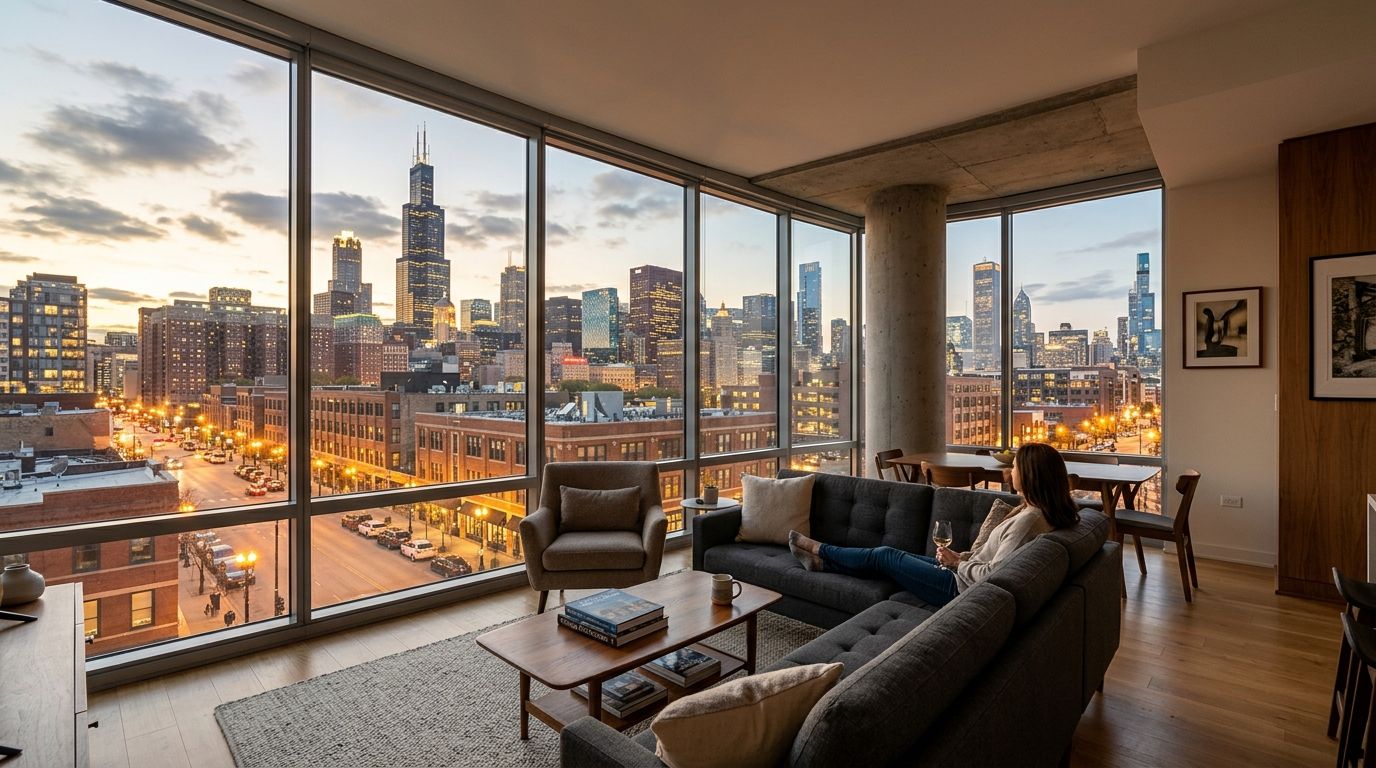
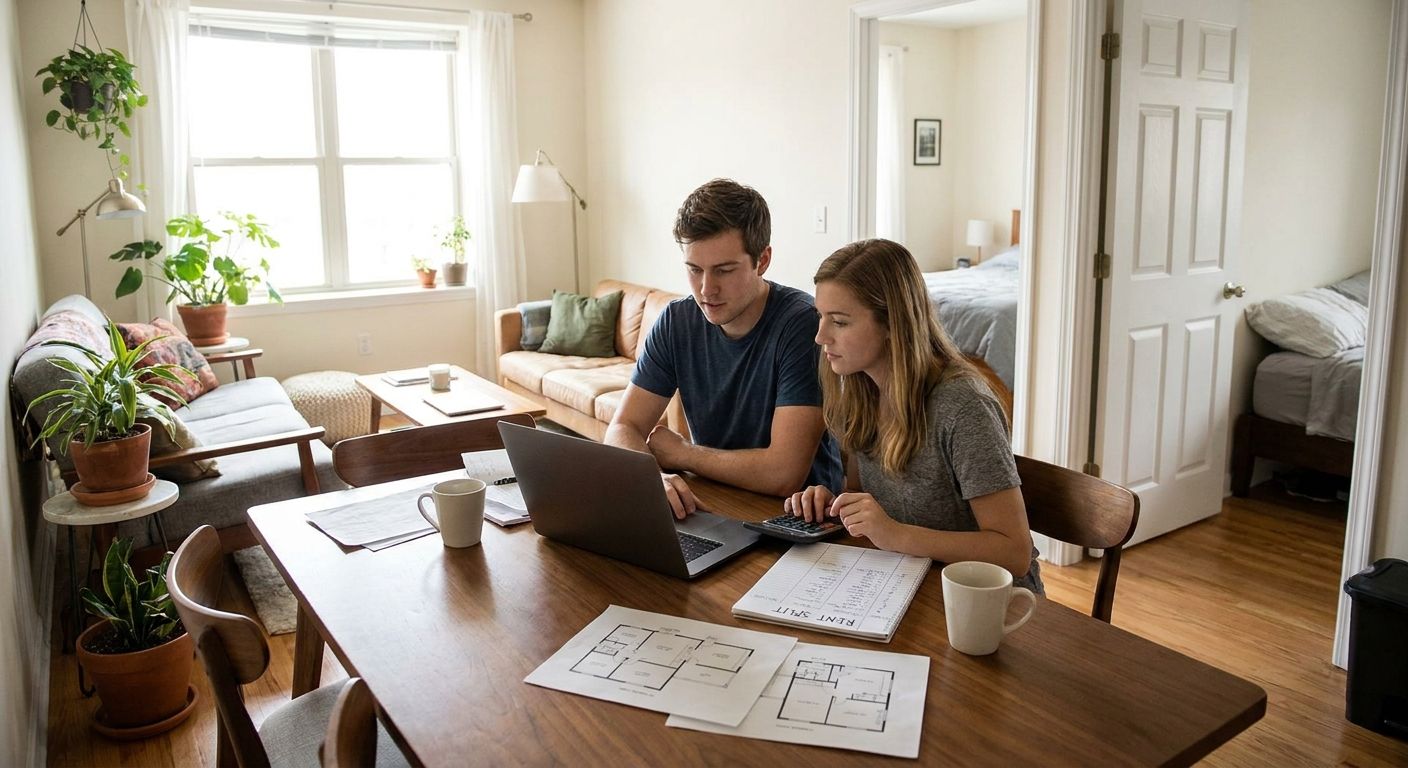
Splitting rent with roommates in a two-bedroom apartment gets contentious fast when the bedrooms aren't the same size or one person parks a car and the other doesn't. A clear split method, put in writing before move-in, prevents most of the arguments that end roommate friendships in 2026.
- Splitting rent 60/40 by square footage beats a flat 50/50 split for most two-bedroom layouts in 2026.
- Stead 220's two-bedroom floor plans at 220 N. Ada Street separate primary and second bedrooms enough to make a size-based split fair to tour before you sign.
- Add utilities, parking, and amenity fees to a shared spreadsheet before you calculate how to split rent with roommates in a two bedroom apartment.
- Put the split amount in writing and attach it to the lease before move-in day, not after.
Why this matters
A two-bedroom lease puts both names on one number. The apartment doesn't care how you divide it — the landlord collects the total rent from whoever signed, and if a roommate stops paying, the other name on the lease is on the hook for the full amount. That's why the split needs to be decided with real numbers, not a handshake.
Bedroom size, closet space, bathroom access, and who gets the parking spot all change what's fair. A primary suite with a private bath and 40 more square feet than the second bedroom isn't worth the same rent as the smaller room, and treating it that way just means one roommate quietly resents the other by month three.
What you'll need
- The floor plan with square footage for each bedroom (ask the leasing office for exact numbers, don't eyeball it)
- A shared spreadsheet or split-bill app (Splitwise, a shared Google Sheet, or similar)
- The full monthly cost list: base rent, parking, storage, pet fees, amenity fees, utilities
- A written roommate agreement, separate from the lease itself
- Bank or Venmo/Zelle details set up before the first rent due date
The steps
1. Pull the exact square footage for each bedroom
A fair split starts with real numbers, not guesses. Ask the leasing team for the unit's floor plan with bedroom dimensions listed — most Chicago high-rises, including two-bedroom apartments for roommates in West Loop Chicago, publish this on the listing or hand it over during a tour.
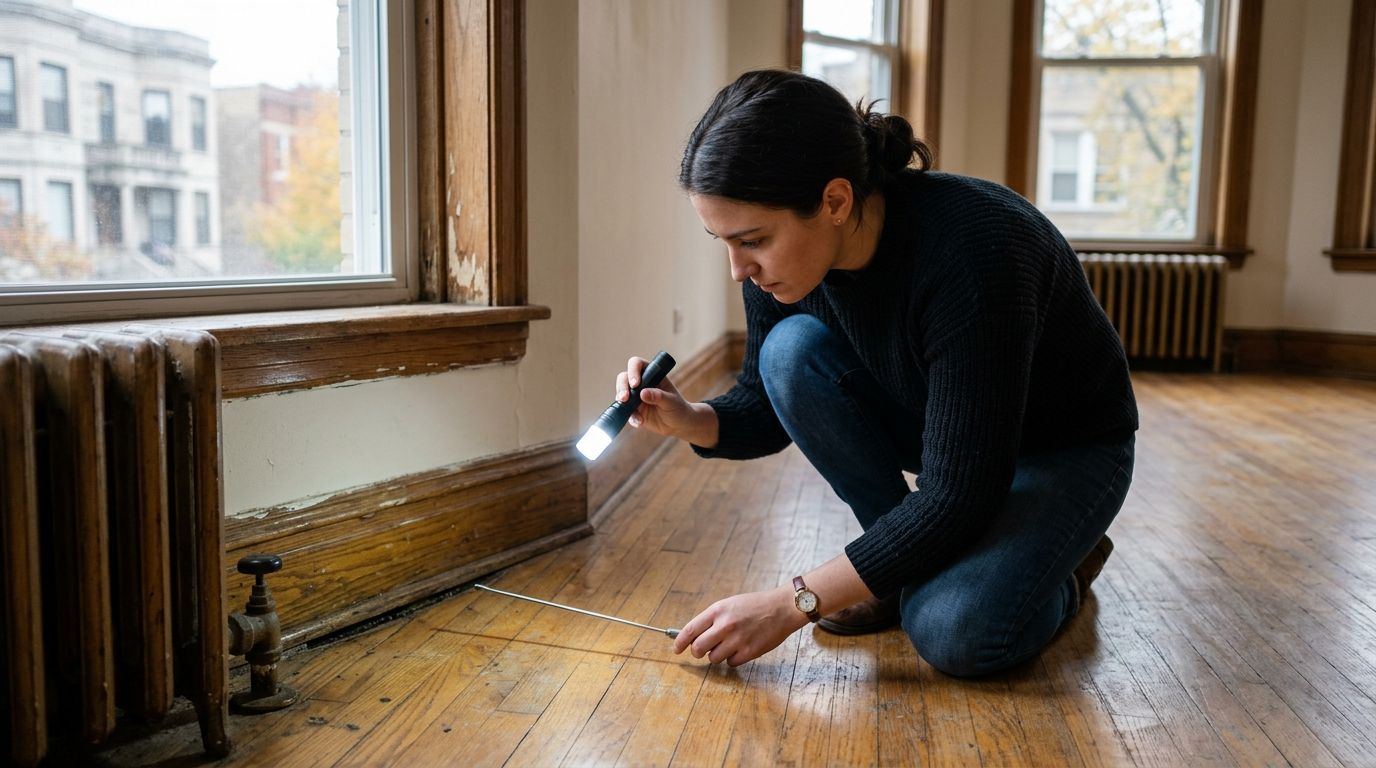
Measure with a tape measure on move-in day to confirm the numbers match what was advertised. A 20-square-foot gap between bedrooms is common in Fulton Market layouts and is the single biggest reason a 50/50 split feels wrong to the person in the smaller room.
Common mistake: relying on a listing photo to judge room size. Photos with wide-angle lenses make small rooms look bigger than they are.
2. Calculate the base percentage split
Divide each bedroom's square footage by the combined total to get a percentage, then apply that percentage to the base rent. If the primary bedroom is 160 square feet and the second is 120, the primary tenant pays 57% of base rent and the second tenant pays 43%.
This method is the industry-standard starting point for how to split rent with roommates in a two bedroom apartment, and it removes the emotion from the conversation because the math is objective.
Common mistake: splitting by percentage but forgetting the primary bedroom often has an en-suite bathroom, which should push the split further in the smaller room's favor — closer to 60/40 than 55/45.
3. Adjust for private bathrooms and closet space
A private bath is worth roughly $75 to $150 a month in most Chicago two-bedroom layouts, based on the premium landlords typically charge for en-suite units versus shared-bath layouts. Add that amount to the primary tenant's share before finalizing the split.
Walk-in closets matter too. If one room has double the closet space, factor in another 2-3 percentage points toward that tenant's share.
Common mistake: ignoring bathroom access entirely and going with a pure square-footage split when one roommate showers before work every morning and the other doesn't.
4. Build the full monthly cost sheet
Base rent is only part of the number. List every recurring charge: parking (if only one roommate has a car), storage unit fees, pet rent, amenity fees, and utilities like internet, electric, and gas.
Split shared costs like internet 50/50 regardless of bedroom size — a router doesn't care who has the bigger closet. Split car-specific costs like a parking spot 100% to the person using it.
Common mistake: splitting parking and pet fees the same way as base rent. These are individual costs, not shared ones, and lumping them in inflates the non-car-owning roommate's bill.
5. Put the agreement in writing
A verbal agreement doesn't hold up when someone's paycheck is late or a friend moves in unannounced. Write a one-page roommate agreement listing the exact dollar amount each person owes, the due date, and what happens if a payment is missed.
Before signing anything, both roommates should read the lease agreement together so there's no confusion about joint-and-several liability — the clause that makes both tenants responsible for 100% of the rent if one stops paying.
Common mistake: assuming the lease itself covers the internal split. It doesn't. The lease binds you to the landlord; the roommate agreement binds you to each other.
6. Set up automatic payment splitting
Use a shared bank account, a split-bill app, or a standing Zelle/Venmo transfer scheduled a few days before rent is due. Automating the transfer removes the monthly awkwardness of asking for money.
Set the transfer date 3-5 days before the lease's rent due date to give time for a bank hiccup to get sorted before a late fee applies.
Common mistake: relying on memory instead of a recurring calendar reminder or auto-transfer. This is the single most common reason splits break down after the first few months.
Tour a two-bedroom floor plan
See exact square footage and bathroom layouts before you calculate a split.
Troubleshooting
- One roommate wants a flat 50/50 split despite unequal room sizes. Show the square-footage math from step 2 — an objective number ends the argument faster than an opinion does.
- A roommate's income changes mid-lease. Renegotiate the internal split, not the lease itself. The lease amount stays fixed with the landlord regardless of what you two agree to privately.
- One roommate wants to move out early. Review how to sublet an apartment legally in Chicago before assuming you can just swap names — most leases require landlord approval for a sublet or lease transfer.
- A payment is late and no one flags it. Set up automatic notifications in your split-bill app so both people see the payment status in real time, not after a late fee posts.
- Utilities are billed to only one name. Split the bill 50/50 by default unless usage is wildly uneven (one roommate working from home all day versus one gone 10+ hours), then adjust by a fixed percentage instead of tracking exact usage.
- A guest moves in unannounced and starts using shared space. Address this in the written roommate agreement from step 5 with a clause on guest stays before it becomes a rent-split issue.
Tools and resources
- Splitwise or a shared spreadsheet for tracking monthly payments
- The unit's floor plan with square footage, available from the leasing office
- A written roommate agreement template (a one-page document works fine)
- Renters insurance for both tenants — most policies run separately per person even in a shared unit
- Automatic bank transfers or Zelle/Venmo scheduled recurring payments
What to do next
Once the split is set, confirm both names are correctly listed on the lease and that the joint-and-several liability clause is understood by both roommates. From there, the split becomes a spreadsheet update, not a monthly negotiation.
FAQ
What's the fairest way to split rent with roommates in a two bedroom apartment?
A square-footage-based split, adjusted for private bathrooms and closet space, is fairer than a flat 50/50 split in most two-bedroom layouts. Calculate each bedroom's percentage of total square footage and apply that percentage to base rent, then add a premium for en-suite bathrooms.
Is a 50/50 rent split ever fair for a two bedroom apartment?
Yes, when both bedrooms are within a few square feet of each other and neither has a private bathroom. Measure both rooms before assuming they're equal.
How much extra should the primary bedroom pay for a private bathroom?
Roughly $75 to $150 more per month is typical in Chicago two-bedroom units, based on the premium landlords generally charge for en-suite layouts versus shared-bath units. Add this to the base square-footage split.
Should parking be split evenly between roommates?
No. Parking is an individual cost and should be paid entirely by the roommate using the spot, not split evenly like base rent.
What happens if one roommate stops paying rent?
Both names on the lease remain responsible for the full rent amount under joint-and-several liability. The other roommate should read the lease agreement closely to understand this clause before signing.
Do roommates need separate renters insurance policies?
Yes, in most cases. Renters insurance is typically written per person, so each roommate in the unit should hold an individual policy rather than assuming one covers both.
Can one roommate sublet their room in a two bedroom apartment?
Only with landlord approval in most Chicago leases. Check the sublet process before assuming a roommate swap is as simple as splitting the new rent differently.
How do you split utilities fairly in a shared apartment?
Split shared utilities like internet 50/50 by default. Split usage-heavy utilities like electric by a fixed adjusted percentage only if one roommate is home significantly more than the other.
One last thing
The split conversation goes smoother before you sign than after you've moved in — dimensions and bathroom counts are easier to negotiate over on a floor plan than over a lease you've already committed to. Stead 220's two-bedroom homes at 220 N. Ada Street are shaped around how people actually live together, not just how they photograph, which is why the primary and second bedrooms are sized to make a fair split possible instead of forced.