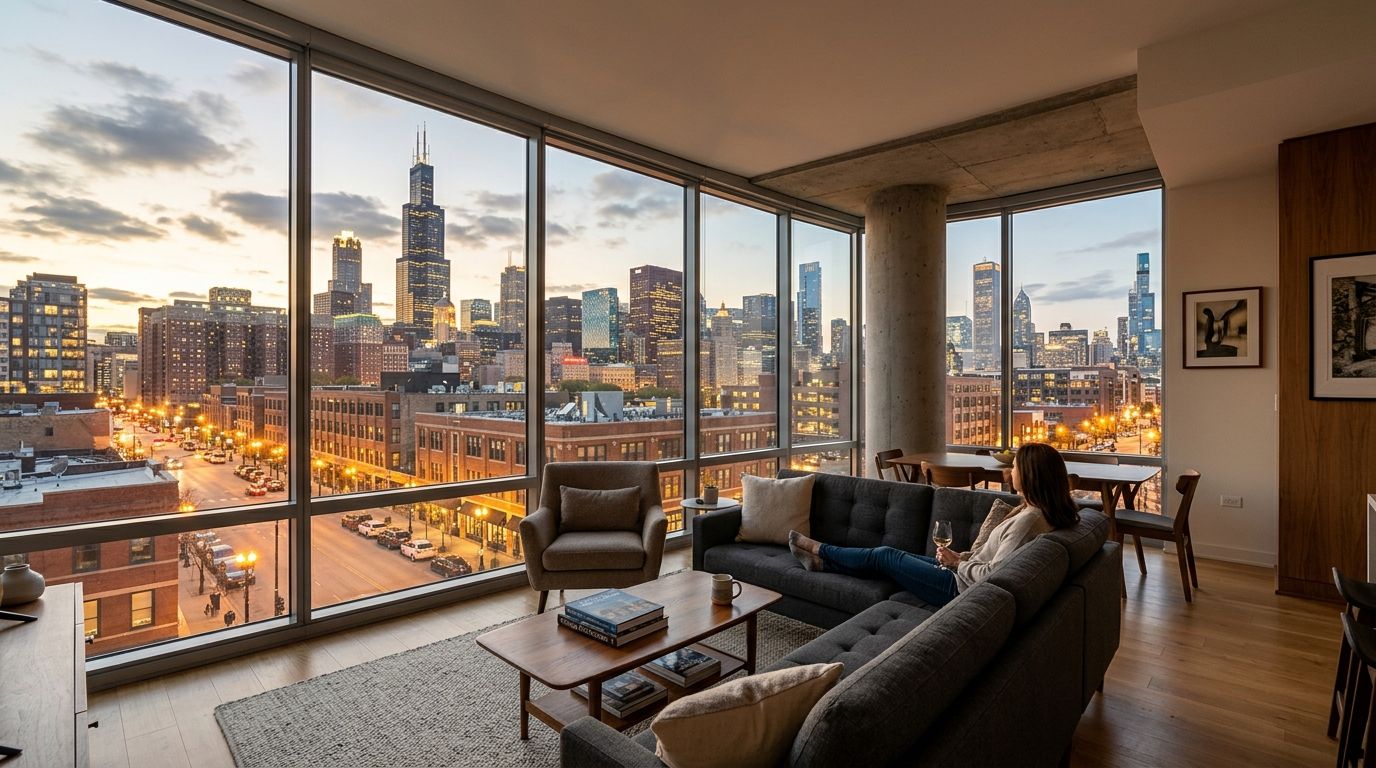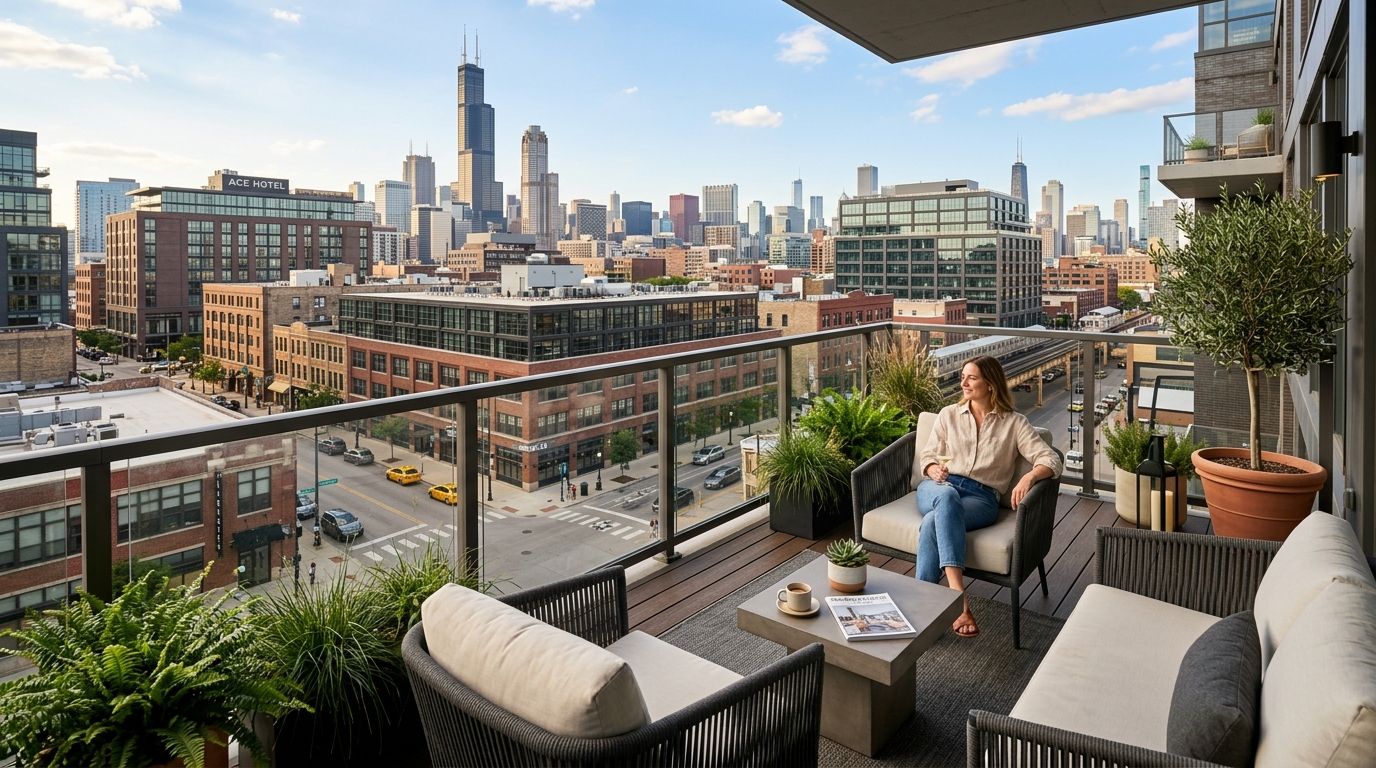
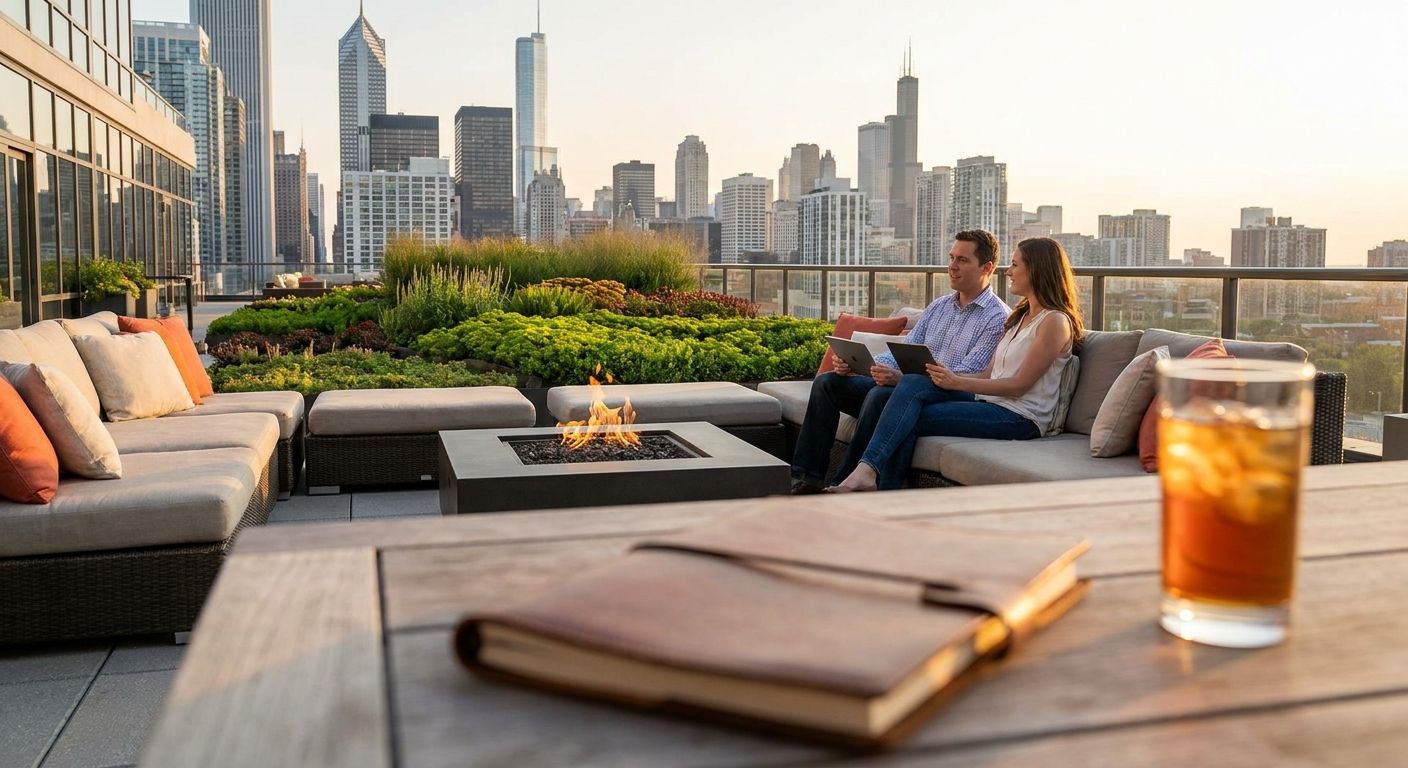
Rooftop access sounds like a simple checkbox until you're touring five Chicago buildings that all claim it. Some mean a shared pool deck open four months a year. Others mean a locked event space you can rent twice annually. This guide breaks down exactly what to verify before you sign a lease in 2026, and how to tell a real rooftop amenity from a marketing photo.
- Finding luxury apartments with rooftop access in Chicago comes down to three checks: pool season, reservation hours, and unit-type fit.
- Stead 220 in Fulton Market pairs a rooftop pool with a fitness center — a strong pick for renters who want daily amenity access in 2026, not once-a-year event use.
- Ask about resident-only hours before touring. Some Chicago rooftops close for private events more than they're open to residents.
- Match your unit type to your rooftop use case: studios and one-bedrooms at amenity-rich buildings give solo renters full access without paying for extra square footage.
Why this matters
Rooftop access gets listed the same way whether it's a full pool deck or a folding table with a view. That gap matters when you're comparing rent across Fulton Market and West Loop buildings in 2026, because two apartments at the same price point can offer completely different amenity value.
Stead 220 is a 308-unit community at 220 N. Ada Street in Fulton Market, leasing studios through two-bedroom homes with a rooftop pool and fitness center built into the offering, not bolted on as a marketing line. Knowing what to ask before you tour saves you from signing a lease around an amenity you'll rarely use.
What you'll need
- Your target move-in date and how flexible it is
- A rent range that includes likely amenity fees, not just base rent
- A shortlist of Fulton Market and West Loop buildings with rooftop features
- A list of rooftop-specific questions (pool season, reservation rules, guest policy)
- Time for at least two in-person tours before you sign
- A note on which unit types you're open to — studio, one-bedroom, or two-bedroom
The steps
1. Define what "rooftop access" actually means to you
A rooftop pool, a rooftop deck, and a rooftop lounge are three different amenities with three different use cases. If you want to swim, an open-air deck with string lights doesn't deliver that in 2026 no matter how the listing photographs it. Write down the specific feature you're after before you start comparing buildings — pool, grill stations, fire pits, or just skyline views — so you're not swayed by staging.
Common mistake: touring based on the listing photo alone. Photos rarely show whether the space is pool-equipped or just furnished for events.
2. Build a shortlist of Fulton Market and West Loop buildings
Fulton Market and West Loop concentrate most of Chicago's newer amenity-heavy buildings, largely because ground-up construction in the last decade made rooftop infrastructure easier to build in from day one. Narrow your list to five or six buildings in these neighborhoods before booking tours, so you're comparing similar inventory rather than a random mix across the city.
Expected outcome: a shortlist you can call or email in one afternoon instead of scattering tour requests across unrelated neighborhoods.
3. Check the amenity specifics before you tour
Call or email each building and ask directly: is the pool heated, seasonal, or year-round? Is the rooftop open to all residents daily, or reserved for events? At buildings like Stead 220, the rooftop pool apartments are positioned for daily resident use and summer entertaining, not one-off bookings — that distinction is worth confirming in writing for every building on your list.
Common mistake: assuming "rooftop amenity" on a listing means the same access level everywhere. It doesn't.
4. Time your tour to when the rooftop actually functions
Most outdoor rooftop pools in Chicago run roughly Memorial Day through early October, weather permitting, then close for the winter. If you're touring in January, ask to see photos or video of the space in-season rather than judging it covered or drained. A tour in peak summer tells you far more about real usage than a tour in February.
Expected outcome: you know what the amenity looks like in use, not just in the leasing brochure.
5. Ask about reservation and guest rules
Some buildings cap rooftop capacity, require reservations for groups, or limit guest access to a set number per resident. If you plan to host, ask specifically about group size limits and how far in advance you need to book. A rooftop that requires two weeks' notice for a party of six functions very differently than one with open daily access.
Common mistake: skipping this question and finding out about capacity limits after you've already invited people over.
6. Match your unit type to your rooftop use case
A studio renter who plans to use the rooftop as their main outdoor space has different priorities than a family looking at a two-bedroom for occasional weekend use. Solo renters and remote workers often get full amenity value from smaller units at buildings with strong shared spaces, since the rooftop functions as extra square footage you don't pay to heat or furnish.
Expected outcome: you stop overpaying for unit size when the amenity floor is doing the work you actually want.
7. Confirm lease terms and move-in timeline
Ask about application turnaround, security deposit structure, and how soon you can move in relative to your target date. In a competitive 2026 leasing market, popular units with rooftop and fitness access can move fast, so get the paperwork requirements upfront rather than discovering them after you've picked a favorite.
Common mistake: falling in love with a unit before confirming it's actually available on your timeline.
8. Book the tour and hold the unit
Once you've narrowed to two or three finalists, schedule same-week tours so your comparisons are fresh. Ask the leasing office directly what it takes to hold a unit — some buildings require an application fee to reserve, others hold for 24 to 48 hours informally. Get this in writing before you walk away from a tour you liked.
See rooftop-ready units in Fulton Market
Studios through two-bedrooms with rooftop pool and fitness access at Stead 220.
Troubleshooting
- Building advertises "rooftop access" but the pool is closed on your tour date. Ask for the seasonal calendar in writing and request photos or video from peak season before ruling the building in or out.
- Rooftop is technically for events only, not daily lounging. Confirm resident-hours access separately from event-booking access — these are frequently two different policies at the same address.
- No availability for your move-in date. Ask about upcoming lease-end dates on comparable units; amenity-heavy buildings often have a rolling turnover you can plan around.
- Budget doesn't match downtown high-rise pricing. Compare studio and one-bedroom pricing before assuming a two-bedroom is your only option — smaller units at the same amenity-rich building often deliver the same rooftop access.
- Amenity fees stack on top of quoted rent. Ask for the full fee schedule, including any amenity or resident-services fee, before comparing base rent across buildings.
Tools and resources
- A written list of rooftop-specific questions for every leasing office you contact
- A shortlist of Fulton Market and West Loop buildings, narrowed by amenity type
- Building pages that spell out amenity fit, such as fitness center apartments for renters who want gym access paired with rooftop use
- A calendar tracker for tour dates, application deadlines, and lease-start windows
What to do next
Once your shortlist is set, dig into unit-specific details before you tour. If skyline views matter as much as the pool itself, start with high-rise apartments with skyline views to see how view quality factors into unit selection at buildings with rooftop amenities.
FAQ
What counts as a luxury apartment with rooftop access in Chicago?
A luxury apartment with rooftop access in Chicago typically includes a shared rooftop pool, deck, or lounge built into the building alongside finishes like hardwood floors and updated fitness spaces. The distinction that matters most in 2026 is whether the rooftop is open daily to residents or reserved mainly for private events.
Is rooftop access included in rent or is it an added fee?
It depends on the building — some include rooftop and fitness access in base rent, others charge a separate amenity fee. Always ask for the full fee schedule before comparing quoted rent across buildings.
What neighborhoods in Chicago have the most rooftop apartment buildings?
Fulton Market and West Loop have the highest concentration of newer buildings with rooftop pools and decks, largely due to ground-up construction over the past decade. These neighborhoods are the most efficient starting point for a rooftop-focused apartment search in 2026.
Are rooftop pools open year-round in Chicago?
No. Most outdoor rooftop pools in Chicago run seasonally, roughly Memorial Day through early October, weather permitting. Indoor amenities like fitness centers typically stay open year-round.
What's the difference between a rooftop deck and a rooftop pool?
A rooftop deck is an open-air lounge space with seating, grills, or fire pits, while a rooftop pool includes an actual swimming pool on the building's roof. Listings sometimes use "rooftop access" loosely, so confirm which one a building actually offers before touring.
Do studio apartments get the same rooftop access as larger units?
In most buildings, yes — rooftop and fitness amenities are shared across all unit types, including studios through two-bedrooms. This makes smaller units a strong value option for renters who prioritize amenity access over square footage.
How much does a luxury apartment with a rooftop pool cost in Chicago?
Rent varies by neighborhood, unit size, and building age, so check current listings for exact pricing. Amenity-rich buildings in Fulton Market and West Loop typically price at a premium over comparable units without rooftop or fitness access.
How far in advance should you tour rooftop apartments in Chicago?
Book tours as soon as you've narrowed your shortlist to five or six buildings, since popular amenity-heavy units can move quickly in a competitive 2026 leasing market. Schedule two or three finalist tours in the same week so your comparisons stay accurate.
One last thing
Tour rooftop spaces in the early evening if you can. Pool lighting, sunset skyline views, and how many residents are actually using the space at that hour tell you more about daily amenity value than a mid-afternoon walkthrough ever will. At Stead 220, the rooftop pool and fitness center are designed around how residents actually use the building day to day, not how the space photographs for a listing — and that's the detail worth confirming at every building on your list before you sign in 2026.