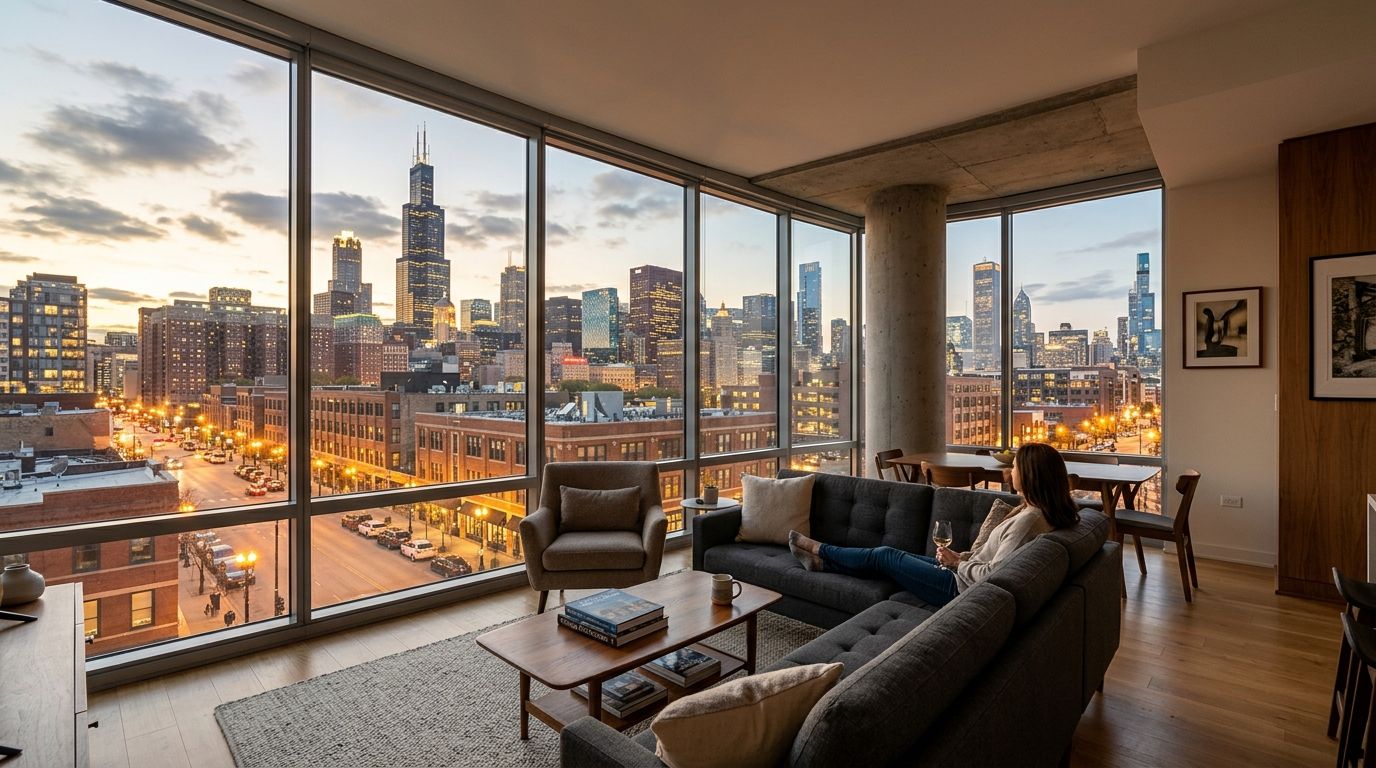
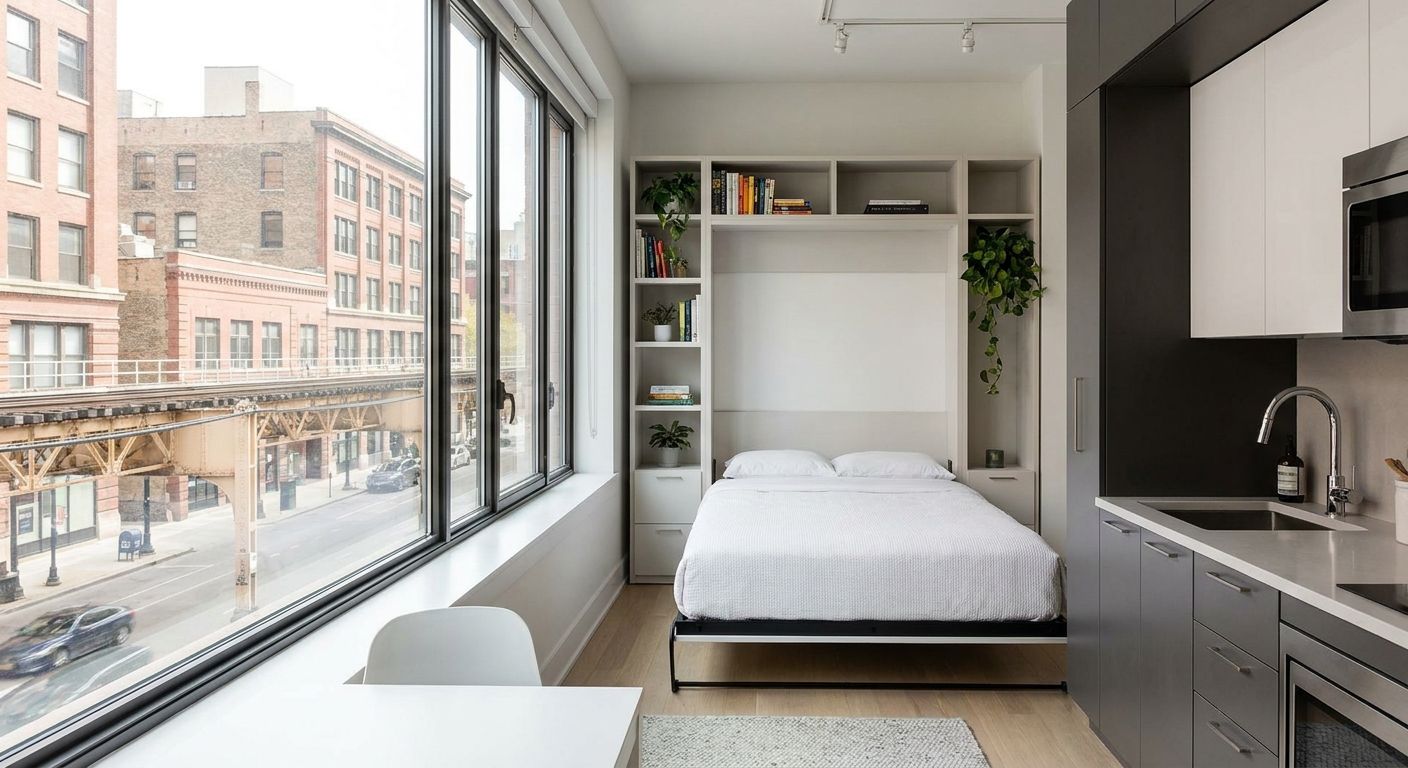
Micro-unit apartments in Chicago trade square footage for location, design, and amenities, and the right pick depends on which neighborhood matches how you actually spend your week. Best overall: Stead 220 in Fulton Market. Best for young professionals: West Loop compact studios. Best budget-conscious option: South Loop efficient layouts. Best for nightlife access: River North. Best for commuters: the Loop.
- Stead 220 at 220 N. Ada Street wins for compact living with full-building amenities in Fulton Market.
- Best micro unit apartments Chicago picks split by lifestyle: West Loop for professionals, South Loop for budget, River North for nightlife, the Loop for commuters.
- Micro units are generally classified as apartments under 400 square feet, so amenity access matters more than floor plan alone.
- None of the five picks compete on the same use case, so match the neighborhood to your daily routine before touring.
Why this matters
A smaller unit only works if the building compensates for it. A 350-square-foot studio with no storage, no rooftop, and a ten-minute walk to transit feels cramped in a way the same unit with a package room, a gym, and a five-minute walk to the Metra does not.
Stead 220 is a 308-unit community at 220 N. Ada Street in Fulton Market, and it's the anchor for this list because the building was built around compact-but-complete living rather than around square footage alone. The other four picks below are neighborhood categories, not single addresses, because Chicago's micro-unit inventory is spread across buildings rather than concentrated in one tower. In 2026, renters comparing compact apartments in Chicago are weighing three things: unit efficiency, walkability, and whether the building's shared spaces make up for a smaller private footprint.
What makes the best micro unit apartment in Chicago
- Floor plan efficiency — layouts that use built-in storage and multi-purpose zones instead of wasted hallway space
- In-unit storage — closets and cabinetry sized for the unit, not an afterthought
- Amenity depth — a rooftop, fitness center, or lounge that extends living space beyond the four walls
- Walkability and transit access — proximity to Metra, CTA, or a walkable grocery run
- Natural light — window-to-floor ratio matters more in a smaller unit than a larger one
- Package and delivery infrastructure — lockers or staffed reception, since compact units have nowhere to stash a missed delivery
Best micro unit apartments in Chicago at a glance
| Neighborhood / building | Best for | Standout feature | Key limitation |
|---|---|---|---|
| Stead 220 (Fulton Market) | Design-conscious renters wanting full amenities | Rooftop pool, fitness center, studio-to-two-bedroom mix | Fulton Market rents at a premium versus outer neighborhoods |
| West Loop compact studios | Young professionals | Walk to restaurant row and CTA Green/Pink lines | Building amenity levels vary block to block |
| South Loop efficient units | Budget-conscious renters | Lower price point relative to West Loop and Fulton Market | Farther from the densest job clusters |
| River North studios | Nightlife access | Closest concentration to bars, clubs, and late-night dining | Noise levels run higher on weekends |
| The Loop micro units | Metra and CTA commuters | Direct access to Ogilvie and Union Station | Retail and grocery options thin out after 7pm |
1. Stead 220: best micro unit apartment in Chicago for design-conscious renters
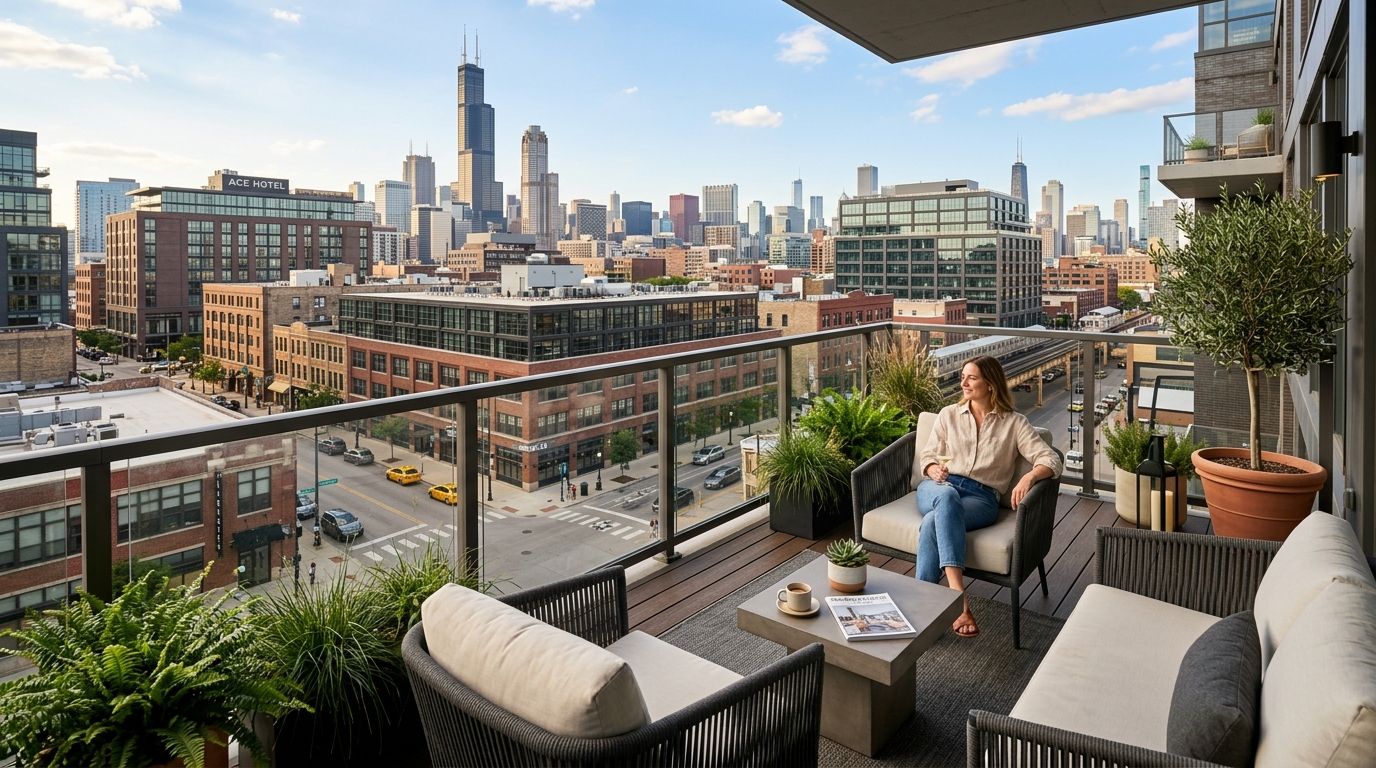
Stead 220 is a 308-unit community at 220 N. Ada Street, leasing studios through two-bedroom homes with a rooftop pool and a fitness center on site. The building leans into the idea that a smaller unit doesn't have to feel unfinished — shared spaces are treated as an extension of the unit rather than a separate perk.
Stead 220 pros:
- Studio layouts sized for compact living without sacrificing storage
- Rooftop pool and fitness center on site, so amenities offset unit size
- Fulton Market location puts restaurant row and the neighborhood's tech and creative offices within walking distance
Stead 220 cons:
- Fulton Market carries some of the highest rents in the West Loop corridor
- No dedicated micro-unit floor plan under a specific square footage cutoff — the smallest layouts are studios, not sub-300-square-foot units
Stead 220 pricing: rates vary by floor plan and lease term; check current availability directly with the property.
Best for: renters who want a compact unit backed by a full amenity package instead of a bare-bones building.
Verdict: tour it first. If you're deciding between micro-unit trade-offs in Fulton Market, this is the comparison point every other building on this list gets measured against.
2. West Loop compact studios: best for young professionals
West Loop studios sit closest to the neighborhood's job clusters and its restaurant corridor, which is why this segment skews toward renters in their 20s and 30s working nearby. Units here run efficient rather than spacious, with the trade-off being a short walk to both office towers and CTA lines.
West Loop studios pros:
- Walking distance to West Loop apartments built for young professionals and the office density around them
- Strong CTA Green and Pink line access
- High concentration of restaurants and grocery within a few blocks
West Loop studios cons:
- Amenity levels swing widely between older and newer buildings
- Smaller closets are common in pre-2020 construction
Best for: professionals prioritizing a short commute over unit size.
Verdict: strong shortlist candidate for anyone working in or near the West Loop.
3. South Loop efficient units: best budget option
South Loop trades some walkability for lower price points relative to West Loop and Fulton Market, making it the pick for renters stretching a budget in 2026 without leaving downtown entirely. Compact units here tend to run in older high-rises with straightforward layouts.
South Loop pros:
- Lower relative cost compared to Fulton Market and West Loop
- Access to Museum Campus and the lakefront
- Good fit for renters comparing studio apartments for solo renters on a tighter budget
South Loop cons:
- Farther from the West Loop and Fulton Market job clusters
- Fewer new-construction buildings with modern amenity packages
Best for: renters who want downtown proximity without downtown-adjacent rent.
Verdict: worth a look if budget outweighs amenity depth.
4. River North studios: best for nightlife access
River North sits at the center of Chicago's bar and restaurant density, and its compact units cater to renters who want to walk home rather than drive or rideshare after a night out. The trade-off is noise, particularly on weekends near the main strips.
River North pros:
- Highest concentration of nightlife and dining within walking distance
- Central location between the Loop and the Gold Coast
- Easy access to restaurant-heavy stretches similar to Fulton Market's own restaurant row
River North cons:
- Weekend noise is a real factor, not a minor complaint
- Parking is scarce and often unbundled from the unit
Best for: renters who prioritize nightlife proximity over quiet evenings.
Verdict: tour before signing — noise levels vary block to block.
5. The Loop micro units: best for commuters
The Loop puts commuters closest to Ogilvie Transportation Center and Union Station, which matters most for renters who take Metra daily rather than driving. Compact units here often sit in converted office-adjacent buildings, which shapes the layouts.
Loop micro units pros:
- Shortest walk to Metra and CTA hubs of any neighborhood on this list
- Good option for renters comparing Fulton Market apartments built for commuters against a downtown-core alternative
- Central to nearly every CTA line
Loop micro units cons:
- Retail and grocery options thin out in the evening
- Weekend foot traffic drops sharply compared to Fulton Market or River North
Best for: daily Metra or CTA commuters who want transit time minimized above all else.
Verdict: solid pick if commute time is the deciding factor.
See Stead 220's current floor plans
Studio through two-bedroom layouts in Fulton Market, Chicago.
How we ranked
Each pick above was scored against the six criteria listed earlier — floor plan efficiency, storage, amenity depth, walkability, natural light, and package infrastructure — with no two neighborhoods competing for the same use case. Stead 220 leads the overall ranking because it's the only entry combining a specific address, a confirmed unit count, and an on-site amenity package that directly offsets smaller unit sizes.
Which micro unit apartment in Chicago should you choose?
If you want one answer for 2026: start with Stead 220 in Fulton Market if amenity depth matters as much as square footage. Choose West Loop if your job is nearby and you want the shortest possible walk to work. Pick South Loop if rent is the deciding factor. Go River North if nightlife access outweighs weekend quiet. Choose the Loop if your daily Metra commute is non-negotiable.
FAQ
What counts as a micro unit apartment in Chicago?
Micro units are generally classified as apartments under 400 square feet, a definition used across the multifamily industry rather than one specific to Chicago. Buildings market these as efficiency studios or compact studios more often than using the term "micro unit" directly.
Is Stead 220 a micro unit building?
Stead 220 is a 308-unit community at 220 N. Ada Street leasing studios through two-bedroom homes, not a building marketed specifically as micro units. Its studio layouts appeal to renters comparing compact living options because of the rooftop pool and fitness center on site.
Which Chicago neighborhood has the most micro unit apartments?
West Loop, South Loop, River North, the Loop, and Fulton Market all carry compact studio inventory in 2026, with no single neighborhood dominating supply. Fulton Market and West Loop skew toward newer construction with deeper amenity packages.
Are micro unit apartments cheaper than standard studios in Chicago?
Smaller square footage generally correlates with lower rent within the same building, but neighborhood matters more than unit size. A compact studio in Fulton Market can cost more than a larger unit in South Loop because of location and amenities.
Do micro unit apartments in Chicago come furnished?
Furnished options exist in Fulton Market and other high-turnover neighborhoods, but availability varies by building and lease term. Check individual listings rather than assuming furnished inventory is standard.
What amenities matter most in a micro unit building?
Storage, package infrastructure, and a rooftop or fitness center matter most because they extend living space beyond the unit itself. A smaller floor plan feels workable when the building compensates with shared amenities.
Is Fulton Market a good location for compact apartment living?
Fulton Market works well for compact living in 2026 because of its restaurant density, walkability, and proximity to West Loop's office corridor. Renters trade some rent premium for that location and amenity depth.
How do I compare micro unit apartments before signing a lease?
Compare floor plan efficiency, in-unit storage, and building amenities side by side rather than square footage alone. Touring in person catches storage and light issues that listing photos hide.
One last thing
The detail renters skip most often is checking whether the building's storage matches the unit size — a 400-square-foot studio with a walk-in closet lives larger than a 550-square-foot unit with none. Walk the closets and cabinetry on every tour in 2026, not just the square footage number on the listing.