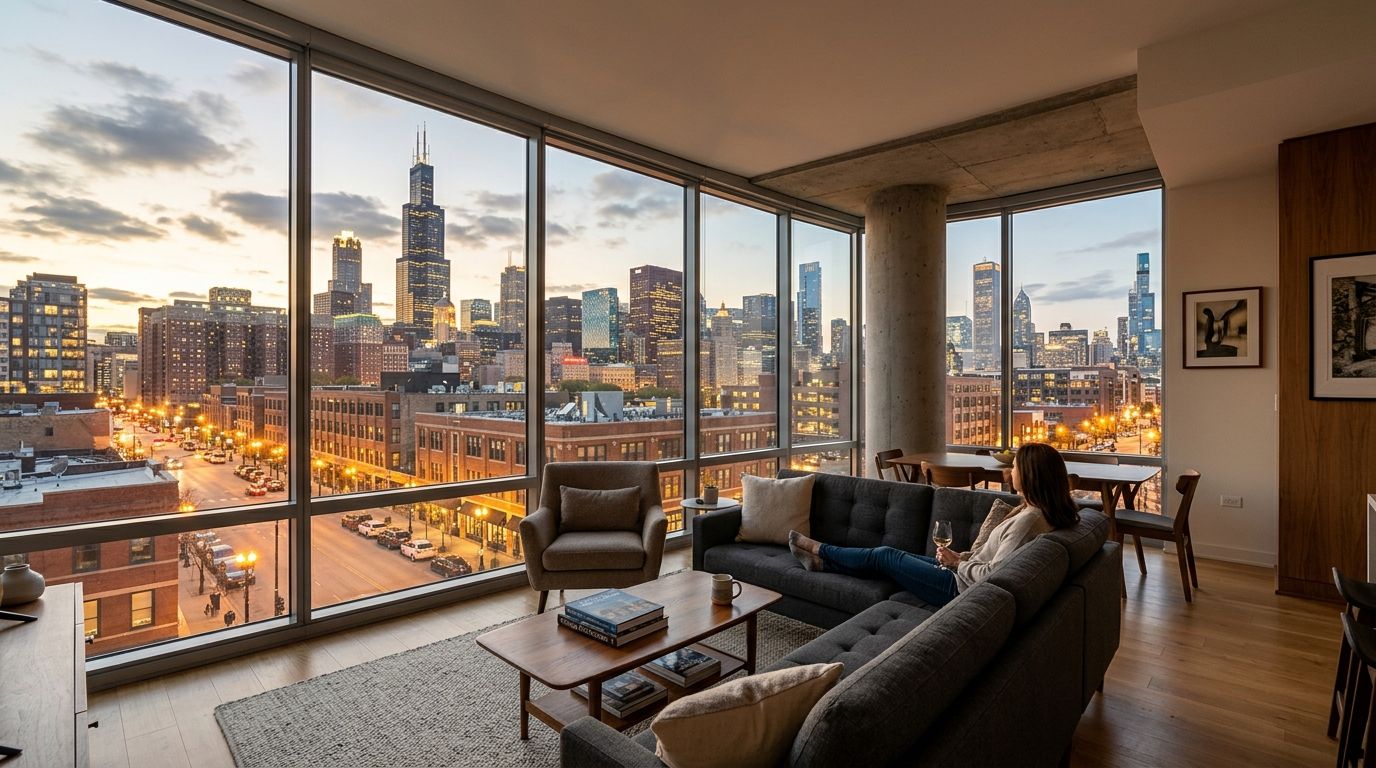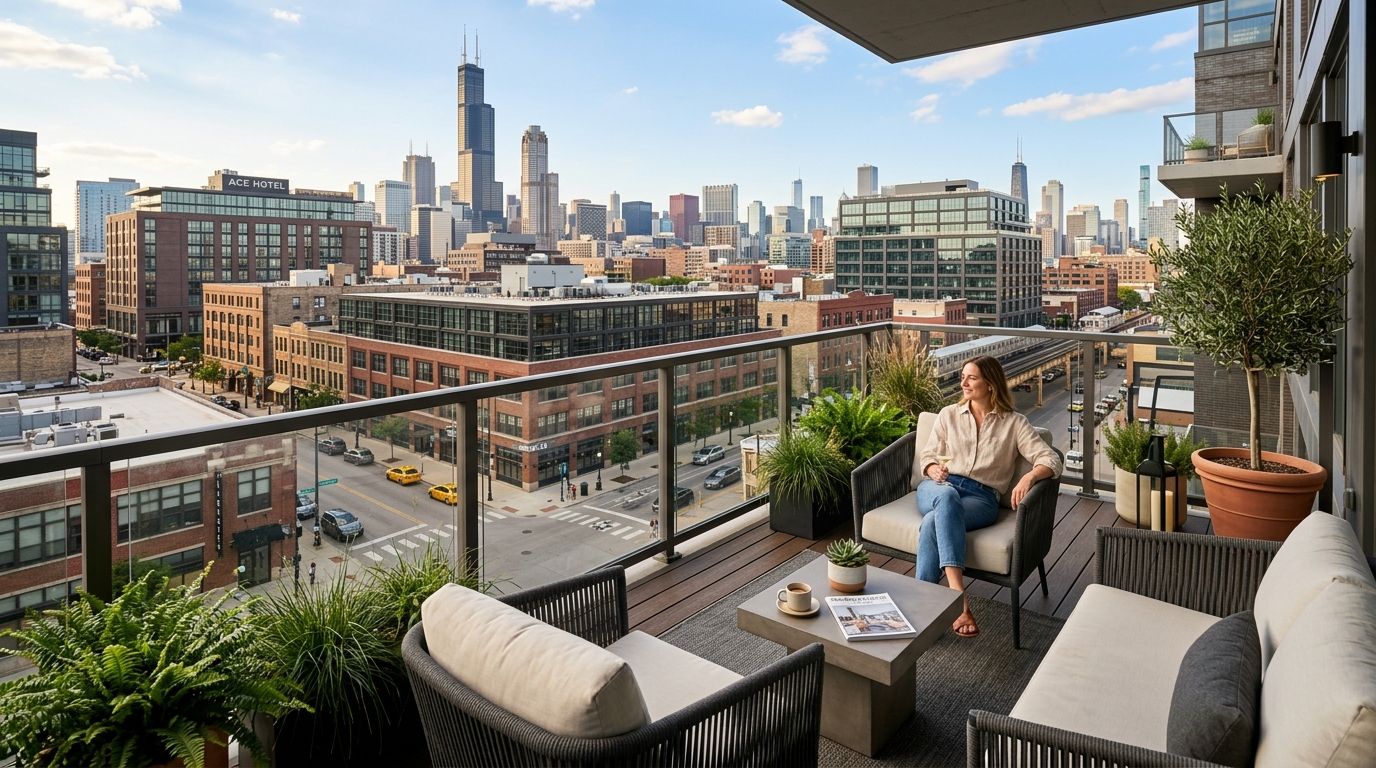
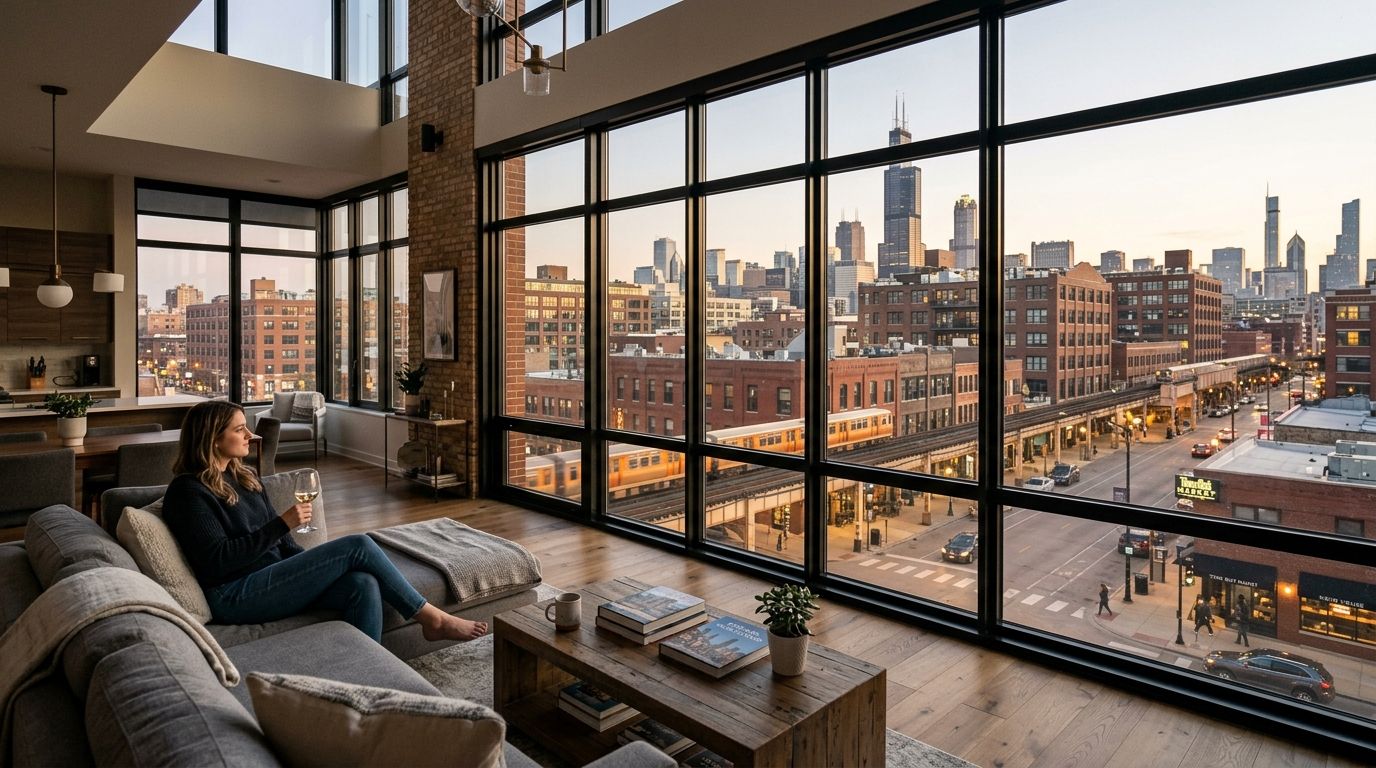
Floor-to-ceiling windows apartments in Fulton Market are homes built with glass that runs from floor to near-ceiling height in the main living space, and renters chasing this feature care more about exposure and sightline than they do about extra square footage. This search behaves differently than a general apartment hunt: light-focused renters filter by window height and orientation before they even open a floor plan.
- Floor-to-ceiling windows apartments in Fulton Market range from partial-glass loft conversions to true glass-wall high-rises built since 2015.
- Stead 220, a 308-unit community at 220 N. Ada Street, is built to the glazing standard common in Fulton Market's newest towers.
- Corner units give two exposures of glass instead of one, which changes light and view more than square footage does.
- Tour at the time of day you'll actually be home; midday tours hide east- and west-facing glare and shadow.
- Floor-to-ceiling glass eats wall space, so check linear wall footage before signing, not just window height.
Why floor-to-ceiling glass matters if you search by window height, not floor plan
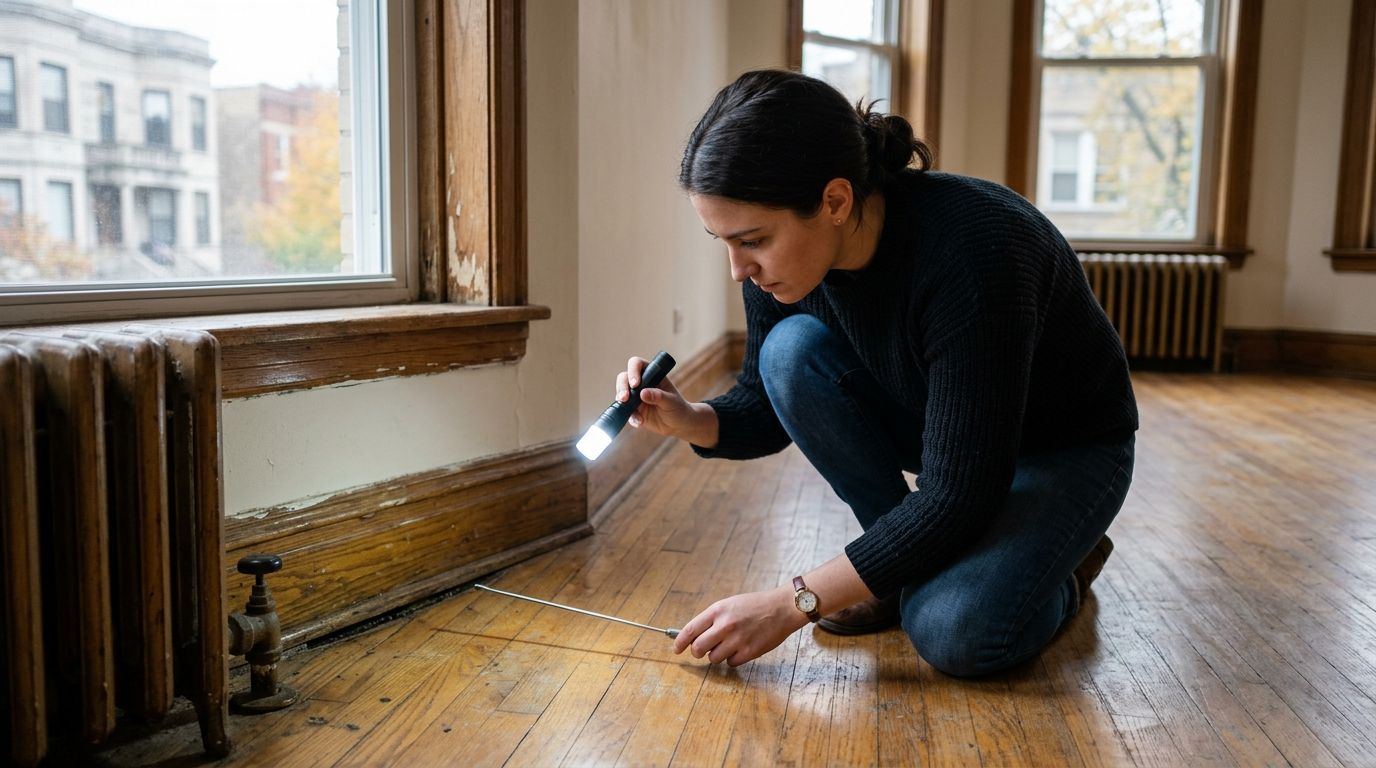
Renters typing "floor to ceiling windows apartments fulton market" into a search bar already know what they don't want: a listing photo that looks bright online and turns out to be a standard window with a deep sill and a lot of dead wall. Fulton Market's building stock splits into two eras. Pre-2015 loft conversions kept the punched industrial windows from their warehouse days. The high-rises built since treat floor-to-ceiling glass as a base spec, not an upgrade, and units like the corner-unit apartments with panoramic views sit squarely in that second category.
Renters chasing this feature tend to fall into three groups: people who work from home near a window all day, photographers and content creators who need consistent light, and people who just left a dark apartment and are done turning on lamps at 2 p.m. Stead 220, a 308-unit community at 220 N. Ada Street, was built for that second wave of Fulton Market leasing, which is exactly why this search term routes to buildings like it.
A Fulton Market apartment with floor-to-ceiling glass and no usable wall space is a harder sell for daily living than a slightly smaller window with room for a bed frame. Keep that trade-off in mind through every step below.
Check the glazing type before you book a tour
Listings use "bright" and "sun-drenched" loosely. Before you drive across town, get specific.
- Confirm the glass runs floor to near-ceiling in the living room, not just the bedroom
- Ask whether the panes are fixed or if any section opens for air
- Ask about mullion spacing — thick vertical bars chop an unobstructed view into segments
- Request photos shot from inside the actual unit, not building renderings or lobby shots
Match window exposure to how you actually use the apartment
Orientation matters more than total glass. Pick based on your schedule, not the listing photo.
- East-facing units get first light — best for early risers and morning routines
- West-facing units carry the skyline into the evening — best for renters home after 6 p.m.
- North-facing units give consistent, glare-free light — best for screens, plants, and photography setups
- Corner units combine two exposures instead of one, which changes how a room reads through the day, not just how it photographs
Confirm the floor plan leaves you usable wall space
Floor-to-ceiling glass eats wall space that would otherwise hold a headboard, a bookshelf, or art. This is where the trade-off gets real, and where a building's design choices start to matter more than the glass itself.
- Ask for the exact linear footage of solid wall per room
- Confirm whether window treatments come installed or you're buying your own
- Check ceiling height alongside window height — 9-foot glass reads differently under a 9-foot ceiling than a 12-foot one
- Ask if closets are recessed to preserve wall space; Stead 220's studios and one-bedrooms use built-in Italian wardrobes for this reason, so the glass doesn't cost you storage
Test acoustic and thermal performance before you sign
Glass performs differently than drywall, and Chicago winters expose that fast.
- Ask about the glazing's insulation rating — single-pane glass in an older loft loses heat quickly
- Stand at the window during your tour and feel for a draft
- Ask how the building manages solar heat gain on west-facing units in summer
- If you practice music or take calls all day, ask how sound behaves against a full glass wall before you assume it's quiet
See the glass for yourself
Tour a floor-to-ceiling unit at 220 N. Ada Street before you sign anywhere else.
Pick your floor before you pick your view
Fulton Market is still building. A view that looks clear in 2026 can change fast in a corridor this active.
- Higher floors clear neighboring rooftops and construction cranes common to a fast-developing area
- Lower floors near street level pick up more foot traffic and noise through the glass
- Ask whether any approved developments nearby could rise and block your specific sightline during your lease
- Walk the best apartments in Fulton Market options at different floor heights before deciding which trade-off you'll live with
Evaluate the building's other light-dependent spaces
Floor-to-ceiling glass isn't only about your unit. The amenity floors matter for how much daylight you get outside your own four walls.
- Ask if the fitness center has its own window wall or relies on artificial light
- Check whether the rooftop pool deck sits shaded at midday or gets full sun
- If a shared workspace matters, ask about coworking lounges with natural light
- Walk the amenity floor at the time of day you'd actually use it, not during a staged midday tour
How Fulton Market's floor-to-ceiling window options compare
| Option | Best for | Key limitation |
|---|---|---|
| Stead 220 corner residences at 220 N. Ada Street | Renters who want two exposures of full-height glass | Corner layouts lease faster and turn over less often than interior units |
| Pre-2015 industrial loft conversions | Renters who want exposed brick and timber alongside big windows | Windows are often punched, not floor-to-ceiling, despite "loft" marketing |
| Standard Fulton Market high-rise one-bedrooms | Renters who want floor-to-ceiling glass without a corner premium | A single exposure means light and view depend entirely on which side of the building you land |
| Micro-units and studios | Renters who want the glass without the extra square footage | Less wall space once the glass and a bed both need room |
Verdict: a corner unit with floor-to-ceiling glass, like the layouts at Stead 220, is best for renters who plan their day around light and want two sightlines instead of one — a standard interior high-rise unit is the more budget-conscious pick if one exposure is enough.
Mistakes light-focused renters make in Fulton Market
- Touring at midday and missing the light pattern you'll actually live with morning and night
- Trusting "bright" or "sun-drenched" in a listing instead of asking for the glazing height directly
- Signing on a west-facing unit without checking for summer heat gain
- Forgetting that floor-to-ceiling glass reduces usable wall space for furniture and art
- Skipping the question about upcoming construction that could block a view mid-lease
FAQ
What counts as a floor-to-ceiling window in a Fulton Market apartment?
A floor-to-ceiling window runs from the floor to near the ceiling in the main living space, not just a large window with a standard sill height. Ask for the exact glazing height before you tour, since listings use "large windows" and "floor-to-ceiling" loosely.
Are floor-to-ceiling windows standard in new Fulton Market high-rises in 2026?
Yes, floor-to-ceiling glass is a base spec in most Fulton Market high-rises built since 2015, unlike the punched windows common in older industrial loft conversions. Buildings from this newer construction wave, including Stead 220 at 220 N. Ada Street, are built to that current glazing standard.
Do floor-to-ceiling windows make an apartment colder in winter?
It depends on the glazing's insulation rating, not the window height itself. Single-pane glass in an older conversion loses heat faster than modern insulated glazing in a new-construction high-rise, so ask about the rating before you sign.
Is a corner unit worth the extra cost for the view?
A corner unit gives you two exposures of glass instead of one, which changes both the light pattern and the view through the day. It's worth it if your schedule benefits from morning and evening light in the same home; it's a lower priority if you're rarely home during daylight hours.
Which floors have the best skyline views in Fulton Market?
Higher floors generally clear neighboring rooftops and ongoing construction in a fast-developing corridor like Fulton Market. Lower floors near street level trade some view height for less noise exposure through the glass, so the right floor depends on what you're optimizing for.
Does Stead 220 have floor-to-ceiling windows?
Stead 220's homes at 220 N. Ada Street are built to the glazing standard common in Fulton Market's current high-rise construction, across studios, one-bedrooms, and two-bedrooms. Confirm exposure and unit-specific window height during a tour.
How do I know if a window wall will limit my furniture options?
Ask for the linear footage of solid wall remaining in each room once the glass is accounted for. Floor-to-ceiling windows reduce space for headboards, bookshelves, and art, so the answer varies unit by unit even within the same building.
Do floor-to-ceiling windows need special window treatments?
Many need custom-length shades or blinds since standard sizes are built for shorter windows. Ask during your tour whether treatments come installed or if that's a cost and installation you're taking on yourself.
One last thing
If you can only optimize for one variable, optimize for exposure over floor number. A mid-floor unit facing north or west often out-performs a higher unit boxed in by a neighboring building under construction, and in a corridor developing as fast as Fulton Market in 2026, that's not a hypothetical risk. Ask about approved nearby projects before you ask about the floor count.