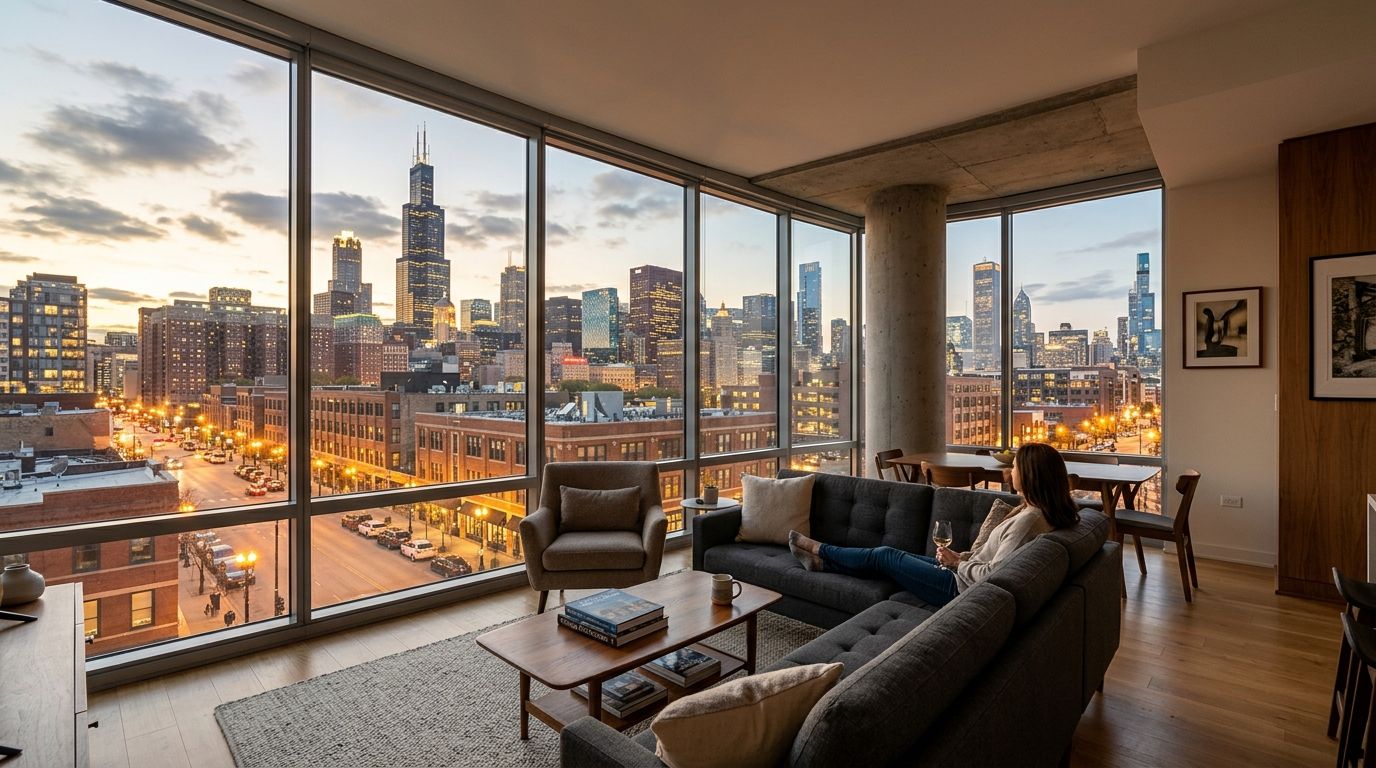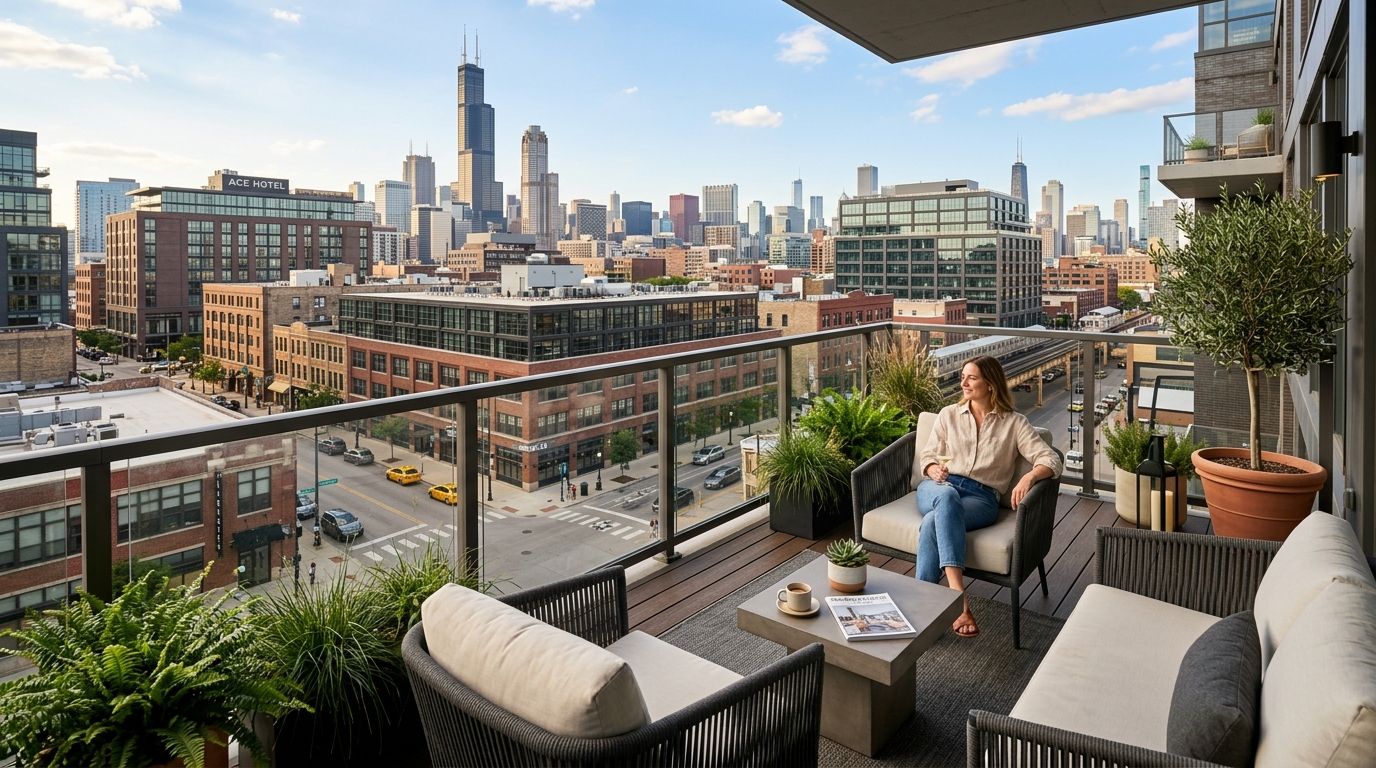
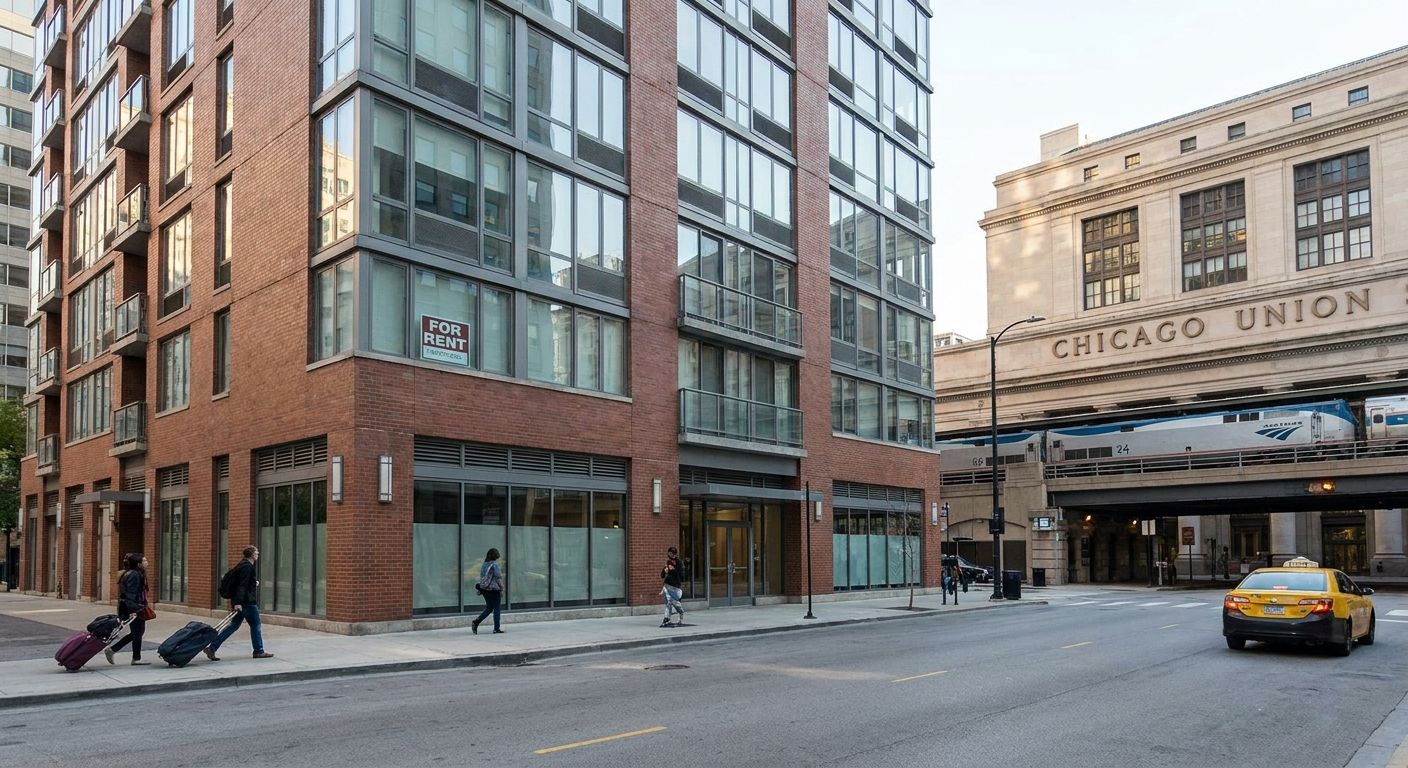
Fulton Market sits a short ride from Chicago's Union Station, which puts Amtrak travelers who lease at Stead 220 close to the Metropolitan Lounge, the Great Hall, and every regional and long-distance line running through the city's rail hub.
- Stead 220 in Fulton Market is the closest 308-unit community to Union Station for Amtrak travelers who want a short rideshare instead of a highway drive - Buy.
- Flexible-term leases matter more than square footage for anyone riding Amtrak on a rotating work or family schedule in 2026.
- Package lockers and bike storage beat a doorman alone when Amtrak delays leave luggage sitting for hours.
- Skip buildings built around airport access - O'Hare and Midway logistics don't map to Union Station's downtown grid.
Why this matters
Union Station is Amtrak's Midwest hub, running the Lake Shore Limited to New York, the Hiawatha to Milwaukee, and long-distance service to St. Louis and beyond. Anyone riding those trains regularly - for work, for family, or because they'd rather skip TSA lines - needs a home base that doesn't turn every trip into a logistics project.
Fulton Market isn't a train-adjacent afterthought neighborhood. It's a working West Loop district with its own restaurant corridor, office towers, and direct bus and rideshare access into the Loop, which means the walk to a platform never competes with a highway merge or an expressway exit. That distinction matters more in 2026 than it did five years ago, as more companies push hybrid schedules that mix in-office weeks with regional travel.
Who this is for
This guide is for people who treat Amtrak as a regular part of their week, not a once-a-year novelty. Think consultants riding the Hiawatha to Milwaukee twice a month, families making the St. Louis run instead of flying, corporate relocators arriving by train with a few suitcases instead of a moving truck, and remote workers who'd rather take an overnight train to a client site than sit in an airport terminal. None of these people want a 30-minute drive tacked onto a train schedule that's already tight.
What to look for in apartments near Union Station for Amtrak travelers
Real proximity, not marketing proximity
A lot of West Loop listings claim to be "near downtown" without saying how you actually get there. What matters is whether the route from your building to Union Station runs through surface streets with bus access or forces a car through highway ramps during rush hour. Fulton Market's grid puts riders on a direct line into the Loop without that detour, which you can map out in more detail in this guide on how to commute from Fulton Market to downtown Chicago.
Lease terms that match a travel schedule, not a calendar year
Standard 12-month leases assume you're staying put. Amtrak-heavy renters - relocators mid-transfer, consultants on a project timeline, people testing a new city before committing - need terms that flex without penalty. A building that only offers one lease length is optimizing for its own turnover math, not your itinerary.
Secure storage for luggage and packages
Amtrak delays are common enough that you can't assume your bag lands the second you do. A package room or locker system that holds items securely for days, not hours, saves you from missed deliveries and from hauling luggage up to a unit before a shift starts. This matters more than a lobby that just looks nice.
Staff availability around odd hours
Trains don't run on office hours. The Lake Shore Limited pulls into Union Station late at night; the Hiawatha's early departures mean early mornings out the door. A building with staffed access or keyless entry that doesn't depend on a 9-to-5 front desk keeps those hours from becoming a problem.
Walkability to more than one transit option
Union Station handles Amtrak and Metra both, and Fulton Market sits close enough to Ogilvie Transportation Center that renters get a second commuter rail option without changing neighborhoods. That flexibility matters if your travel mix shifts between regional Metra trips and longer Amtrak runs.
Neighborhood substance beyond the commute
A location that's only good for getting to a train station gets old fast. Fulton Market's restaurant row, grocery access, and office density mean the neighborhood works on the days you're not traveling at all, not just the days you are.
Top picks for Amtrak travelers
The frequent-rider pick: short-term leases in the West Loop. Renters riding Amtrak on a recurring project or relocation timeline don't want to sign a year they might not finish. Stead 220's flexible-term options are built for exactly that gap, and you can see current terms on short-term leases for business travelers. Verdict: Buy for anyone whose Amtrak schedule doesn't match a calendar-year lease.
The relocation pick: corporate transfers arriving by train. People moving into Chicago for a new role often skip a moving truck entirely and arrive with a few bags on an Amtrak line instead. That's a common enough pattern that Stead 220 built a dedicated path for it - review it on apartments for corporate relocators. Verdict: Buy if you're transferring in without a car and need a lease that starts fast.
The recovery pick: rooftop and fitness amenities. A long train ride leaves you stiff, not rested. Stead 220's rooftop pool and TechnoGym-equipped fitness center give Amtrak travelers a way to reset the same day they get in, rather than waiting for a weekend. Verdict: Consider if recovery time matters as much as commute time.
The solo-trip pick: studio homes for occasional riders. Not every Amtrak traveler needs two bedrooms. Studios at Stead 220 fit renters who ride the train for weekend trips or short work stints and don't want to pay for space they won't use. Verdict: Consider for lighter travel schedules; skip it if you're hosting overnight guests regularly.
See current floor plans at Stead 220
Studio to two-bedroom homes in Fulton Market, close to Union Station.
What to avoid
- Buildings marketed around airport access. O'Hare and Midway logistics run on a completely different grid than Union Station. A location optimized for airport shuttles doesn't shorten your walk to Amtrak.
- Standard 12-month-only leases with no flexibility. If a building won't budge on term length, it's optimizing for its own occupancy numbers, not your travel calendar.
- Neighborhoods with no direct bus or CTA connection into the Loop. A quiet residential block can still leave you stuck calling a rideshare every single time you head to the station, which adds up fast across a year of regular Amtrak trips.
Verdict comparison
| Criteria | Fulton Market (Stead 220) | Near Ogilvie/Metra corridor | Neighborhoods without direct CTA access |
|---|---|---|---|
| Distance feel to Union Station | Short rideshare or bus, no highway merge | Close to Metra, similar reach into the Loop | Depends heavily on rideshare timing |
| Lease flexibility | Flexible short-term options available | Varies by building | Often standard 12-month only |
| Luggage/package storage | Package lockers, bike storage on-site | Varies by building | Varies widely |
| Neighborhood substance | Restaurant row, grocery access, office density | Commuter-focused | Residential, fewer amenities |
| Verdict | Buy | Consider | Skip for frequent Amtrak use |
Renters weighing the Ogilvie corridor against Union Station access can compare both directly through apartments near Ogilvie Transportation Center, since Fulton Market sits within reach of both hubs.
FAQ
What's the closest apartment community to Union Station for Amtrak travelers?
Stead 220, a 308-unit community at 220 N. Ada Street in Fulton Market, sits close enough to Union Station for a short rideshare or bus ride without a highway merge. That makes it a strong base for regular Amtrak riders in 2026.
Is Fulton Market walkable to Union Station?
Fulton Market is closer to Union Station than most West Loop and River North options, though most renters cover the distance by bus or rideshare rather than on foot. The route runs on surface streets, not highway ramps, which keeps travel time predictable.
Do apartments near Union Station cost more than other Chicago neighborhoods?
Pricing varies by unit type and lease term, so check current rates directly on a building's site rather than relying on neighborhood averages. What matters more for Amtrak travelers is lease flexibility, not just the base rate.
Is Union Station better than flying out of O'Hare for regular travel?
For regional trips to cities like Milwaukee or St. Louis, Amtrak out of Union Station skips airport security lines and parking costs entirely. It's a different calculation than flying and works best for people who travel that corridor often.
Can I get a short-term lease near Union Station for occasional Amtrak trips?
Yes. Short-term lease options in the West Loop and Fulton Market exist specifically for renters whose schedules don't match a standard 12-month term. Look for buildings that advertise flexible-term leasing rather than a single lease length.
What amenities matter most for frequent Amtrak travelers?
Secure package and luggage storage matters more than most cosmetic amenities, since train delays can leave deliveries or bags sitting for hours. Keyless entry and staffed access outside standard business hours help too, given how early and late Amtrak schedules run.
Are there apartments near both Union Station and Ogilvie Transportation Center?
Fulton Market sits within reach of both hubs, which gives renters access to Amtrak service through Union Station and Metra service through Ogilvie without changing neighborhoods. That dual access is one reason the area works for mixed commuter and Amtrak schedules.
Is Fulton Market a good neighborhood for business travelers who ride Amtrak regularly?
Yes. The neighborhood combines office density, a restaurant corridor, and direct transit access into the Loop, which means it works on non-travel days as well as travel days. That's a meaningful difference from neighborhoods that only make sense as a commute shortcut.
One last thing
Most Amtrak-focused apartment searches obsess over walking distance and skip lease structure entirely. The renters who end up frustrated a year in aren't the ones who picked a building a few blocks farther from Union Station - they're the ones locked into a standard 12-month lease that didn't match a travel schedule that changed twice in 2026 alone. Flexibility beats proximity when the two conflict.