Apartments for startup founders in Fulton Market Chicago need to work as hard as the person renting them: a home base that flexes between 6 a.m. investor calls and midnight product sprints, inside a neighborhood where the office is often a five-minute walk. Founders don't rent on a fixed schedule, so the unit has to double as a war room, a recovery space, and occasionally a place to close a deal without changing out of a hoodie.
- Stead 220 at 220 N. Ada Street puts founders inside Fulton Market's tech and CPG corridor, steps from major employer offices.
- Look for buildings with real workspace, not just a lobby with wifi — coworking lounges and fitness centers matter more than a doorman.
- Flexible lease terms and furnished options beat long commitments when your runway timeline is still moving.
- A 308-unit building like Stead 220 gives founders scale amenities a boutique walk-up cannot match.
Why apartments matter for startup founders
Fulton Market isn't just trendy — it's where the employers are. McDonald's global headquarters, Google's Chicago office, and Mondelez International all sit inside or bordering the neighborhood, which means a founder living here can walk to investor coffee meetings, recruiting events, and partner lunches without touching a rideshare app. That density changes what a founder needs from a lease in 2026.
A founder's calendar doesn't look like a 9-to-5 employee's. Board calls happen at odd hours, hiring sprints eat weekends, and the apartment has to absorb work that used to live in an office. The right building removes friction from the parts of founder life that aren't the product — commute, connectivity, and a place to think when the incubator space is booked.
Update your commute math first
Before comparing floor plans, figure out how the building's location changes your actual week. Founders who guess on this end up re-signing somewhere else within a year.
- Walk the route to your office or your primary client meetings at the time of day you'll actually make the trip
- Check proximity to apartments with coworking lounges for hybrid workers if your team splits time between home and a shared office
- Confirm transit access if investors or hires are coming from outside the neighborhood
- Test cell and wifi reliability in the unit itself, not just the lobby
- Factor in late-night food and coffee options for the nights product launches run long
Build a workspace that survives a full day of calls
A kitchen table isn't a home office once you're taking back-to-back investor calls. The unit's layout matters more than its square footage.
- Prioritize a second room or a defined nook that can hold a desk and a closed door
- Check natural light where you'll actually work — video calls look different at 9 a.m. versus 4 p.m.
- Confirm outlet placement and wired internet access if your bandwidth needs exceed standard wifi
- Look at sound isolation between units; open floor plans carry noise from next door
- Ask whether the building has a bookable space for when you need a room, not a desk
Treat the building's amenities as your extended office
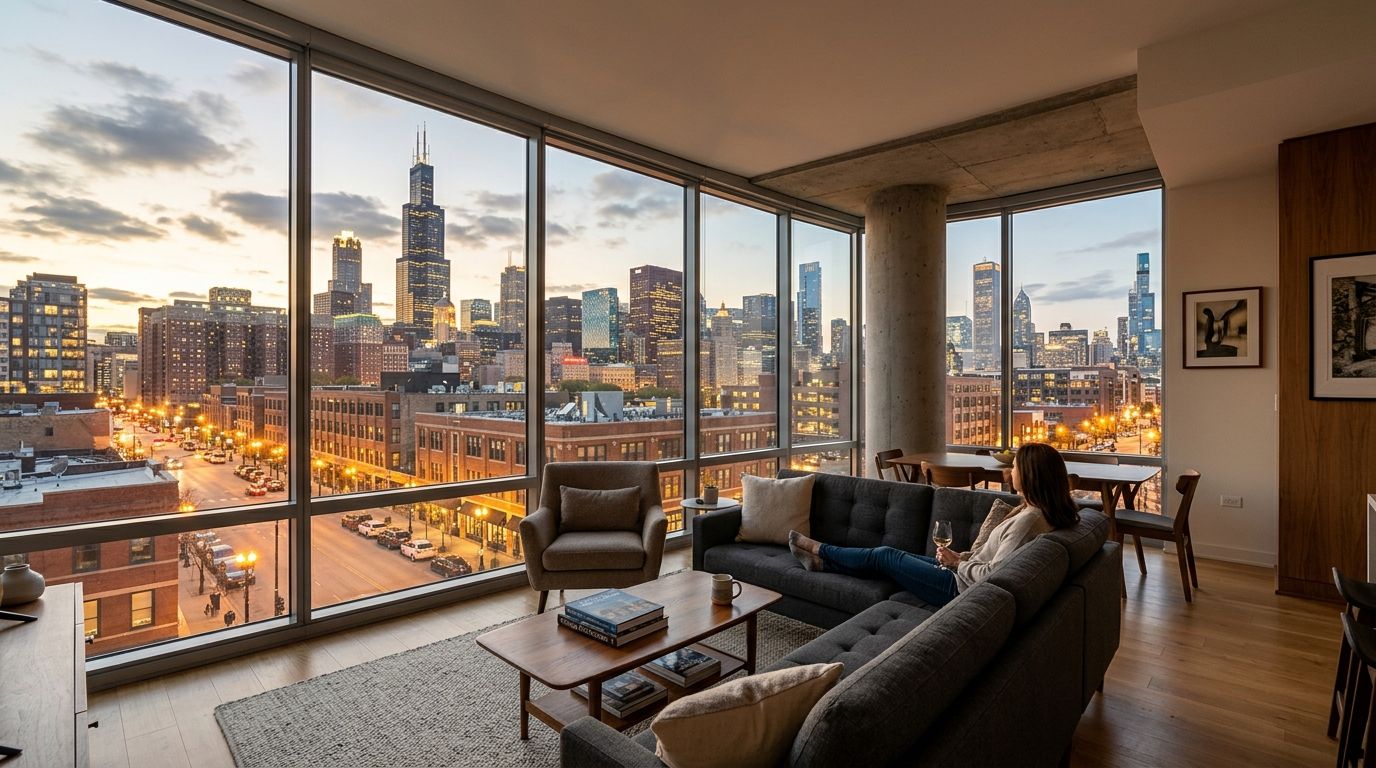
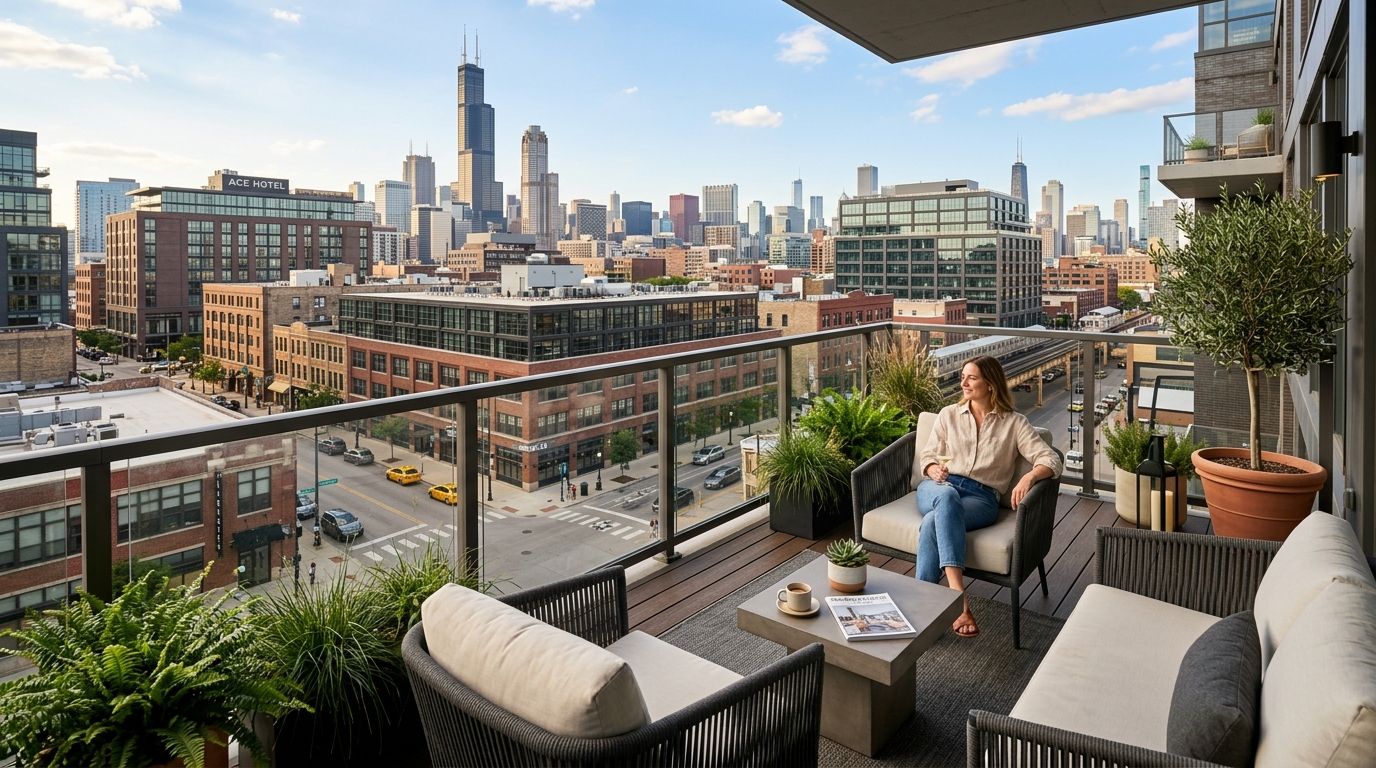
Once the in-unit setup is solid, the building itself becomes part of your workday. This is where a full-amenity property outperforms a boutique walk-up. Stead 220's rooftop pool and fitness center function as the break a founder actually takes between calls, and the building's resident spaces double as informal meeting spots when a coffee shop is too loud for a real conversation.
- Confirm on-site fitness access — a 20-minute session between calls beats a commute to an outside gym
- Ask if common areas can be booked for small meetings or interviews
- Check package handling if your gear, samples, or hardware ship frequently
- Look at apartments near Chicago tech offices if your team or investors cluster in a specific pocket of Fulton Market
- Verify the pet policy early if a dog is part of your daily routine
Budget for irregular income, not a steady paycheck
Founder income doesn't arrive like a salaried paycheck, and lease terms built around a W-2 assumption don't fit. Plan the budget around variability, not a single number.
- Model rent against your lowest-revenue month, not your average month
- Ask what documentation the building accepts in place of pay stubs — many founders lean on bank statements or a co-signer
- Separate personal rent from any home-office expense you plan to run through the business
- Build in a cushion for utilities and the internet upgrade your workspace setup requires
- Confirm whether the lease allows early termination if a funding round changes your location plans
Negotiate lease length around your funding timeline
A 12-month lease signed the week before a Series A close can feel very different six months later. Match the lease term to what you actually know about your near-term plans in 2026.
- Ask about shorter or flexible term options if your runway timeline is uncertain
- Request move-in date flexibility if your close date keeps shifting
- Clarify subletting rules in case travel or a satellite office pulls you out of the unit for weeks
- Read the early-termination clause before you need it, not after
Network inside the building, not just the neighborhood
Fulton Market is full of founders, but most of them are strangers in the elevator. A building with real common space turns neighbors into a network.
- Look for resident lounges or rooftop spaces that get used, not just photographed
- Ask if the building hosts resident events — informal, but useful for meeting people outside your own team
- Check whether the building attracts other tech and creative-industry renters, which shapes who you'll run into
“The right building removes friction from the parts of founder life that aren't the product.”
Housing options for Fulton Market founders compared
| Option | Best for | Key strength | Key limitation |
|---|---|---|---|
| Full-amenity high-rise (Stead 220-style) | Founders who want a turnkey work-life setup | On-site fitness, rooftop pool, resident common space | Rent reflects the full amenity package |
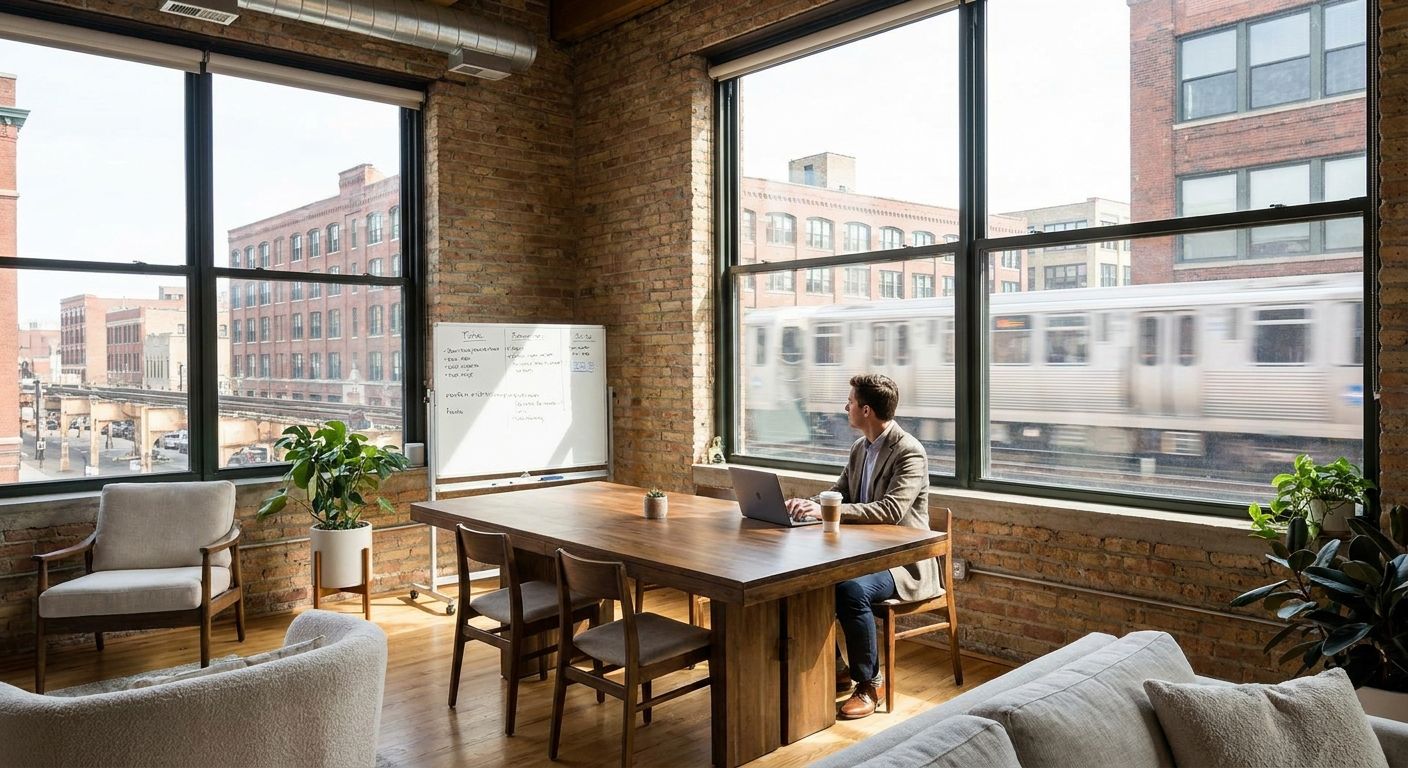
| Loft-style walk-up | Founders who want industrial character over amenities | High ceilings, more square footage per dollar | Often no elevator, no on-site gym or workspace |
| Short-term or extended-stay unit | Founders between funding rounds or relocating fast | Flexible move-in dates, lower commitment | Rarely set up with a real home-office layout |
| Shared two-bedroom with a co-founder | Early-stage teams splitting costs | Lower per-person rent, built-in roommate | Less privacy for investor calls and pitch prep |
Verdict: a full-amenity high-rise like Stead 220 wins for founders who need the building itself to function as workspace and recovery space, not just a place to sleep.
See Stead 220 availability
Studios to two-bedroom homes in Fulton Market, steps from the neighborhood's employers.
Common mistakes founders make renting in Fulton Market
- Signing a 12-month lease before knowing the runway — a funding delay shouldn't be complicated by a lease you can't exit
- Choosing on address prestige over actual workspace — a photogenic building with no bookable common space doesn't help you close a deal
- Ignoring internet reliability during the tour — check it live in the unit, not from a marketing sheet
- Underbudgeting utilities and home-office costs — these add up fast when the apartment is also the office
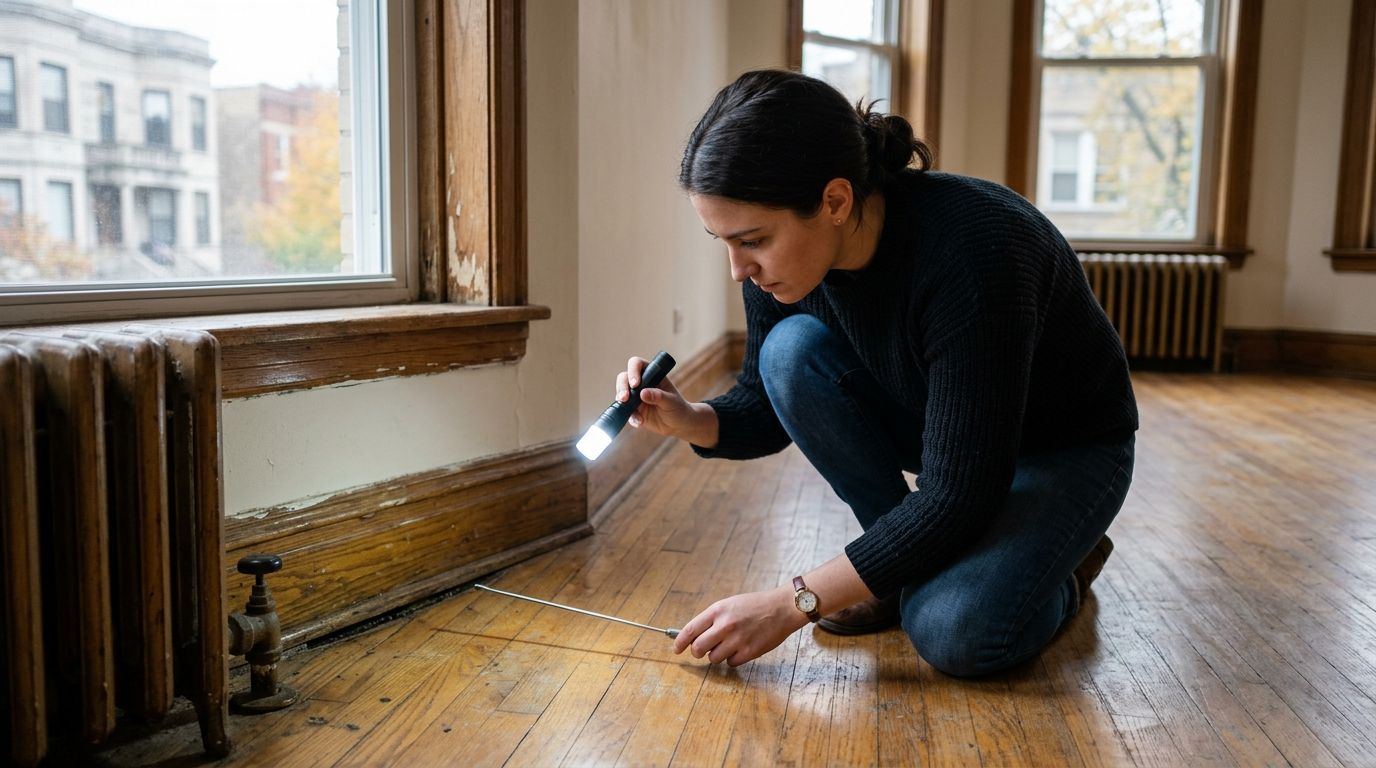
- Skipping the noise check — a founder working odd hours needs to know what the walls block before move-in, not after
FAQ
What's the best neighborhood for startup founders in Chicago?
Fulton Market is the strongest fit in 2026 for founders who want proximity to tech and CPG employers like Google Chicago and Mondelez International, plus a walkable restaurant and coworking scene.
Do apartment buildings in Fulton Market offer coworking space?
Some do. Buildings positioned for hybrid and remote workers include lounges or common areas that function as informal meeting space, which matters more for founders than a standard lobby.
Is a furnished apartment better for a startup founder?
A furnished unit removes setup time during a period when time is the scarcest resource, which is why many founders relocating quickly choose it over an unfurnished lease.
Can startup founders get flexible lease terms in Chicago?
Flexible terms exist but vary by building. Ask directly about short-term options, move-in date flexibility, and early-termination clauses before signing.
How close is Fulton Market to major Chicago employers?
Fulton Market borders or contains the offices of McDonald's global headquarters, Google Chicago, and Mondelez International, making it one of the most walkable employer clusters in the city in 2026.
What apartment amenities matter most for founders working from home?
Reliable internet, a closable workspace, and on-site fitness or common areas matter more than square footage alone, since the apartment often functions as both home and office.
Should a founder rent alone or with a co-founder?
Splitting a two-bedroom lowers cost per person but reduces privacy for calls. Solo renters gain privacy at a higher per-person rent.
How many units does Stead 220 have?
Stead 220 is a 308-unit apartment community at 220 N. Ada Street in Fulton Market, leasing studios through two-bedroom homes.
One last thing
Most founders tour an apartment looking for the photo-worthy amenity — the rooftop, the lobby art — and skip the one question that actually predicts whether the lease works in 2026: can you take a 45-minute investor call from this unit without a delivery buzzer, a neighbor's bass line, or a dead wifi signal cutting in. Ask the leasing office to let you sit in the unit for ten minutes before signing anything. That's the real test.