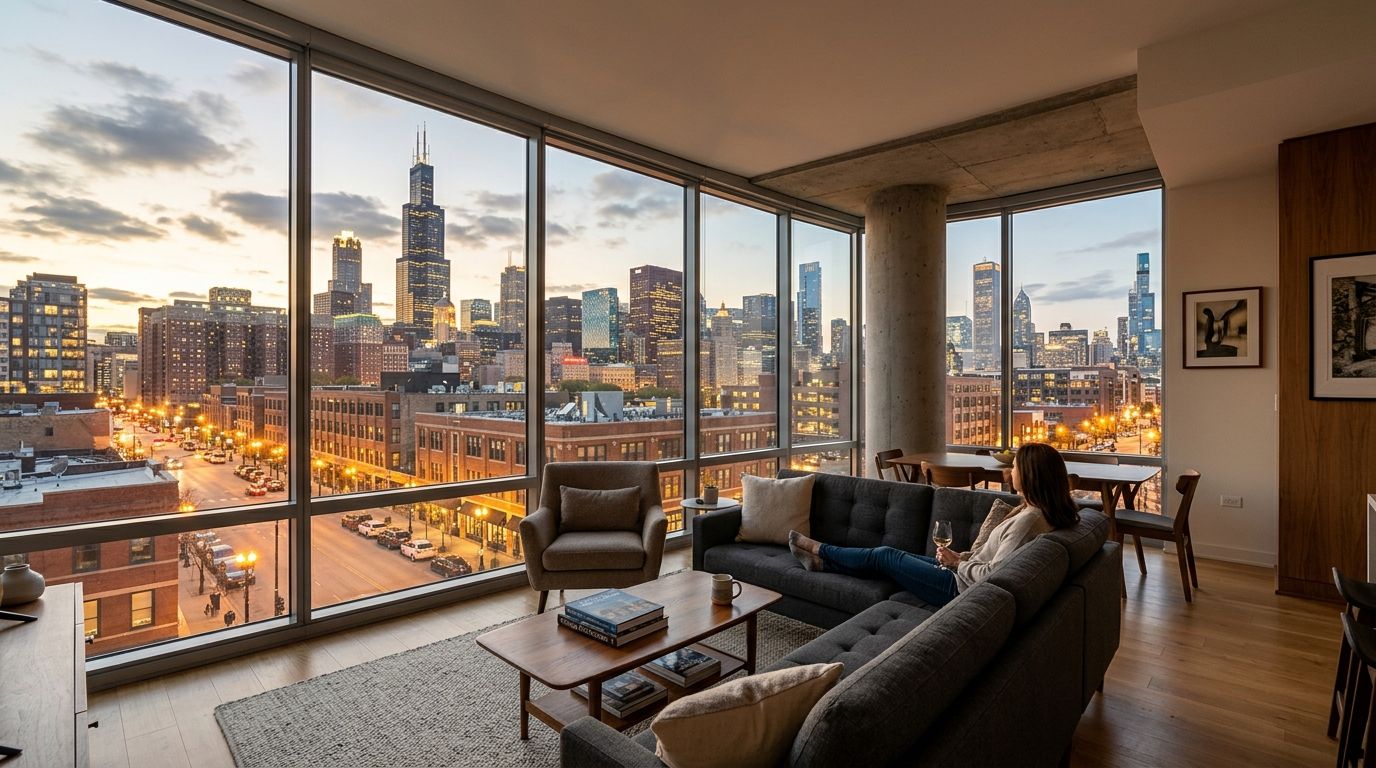
Leaving a co-living space in Chicago means trading a furnished bedroom and a shared kitchen for a real lease with your name on it, and that shift changes almost everything about how you search for an apartment. Stead 220 in Fulton Market fits renters coming from co-living because it replaces bundled community perks — a gym, a lounge, a rooftop — with the same amenities inside a private, full-unit lease.
- Renters leaving co-living need a private lease, not a room membership — Stead 220 offers studios to two-bedrooms with individual leases.
- Co-living usually bundles utilities and furniture into one fee; budget separately for both once you sign a standard Chicago lease.
- Apartments for renters leaving co-living in Chicago should replace lost community amenities with on-site perks like a rooftop pool or fitness center.
- A 12-month lease at a building like Stead 220 trades flexibility for privacy and a fixed rent you control.
Why the shift from co-living matters for this segment
Co-living memberships are built around flexibility: short commitments, furnished rooms, and someone else handling wifi and cleaning supplies. That structure works until you want your own bathroom, your own lease terms, or a kitchen nobody else touches.
The jump to a standard Chicago lease is bigger than it looks on paper. You go from paying one all-in membership fee to managing rent, utilities, renters insurance, and furniture separately, on your own schedule, with your own credit and income backing it up. Stead 220 in Fulton Market is built around that exact transition — private units with hotel-grade amenities on site, so you're not giving up the perks that made co-living appealing in the first place.
How to find an apartment after leaving a co-living space
Audit what your co-living membership actually covered
Most co-living operators fold several costs into one fee. Before you budget for a standalone apartment, list out everything that fee quietly handled.
- Utilities (electric, gas, water, sometimes internet)
- Furniture and basic kitchenware
- Cleaning services for common areas
- Community events or programming
- Maintenance requests handled without a landlord call
Each line item above becomes a separate cost or task once you sign an individual lease.
Calculate your true solo budget
Co-living membership fees rarely map cleanly onto rent-plus-utilities math. Build a real number before you start touring.
- Rent (check if it's quoted with or without utility credits)
- Electric and gas, which vary seasonally in Chicago
- Internet, since co-living wifi is gone
- Renters insurance, generally required by most Chicago leases
- A furniture budget if you're leaving a furnished room
Decide which amenities actually replace your co-living community
The biggest adjustment isn't financial — it's social. Co-living spaces manufacture community through shared kitchens and planned events. A building's on-site amenities need to do that job now.
- A fitness center you'll actually use instead of a shared gym schedule
- A rooftop or lounge space for casual socializing
- A resident event calendar or common area with regular foot traffic
- Package handling so deliveries don't pile up in a shared entry
- Proximity to the same neighborhood social scene you already know
Buildings that stack these into one address — rooftop pool, fitness center, resident lounge — cut down the isolation that catches a lot of former co-living renters off guard in their first few months solo.
Apply with documented income and credit, not a membership form
Co-living applications are often lighter than a standard Chicago lease application. Landlords want income verification, credit history, and sometimes a guarantor if you're newer to solo renting.
- Two to three recent pay stubs or an offer letter if you're new to a job
- A credit report pulled within the last 30 days
- Bank statements showing consistent deposits
- A guarantor or co-signer lined up in advance if your credit history is thin
- Prior address history, including your co-living space
Walk through how to apply for an apartment in Fulton Market before you tour, so the paperwork isn't the thing that costs you the unit.
Set up utilities co-living used to handle for you
This is the step most first-time solo renters underestimate. Co-living bundled it; now it's on you, and Chicago utility setup has its own timeline.
- ComEd for electric, typically activated within a few business days
- Peoples Gas for heat and hot water
- Internet provider account and installation window
- Renters insurance policy active before move-in day
- Address updates with your bank, employer, and mail forwarding
A full walkthrough lives at setting up utilities before moving into a Chicago apartment — worth reading a week before your lease start date, not the day of.
Plan move day without a co-living move-in team
Co-living operators often manage move-in logistics for you. Solo renters coordinate everything themselves.
- Confirm elevator or freight elevator reservation windows with the building
- Book movers or a truck rental at least two weeks out
- Change your address with USPS before move day, not after
- Photograph the unit's condition on arrival for your move-in inspection
- Confirm your renters insurance is active before keys change hands
Rebuild your social routine outside a shared kitchen
Co-living's built-in socializing disappears the moment you sign a private lease. Replace it deliberately instead of hoping it happens.
- Use building amenity spaces (lounges, rooftops) during peak hours when other residents are around
- Join a neighborhood-specific group tied to Fulton Market or West Loop
- Default to on-site fitness classes or gym hours that overlap with other residents
- Host, rather than wait to be hosted, once you have your own space
The renters who adjust fastest treat their building's amenities as the new common room, not a private afterthought.
“The renters who adjust fastest treat their building's amenities as the new common room, not a private afterthought.”
Comparing your options after co-living
| Option | Best for | Key limitation |
|---|---|---|
| Stead 220 (Fulton Market) | Renters who want a private full lease plus on-site amenities replacing co-living perks | Standard lease terms — no month-to-month flexibility like co-living |
| Co-living operator, bedroom-only lease | Renters not ready to give up shared costs or short commitments | Shared common areas, roommate turnover, limited privacy |
| Traditional walk-up building | Renters prioritizing lower monthly cost above amenities | Few or no on-site amenities, often older mechanical systems |
| Furnished short-term corporate apartment | Renters still unsure about committing to a neighborhood or city long-term | Limited unit selection, generally a bridge option rather than a home |
Verdict: renters leaving co-living who want privacy without losing amenity access are best served by a building like Stead 220 that puts a rooftop pool and fitness center inside a private-lease structure.
See what a full lease unlocks
Compare studio, one-bedroom, and two-bedroom layouts at Stead 220 in Fulton Market.
Common mistakes renters leaving co-living make
- Underbudgeting utilities. Co-living fees hide the real cost of electric, gas, and internet — renters routinely underestimate this by treating rent as the only number that matters.
- Skipping renters insurance. Co-living operators sometimes require it as part of the membership; a standalone Chicago lease almost always requires you to source your own policy.
- Assuming solo credit history is sufficient. Co-living applications are lighter on credit checks than standard leases — renters with thin credit history get surprised at the guarantor requirement.
- Underestimating the social gap. Renters who don't replace co-living's built-in community with on-site amenities or a deliberate social routine report the biggest adjustment shock in the first two months.
- Furnishing everything at once. Renters leaving a furnished co-living room often overbuy furniture in the first week instead of living with the space for a month first.
FAQ
What's the best apartment option for renters leaving co-living in Chicago?
A private-lease building with on-site amenities that replace what co-living bundled in — rooftop access, a fitness center, and a resident lounge. Stead 220 in Fulton Market structures its studios through two-bedroom units this way in 2026.
Is a private apartment better than co-living for renters in Chicago?
It depends on what you're optimizing for — co-living wins on flexibility and bundled costs, while a private lease wins on privacy and control over your space. Renters who've outgrown shared common areas generally move to a private lease once income and credit history support it.
How much does renters insurance cost after leaving co-living in Chicago?
Cost varies by provider and coverage level, and co-living memberships often bundle it in while standard leases require you to source your own policy. Compare quotes before your lease start date so coverage is active on move-in day.
Do Chicago apartments require a guarantor for renters coming from co-living?
Some do, especially if your credit history is thin because co-living applications rarely run a full credit check. Lining up a guarantor or co-signer in advance avoids a delay at lease signing.
What utilities do I need to set up after leaving a co-living space?
Electric through ComEd, gas through Peoples Gas, internet through your chosen provider, and renters insurance — all handled individually once you're off a bundled co-living membership. Start these at least a week before move-in.
How do I replace the community aspect of co-living in a private apartment?
Use building amenity spaces like rooftops, lounges, and fitness centers during peak hours, and treat them as your new common room. Buildings with active resident spaces close the social gap faster than isolated units.
Can I apply for a Chicago apartment with limited individual lease history?
Yes — landlords weigh income verification and credit history more than prior lease type, but a guarantor can help if your history is thin. Documented pay stubs and a recent credit report speed up approval.
What amenities matter most for renters transitioning from co-living?
A fitness center, rooftop or lounge space, and package handling top the list, since these replace the shared infrastructure co-living provided. Renters who skip this step often feel the amenity gap within the first month.
One last thing
The single biggest miscalculation renters make after leaving co-living isn't financial — it's assuming the social structure will rebuild itself. It doesn't. Buildings with active amenity spaces, not just amenity lists, are the ones that actually close the gap co-living leaves behind, and that's worth weighing above square footage or floor level when you tour in 2026.