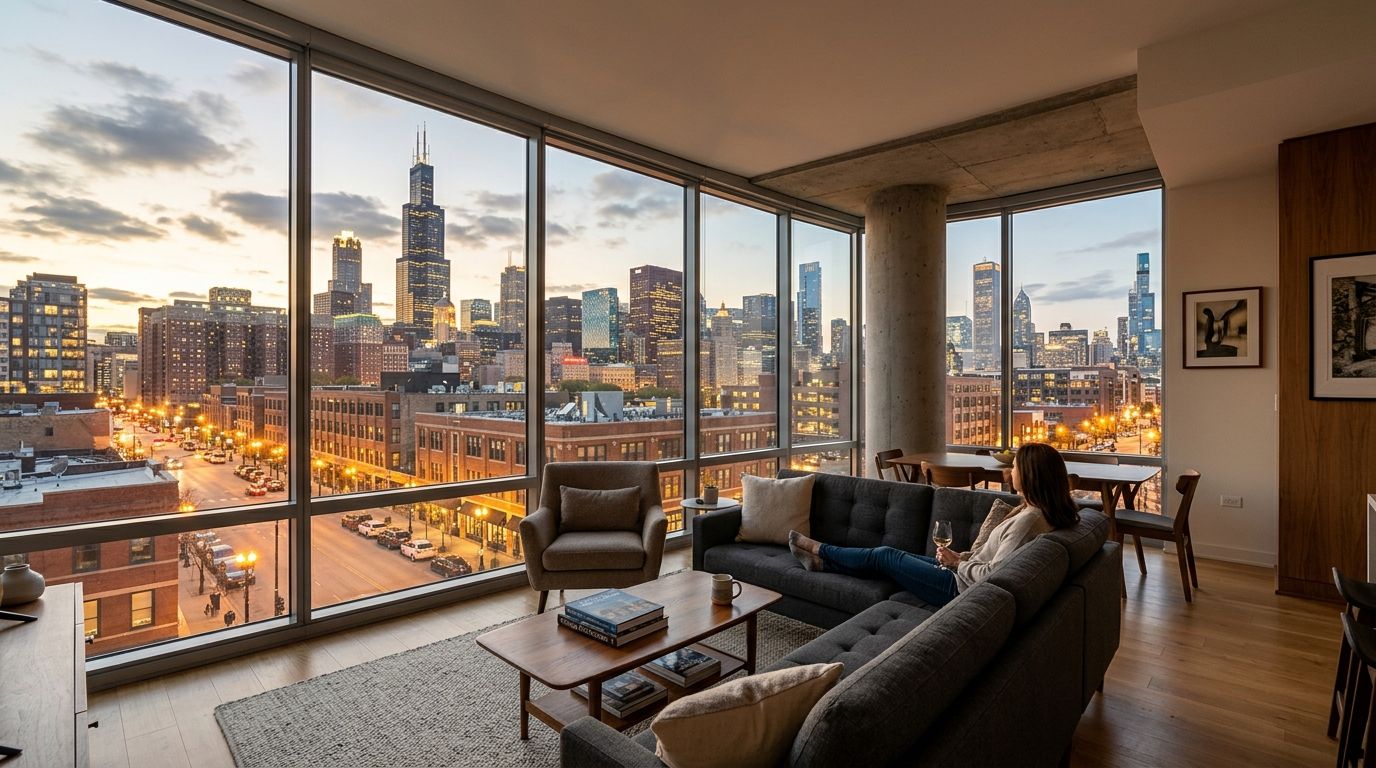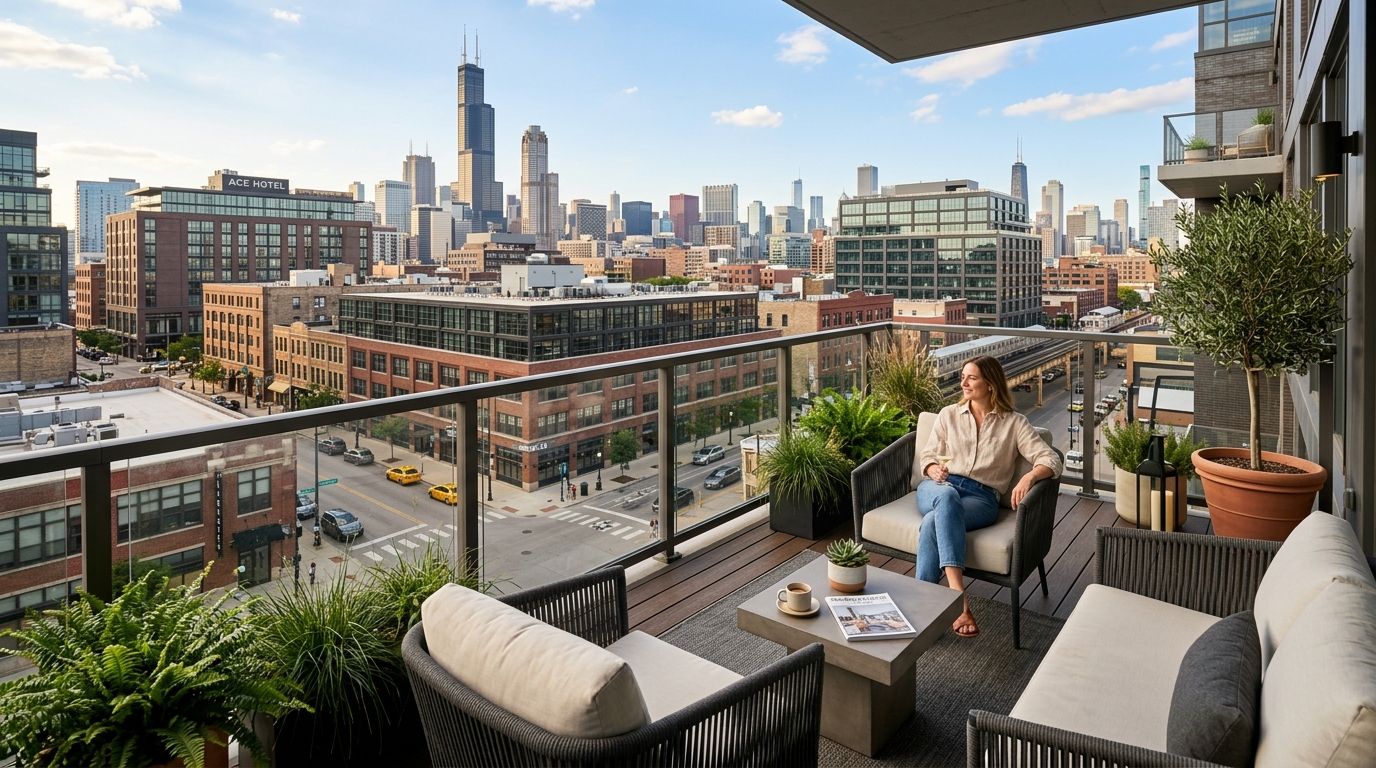
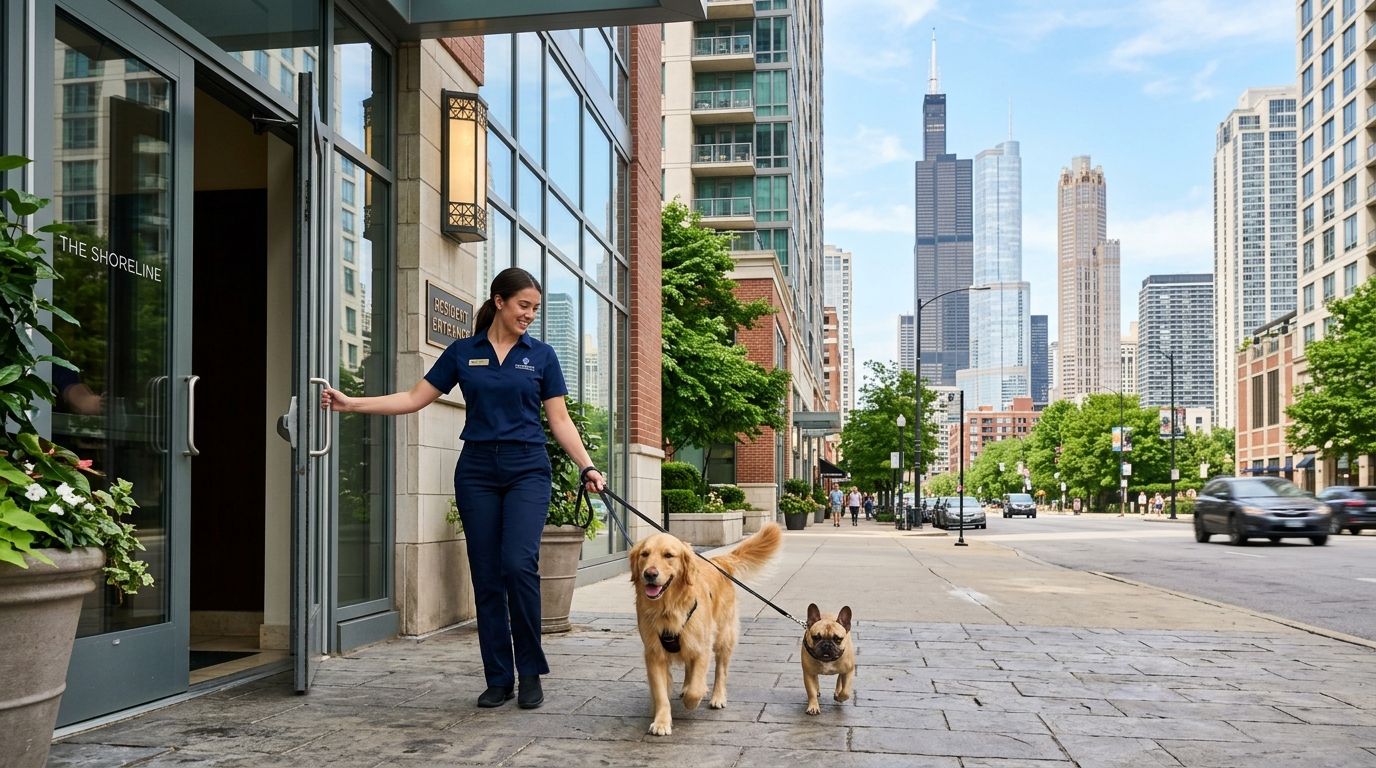
Renters seeking concierge dog walking service want a building that treats a dog's daily routine as part of the lease, not an afterthought. In Fulton Market, that means more than a patch of grass out front — it means dog wash stations, defined dog runs, and staff who know your building well enough to point you toward a reliable walker when your schedule runs long.
- Apartments with dog walking concierge Chicago searches lead to buildings pairing on-site pet infrastructure with nearby walking services, not a single universal amenity.
- Stead 220 in Fulton Market pairs a dog run and dog wash station with a walkable, dog-dense neighborhood as of 2026.
- App-based walkers (Rover, Wag-style platforms) remain the fastest way to book a walk without a dedicated building concierge desk.
- Buildings without dog runs or wash stations push more of the daily routine onto renters and their own scheduling.
Why dog walking concierge matters for renters
A renter with a dog on a 9-to-6 schedule is solving a logistics problem every single weekday, and Chicago winters make that problem worse for four months a year. Fulton Market's mix of restaurants, converted warehouses, and dense sidewalk traffic means dogs need consistent midday relief, not just an evening loop around the block.
The search behind "apartments with dog walking concierge chicago" usually comes from renters who already own a dog and are comparing buildings on pet logistics the way they'd compare a commute. The buildings that win this comparison aren't the ones with a vague "pet-friendly" label — they're the ones with a dog run, a wash station, and a location where an independent walker or app-based service can actually get to your door in under 20 minutes. Stead 220 sits at 220 N. Ada Street, inside a neighborhood dense enough that dog-walking services treat it as a regular route rather than a special trip.
Confirm the building has real pet infrastructure, not just a pet policy
A "dogs welcome" line in a listing tells you nothing about the daily experience. Look past the policy and check what's physically in the building.
- Ask whether the property has a dedicated dog run, not just a shared courtyard
- Check for an on-site dog wash station — it changes how often you need an outside groomer
- Confirm ground-floor or lobby access that doesn't require a full elevator-and-hallway trek during a rainstorm
- Ask if the leasing team can name specific walking services other residents use
- Walk the block yourself at 8am and 5pm to see how many other dog owners you pass
Stead 220's dog run apartments and dog wash station are the kind of physical infrastructure that separates a building that tolerates dogs from one built around them.
Map the walking-service options before you sign
Before you assume a building has a concierge dog-walking desk, map out what's actually available in the neighborhood — most Chicago buildings, including new construction in 2026, rely on third-party walkers rather than in-house staff.
- Search app-based platforms (Rover, Wag) for walker density within a half-mile radius
- Call two independent local walking services and ask about their Fulton Market coverage
- Ask the leasing office directly whether they have a referral list or a negotiated rate with any walker
- Check if the building's package or concierge desk accepts key handoffs for third-party walkers
- Note whether walkers need a fob or code to get into the building at all
Test the building's midday accessibility
A walker showing up at noon needs a fast, predictable way in — buildings that make this hard lose walkers to easier addresses.
- Ask if the front desk or concierge holds spare fobs for approved walkers
- Check if there's a separate service entrance that avoids the main lobby
- Confirm whether visitor parking exists for a walker driving between multiple stops
- Ask how the building handles lost or forgotten fobs mid-shift
Price out the manual routine against a managed one
Before booking any service, run the math on what a self-managed routine actually costs in time. A renter walking their own dog twice a day, seven days a week, is committing roughly an hour daily that a concierge or app-based walker would otherwise absorb. That's the trade every renter in this segment is actually making — not service versus no service, but time versus a scheduled walker.
- List your actual weekday work hours and identify the true midday gap
- Decide if a once-daily professional walk covers the gap or if you need two
- Factor in Chicago's winter months, when a dog's outdoor tolerance drops and walks shorten
- Compare a single walker to a rotating app-based service for consistency
Read the lease for pet clauses that affect a walking routine
Many Chicago leases in 2026 still bury pet rules in a separate addendum rather than the main lease body, and those clauses can restrict which service providers are allowed inside.
- Check for a clause requiring walkers to be added to an approved-visitor list
- Look for weight or breed restrictions that could affect insurance for a hired walker
- Confirm whether the building charges a pet rent or deposit separate from a walking service cost
- Ask if the lease requires proof of vaccination records on file with the office
Once the manual routine is mapped, look at buildings designed around it
After confirming what a self-managed or app-based routine actually costs in time and money, compare that against buildings where the pet infrastructure is already built in. This is where a property like Stead 220 changes the calculation — a dog run and wash station on-site reduce how much a renter needs to outsource in the first place, even without a dedicated concierge walking desk.
- Weigh the value of an on-site dog run against a five-minute walk to the nearest park
- Compare wash-station access against a monthly groomer visit
- Check if the building's pet-friendly high-rise amenities extend beyond a single run to include indoor relief options for bad weather
- Ask whether the fitness center or common areas restrict leashed dogs during off-peak hours
Comparing the realistic options for this segment
| Option | Best for | Key limitation |
|---|---|---|
| App-based walker (Rover, Wag-style) | Renters wanting on-demand, one-off bookings | Walker quality and reliability vary by profile, not by building |
| Independent local dog walker | Renters wanting a consistent, known face daily | Requires building access coordination for fobs or keys |
| Building dog run + wash station | Renters wanting to self-manage most of the routine | Doesn't replace a walk during a full workday absence |
| In-building concierge desk (rare in Chicago) | Renters wanting a single point of contact for scheduling | Few Chicago buildings staff this as a dedicated role in 2026 |
Verdict: no Chicago apartment in 2026 replaces a hired walker with a building amenity alone — the strongest move is pairing a building with real dog infrastructure, like a dog run and wash station, with an app-based or independent walker for the actual midday walk.
Tour Stead 220's pet amenities
See the dog run and wash station before you sign a lease.
Common mistakes renters in this segment make
- Assuming "pet-friendly" means walking support exists. It usually just means dogs are allowed, not that any infrastructure supports them.
- Booking a walker before confirming building access. A walker who can't get past the lobby without a resident present isn't a working solution.
- Ignoring winter walking patterns. A dog run that's unusable under snow for three months a year changes the math on how much outside walking you'll need.
- Skipping the lease addendum. Pet clauses often restrict who can enter the unit, which can quietly rule out a hired walker.
- Comparing buildings only on rent, not on the walk-to-park distance. A cheaper unit five blocks from the nearest green space costs more in daily walking time.
FAQ
Do any Chicago apartments have an actual in-house dog walking concierge in 2026?
Very few Chicago buildings staff a dedicated in-house dog-walking concierge as of 2026 — most rely on referrals to app-based or independent walkers instead. Buildings with a dog run and wash station reduce how often a renter needs outside help in the first place.
Is a dog run apartment better than hiring a dog walker?
A dog run and a hired walker solve different problems: the run handles quick relief breaks, while a walker covers a full midday absence during a workday. Most renters with a full-time schedule need both, not one instead of the other.
How much does an app-based dog walker cost in Chicago?
Pricing on app-based platforms like Rover or Wag varies by walker profile and neighborhood demand, so check current rates directly on the platform rather than relying on a fixed figure.
What should I ask a leasing office about pet amenities before touring?
Ask specifically whether the building has a dog run, a wash station, and any referral list for local walkers — a general "pet-friendly" answer usually means none of those exist.
Does Stead 220 in Fulton Market allow dogs?
Stead 220 is a 308-unit community at 220 N. Ada Street with a dog run and dog wash station among its amenities, in a neighborhood dense with independent and app-based dog-walking services.
Are dog walking apps reliable for daily walks in Chicago winters?
App-based walkers remain available through winter, but confirm any given walker's cold-weather policy directly, since shortened walks are common below freezing.
What's the difference between a dog run and a dog park near an apartment?
A dog run is a private, on-site amenity limited to residents, while a dog park is a public space shared with the whole neighborhood. A building's own dog run offers faster, lower-friction access for quick breaks.
One last thing
Most renters in this segment budget for a walker's time but forget to budget for the building's access friction — a walker who spends five extra minutes getting past a lobby desk twice a day loses nearly an hour a week that could go toward an actual longer walk. Buildings with a dog run and wash station, like Stead 220, cut that friction by keeping the routine on-site instead of dependent on a third party getting through the door.