
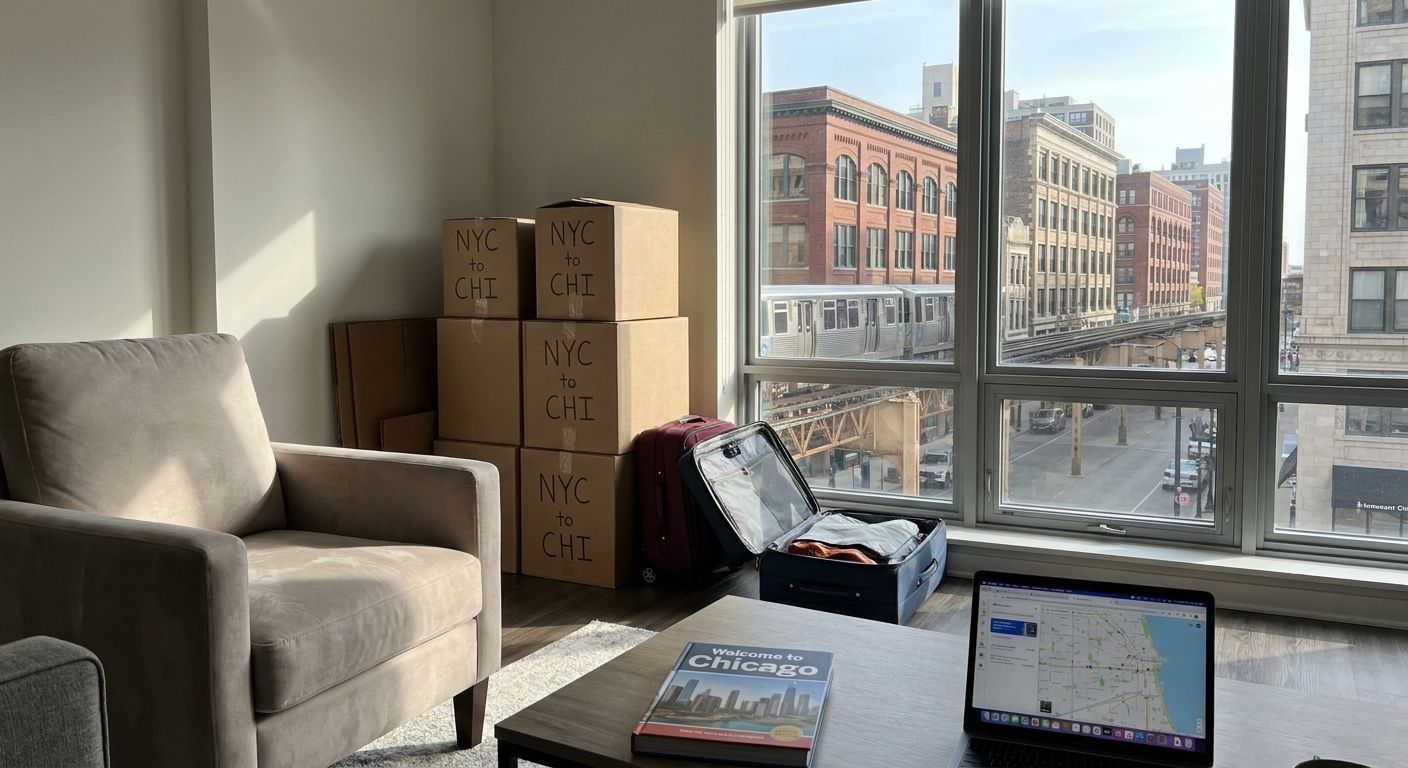
New York renters moving to Chicago apartments are trading a shrinking studio and a 45-minute subway ride for larger floor plans, a shorter commute, and a lease that doesn't eat half your paycheck. The move isn't just cheaper square footage — it's a different rental market with different rules on deposits, credit checks, and lease timing, and New Yorkers who apply the same playbook they used in Manhattan or Brooklyn end up overpaying or missing the best units.
- Stead 220 in Fulton Market fits renters moving from New York to Chicago who want studio-to-two-bedroom layouts with in-unit laundry and a rooftop pool.
- Chicago apartment applications typically move faster than NYC's board-and-guarantor process — expect income and credit checks, not a co-op interview.
- Fulton Market and West Loop put you inside a 15-20 minute commute to the Loop without a car, similar to a Brooklyn-to-Manhattan trip.
- Peak leasing season in Chicago runs May through September — locking a lease outside that window usually means better concessions.
Why this matters for renters moving from New York to Chicago
The apartment search itself looks unfamiliar even to a seasoned NYC renter. Chicago buildings run direct-lease applications through the landlord or management company rather than broker fees and board approval, so the friction point shifts from paperwork to timing and neighborhood fit. If you're used to a Stead220-style building search in New York — chasing listings before a broker fee locks you in — the Chicago equivalent is watching floor plan availability inside a single well-run community instead of fighting six agents for the same unit.
The bigger adjustment is expectation-setting on space. A one-bedroom that reads as "generous" in New York is often a standard layout in Fulton Market or West Loop, and renters who don't recalibrate end up underbuying square footage they could actually afford in 2026. Winter is also a real variable — Chicago's lake-effect cold runs longer and colder than a New York winter, which matters when you're comparing in-unit laundry, garage parking, and building entry systems.
How to apartment hunt in Chicago when you're coming from New York
Compare cost per square foot, not just the headline rent
A New York studio search trains you to accept less space for more rent. Flip that math in Chicago before you sign anything.
- Calculate rent divided by square footage for every unit you tour, not just the sticker price
- Ask whether the quoted rent includes heat, water, or just electric
- Compare a Fulton Market one-bedroom against what you paid for a studio in Brooklyn or Queens
- Factor in whether in-unit laundry replaces a $30-50/month laundromat habit
- Confirm parking is priced separately before you assume it's bundled
Map your commute before you pick a neighborhood
Commute time drove your New York apartment choice and it should drive this one too — Chicago's Loop, West Loop, and Fulton Market corridor cluster the same way Manhattan's core does.
- Check Metra and CTA train times if you're commuting downtown for work
- Test the walk to the nearest Blue or Green line stop, not just the address on paper
- Confirm whether your employer's office sits in the Loop, Fulton Market, or the Mag Mile — each changes the ideal building
- Ask about bike storage if you plan to go car-free like you did in New York
- Verify rideshare pricing during Chicago winter, which runs higher than fair-weather months
Translate your New York credit and income documents
Chicago landlords check credit and income like New York does, but there's no co-op board interview and no guarantor requirement layered on top for most rental buildings.
- Pull your credit report before applying so surprises don't slow down a lease
- Have two most recent pay stubs and an offer letter ready if you're relocating for a new job
- Ask upfront what income-to-rent ratio the building requires — most run 2.5x to 3x monthly rent
- Bring your New York landlord reference letter even though Chicago buildings weight it less than NYC boards do
- If you're self-employed, have two years of tax returns ready instead of pay stubs
Renters relocating for a job offer or corporate transfer face a tighter timeline than most first-time apartment hunters — the corporate relocator's apartment search usually compresses into two or three weeks between offer and start date, and that's the group Stead 220's studio-to-two-bedroom mix and flexible tour scheduling is built to serve.
Time your lease to avoid peak-season markups
Chicago's leasing calendar runs opposite to what a lot of New Yorkers expect — May through September is peak season, with rents and competition both climbing.
- Target a lease start in November through February for better concessions
- Ask directly whether the building offers a move-in incentive tied to a slower month
- Avoid signing during the June-August rush unless your move date is fixed
- Compare the same floor plan's asking rent across two different months if the leasing office will share it
Right-size your furniture and layout expectations
Furniture that fit a 500-square-foot New York studio can look sparse — or cramped in the wrong spot — inside a Chicago one-bedroom with a real living room.
- Measure your current furniture against the new floor plan before move day, not after
- Decide whether a sectional finally fits now that you have the square footage
- Check window count and orientation — Chicago high-rises often have more natural light than a pre-war New York walk-up
- Ask about closet dimensions if you're used to New York's notoriously small storage
Vet the building's amenities against what you gave up
Most New York rentals don't include a gym, pool, or package room — Chicago's newer buildings compete on exactly those amenities, and it's worth pricing what you'd pay separately in New York for the same access.
- Confirm whether the fitness center includes real equipment or a token treadmill room
- Ask if the rooftop is seasonal or usable into Chicago's shoulder months
- Check package locker systems if you're used to a doorman signing for deliveries
- Verify whether pet fees or breed restrictions differ from your last lease
Stead 220's 308-unit Fulton Market community, at 220 N. Ada Street, pairs studio-to-two-bedroom layouts with a rooftop pool and a fitness center — the kind of building-run amenity stack that replaces the doorman-plus-gym-membership combination a lot of New York renters are used to paying for separately.
Comparing your options in Chicago
| Option | Best for | Key limitation | Verdict |
|---|---|---|---|
| Fulton Market / West Loop new construction | Renters who want amenities and a short downtown commute | Newer buildings sit at the higher end of the neighborhood's rent range | Buy |
| Vintage Lincoln Park or Lakeview walk-up | Renters chasing a lower rent and neighborhood character | Fewer in-building amenities, older mechanical systems | Hold — good if budget is the top priority |
| River North high-rise | Renters who want nightlife and river views | Louder streets, higher parking costs | Hold |
| Suburban commuter rental (Metra line) | Renters prioritizing space over walkability | Daily Metra commute adds 30-45 minutes each way | Wait — only if you're set on more square footage than downtown offers |
“The renters who overpay in Chicago are the ones still pricing rent the way they priced it in New York.”
Common mistakes New Yorkers make apartment hunting in Chicago
- Assuming the credit and income bar is identical to NYC's guarantor system. Chicago buildings check income-to-rent ratio directly and rarely require a guarantor if you meet it.
- Underestimating winter when picking a unit. A west-facing unit with no covered parking sounds fine in September and feels different in January.
- Skipping the commute test. A neighborhood that looks close on a map can add 20 minutes once you factor in a CTA transfer.
- Not asking about move-in timing incentives. Renters who lease in peak season lose the concessions available in slower months.
- Bringing New York-sized furniture expectations into a smaller vintage unit. Not every Chicago building has New York's compact-but-luxury layout — vintage stock runs smaller than new construction.
Tour Stead 220 in Fulton Market
See studio-to-two-bedroom layouts before your New York lease ends.
FAQ
Is it cheaper to rent an apartment in Chicago than in New York?
Most renters find more square footage per dollar in Chicago than in Manhattan or Brooklyn, though exact savings depend on the neighborhood and floor plan you compare. A one-bedroom in Fulton Market or West Loop typically buys more space than the same rent in a comparable New York neighborhood.
Do Chicago apartments require a guarantor like New York co-ops do?
Most Chicago rental buildings do not require a guarantor if your income meets the standard 2.5x to 3x monthly rent ratio. There's no co-op board interview process — approval runs on credit and income documentation instead.
What's the best time of year to sign a Chicago apartment lease?
November through February typically brings better concessions and less competition than the May-through-September peak leasing season. Renters relocating for a fixed job start date should still prioritize the move-in date over timing the market.
How long does the Chicago apartment application process take?
Most buildings process credit and income verification within a few business days once you submit pay stubs, an offer letter, or tax returns for self-employed applicants. It's typically faster than New York's board-and-guarantor timeline.
Which Chicago neighborhoods compare to Manhattan's downtown feel?
Fulton Market, West Loop, and River North cluster restaurants, offices, and transit access the way Manhattan's core does. Fulton Market in particular has grown around tech and corporate offices in recent years, similar to how parts of Lower Manhattan function.
Should I bring my New York furniture or buy new for a Chicago apartment?
Measure your current furniture against the new floor plan first — new construction in Fulton Market and West Loop often has more usable square footage than a comparable New York unit. Vintage Chicago buildings can run smaller, so measure before you commit to shipping everything.
Do Chicago apartments include amenities New York rentals usually don't?
Newer Chicago buildings frequently include a fitness center, rooftop access, and package lockers as standard, where a comparable New York rental might charge separately or lack them entirely. Confirm what's building-run versus what you'd still need to pay for outside the lease.
Is Fulton Market a good fit for someone relocating from New York for work?
Fulton Market suits renters with downtown or West Loop offices who want a short commute and a walkable restaurant corridor. It's a strong match for corporate relocators and tech workers moving on a compressed timeline in 2026.
One last thing
The detail most New York renters miss: Chicago's peak leasing season inverts the calendar you're used to. Manhattan rental demand holds fairly steady year-round because of constant turnover, but Chicago concentrates its move-ins between May and September — sign outside that window and the same floor plan often comes with a better rate and more flexible move-in date.