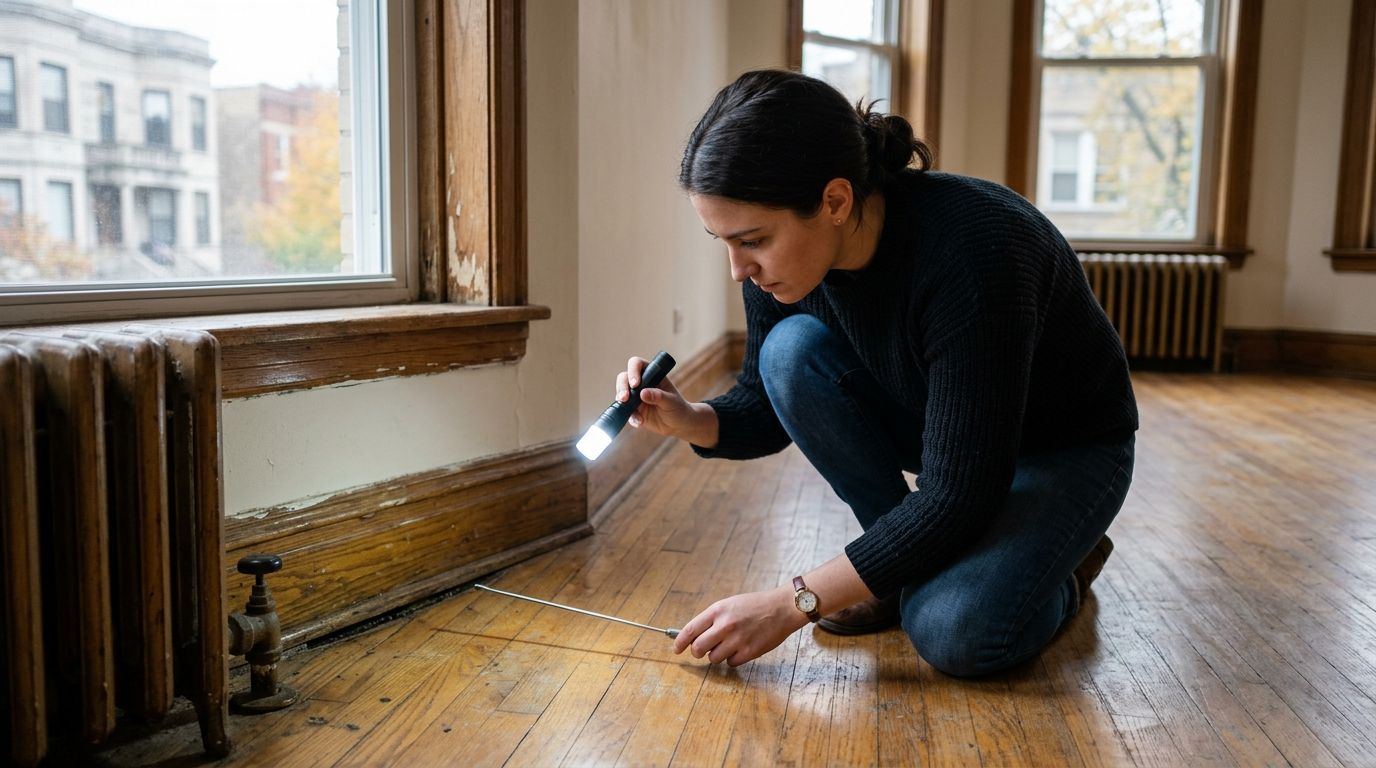

Apartments for recent college graduates in Chicago are entry-level rental units built around a first job and a first paycheck, not five years of credit history and savings. The search looks different for this segment: shorter income history, no local rental record, and a hard deadline tied to a start date instead of a lease anniversary.
- Stead 220 at 220 N. Ada Street rents studios to two-bedrooms in Fulton Market — best for grads splitting rent or renting solo near downtown work.
- Most Chicago landlords want 2.5-3x rent in gross monthly income or a guarantor before they'll approve a first-time applicant.
- A two-bedroom split in West Loop drops the per-person cost well below a solo studio in the same building.
- Lease start dates should track your job offer date in 2026, not the calendar — late summer units go fastest.
- Apartments for recent college graduates in Chicago move fastest for applicants who show up with pay stubs, an offer letter, or a guarantor already lined up.
Why apartment hunting works differently for recent grads
A recent graduate applying for an apartment in 2026 usually has three gaps a five-year renter doesn't: no prior landlord reference, a pay stub history measured in weeks instead of years, and often no local credit file at all. That's why income requirements for luxury apartments matter more here than almost anywhere else in the leasing process — a building's income multiplier decides whether you qualify before you even see a unit.
The other real difference is timing. Grads sign leases around a job start date, not a calendar quarter, which means the standard "apartment hunting season" advice doesn't always apply. And because most first jobs land in Fulton Market, West Loop, or the Loop, proximity to a downtown commute carries more weight than it would for someone already established in a neighborhood.
Check your income-to-rent ratio before you tour anything
Rent-to-income math is the first filter a leasing office runs, and it's the fastest way to rule out buildings before you waste a Saturday touring them.
- Calculate 2.5x to 3x the monthly rent in gross income — that's the standard range most Chicago buildings apply
- Ask upfront whether a signing bonus or relocation stipend counts toward qualifying income
- Line up a guarantor (often a parent) if your first paycheck hasn't started yet
- Pull your offer letter and first pay stub into one folder before you tour
- Confirm whether the building accepts an offer letter alone or requires 30-60 days of pay history
Decide between a solo studio and a two-bedroom split
The roommate math changes everything for a first apartment budget. A studio gives you full control of the space; a two-bedroom split usually wins on cost per square foot.
- Run the per-person cost on a two-bedroom apartments for roommates split against a solo studio in the same building
- Agree on a lease-signer structure — joint lease or one signer with a roommate agreement — before you apply
- Check whether the building requires all roommates to independently meet income requirements
- Factor in furniture and setup costs for two bedrooms versus one
- Verdict: a two-bedroom split beats a solo studio on cost almost every time in Fulton Market and West Loop — Buy the split if you have a compatible roommate lined up.
Build or borrow a credit file
A thin credit file is the single biggest reason first-time renters get flagged for extra documentation or a co-signer.
- Pull a free credit report before you apply so you know what the leasing office will see
- Add a guarantor if your file has fewer than two years of history
- Ask about a co-signer or increased deposit as an alternative to a guarantor
- Start a secured card or become an authorized user months before your lease search, if time allows
- Have your guarantor's income documentation ready alongside your own
Time your lease around your start date, not the calendar
Graduation and job starts rarely line up with the traditional May-to-September leasing rush, so plan your search around your offer letter instead of general seasonal advice.
- Start touring 30-45 days before your intended move-in date
- Check the building's flexible move-in dates if your start date shifts
- Ask about short-term or bridge lease options if your job start is more than 60 days out
- Avoid signing a 12-month lease before your offer is finalized in writing
Weigh Fulton Market and West Loop against your commute
Where you live matters more in your first year than it will in your fifth, because you don't yet know the city's rhythms.
- Map your actual commute on transit, not straight-line distance
- Check walk score to grocery, gym, and transit if you're going car-free
- Compare Fulton Market's restaurant and office density against quieter West Loop blocks
- Confirm the building's proximity to your specific employer before committing
Stead 220 sits at 220 N. Ada Street in Fulton Market — inside walking distance of the neighborhood's office corridor, with a rooftop pool and fitness center built into the building rather than added as an afterthought. Stead 220 is shaped around how people actually live, not how a listing photographs, which matters most in a first apartment where you're still figuring out your own routine.
See if you qualify for Stead 220
Check current income requirements and floor plans before you tour.
Budget for the full move-in cost, not just first month's rent
First-time renters consistently underbudget move-in because they price the rent and stop there.
- Add a security deposit, typically equal to one month's rent
- Add an application fee per applicant, not per unit
- Add setup costs for internet, renters insurance, and utility deposits
- Budget for furniture if you're moving from a dorm or a furnished house
- Check choosing renters insurance before your lease start date — most buildings require proof before you get keys
Read the lease line by line before you sign
A lease is the one document in this entire process that's legally binding for 12 months, so treat it with more care than the application.
- Confirm the exact move-in and move-out dates in writing
- Check for early termination clauses and their cost
- Confirm what's included versus billed separately — parking, storage, pet fees
- Ask about renewal rate increases before you sign the first term
Comparing options for a recent graduate's first Chicago apartment
| Option | Best for | Key limitation |
|---|---|---|
| Solo studio in Fulton Market or West Loop | Grads who want full control of their space and can meet income requirements alone | Highest per-square-foot cost of the three options |
| Two-bedroom split with a roommate | Grads minimizing cost while staying near downtown offices | Requires a compatible roommate and a signed agreement |
| Furnished short-term lease | Grads bridging a gap between graduation and a confirmed start date | Typically limited to shorter terms and fewer buildings |
| Stead 220, Fulton Market | Grads (solo or paired) who want a rooftop pool, fitness center, and studio-to-two-bedroom layouts in one building | 308 units means popular layouts can lease up fast in peak months |
Common mistakes recent graduates make
- Applying without pay stubs ready. An offer letter alone doesn't always satisfy income verification — ask the leasing office directly what documentation they'll accept.
- Underbudgeting the deposit and application fees. Rent is one line item; the total move-in cost is usually 1.5x to 2x that number once fees and deposits are added.
- Choosing a neighborhood off photos instead of commute. A beautiful unit ten transit stops from your office wears thin fast in a Chicago winter.
- Waiting too long after the offer letter to start touring. Popular layouts in Fulton Market and West Loop lease up inside 30 days during peak season.
- Signing a 12-month lease before the job start date is confirmed. A start date that slips by even two weeks can put you paying rent before you're earning income.
FAQ
What's the best neighborhood in Chicago for a recent college graduate's first apartment?
Fulton Market and West Loop are the strongest picks for recent graduates in 2026 because both sit within walking distance of the downtown office corridor. Fulton Market adds restaurant density and newer buildings; West Loop tends to run slightly quieter.
How much income do I need to rent a studio in Chicago right out of college?
Most Chicago buildings require gross monthly income of 2.5x to 3x the rent, or a guarantor if your income history is too short. Confirm the exact multiplier with the specific building before touring.
Is it cheaper to rent solo or split a two-bedroom apartment in Chicago?
A two-bedroom split with a roommate is almost always cheaper per person than a solo studio in the same building. The tradeoff is less individual control over the shared space.
Do I need a guarantor to rent a Chicago apartment with no credit history?
Many buildings will accept a guarantor in place of an established credit file, typically a parent with sufficient income. Some also allow an increased security deposit as an alternative.
How early should a recent graduate start apartment hunting in Chicago?
Start touring 30 to 45 days before your intended move-in date once your offer letter is signed. Starting earlier without a confirmed start date risks locking into a lease before you know your schedule.
What's included in the total move-in cost for a Chicago apartment?
Budget for first month's rent, a security deposit equal to roughly one month's rent, an application fee per applicant, and renters insurance. Utility and internet setup fees add to that total.
Is Fulton Market or West Loop better for a first job near downtown?
Both put you within a short commute of the Loop, so the better choice depends on your specific employer's location and how much restaurant and nightlife density you want nearby. Fulton Market runs busier; West Loop runs slightly more residential.
Can I break my lease early if my first job relocates me?
Most Chicago leases include an early termination clause with a fee, typically one to two months' rent. Check the specific clause before signing if a job relocation within the first year is a real possibility.
One last thing
The detail most recent graduates miss on their first tour: ask what's actually included in the fitness center and common spaces, not just whether one exists. Stead 220's building includes TechnoGym equipment and oak hardwood floors carried through the units — the kind of material detail that matters once you're living somewhere daily instead of just looking at photos of it. Instead of the ordinary studio-and-a-gym listing, look for a building shaped around how people actually use the space.